← Misc · 2021–2026
Layer by Layer
Five years of 3D printing, on two printers.
The lab's Ultimaker S5 for the odd fun print · my own Bambu Lab P1S at home, from November 2024
First print in the photos: Lucy · tallest print: a rainbow Burj Khalifa · one slicer estimate: 1 day, 4 hours
Most of the posts on this page are about going somewhere. This one is about staying in. Going through the photos, I found that one kind of picture comes back again and again between the trips: something small and plastic, still sitting on a build plate, photographed the moment the printer finished.
The photos fall into two halves. Before I had a printer of my own, I printed the occasional fun thing on the lab's printer at USC, in between real work. In November 2024 I bought a printer for home, and the fun prints took over. Almost none of the designs are mine: they are models that people share online, and the fun is in printing them.
On the lab's Ultimaker, 2021–2023
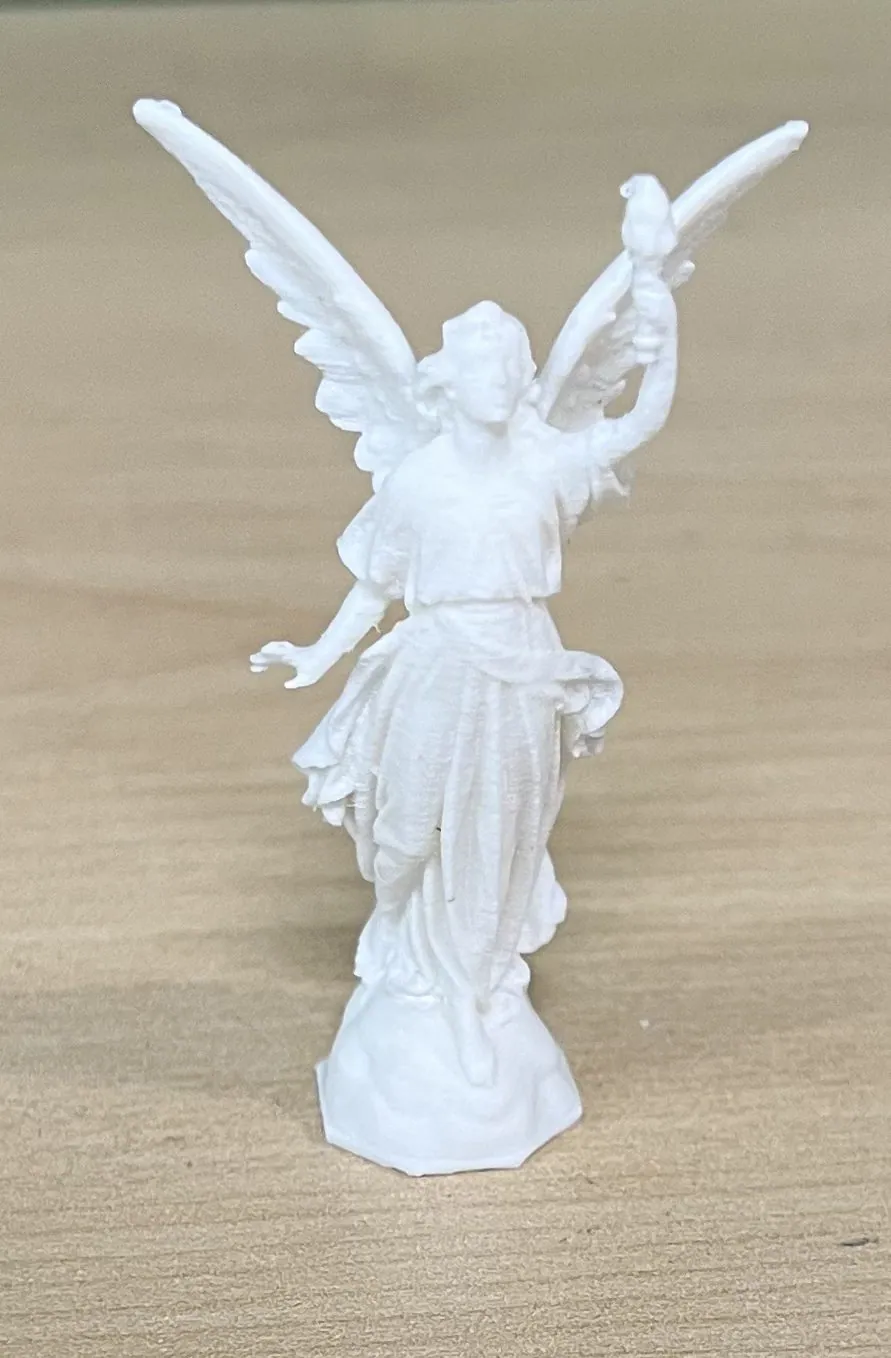
Lucy · October 2021
The lab printer was an Ultimaker S5, a big white box with a glass build plate and a print head that carries two nozzles. The first fun print in my photos, on October 31, 2021, is Lucy: a winged angel holding a torch over her head. Anyone in computer graphics knows her. She is a laser scan of a statue from Stanford's 3D Scanning Repository and one of the classic test models of the field, so printing her felt a bit like printing an old colleague.
Bing Dwen Dwen in four steps · March–April 2022
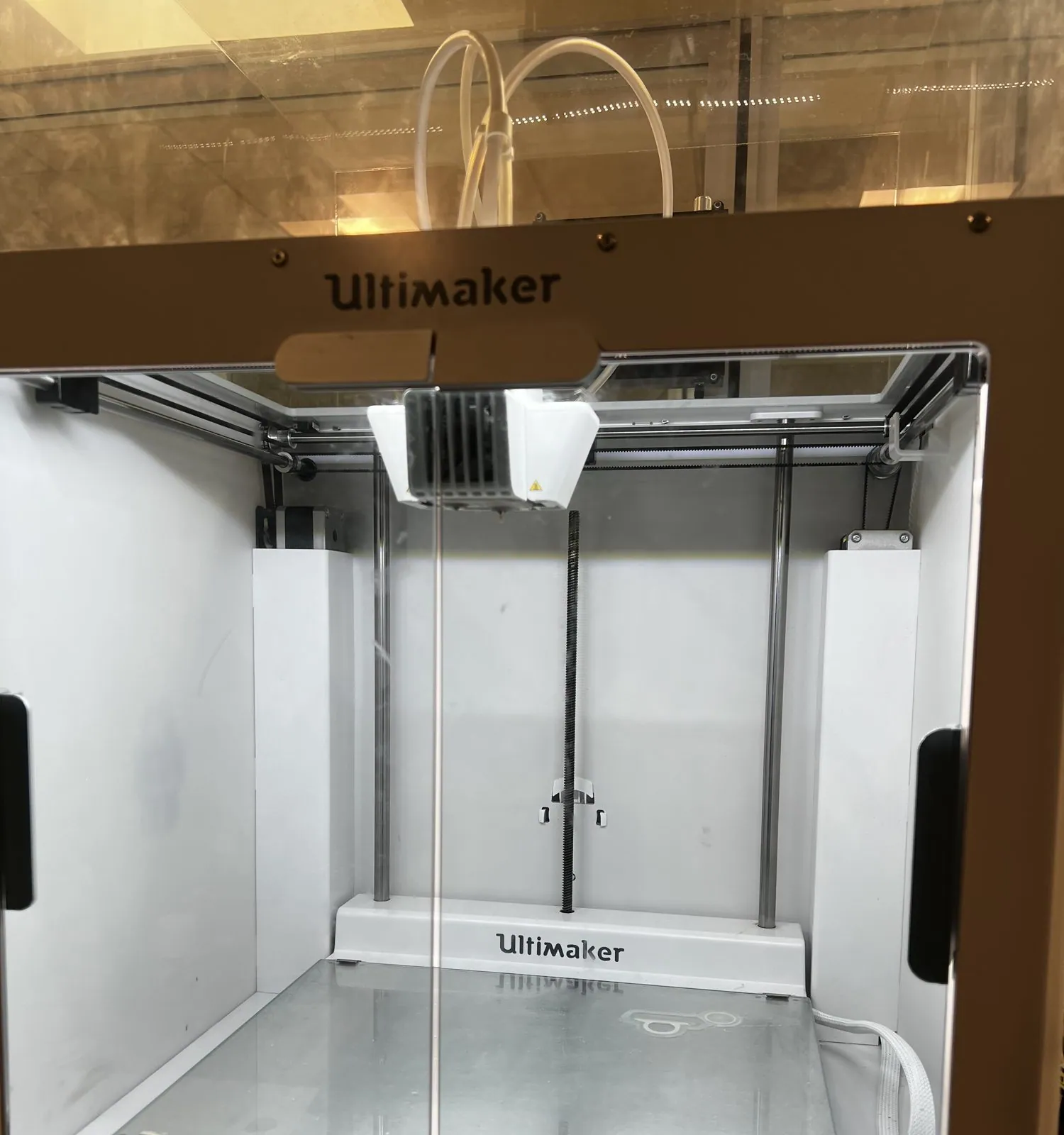
The spring of 2022 has the best sequence in the folder. It starts on March 20 with the only photo I have of the whole printer.
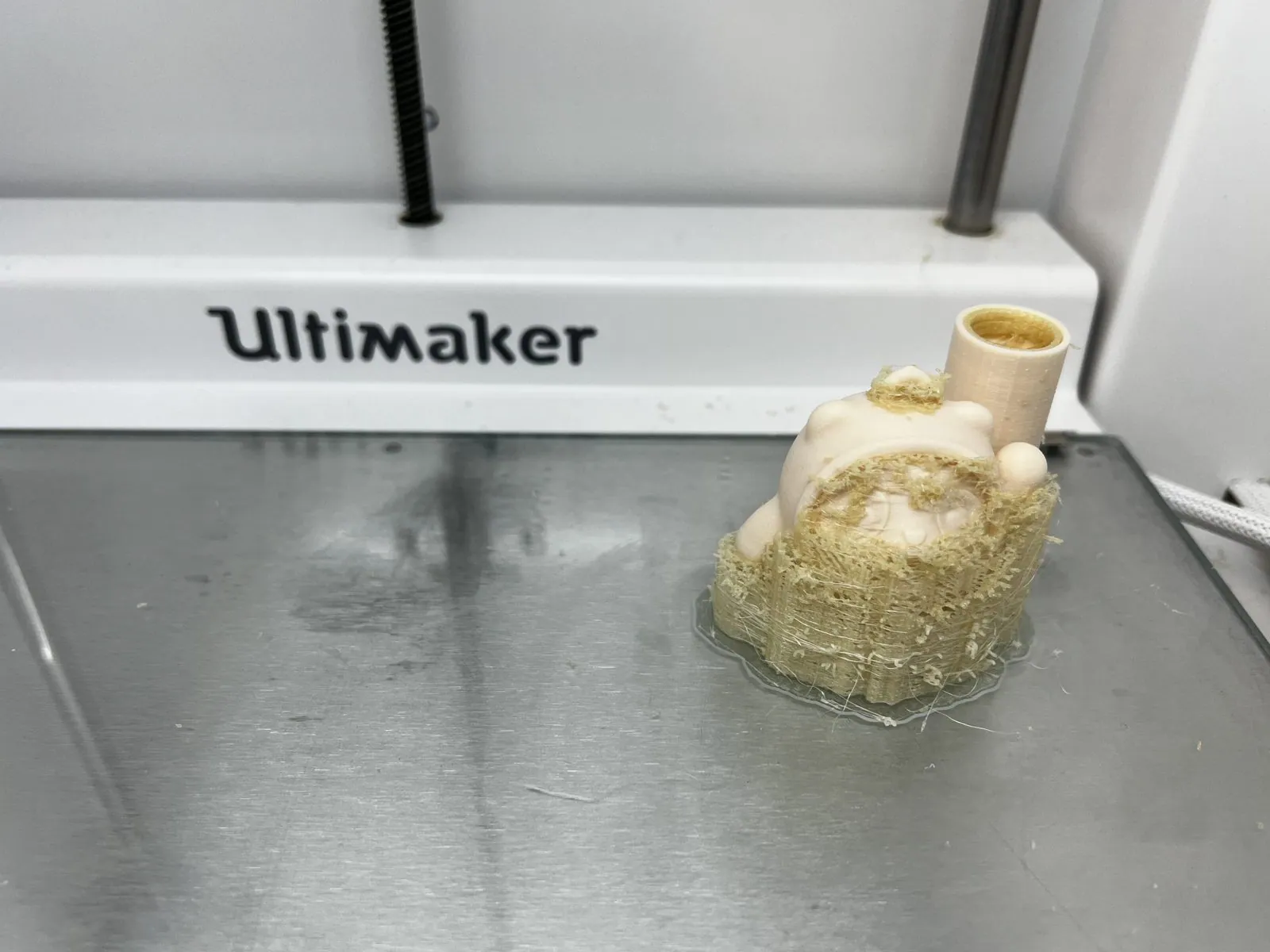
The next morning a small figurine came out wrapped in a block of support material. Cleaned up, it was Bing Dwen Dwen, the panda in an ice-shell suit who was the mascot of the Beijing Winter Olympics, which had ended a month before. He came out waving.
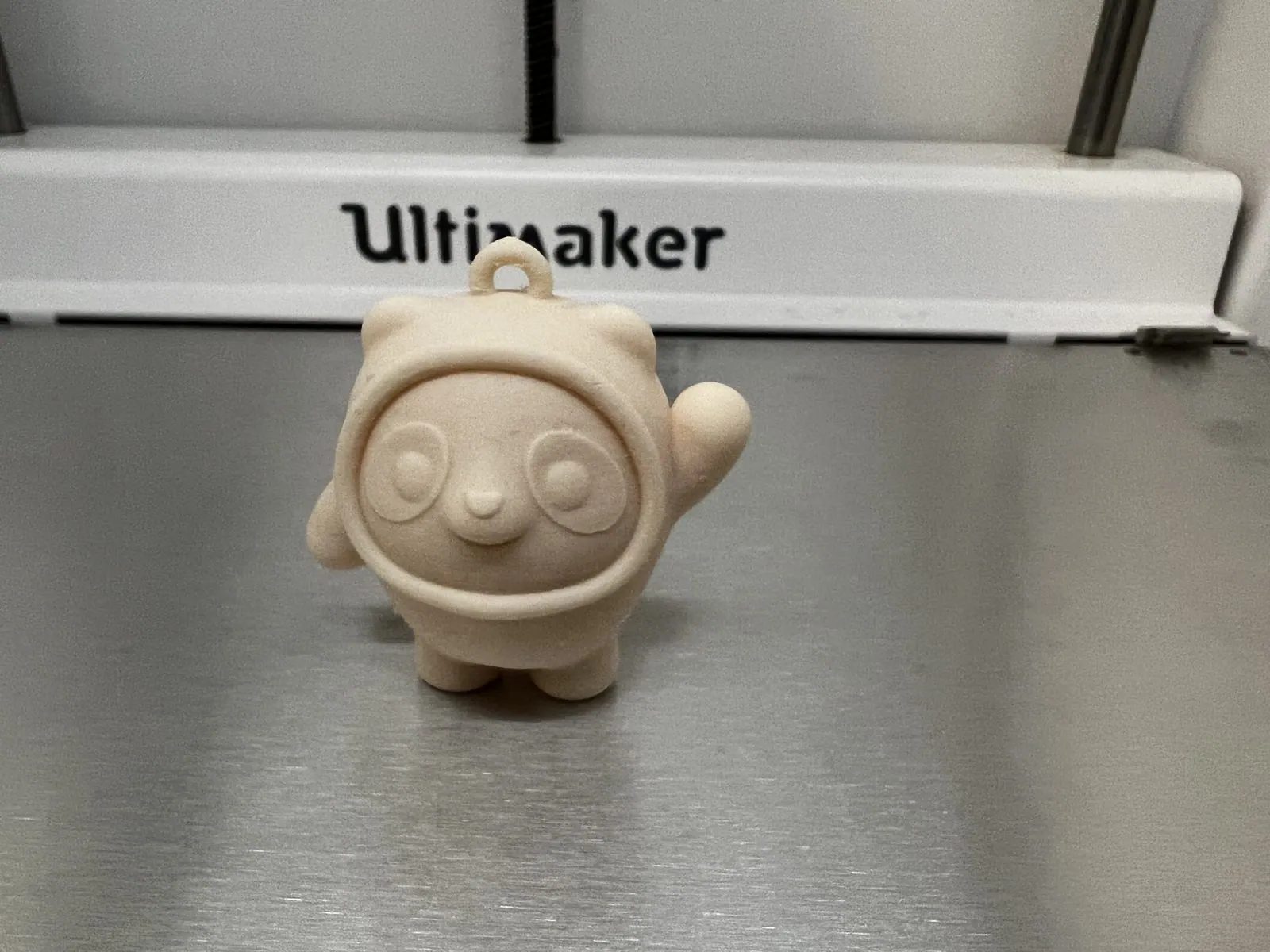
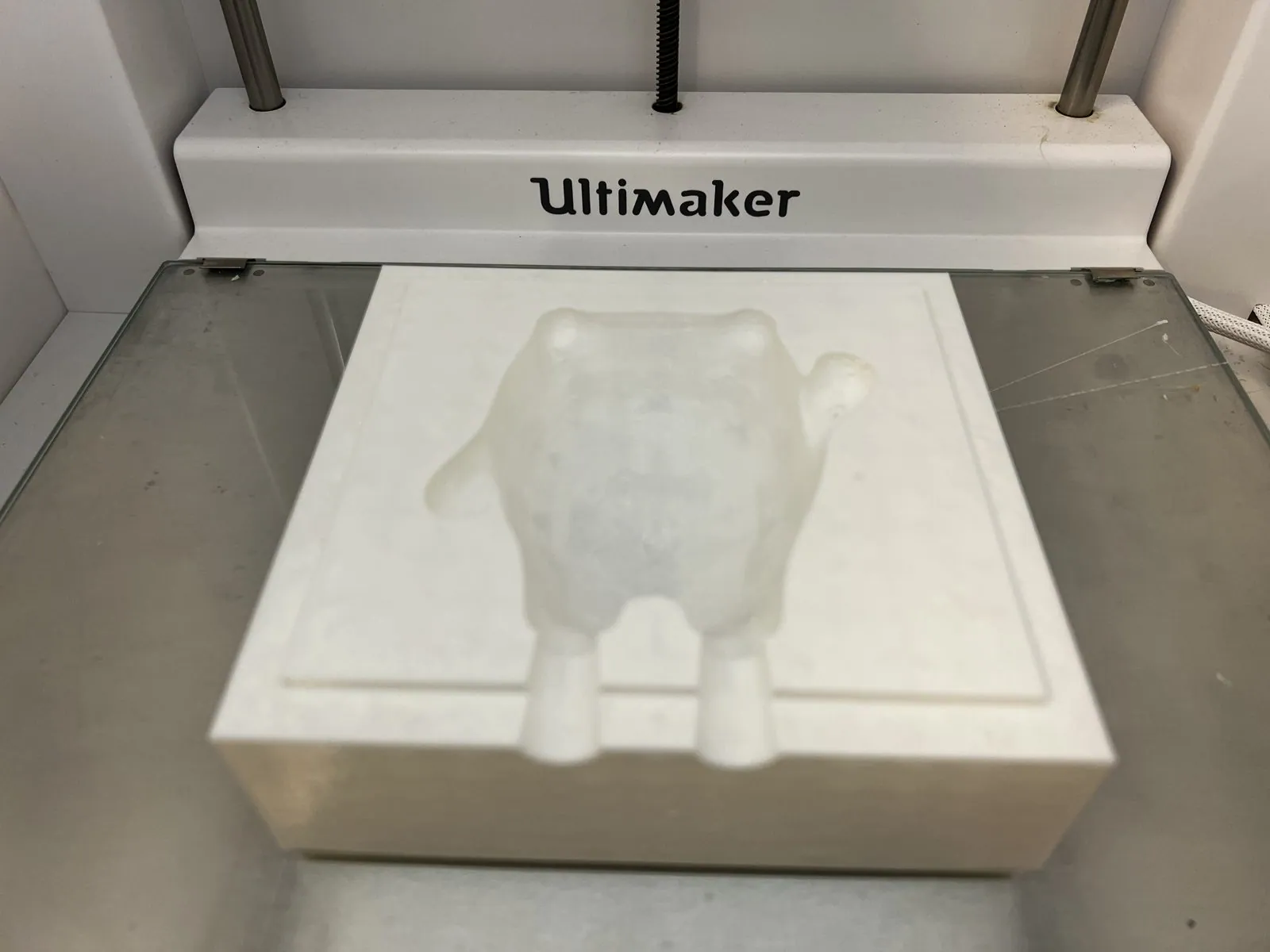
Two days later the printer made a mould: a white block with the same figure sunk into it, the kind of thing you can pour a casting material into.
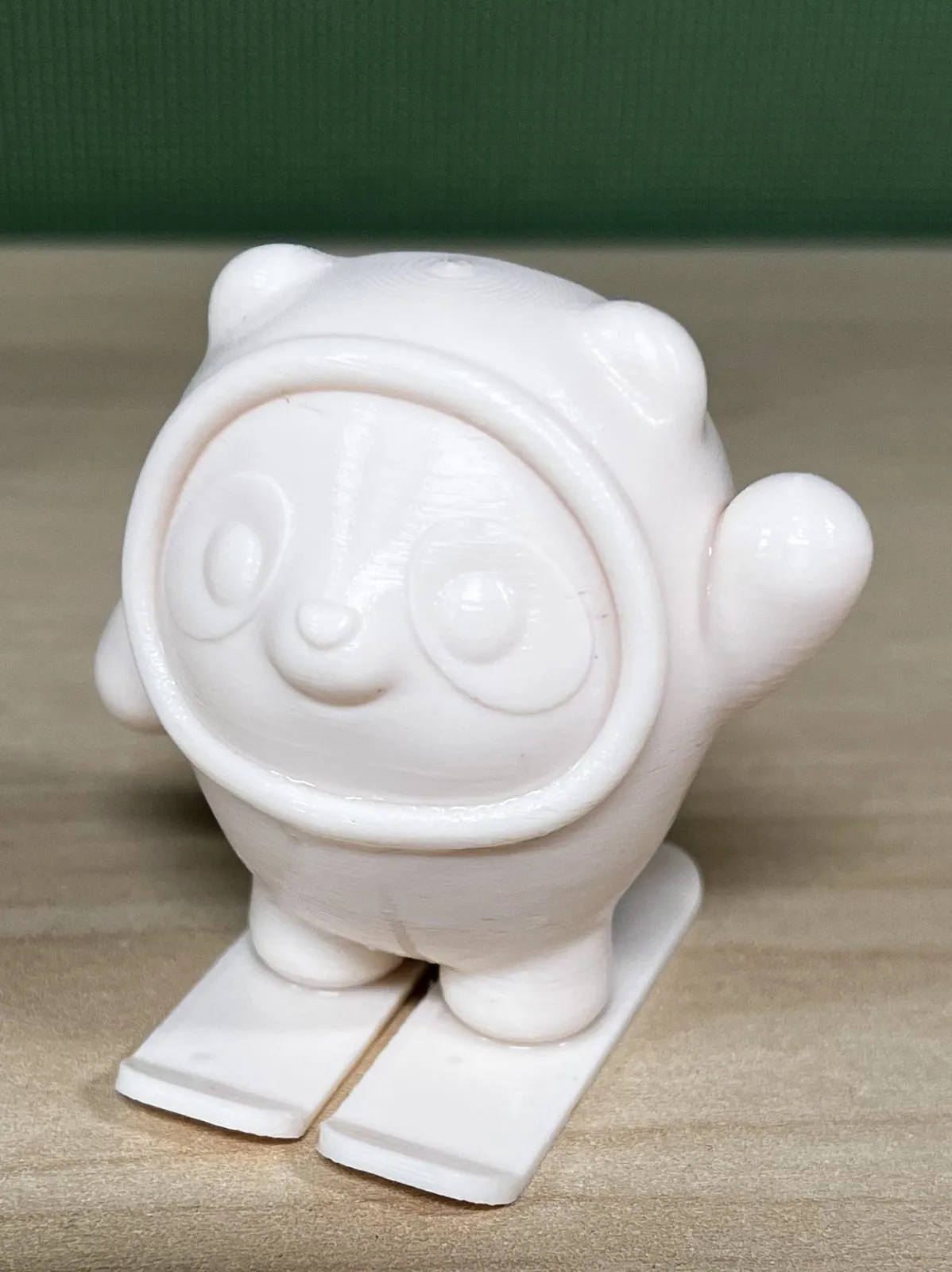
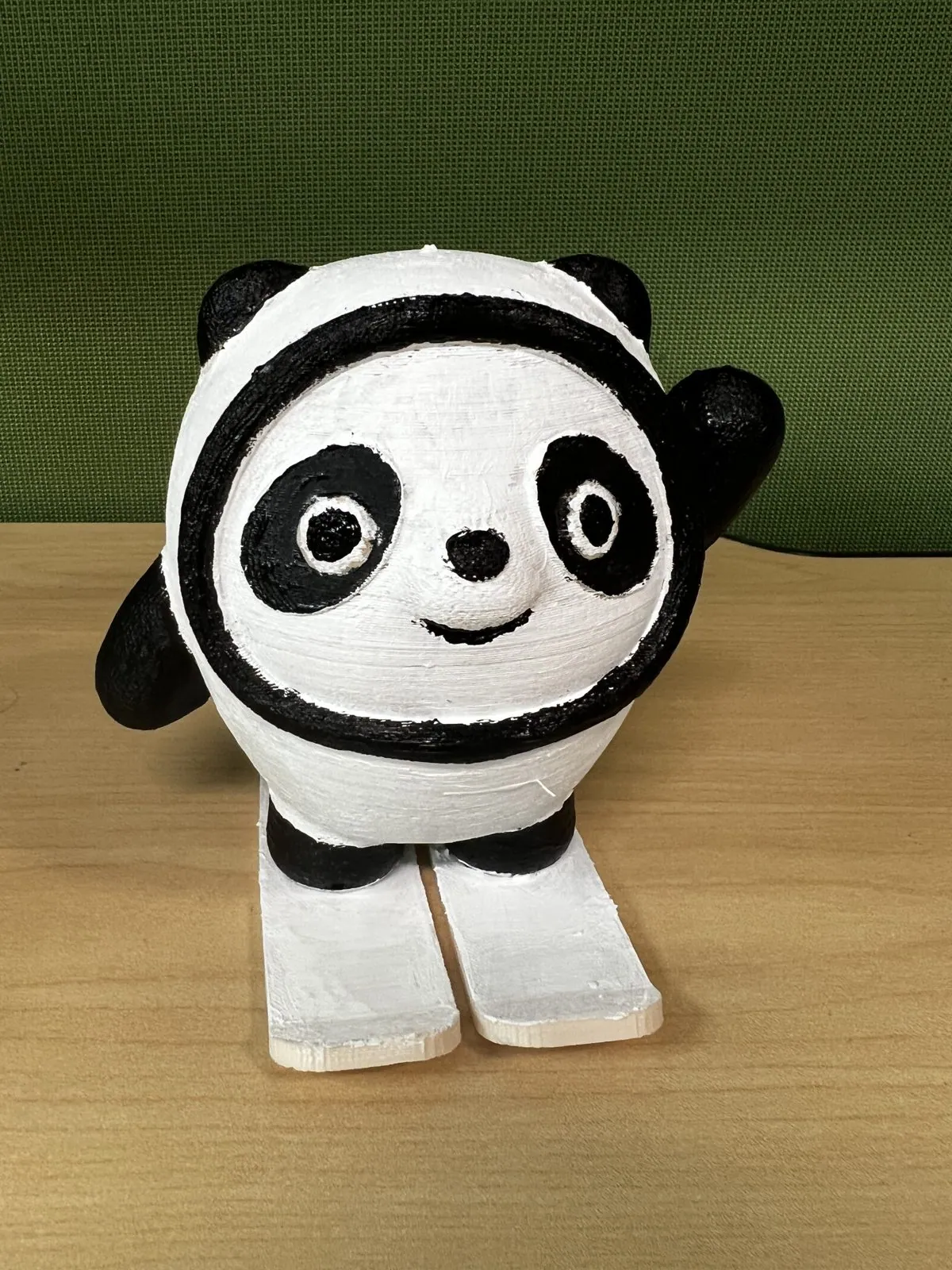
On April 2 a new version stood on a pair of skis, and by April 12 it had been painted black and white, with black arms and a black tail. Four steps, three weeks, one Bing Dwen Dwen.
A cat, and an error · April 2023
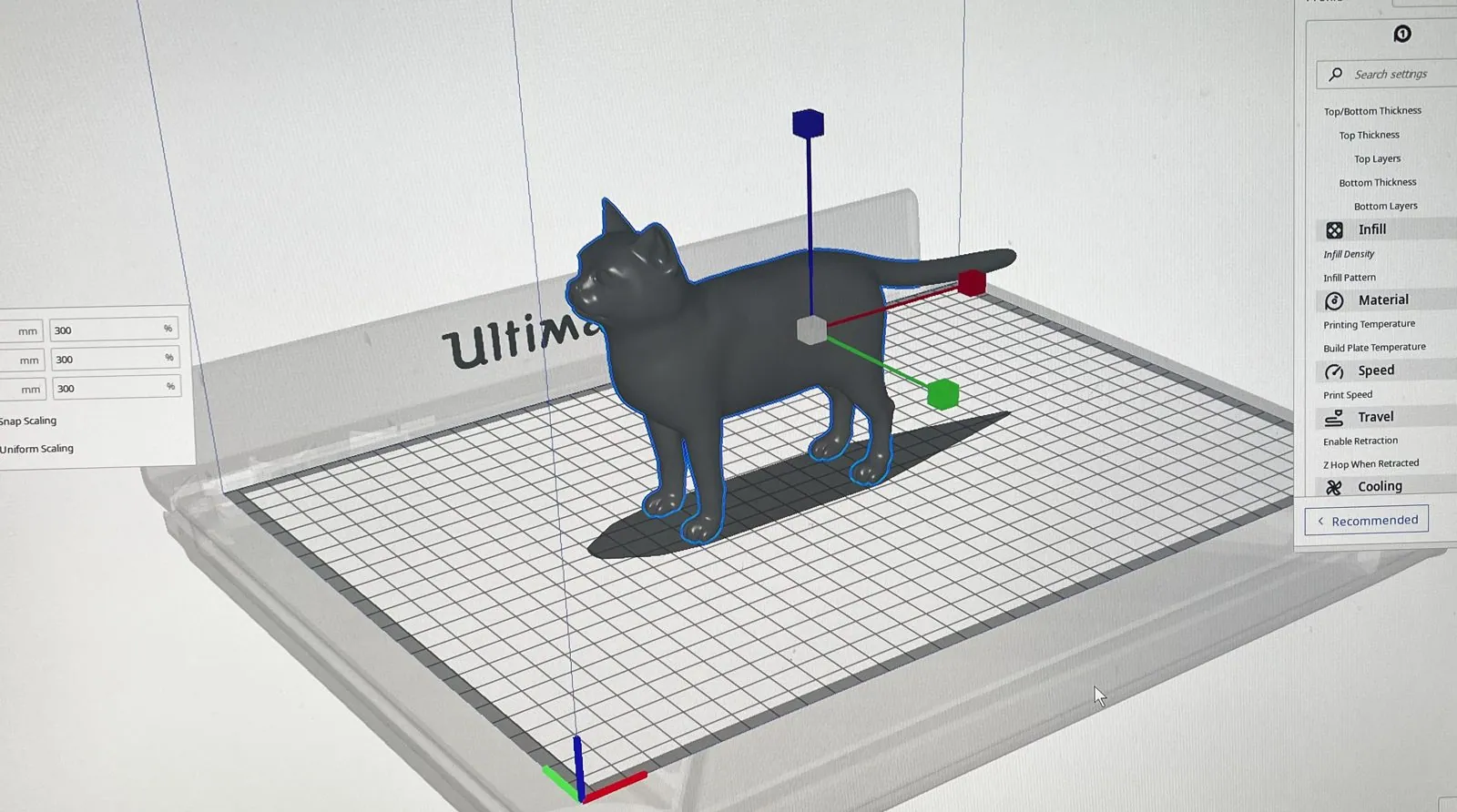
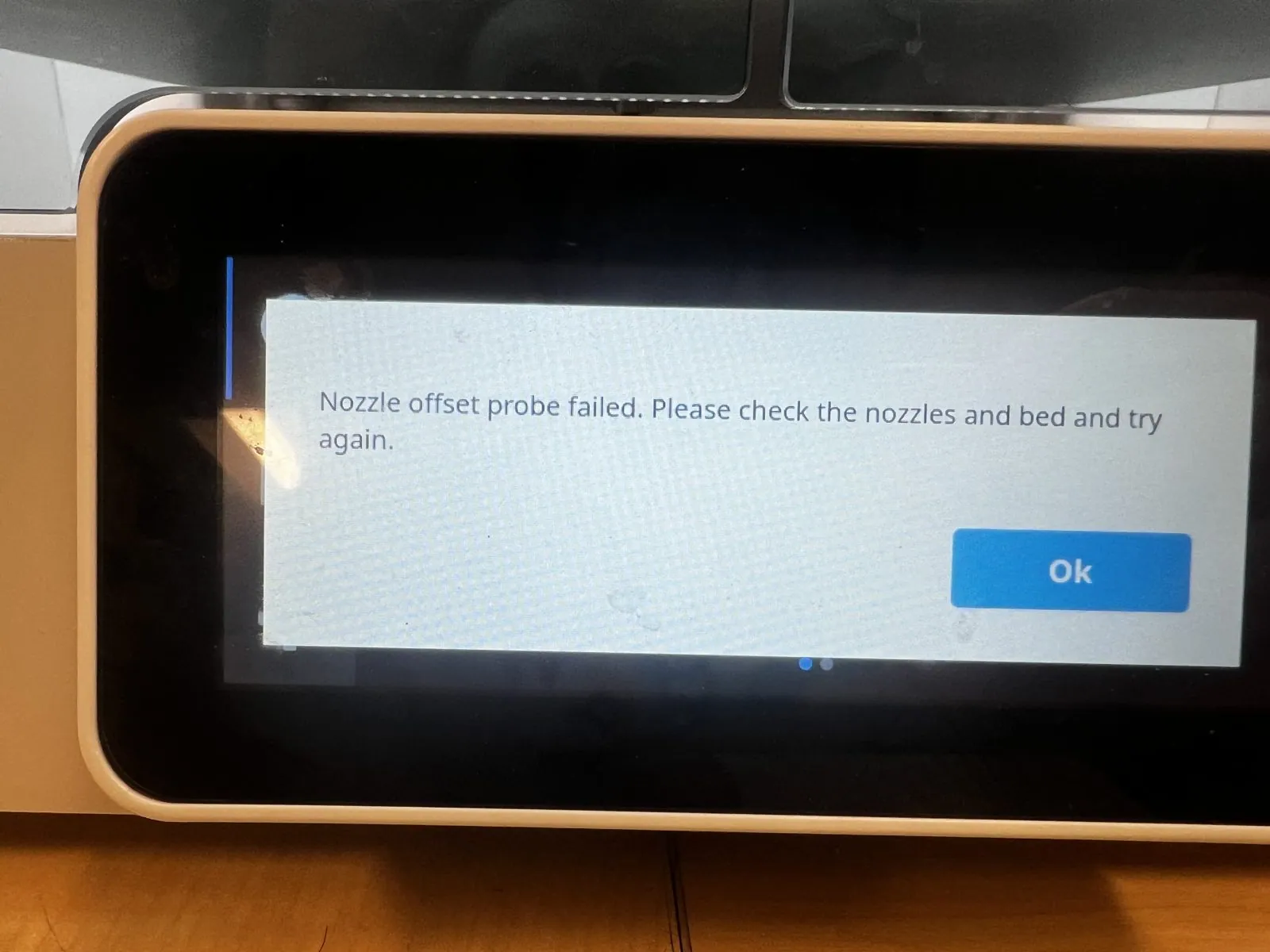
The last fun print I have from the lab is a cat. A photo of the slicer, Ultimaker Cura, shows the model scaled to three times its size, with an estimate of a day and four hours. Two days later, the printer's screen had only this to say: "Nozzle offset probe failed. Please check the nozzles and bed and try again."
A printer of my own, 2024–2026
The first two weeks · November 2024
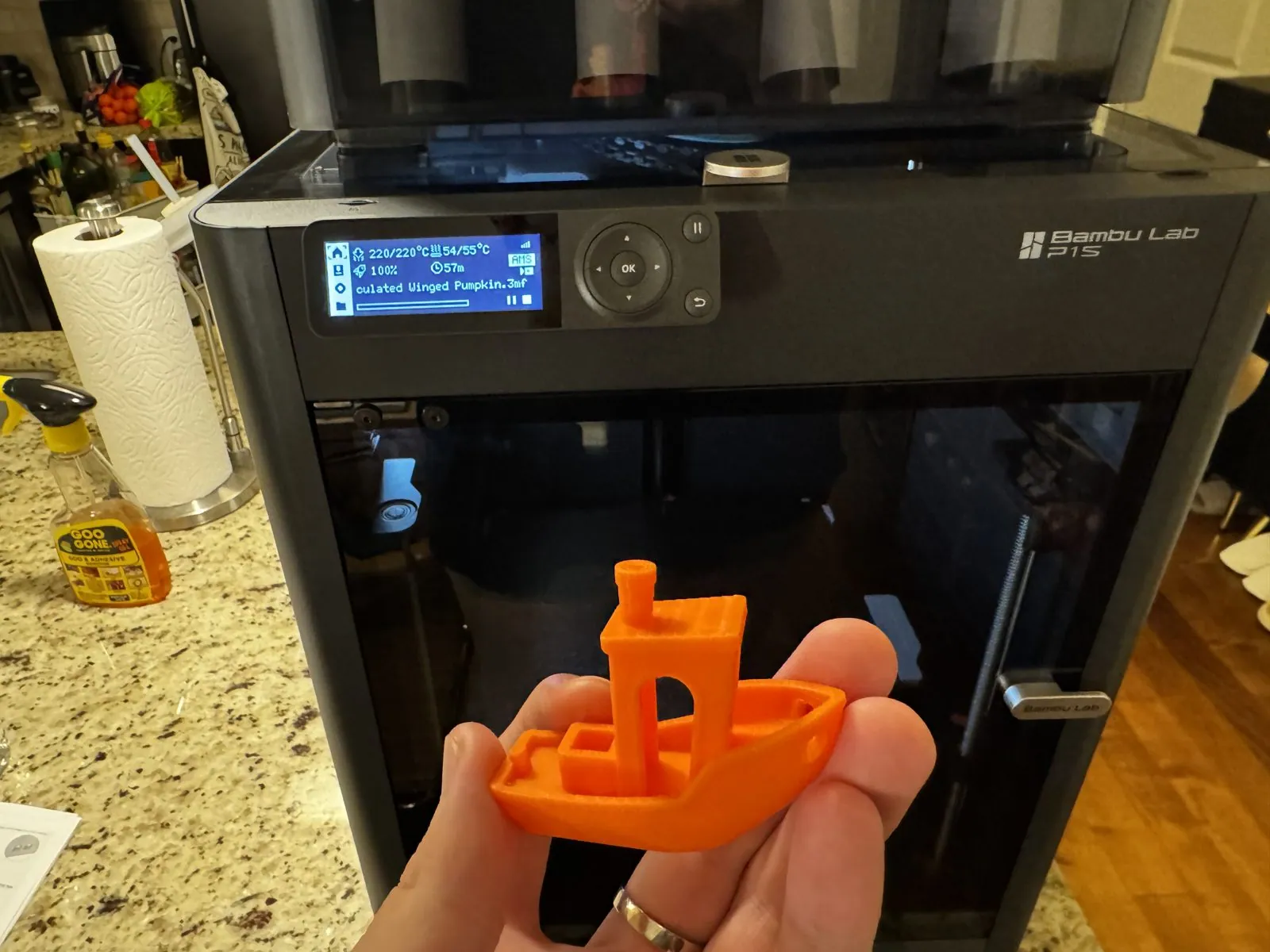
On November 13, 2024 I brought home a Bambu Lab P1S: a closed black box with an AMS unit on top that holds four spools and swaps between them, so one print can use several colors. In its phone app the printer is called 腐竹, dried tofu skin; 竹 is the character for bamboo. The first print, that same evening, was the usual first print: a Benchy, the little tugboat everyone uses to test a new printer. The printer's screen in that photo is already working on the next one, a winged pumpkin.
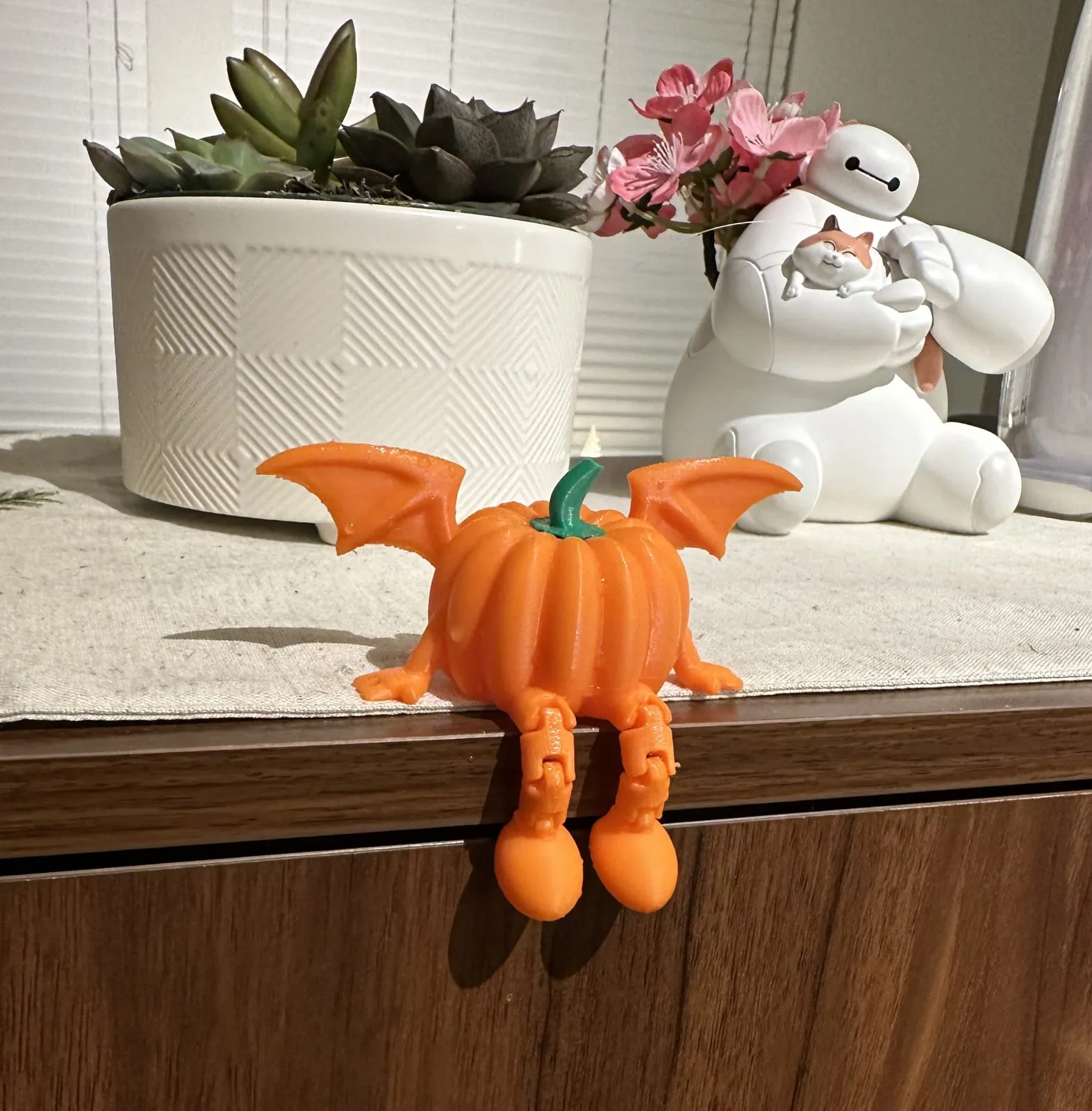
About an hour later the winged pumpkin was done too, and went to sit on the edge of the sideboard, legs over the side.
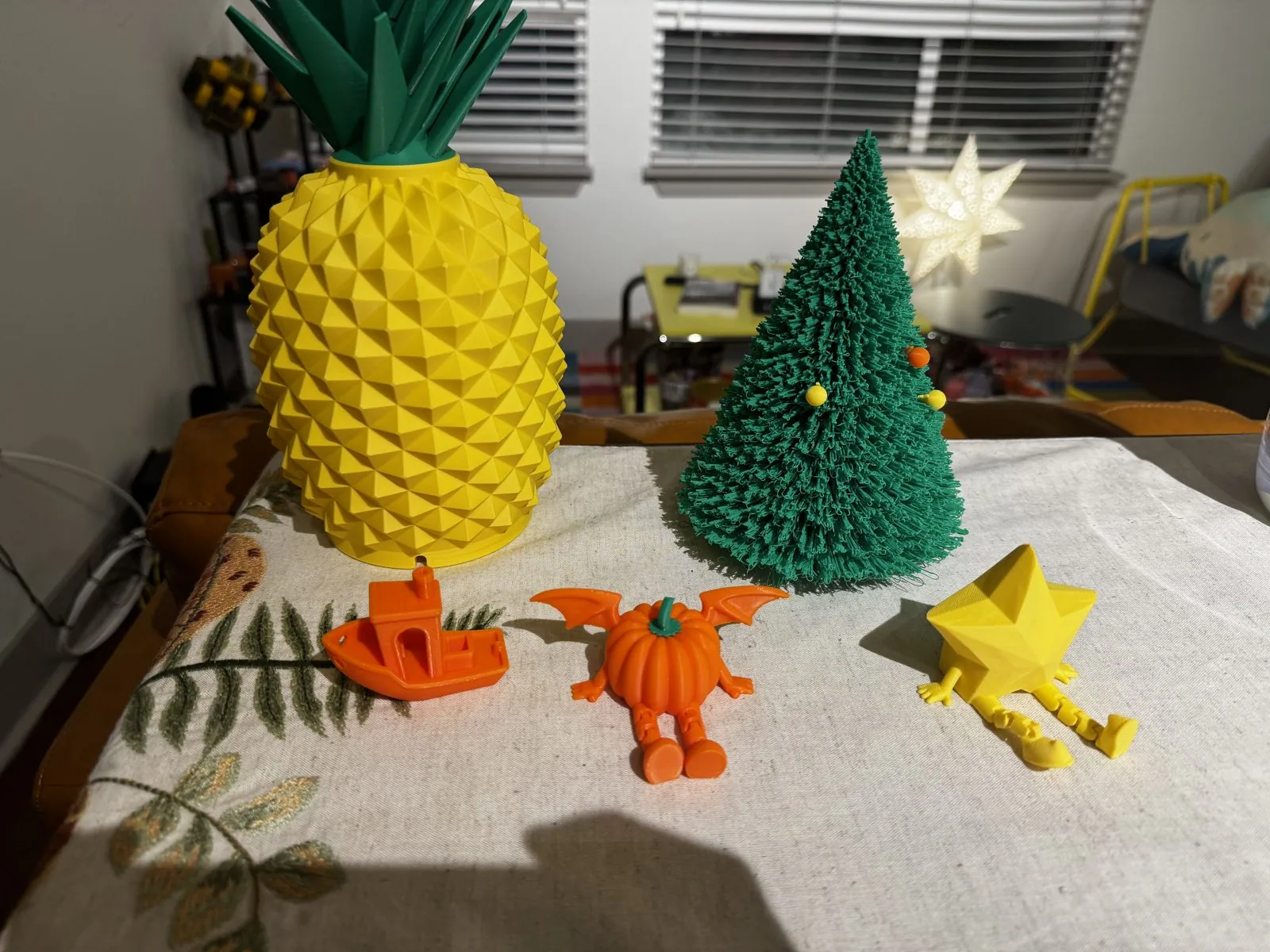
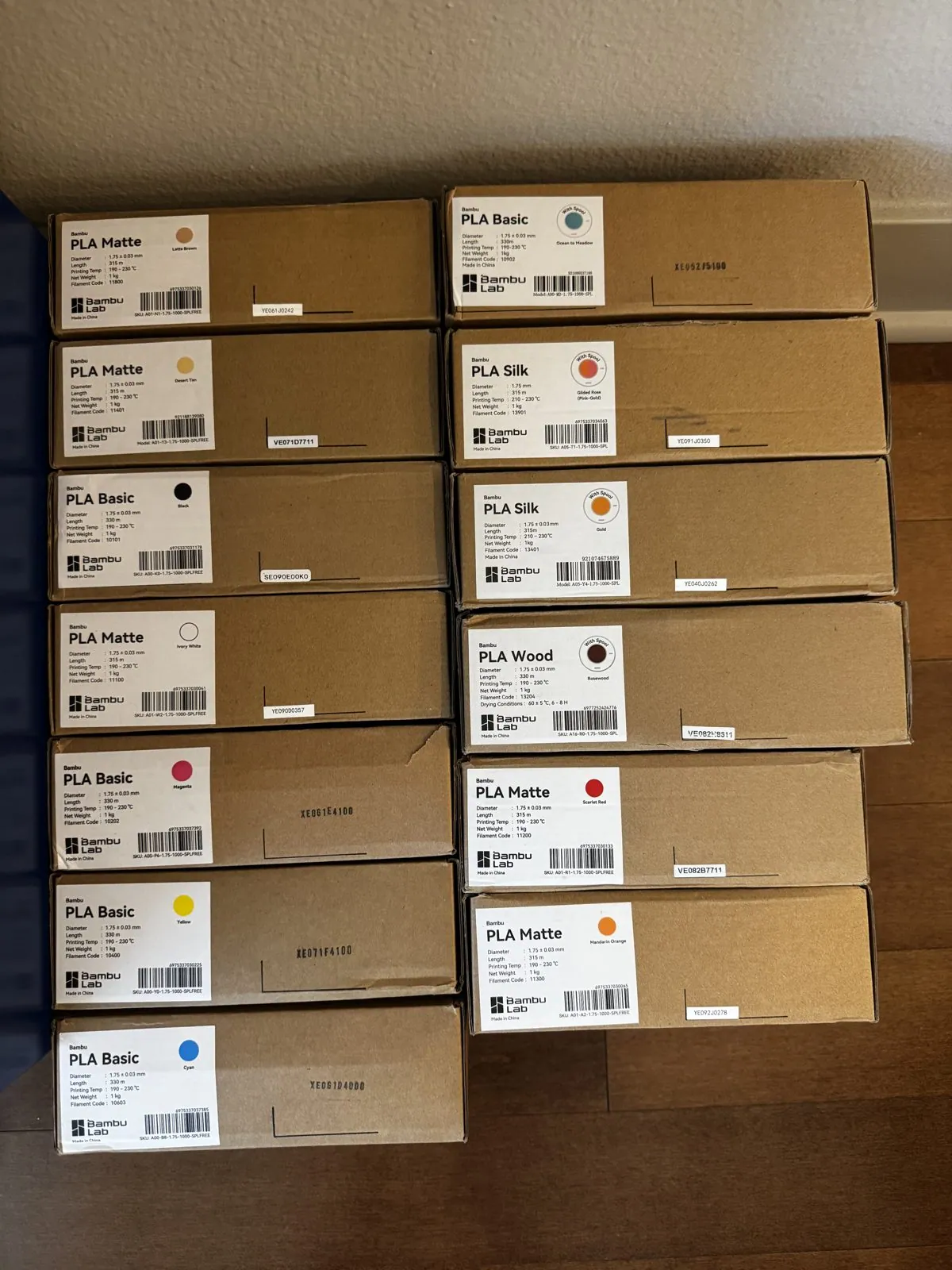
Two days later the first batch was lined up on a tablecloth: a faceted yellow pineapple that is really a lamp, a green Christmas tree, the orange Benchy, an orange pumpkin with wings and legs that move, and a yellow star with arms and legs. A week after that, thirteen boxes of filament had arrived: plain, matte, silk and even wood-filled plastic, in almost every color.
Landmarks
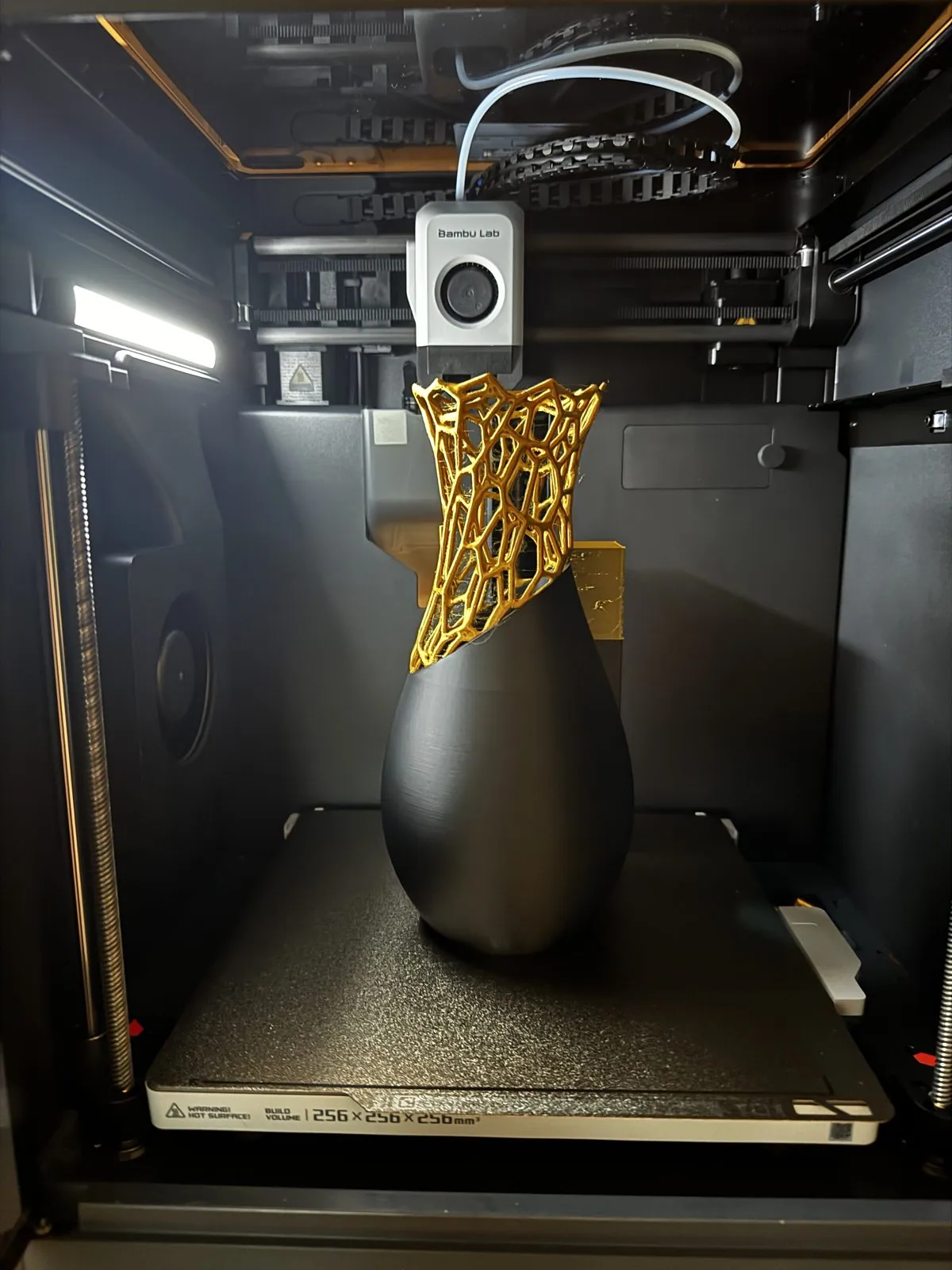
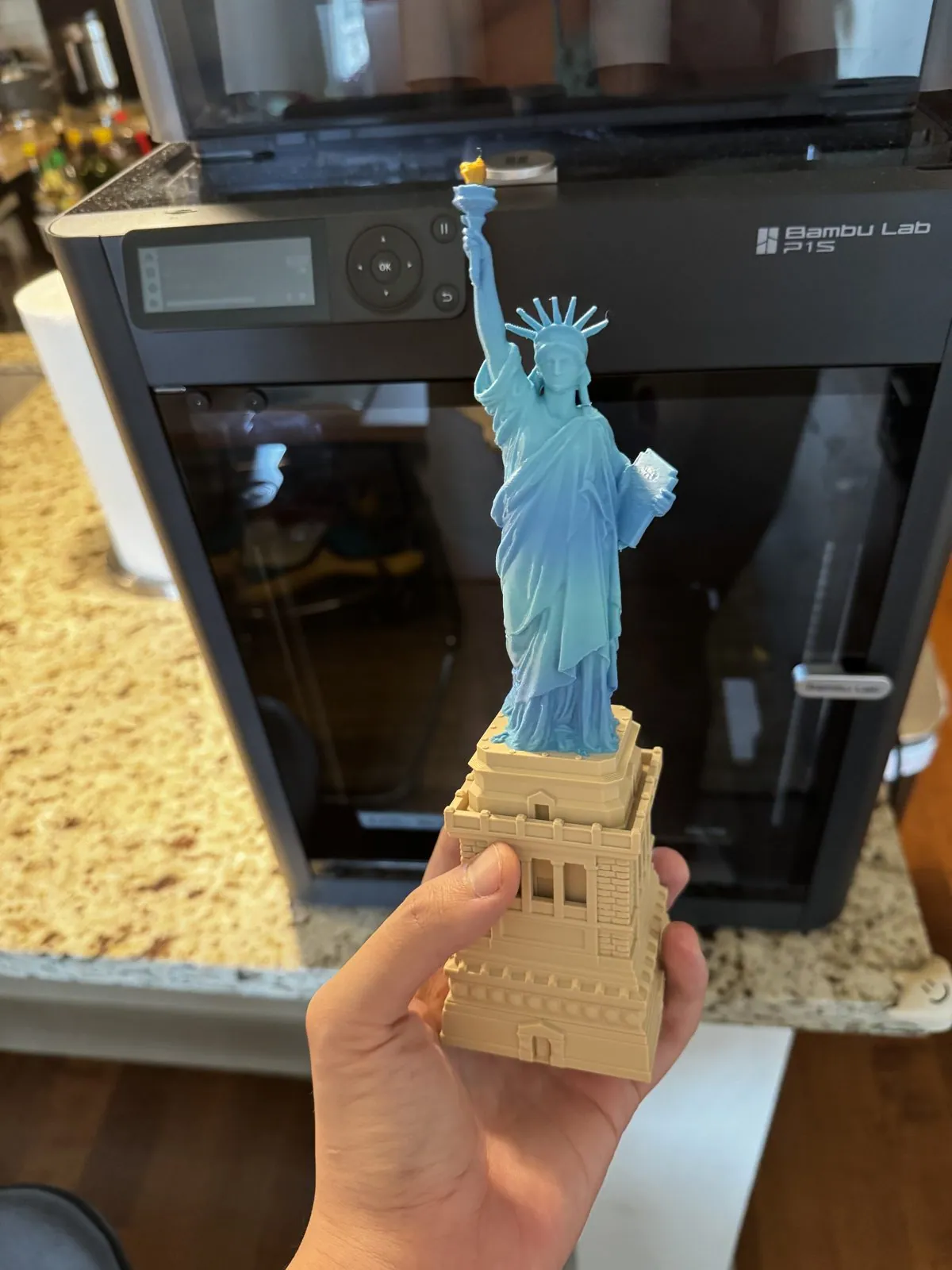
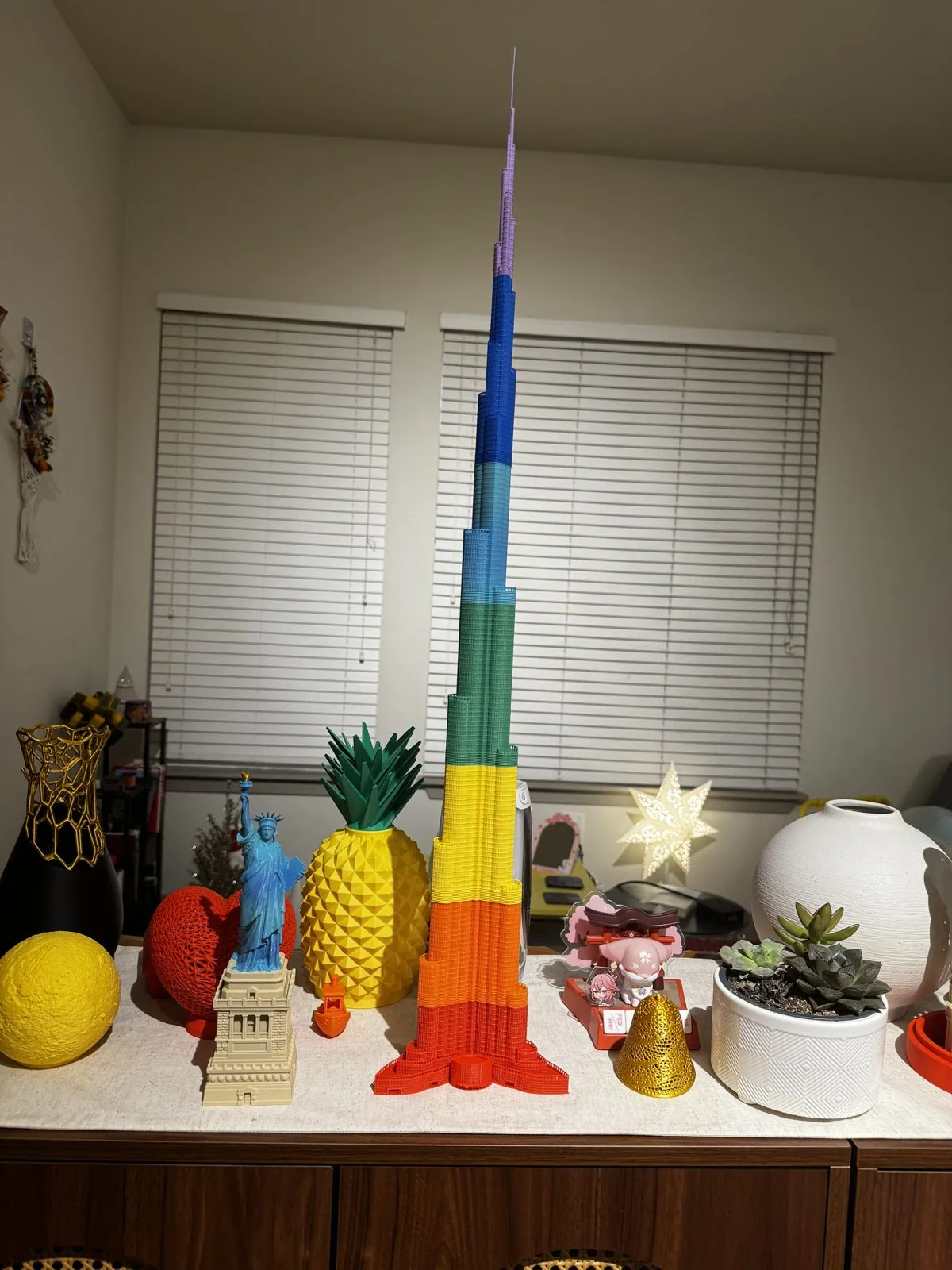
Then came the landmarks. A gold lattice sleeve over a black vase on November 24. A blue Statue of Liberty on a sand-colored pedestal on the 25th.
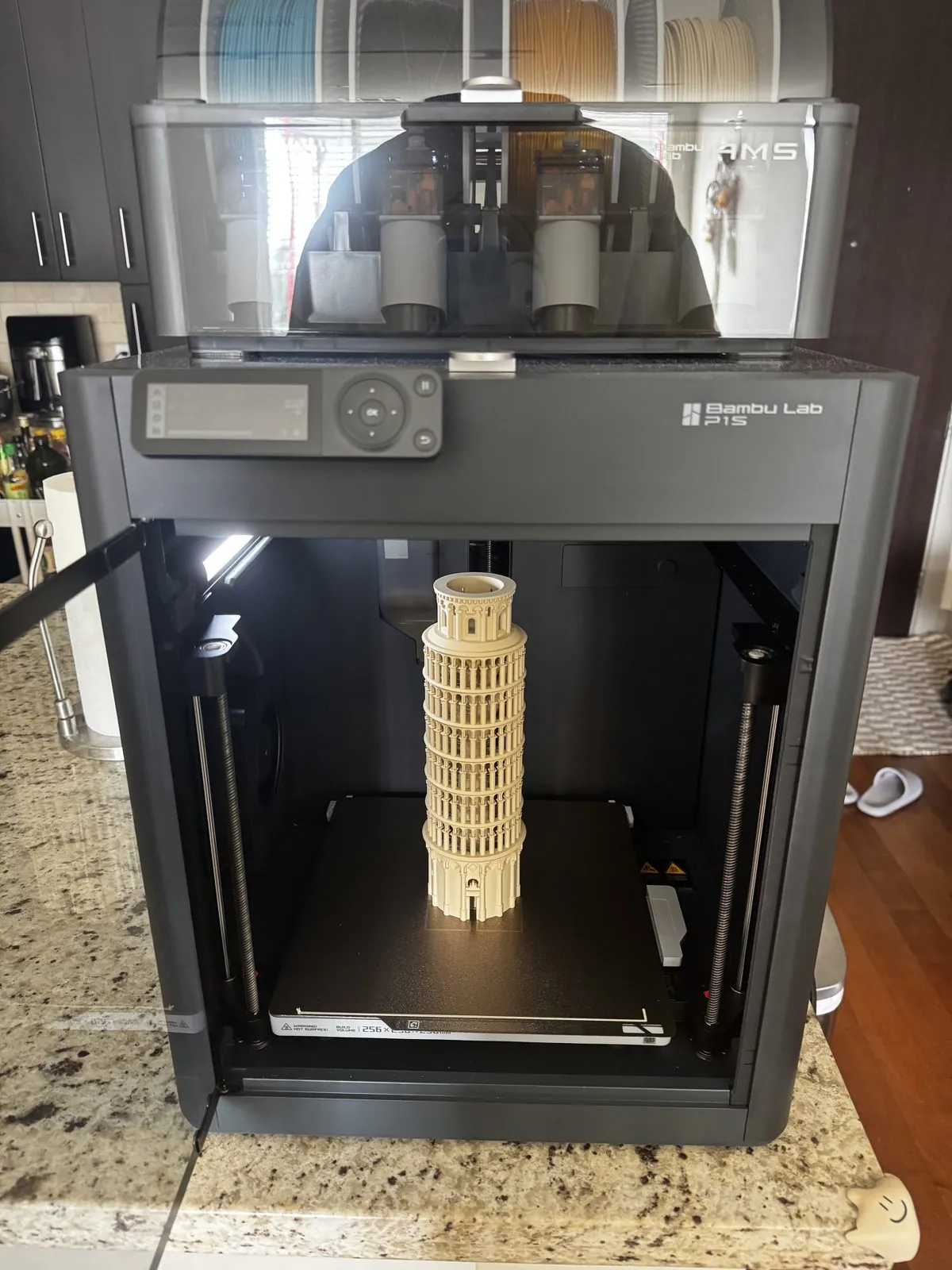
The Leaning Tower of Pisa came on the 26th, leaning properly.
The tallest of them all had actually come first: a Burj Khalifa in bands of red, orange, yellow, green, blue and purple, already standing next to the pineapple and the Benchy by November 22.
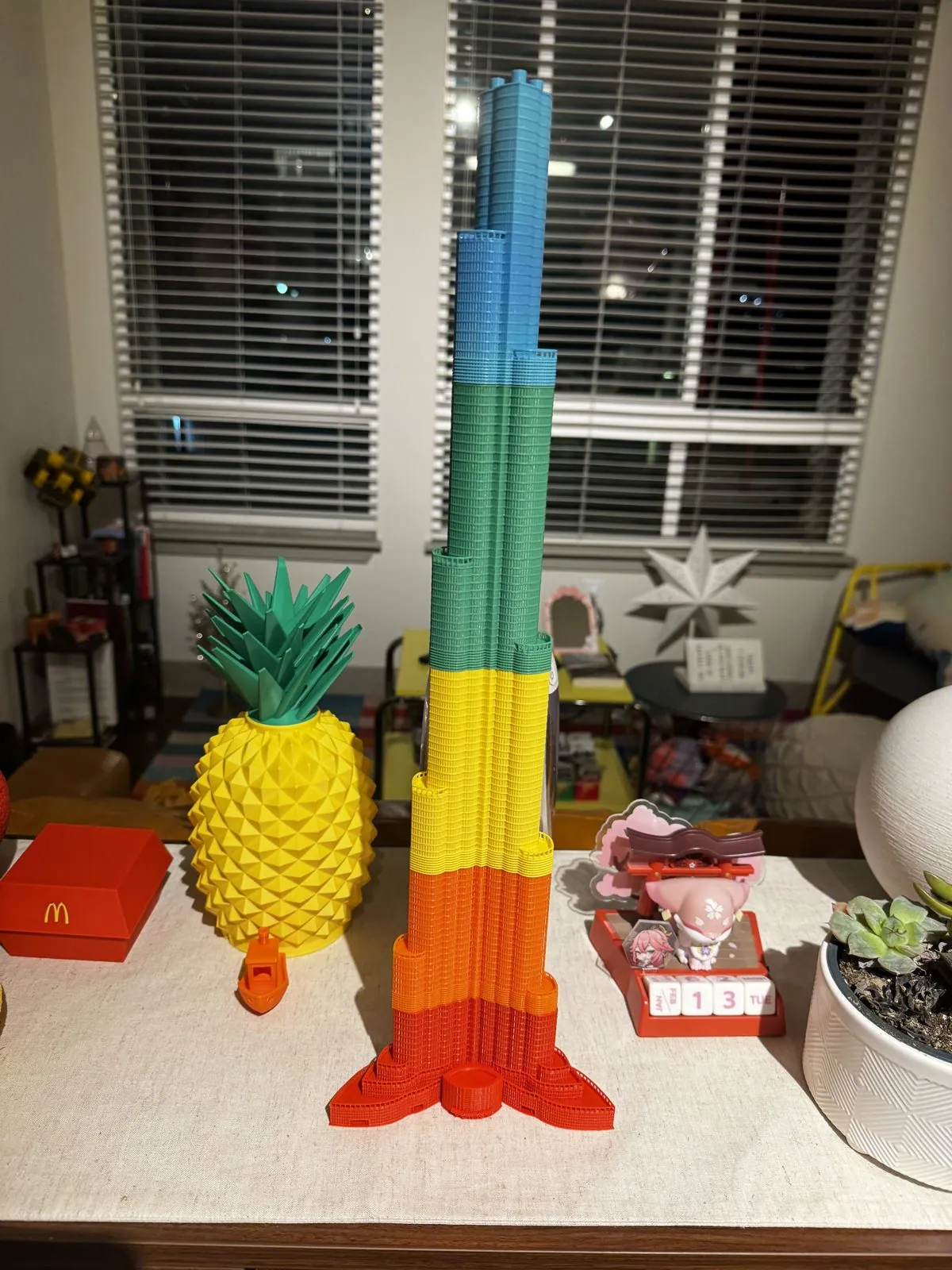
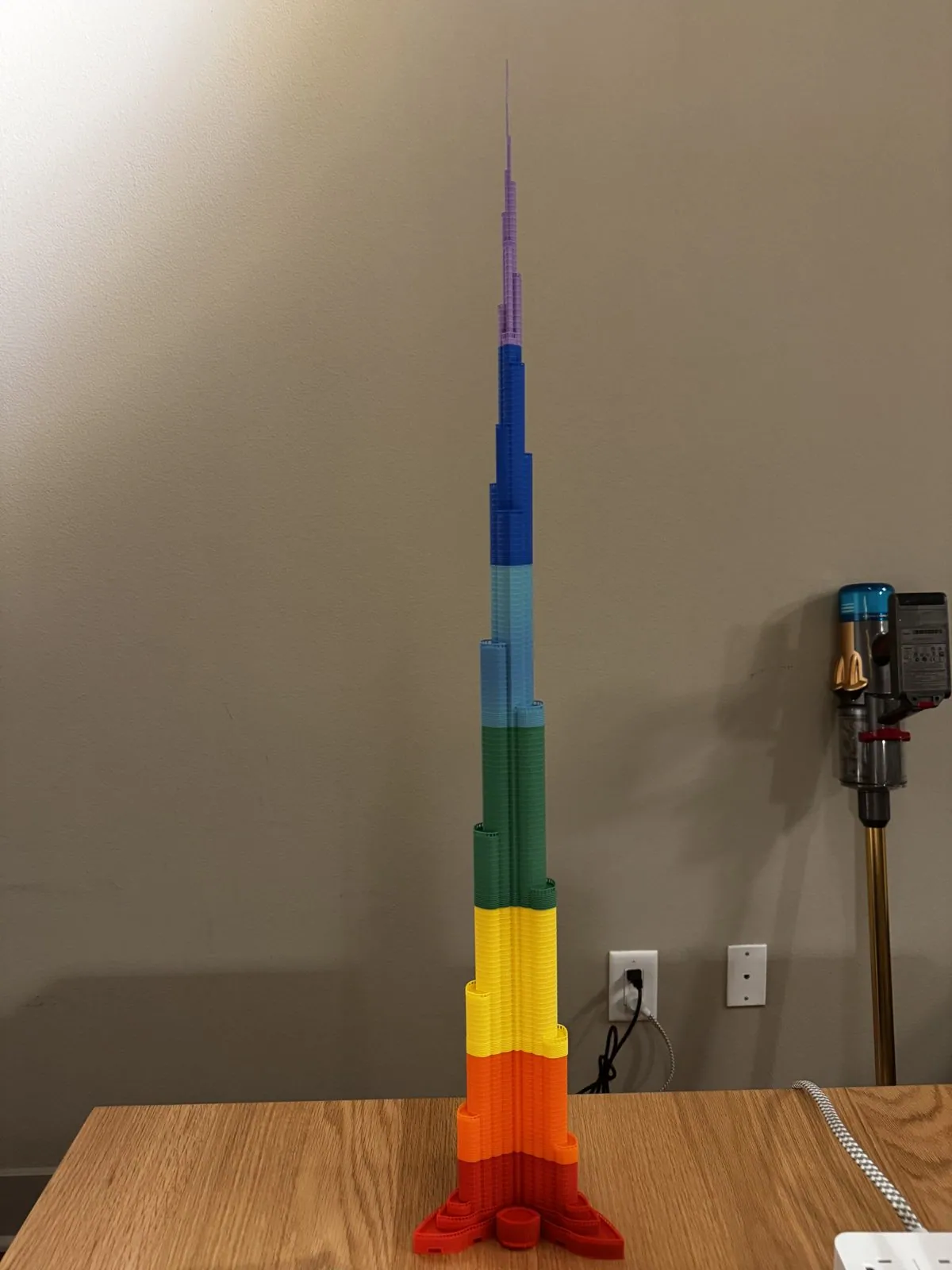
By that night they were all lined up on the sideboard, with the pineapple lamp and the star in between.
Spools, and a bin · December 2024
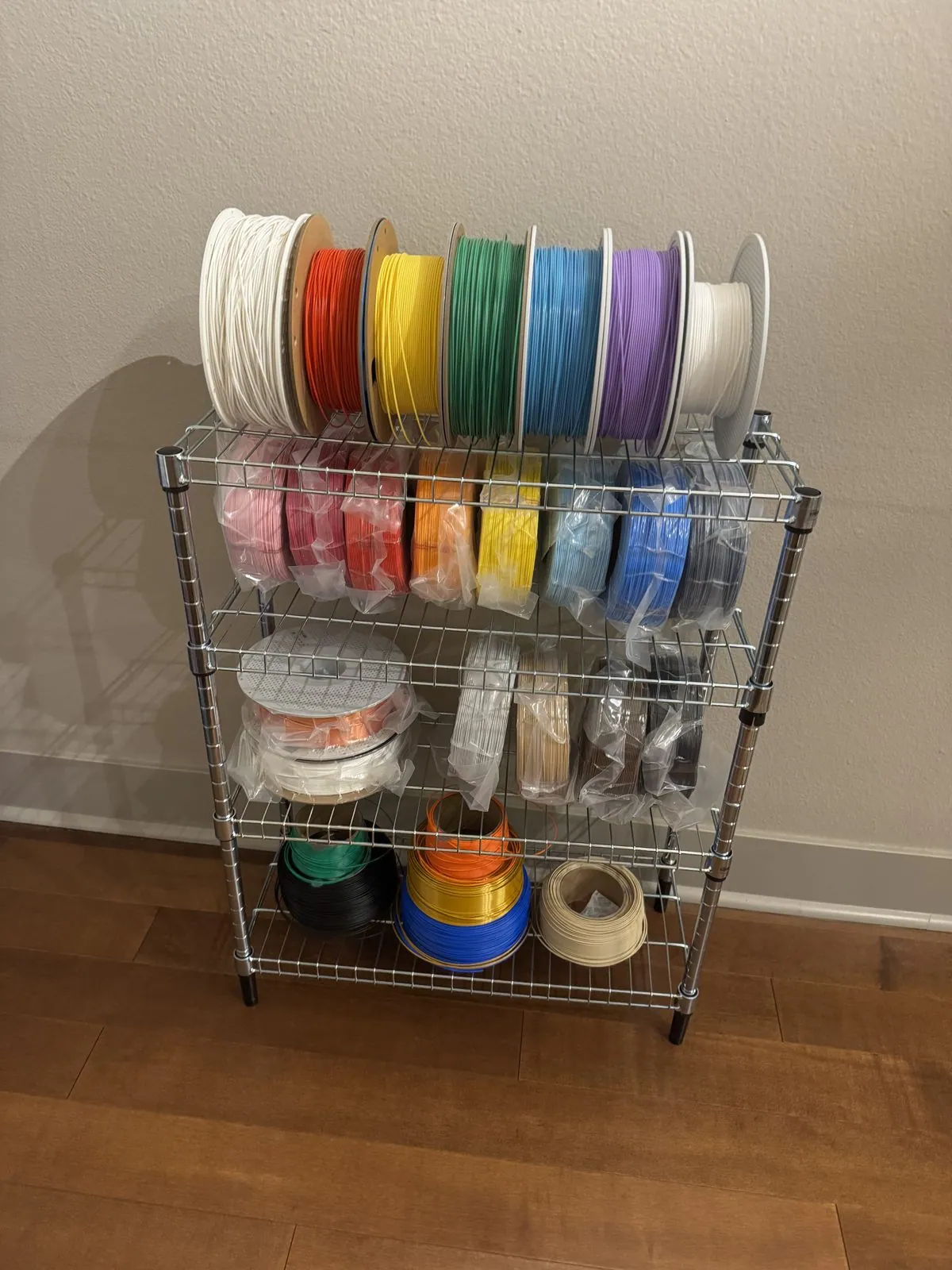
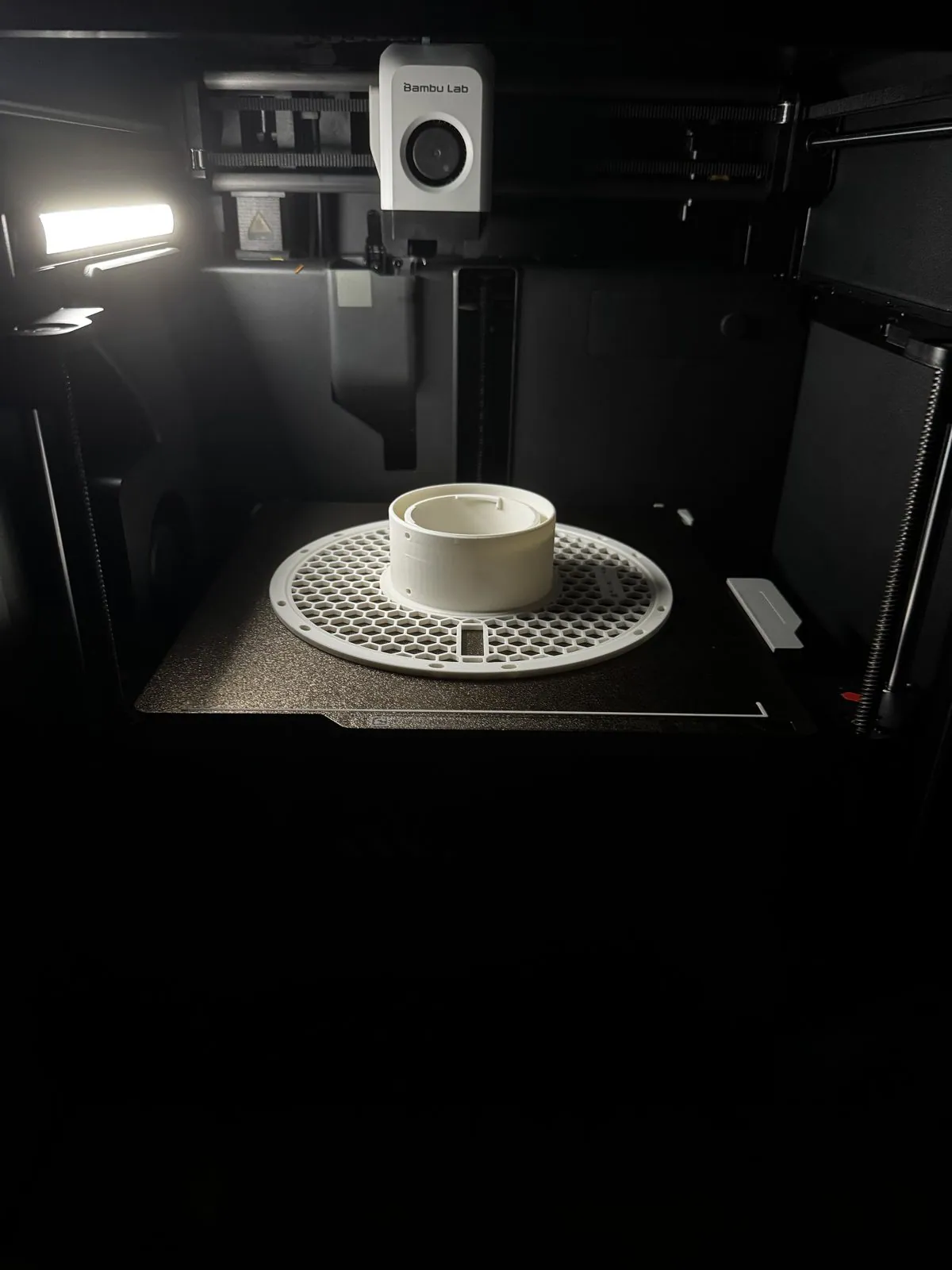
By December the spools needed their own furniture, a wire rack with a rainbow row on top and the refills in vacuum bags below. Some of the spools were printed too: at 6:37 that morning the printer had just finished a white filament spool of its own, with a perforated side.
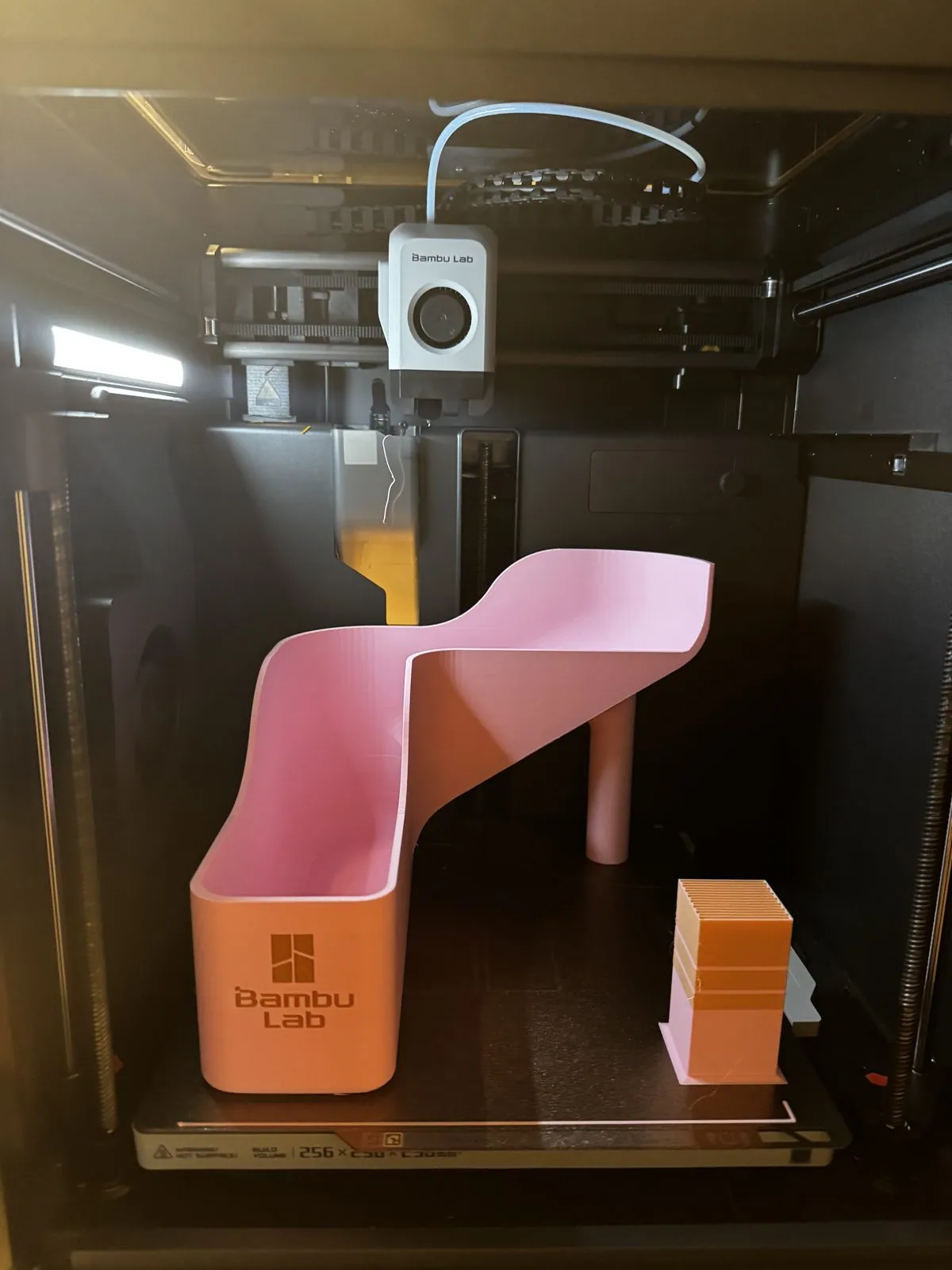
The printer also made things for itself. On December 15 it finished a pink container with the Bambu Lab logo on its side, which collects the waste plastic the printer pushes out each time it changes color. It is standing in the printer at 7:13 that morning, next to a little striped tower.
Still printing · 2026
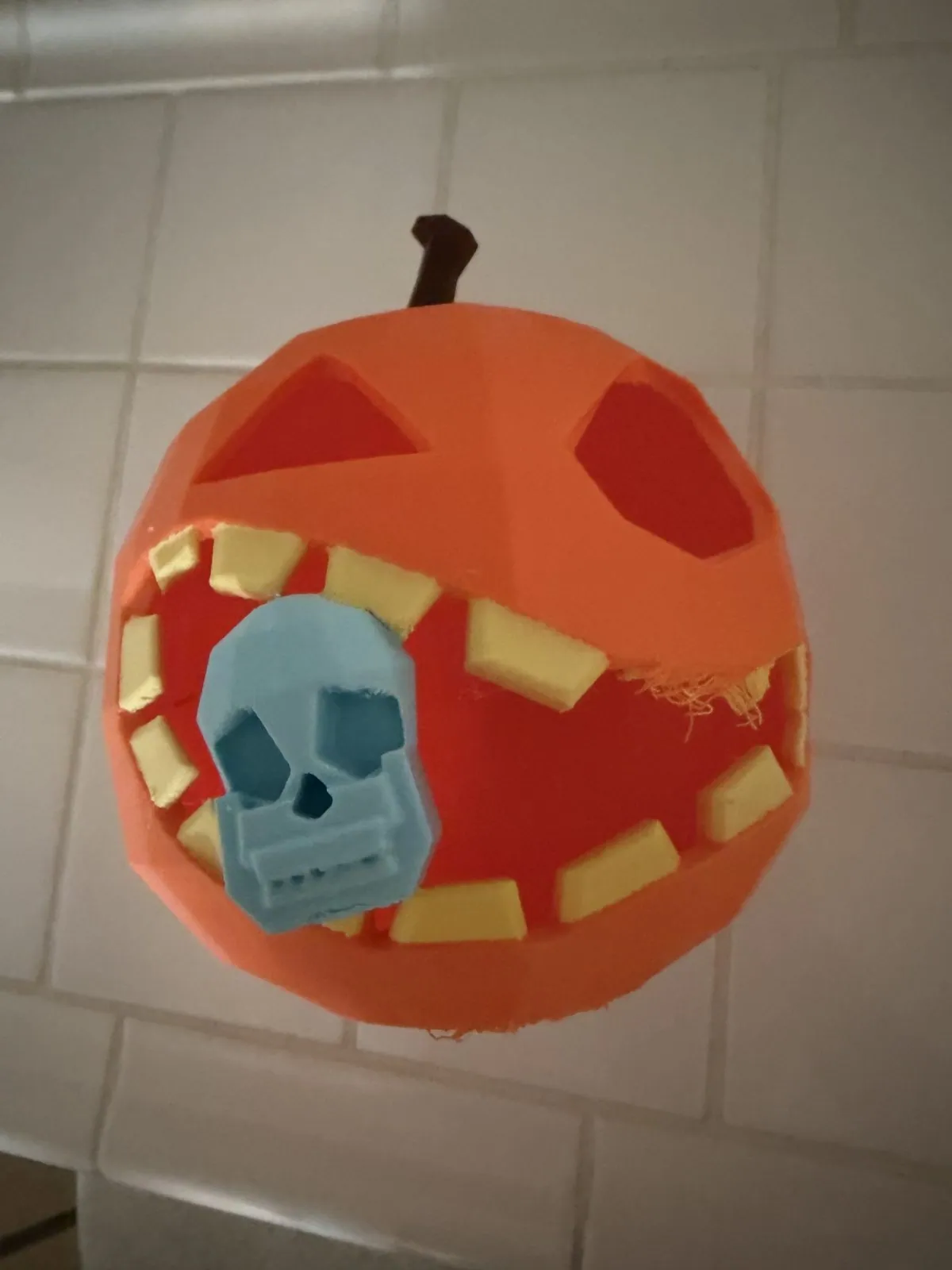
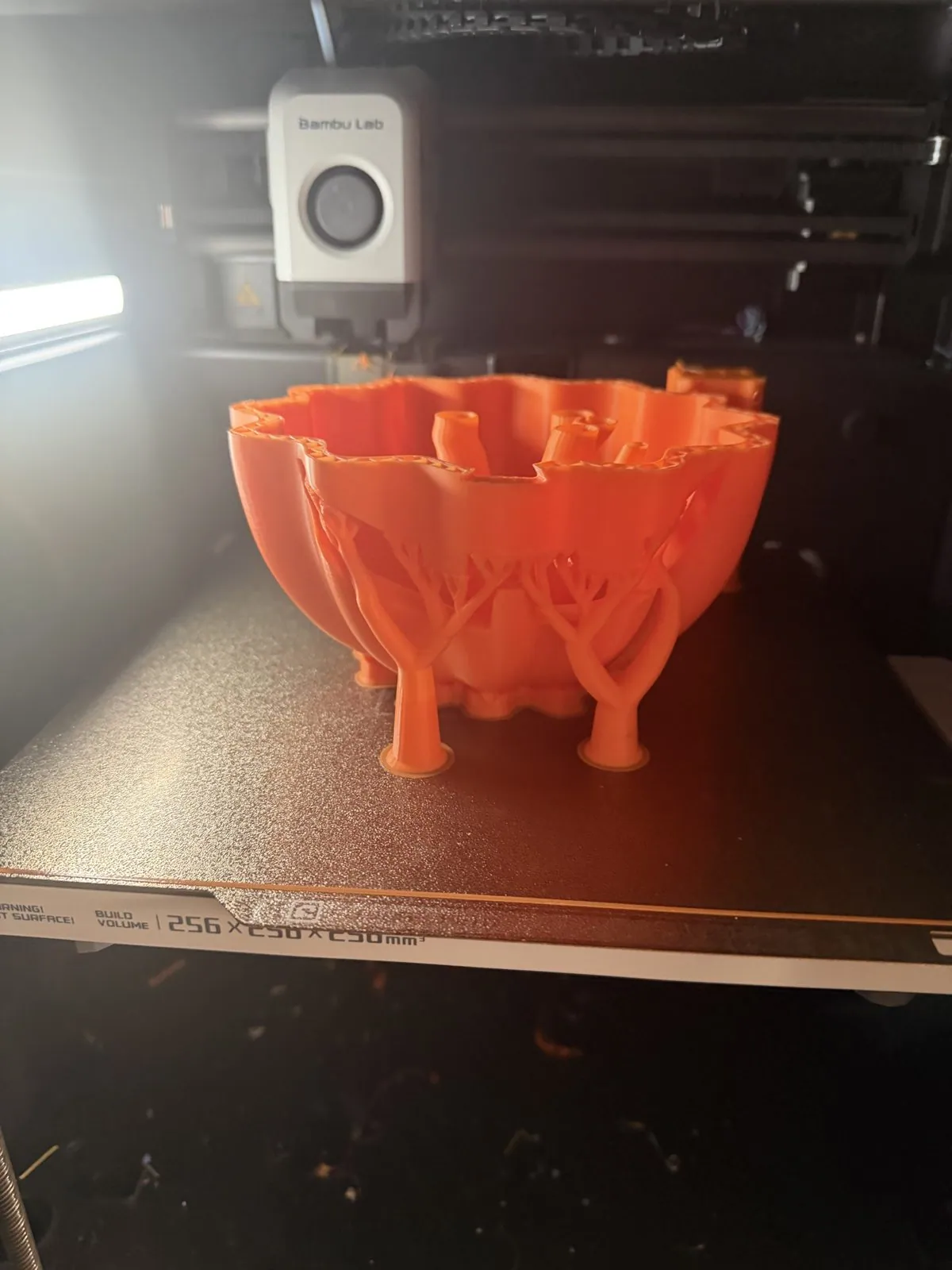
The printer never really stopped, it just stopped being news. In January 2026 the rainbow Burj Khalifa was still standing on top of the filament rack. And in October 2026, for Halloween, it made two pumpkins. One is a low-poly jack-o'-lantern in four colors, with yellow teeth and a blue skull in its mouth. The other is an orange bowl, photographed still on the plate, standing on a forest of tree-shaped supports.
What the photos keep
Looking at all of this together, what I notice is how few of the photos show a finished object in its place. Most of them are taken through the printer's door, with the print still stuck to the plate: the moment of finding out whether it worked. The sideboard on November 27 is the exception, the one night everything was lined up and looked at.
The other thing is how the two halves differ. On the lab printer a fun print had to wait for a free printer, so there are only a few, and each one got a whole series of photos. The printer at home made a skyline in two weeks. Maybe that is just what happens when the printer is ten steps away instead of across campus. Either way, the Burj Khalifa is still on top of the rack.
Built from the photos' timestamps; times are local. Photo locations have been removed from the published images. The models are other people's designs, shared online.
Some photos in this post are my wife's.
Likes and comments
React with an emoji or leave a comment. Signing in with GitHub is required.