← Misc · January–February 2023
The Doors Had Just Opened
After the SIGGRAPH deadline: Shanghai in winter, Sanya in the tropics, Shenzhen straight up.
Los Angeles ✈ Hong Kong airport ✈ Shanghai ✈ Sanya, Hainan ✈ Shenzhen → (metro and taxi) Hong Kong airport ✈ Taipei ✈ Los Angeles
six flights · three weeks after China dropped arrival quarantine · the tail of Chinese New Year, Year of the Rabbit · one night in an airport · two sunsets over the sea · one restaurant on the 118th floor
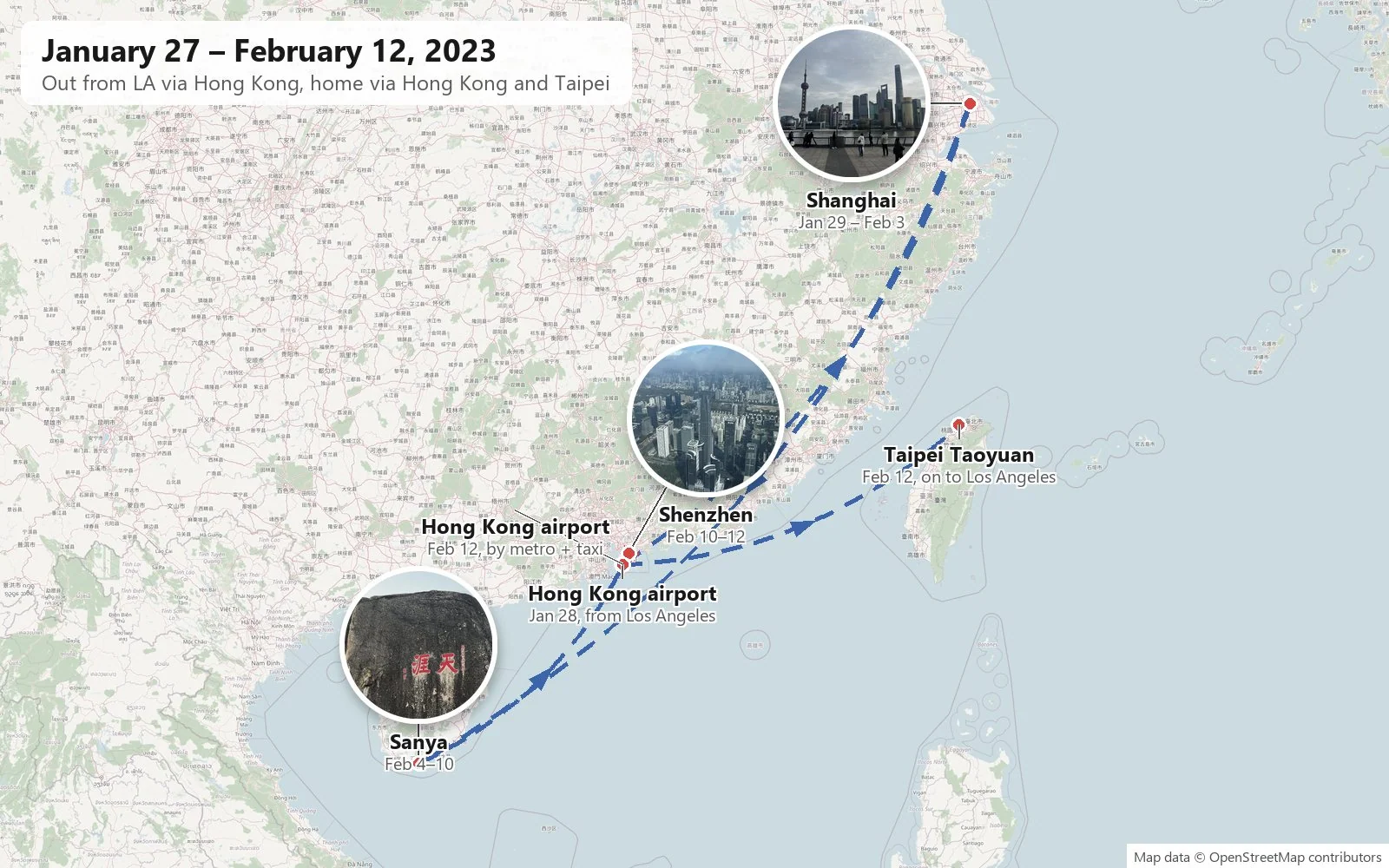
Every January, a good part of the computer graphics world spends the same week not sleeping. The SIGGRAPH paper deadline falls in late January, and for the people who submit to it, the weeks before are a blur of experiments, figures and rewritten paragraphs. Then the deadline passes, the upload page closes, and there is a strange, weightless feeling: nothing is due tomorrow. In 2023 that feeling arrived at a very particular moment. On January 8th, China had dropped the quarantine it had required of arriving travellers for almost three years. For the first time since 2020, you could get on a plane and go, with an online health declaration at the border.
So we did. On the morning of January 27th a silver suitcase stood packed by the door in Los Angeles, and seventeen days later we were home again. It was a trip that was mostly about family: hers in Shanghai, mine wintering in Sanya, and friends in Shenzhen. Most of those days belong to them and stay off this page. What is here is the in-between: the mornings out, and three very different Chinas. Shanghai in late winter was grey and chilly and still full of New Year decorations. Sanya, on the tropical island of Hainan, had palm trees, warm sea and a sunset shared with what looked like half the island. Shenzhen, the city that did not exist forty-five years ago, we mostly saw from above. It was the tail end of Chinese New Year, which in 2023 fell on January 22nd and opened the Year of the Rabbit, so there were rabbits everywhere: lanterns, statues, inflatables, even a cartoon rabbit on a popsicle.
As with the other trips on this page, everything here is reconstructed from the camera roll: when and where each photo was taken, lined up in order. Some days have dozens of pictures and some have none, and a day with no photos is not a day when nothing happened. Where the record is thin, I've kept the story short rather than invent the parts I don't have.
Getting there: a night in Hong Kong's airport
The route from Los Angeles to mainland China ran, as it often did in those months, through Hong Kong. Getting there took a long day in the air and a night that never quite became a night. By the evening of January 28th we were at Hong Kong International Airport, with an early-morning connection to Shanghai and nowhere in particular to be in between. If you have done an overnight in a big airport you know the shape of it. The shops pull down their shutters one by one, the announcements get rarer, the cleaning machines come out and hum up and down the empty concourses, and travellers stake out rows of seats and try every possible angle for sleep. None of them work. The airport never fully goes dark; it just dims, like a city at three in the morning.
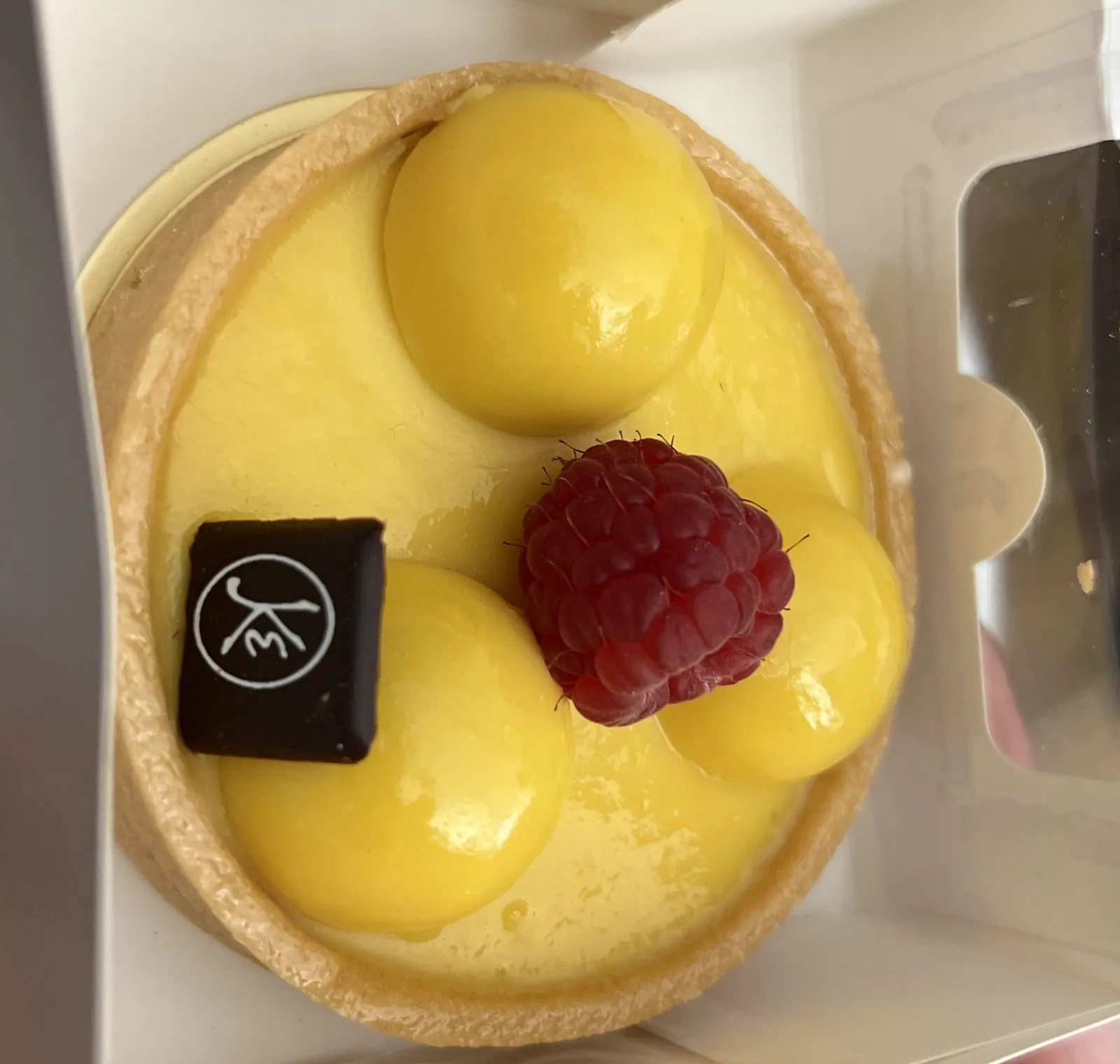
Before the shops closed there was one last bakery counter open, and a lemon tart in a little paper box, topped with a raspberry and a square of dark chocolate, became dinner. Hong Kong has a serious pastry culture, from the egg tarts of its cha chaan teng diners to the French-style patisseries in its malls, and even an airport tart here is better than it needs to be. By breakfast time the Hong Kong-style breakfast counters were open again, and we had breakfast at one of them before an early flight to Shanghai Pudong.
Act I: Shanghai in winter
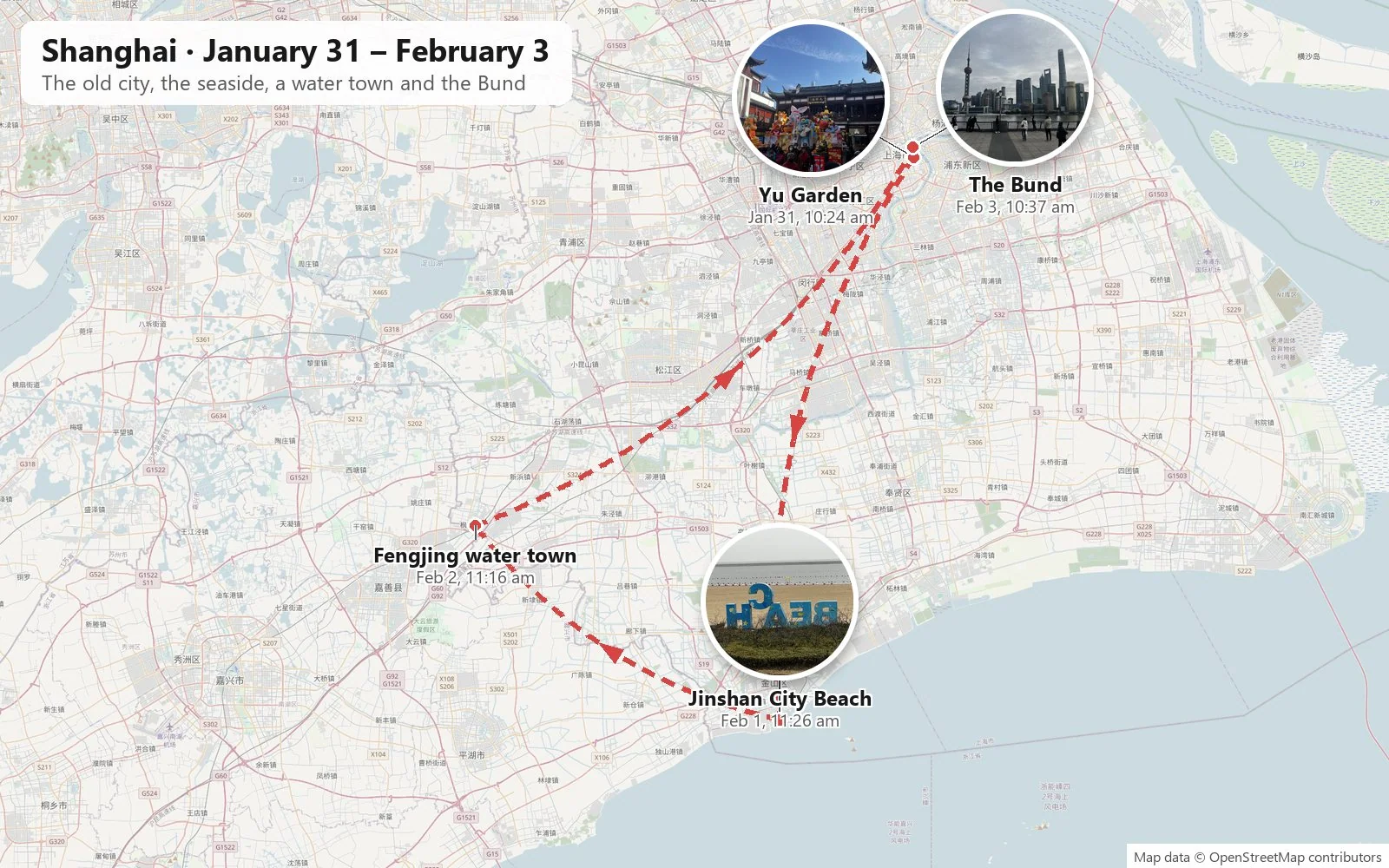
Shanghai in late January is not a postcard city. The sky is a flat, pearly grey most days, the damp cold gets through any coat, and the plane trees along the old French Concession streets are bare. The camera roll from those days is sparse, but it records a few outings: one morning into the old city, one to the seaside, one to an ancient water town, and one to Tian'ai Road and the Bund.
Yu Garden and the Year of the Rabbit
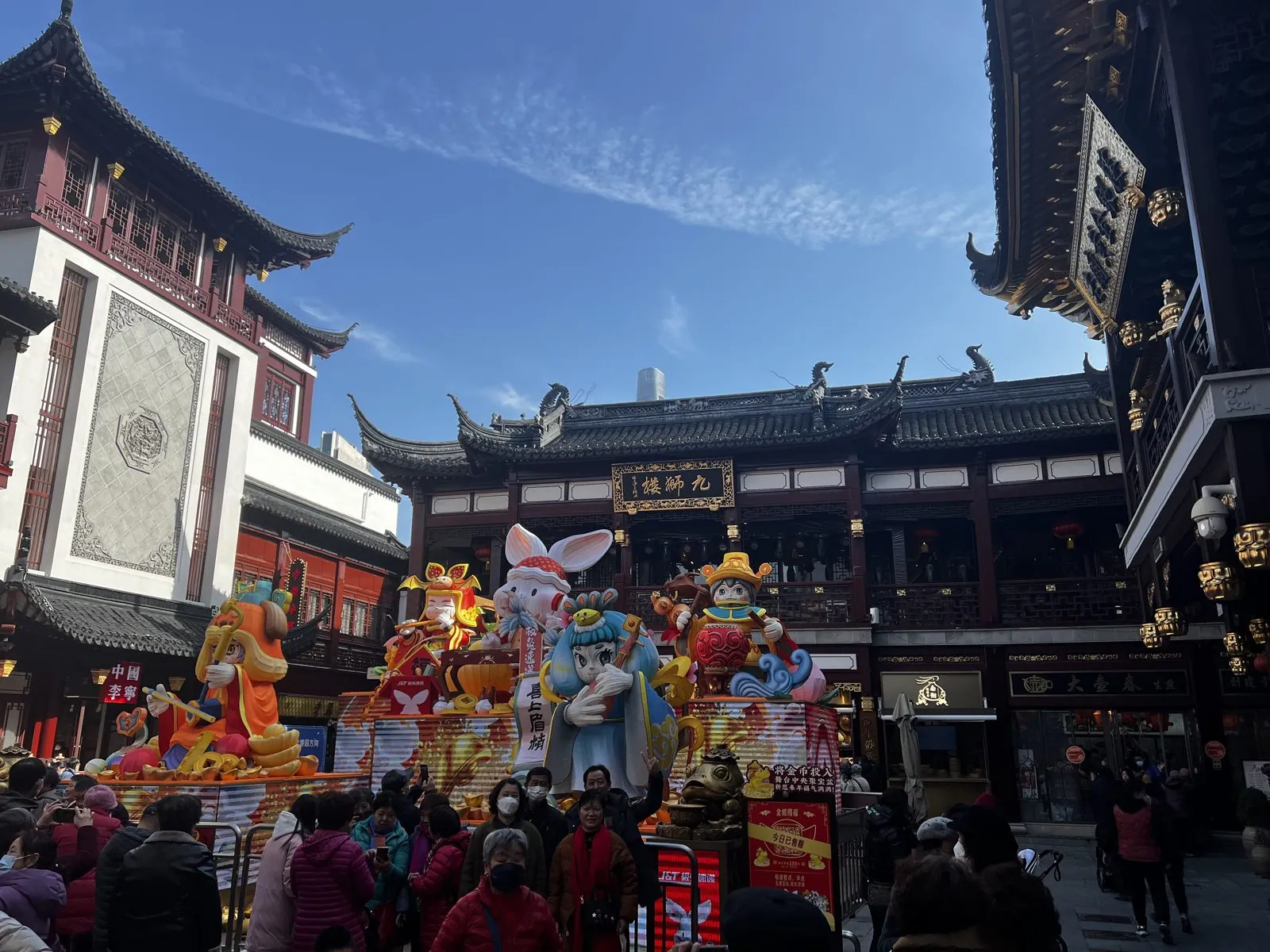
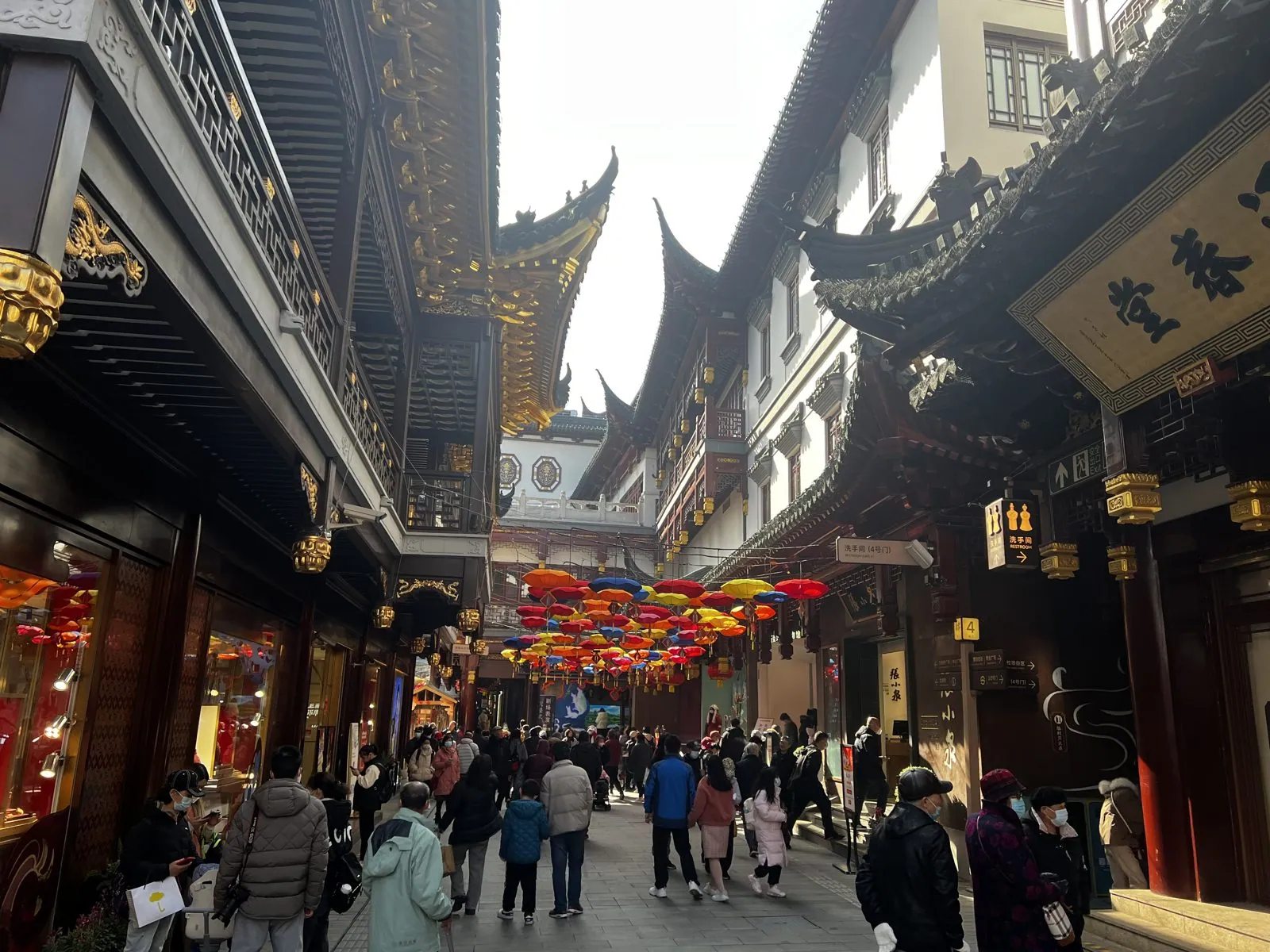
On January 31st we took the metro into the old city, to Yu Garden. The garden itself is a classical Ming-dynasty garden of rockeries, ponds and pavilions, begun in 1559 by an official named Pan Yunduan as a place for his parents to enjoy their old age. Around it has grown a whole district of shops and restaurants built in the same style: dark timber, white walls, and roofs whose eaves curl up at the corners like the toes of a slipper. It is touristy, and it knows it, and at New Year it does not care. Every year the bazaar hosts a lantern show for the Spring Festival, and every year it is mobbed.
That morning, nine days into the Year of the Rabbit, the main square was dominated by a tableau of giant rabbits in silk robes and golden crowns, flanked by figures from Chinese folklore, all of it lit up and glittering even in daylight. The sky, for once, was a clean winter blue. The crowd in front was enormous and mostly masked. A month earlier China had been in the middle of its first great COVID wave after dropping its restrictions, and the habit of wearing a mask in a crowd had not gone anywhere.
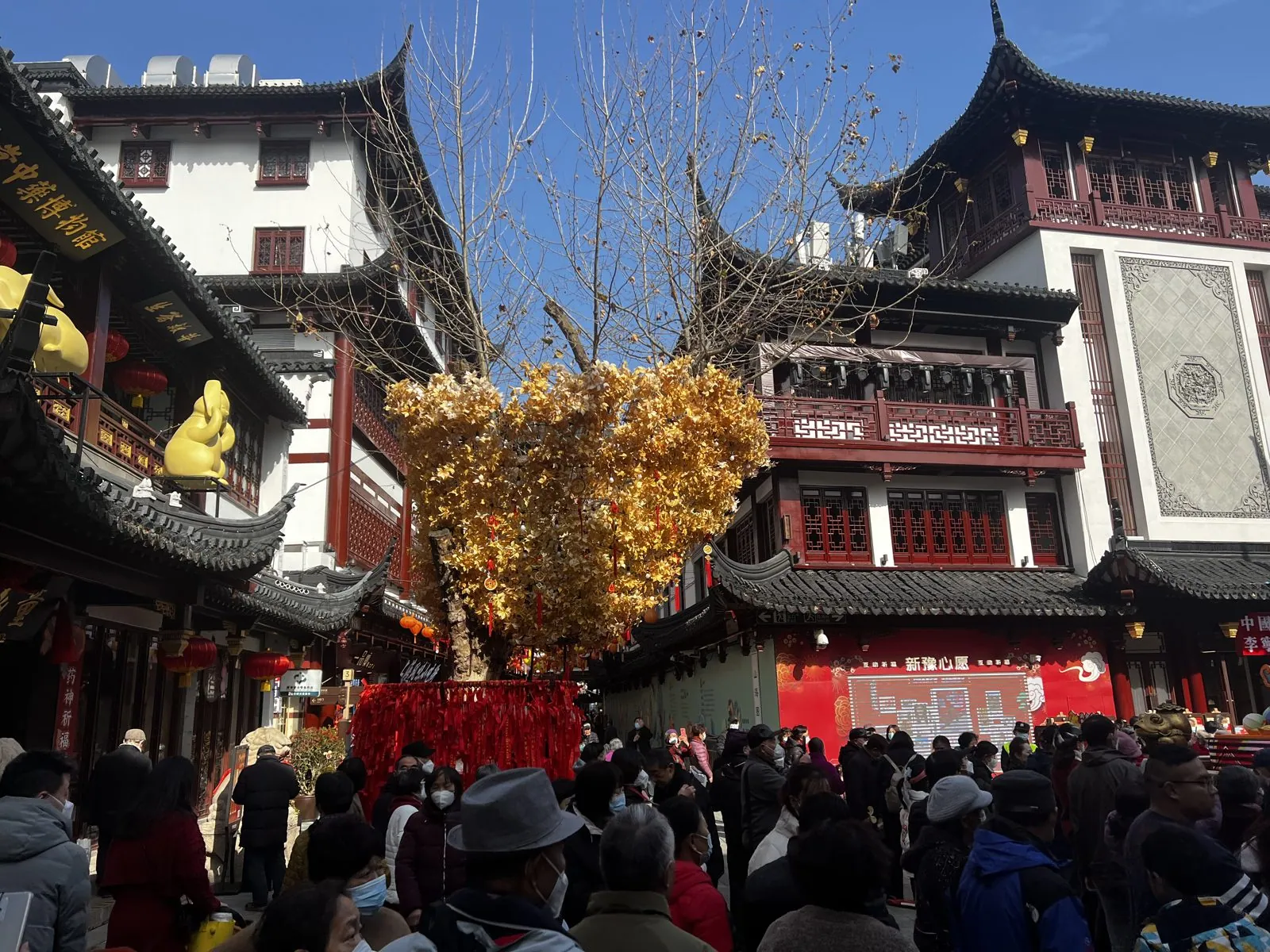
Away from the main square, the lanes of the bazaar were a canyon of carved wooden balconies, gilded signboards and red lanterns, with a canopy of colored paper umbrellas strung overhead. In one courtyard stood a tree with golden leaves, an artificial one, its branches hung with red tags, the kind on which people write a wish for the new year. A golden rabbit perched on a roof edge beside it. The sound of the place is the sound of any Chinese holiday crowd: hawkers, a loudspeaker somewhere, parents calling children, and under it all the shuffle of thousands of feet on stone.
A beach in winter
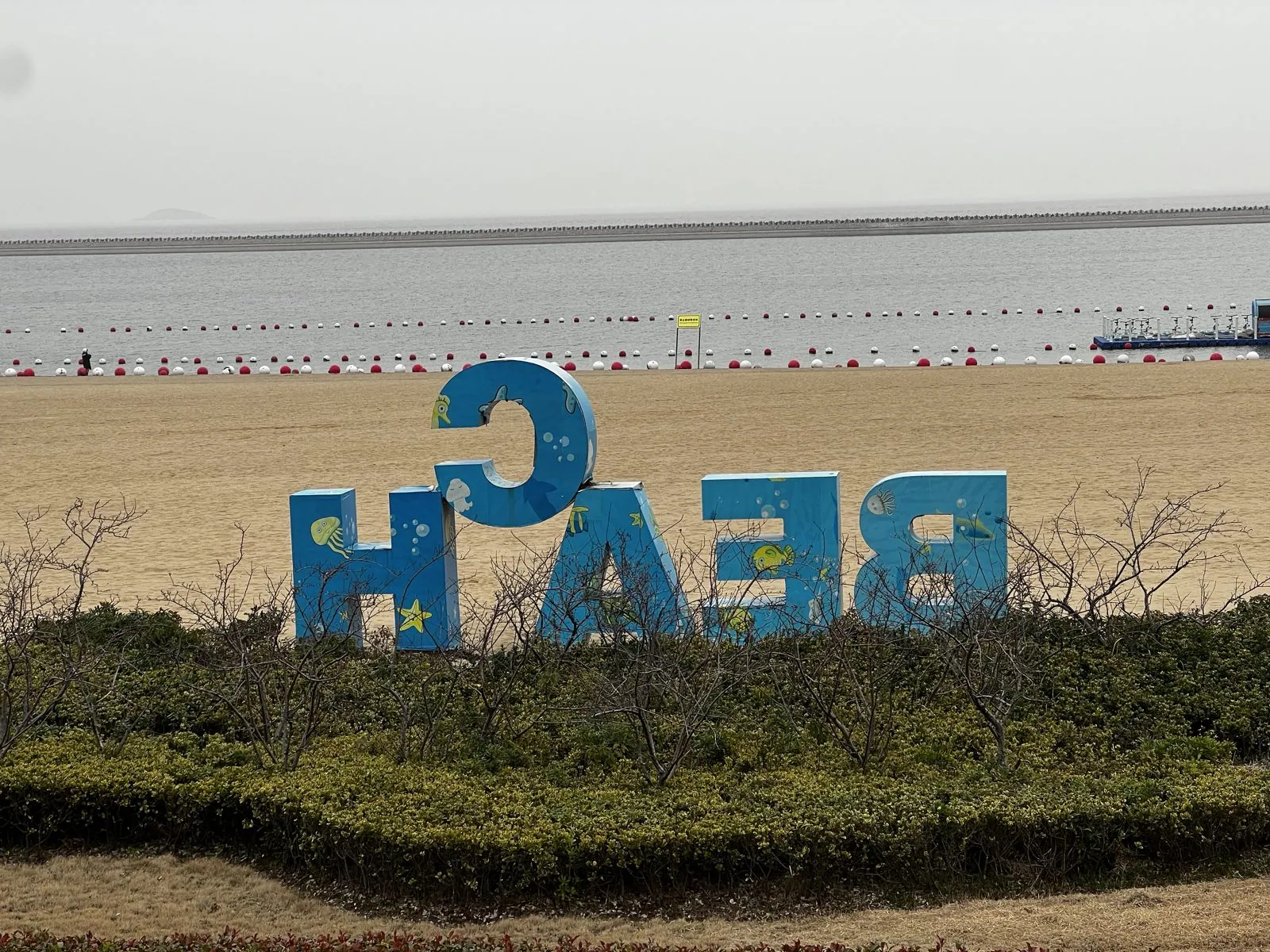
The next day we went to the seaside, which in Shanghai means Jinshan City Beach on Hangzhou Bay. The water off Shanghai's coast is famously brown, thick with silt carried down by the Yangtze, and Shanghai has no natural sandy beach to speak of. Jinshan's is man-made: imported sand, a promenade, palm trees, and a long breakwater that encloses a calmer swimming area. In summer it fills with families. On the first morning of February it was close to empty. The sea was the color of pewter, the sky a pale lid of cloud, and the giant blue letters of the "BEACH" sign stood on the dune with nobody to photograph them but us.
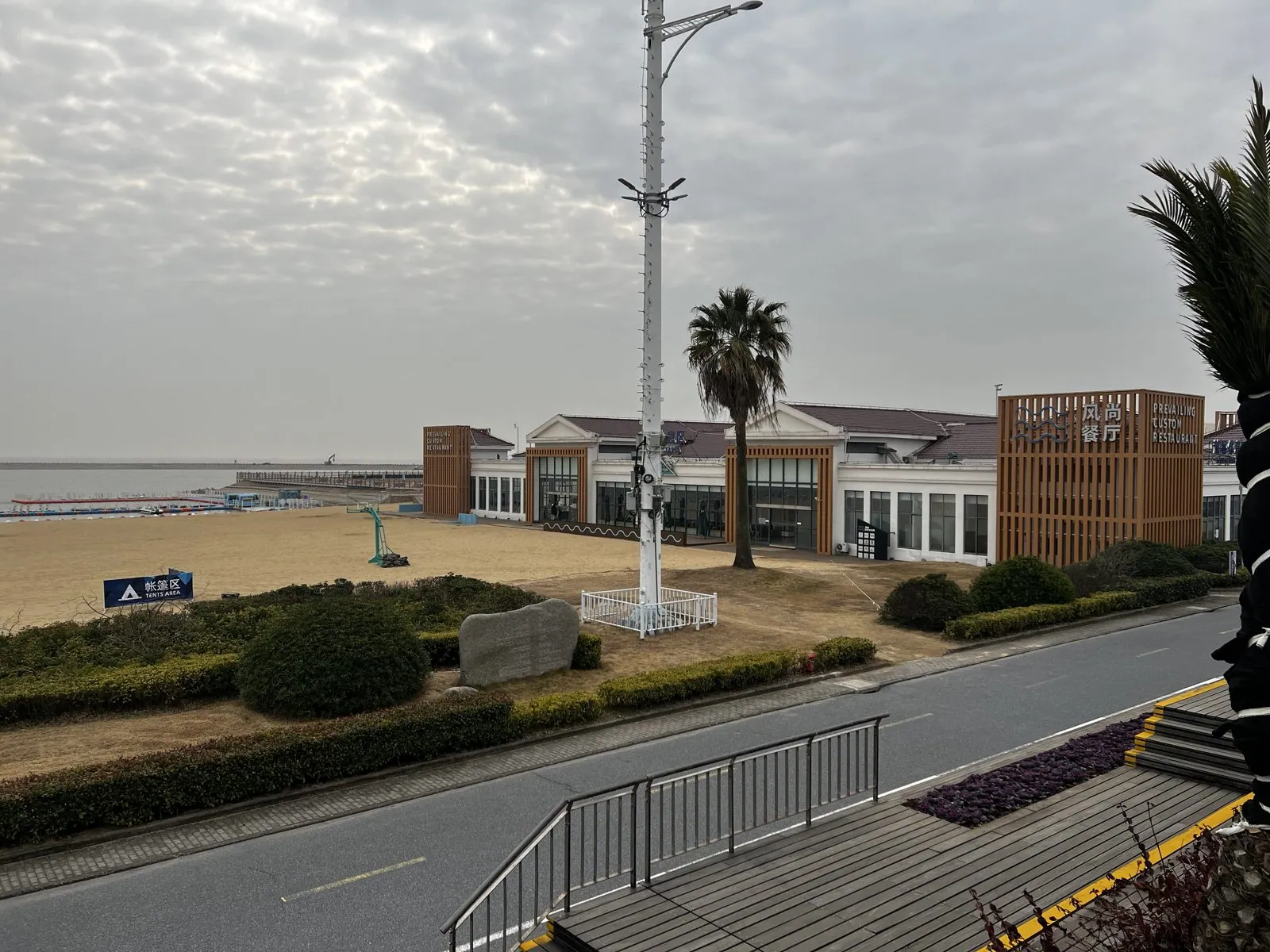
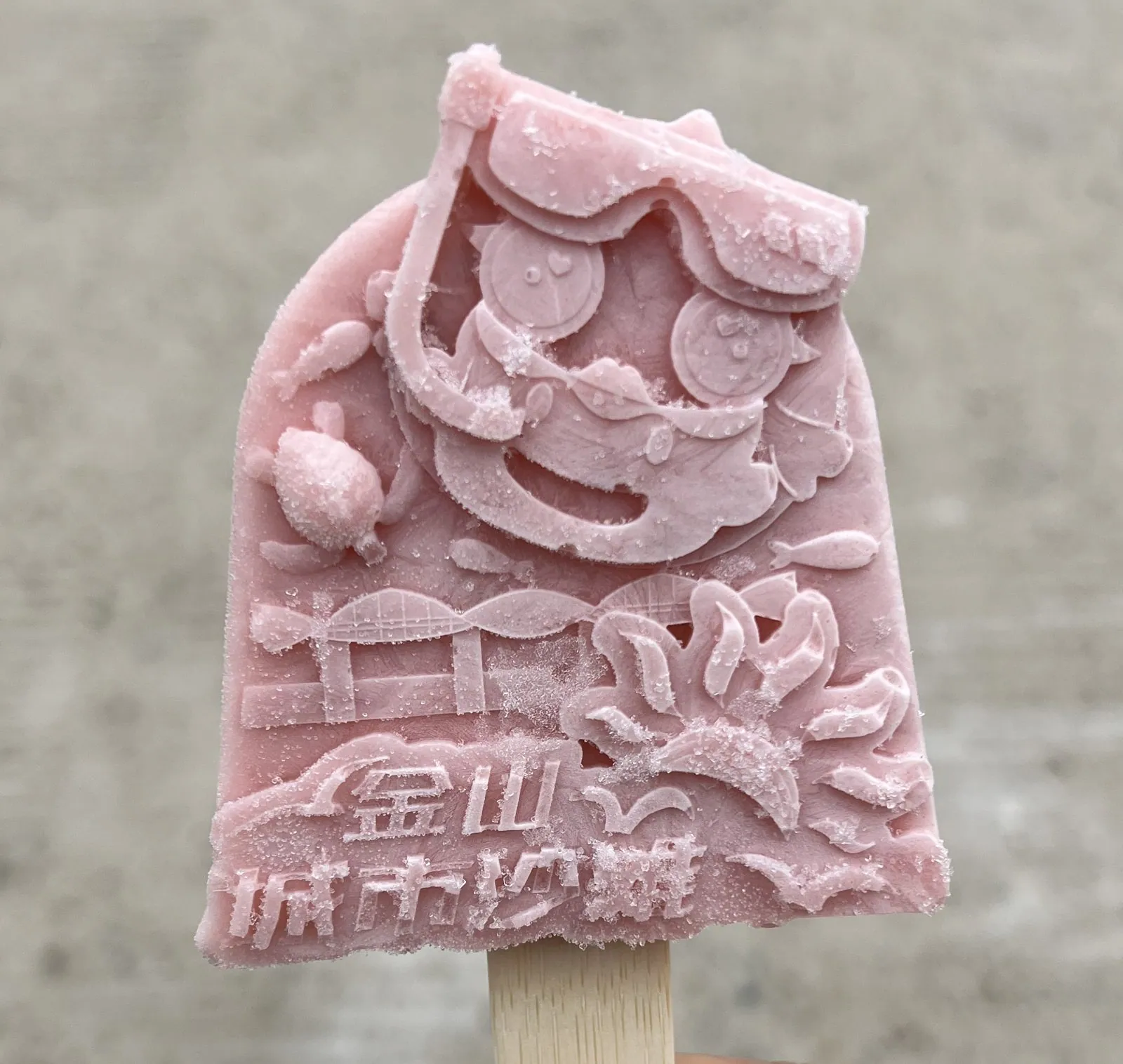
There is something likeable about a summer place in winter. The palm trees look slightly embarrassed, the promenade is swept and silent, and the only sounds are the wind and the flat slap of small waves. We did the obvious thing and bought an ice cream. It was a pink popsicle molded into a little picture of the beach itself, with the sun, a sailboat and the characters for "Jinshan City Beach" pressed into it, and it was eaten very quickly, which in that weather says something about how good it was.
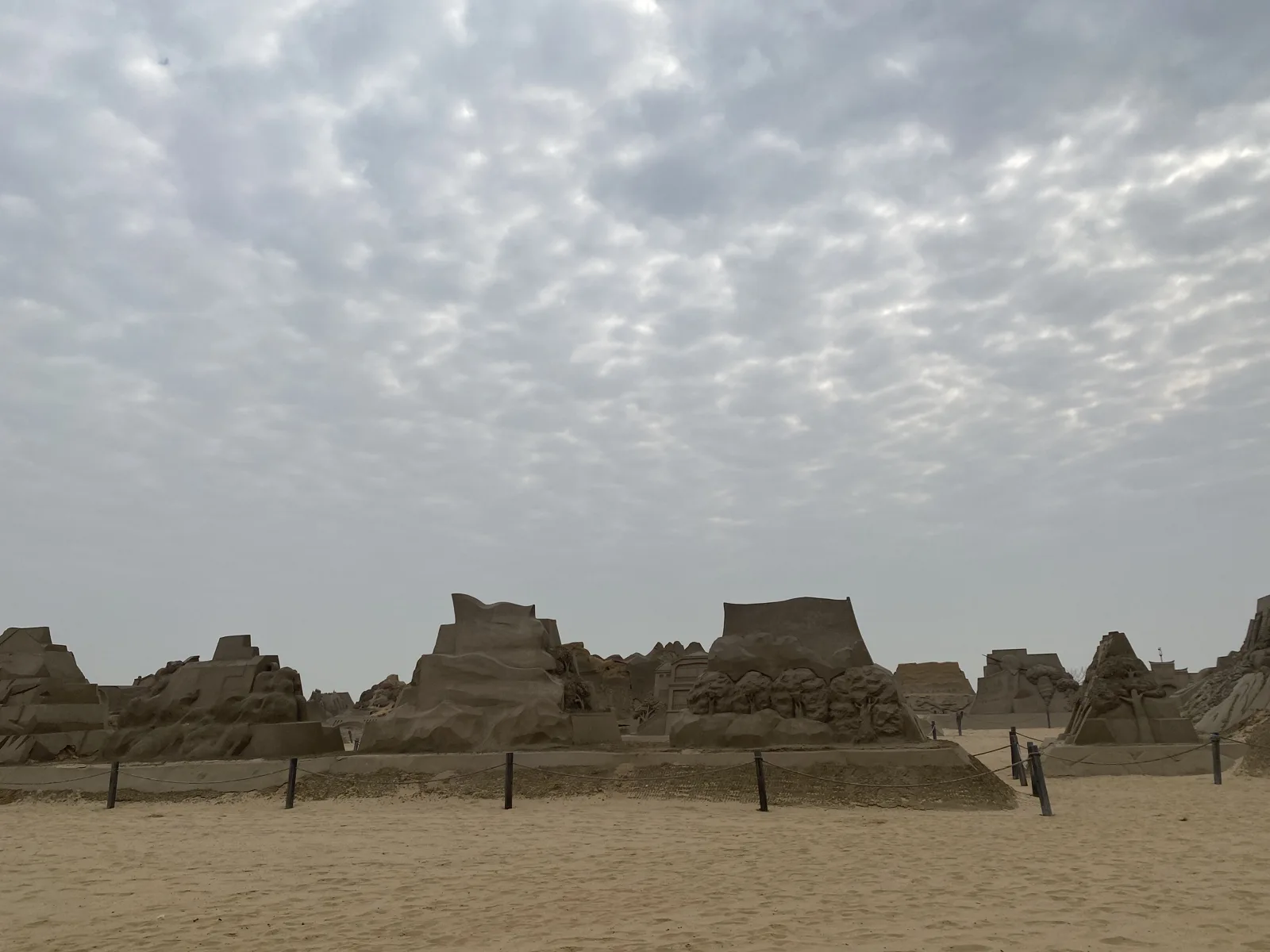
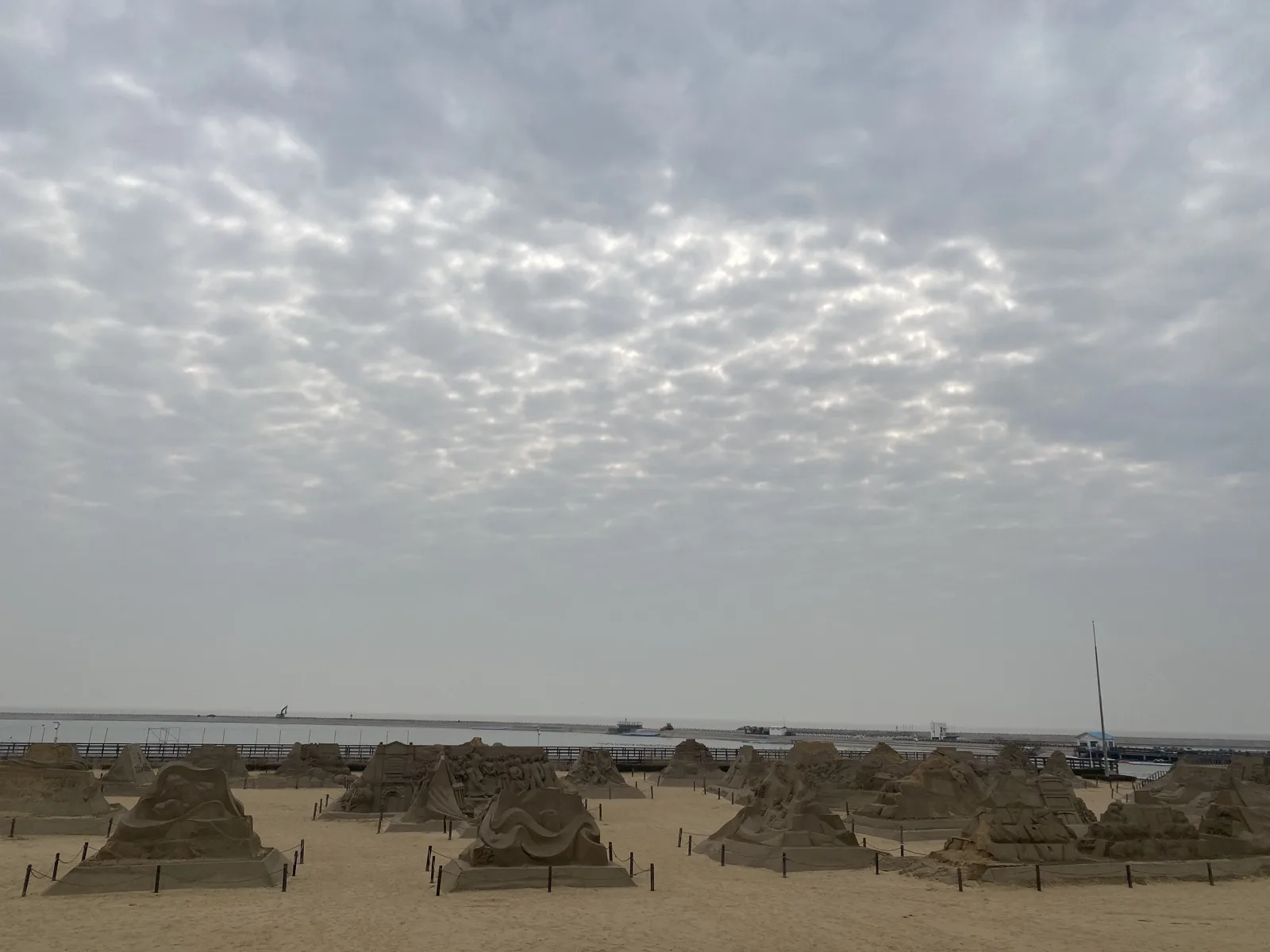
Further along, the sand had been turned into a field of weathered sculptures, with the flat grey bay behind them.
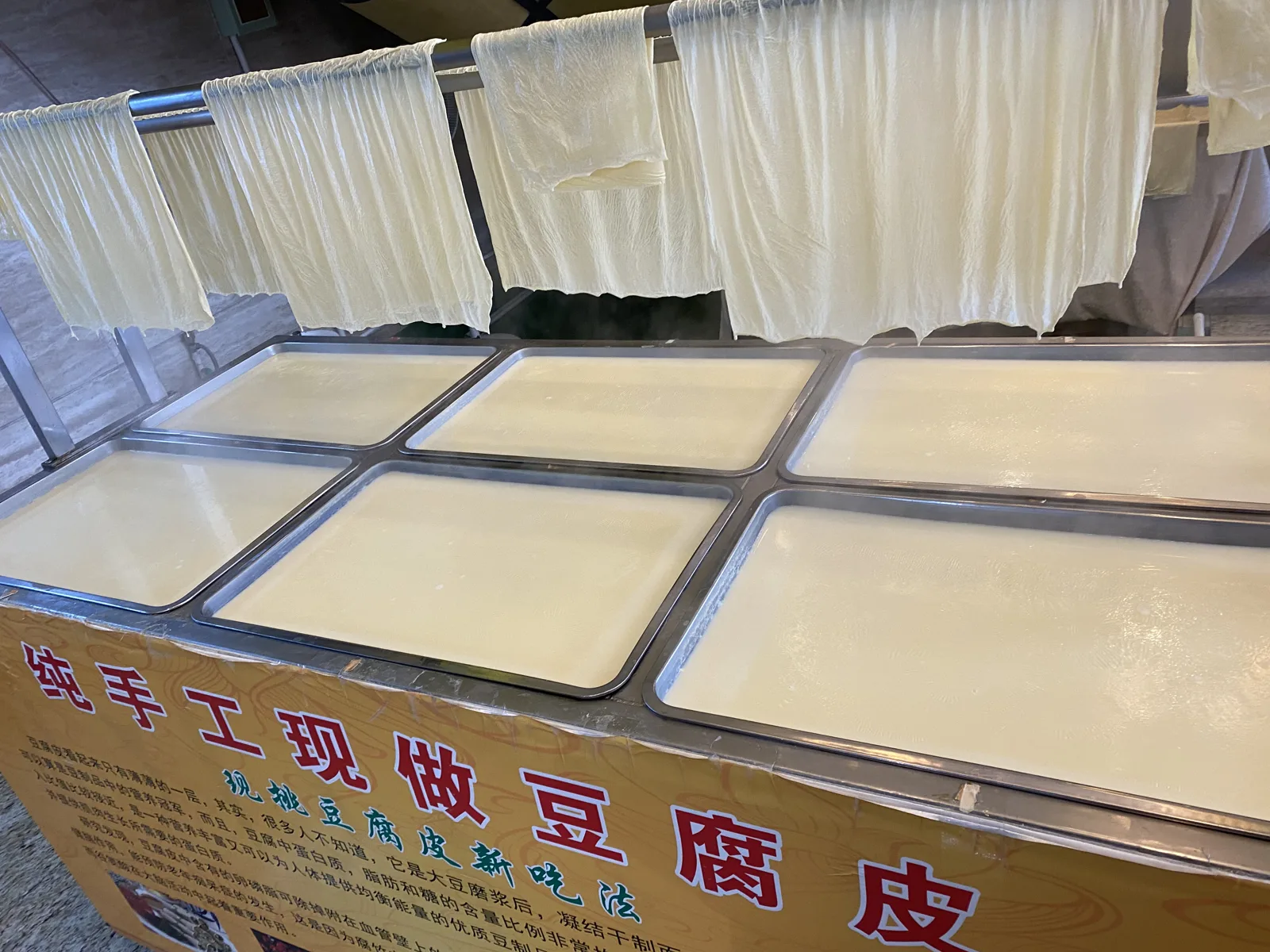
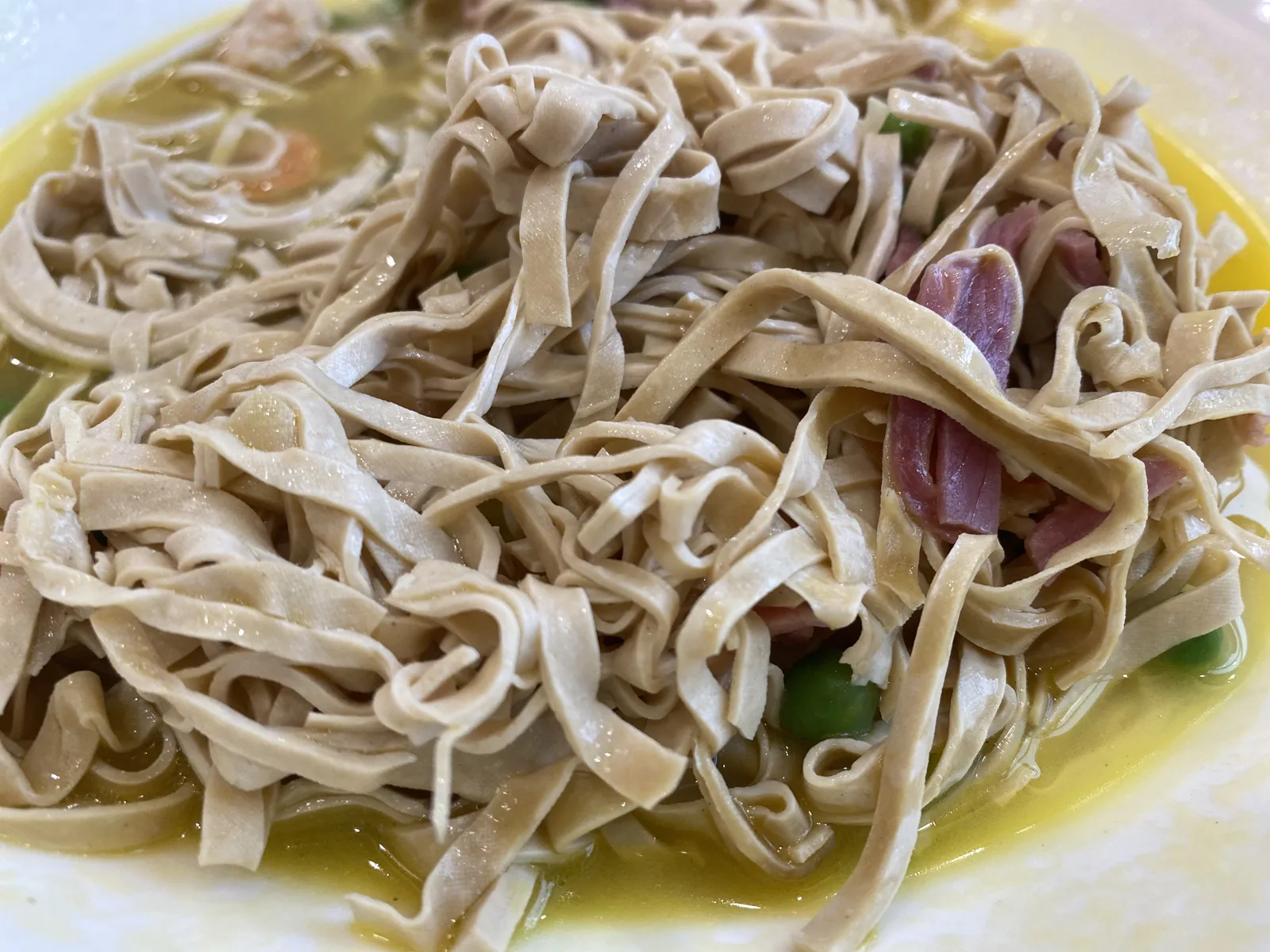
On February 2nd we spent the late morning into lunch in Fengjing, one of the old water towns of the Yangtze delta, a few miles from the border with Zhejiang. The town is built along canals rather than streets, with stone bridges, whitewashed houses and black-tiled roofs reflected in the water. It is famous for its braised pork trotters and as the hometown of the cartoonist Ding Cong. Along one lane a workshop was making tofu skin by hand: trays of soy milk setting into thin sheets and finished sheets hung up to dry. Lunch included a plate of it cut into noodles.
The Bund
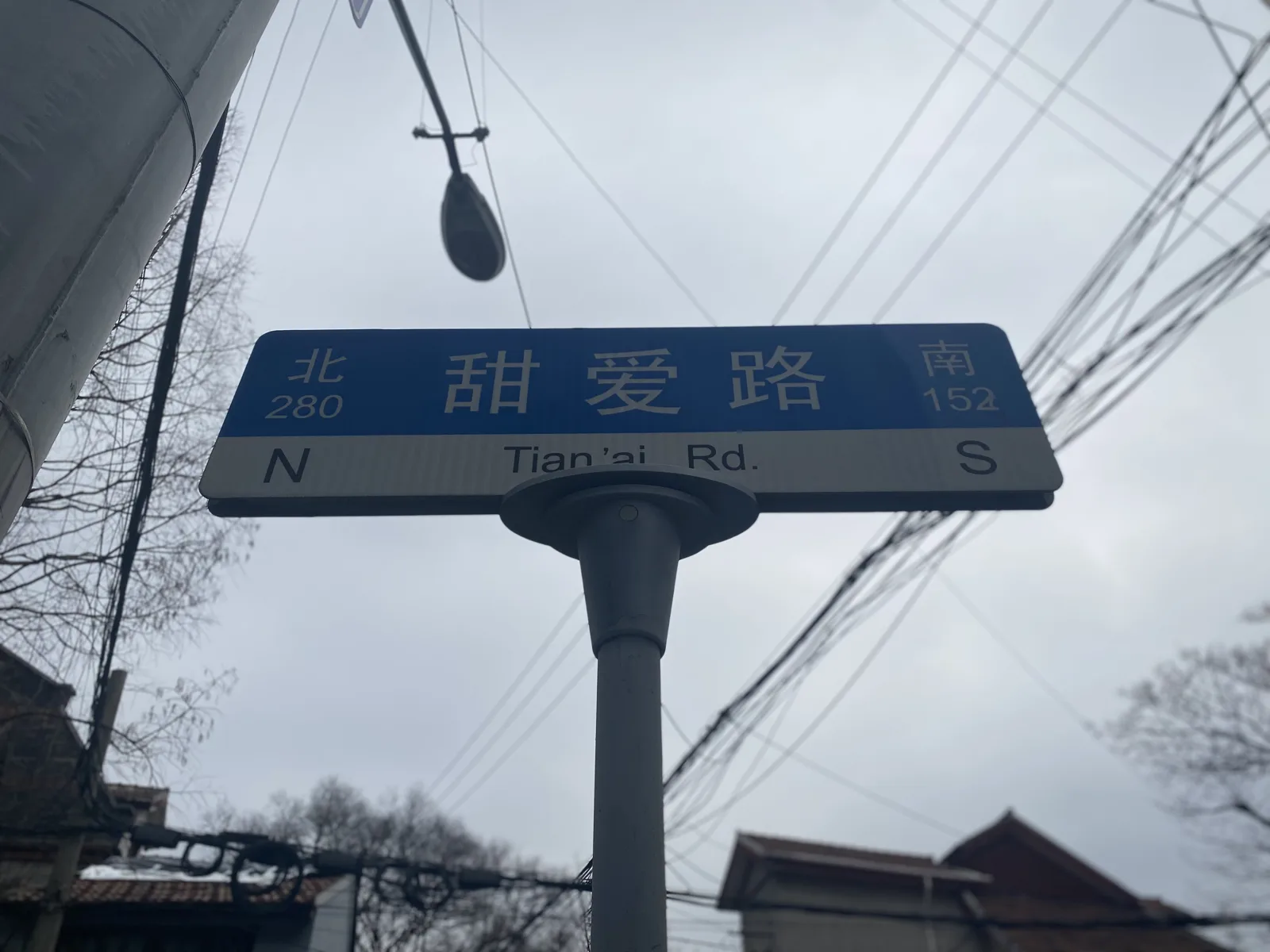
We started the last Shanghai day in Hongkou on Tian'ai Road, "Sweet Love Road", a short lane of plane trees that couples visit for its name.
Later that morning we went to see the view that is on every Shanghai postcard, and it is just as good grey as it is blue. From the promenade of the Bund, the riverfront lined with the granite banks and trading houses of the 1920s and 30s, you look across the Huangpu River at Lujiazui. Each tower over there is famous on its own. The pink-and-silver spheres of the Oriental Pearl Tower went up in 1994. The pagoda-like Jin Mao Tower followed in 1999, and the Shanghai World Financial Center, nicknamed "the bottle opener" for the trapezoidal hole in its top, in 2008. Then came the twisting, 632-metre Shanghai Tower, the tallest building in China, finished in 2015. The astonishing thing is the timing. In 1990, when the government declared Pudong a development zone, almost all of this was warehouses and farmland.
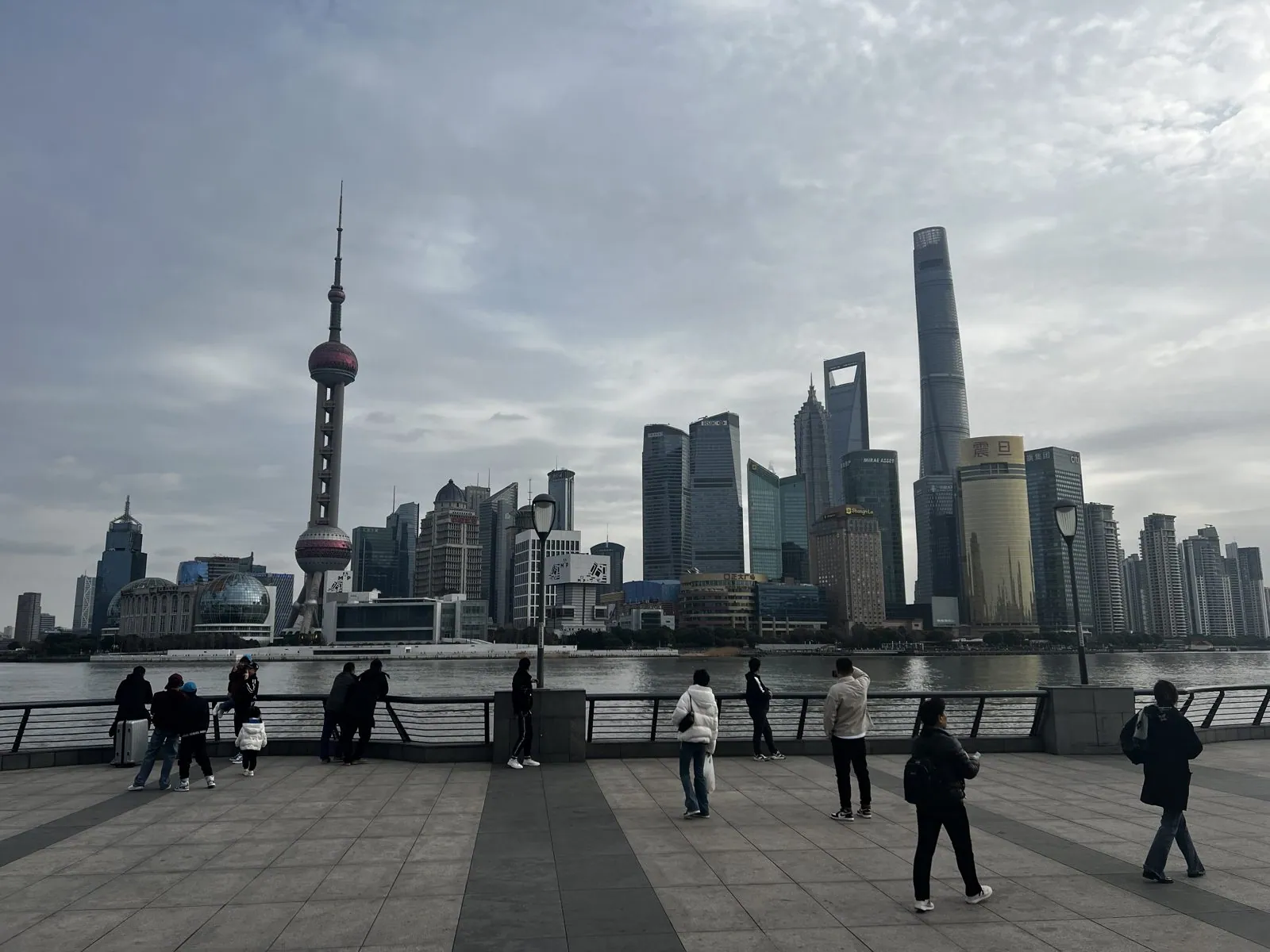
On a weekday morning in winter the promenade had room to breathe: a few people strolling or taking photographs along the railing, the river traffic sliding past, and the wind coming off the water. A few minutes later we were eating a round, flaky pastry in a foil cup, stamped with red characters. That was the end of Shanghai. The next day we flew south, and by mid-afternoon we were two thousand kilometres away, and it was summer.
Act II: Sanya, at the southern edge
Sanya sits at the southern tip of Hainan, the big tropical island off China's south coast, at about eighteen degrees north. That's the same latitude as Jamaica. It is China's answer to Hawaii, and in the weeks around Chinese New Year it is where half of northern China seems to go to get warm. When the border reopened, Sanya was also one of the first places Chinese travellers flocked back to, and it showed. Every sight we went to was busy, and every beach at sunset was full.
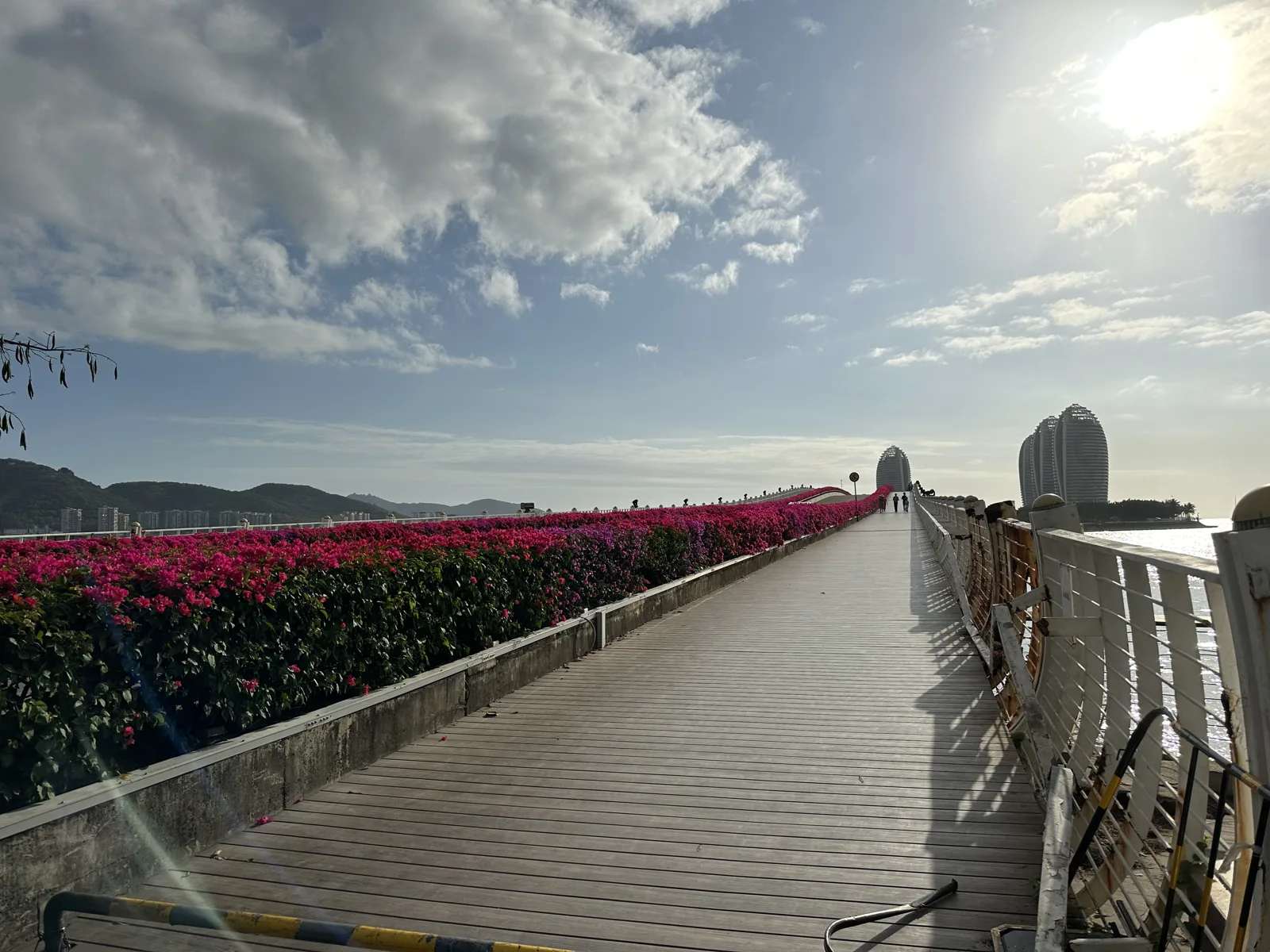
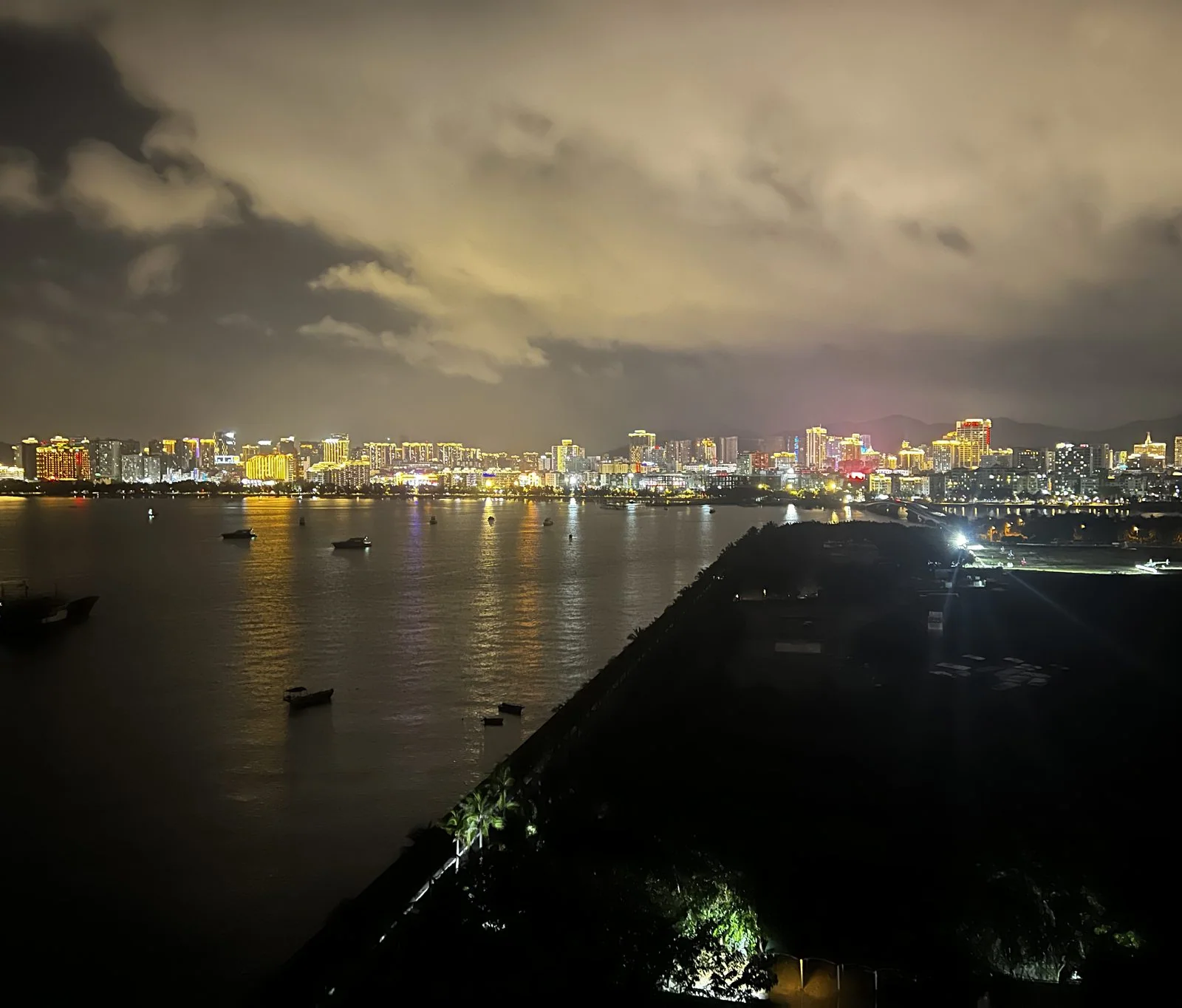
Part of the pull was family: my parents were spending the winter there, as a lot of Chinese retirees do. We landed in the middle of the afternoon on February 4th. The first thing we did was walk along the seafront boardwalk, lined with bougainvillea, toward the egg-shaped towers of Phoenix Island. That night, from a height, we looked out over the curve of Sanya Bay. The city's hotels and apartment towers made a long chain of gold and pink lights along the water, the sea below was black and still, and the low cloud over it all glowed orange with the reflected light of the city. Coming from Shanghai, the air was the first shock: warm and soft and damp, the kind of air that makes you take off your coat before you have decided to.
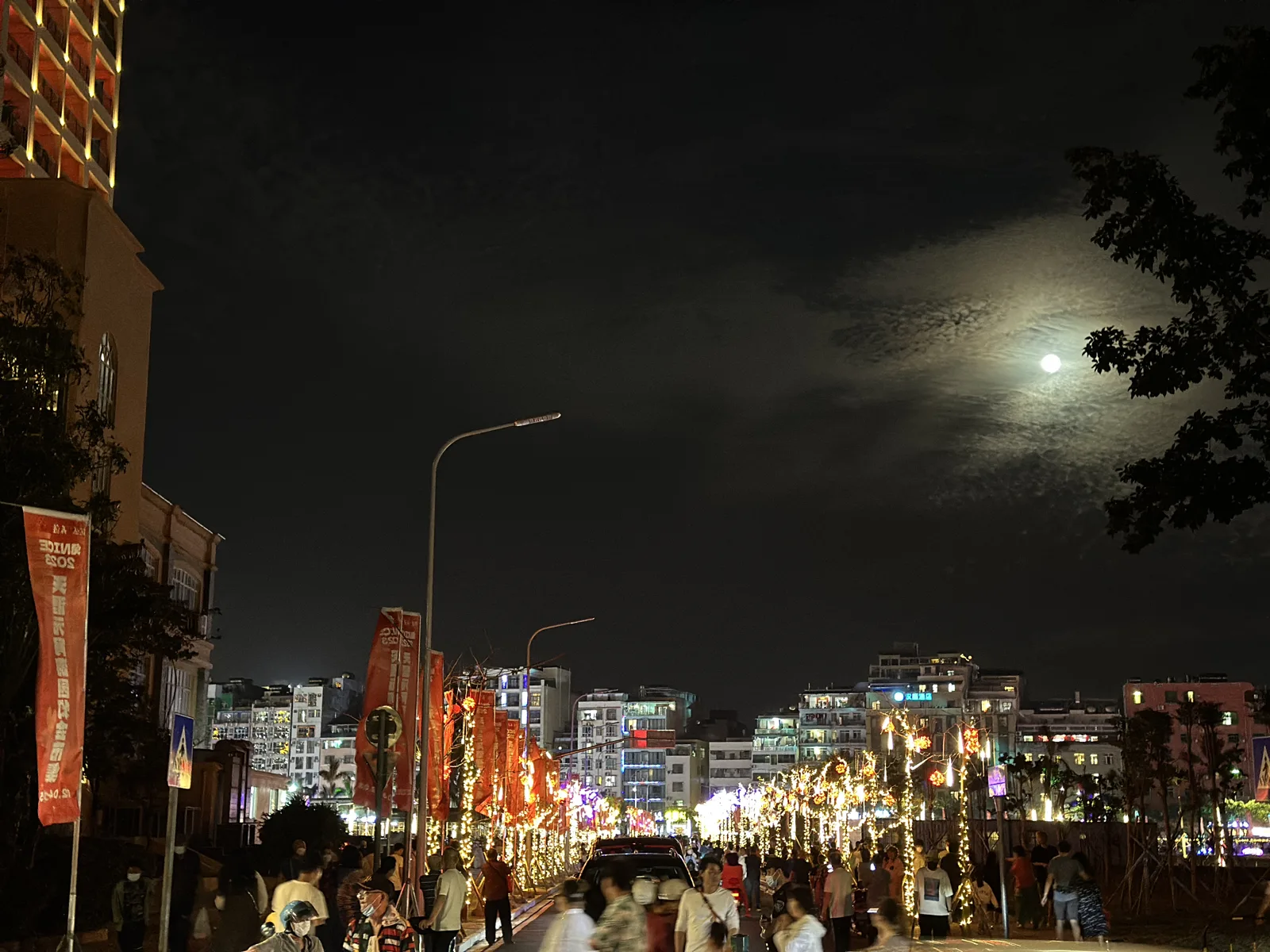
The next evening, February 5th, was the Lantern Festival, the fifteenth day of the first lunar month and the traditional end of the New Year season. That evening we were out along the seafront greenway of Sanya Bay, around Haiyue Square. A full moon hung over the seafront, and along the greenway a band in orange shirts was playing to a crowd.
Nanshan: the Guanyin in the sea
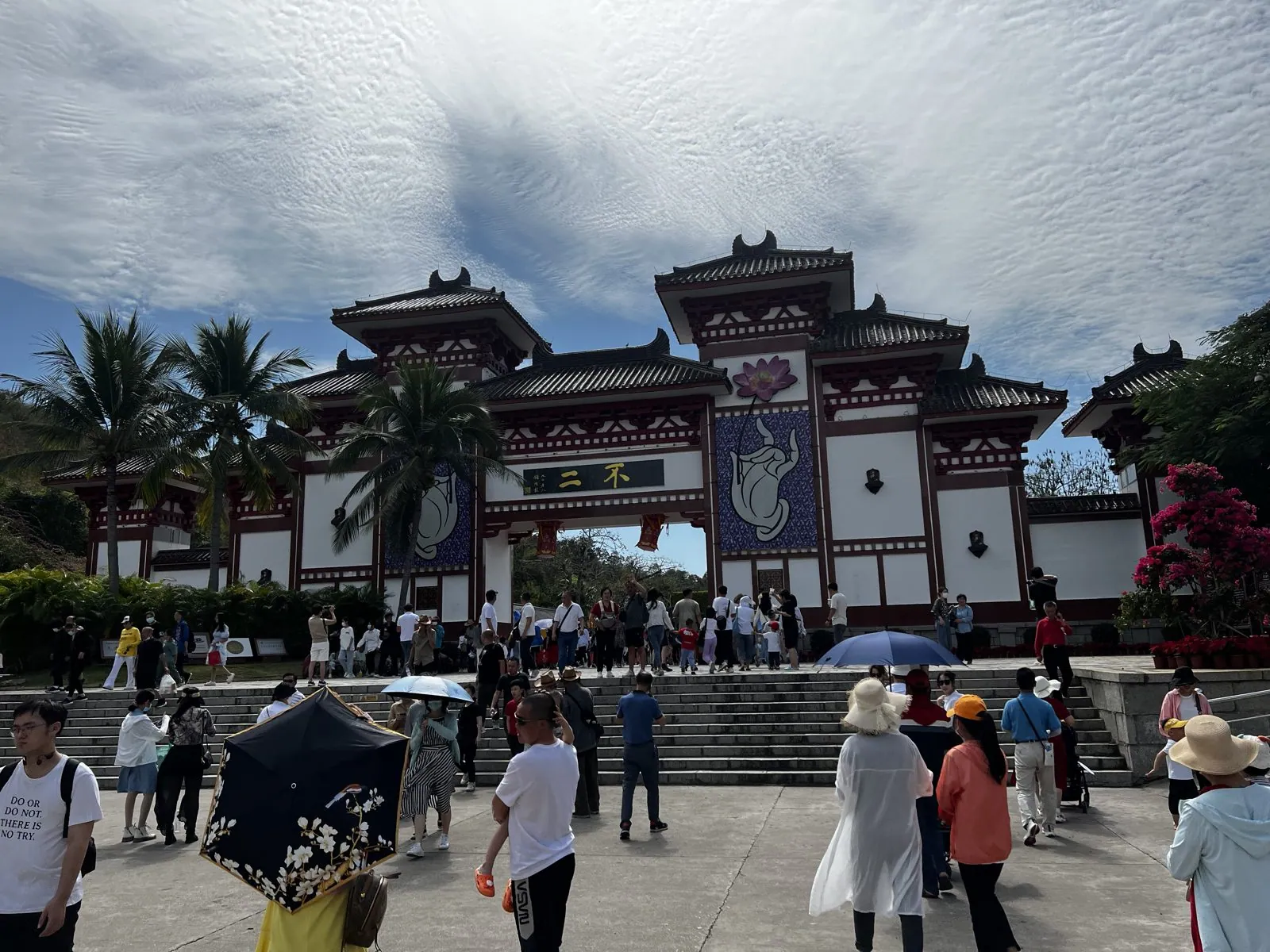
February 6th was the big day, and the one with the most photographs. It started at Nanshan, a Buddhist cultural park about forty kilometres west of the city, on a headland by the sea. We arrived a little after noon. You enter through an enormous ceremonial gate: a long run of white walls and red-lacquered pillars topped with tiered roofs, its panels decorated with elephants and lotus flowers. That day, under a sky rippled with high white cloud, a steady river of visitors was flowing up the steps beneath it, carrying sun umbrellas.
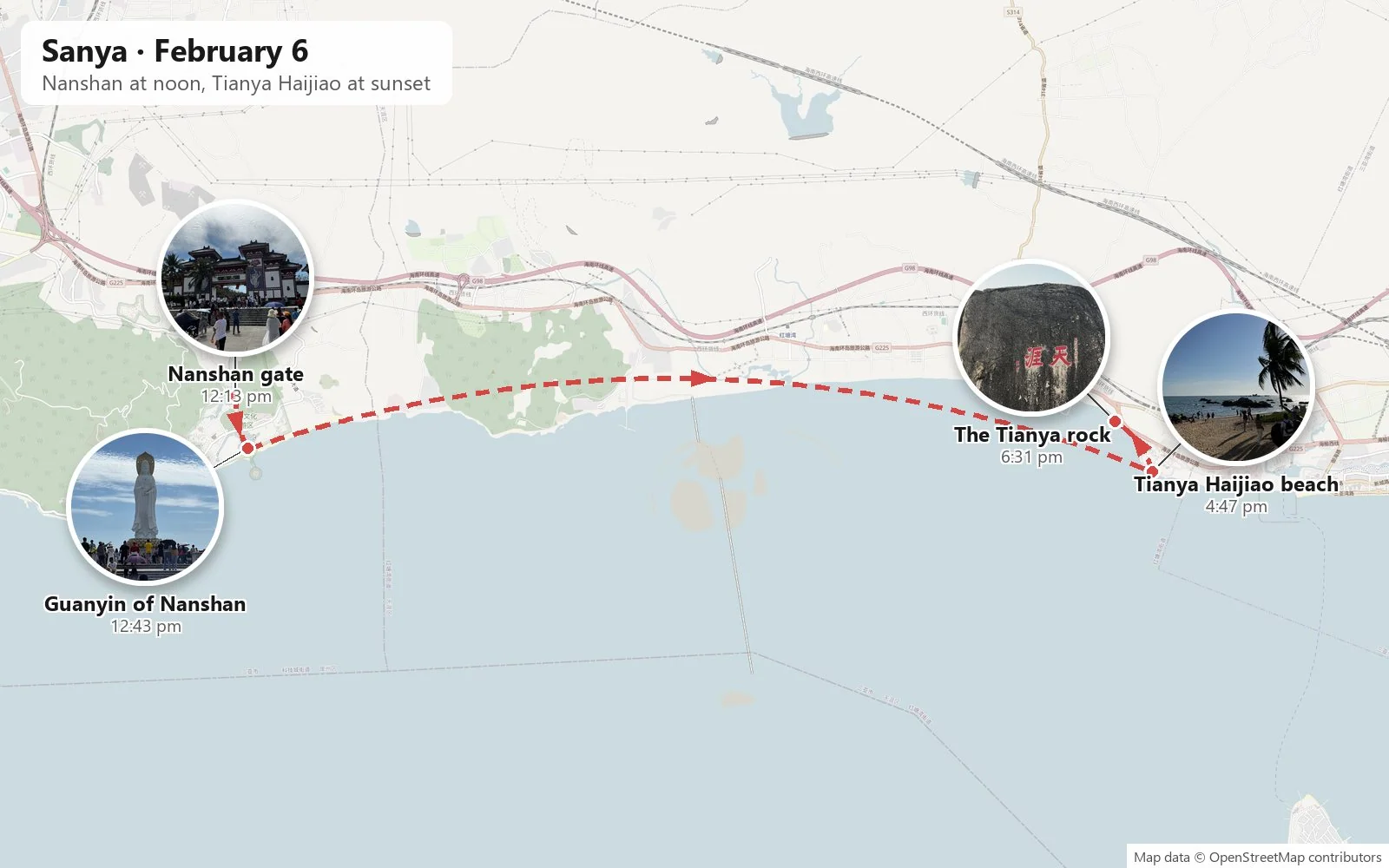
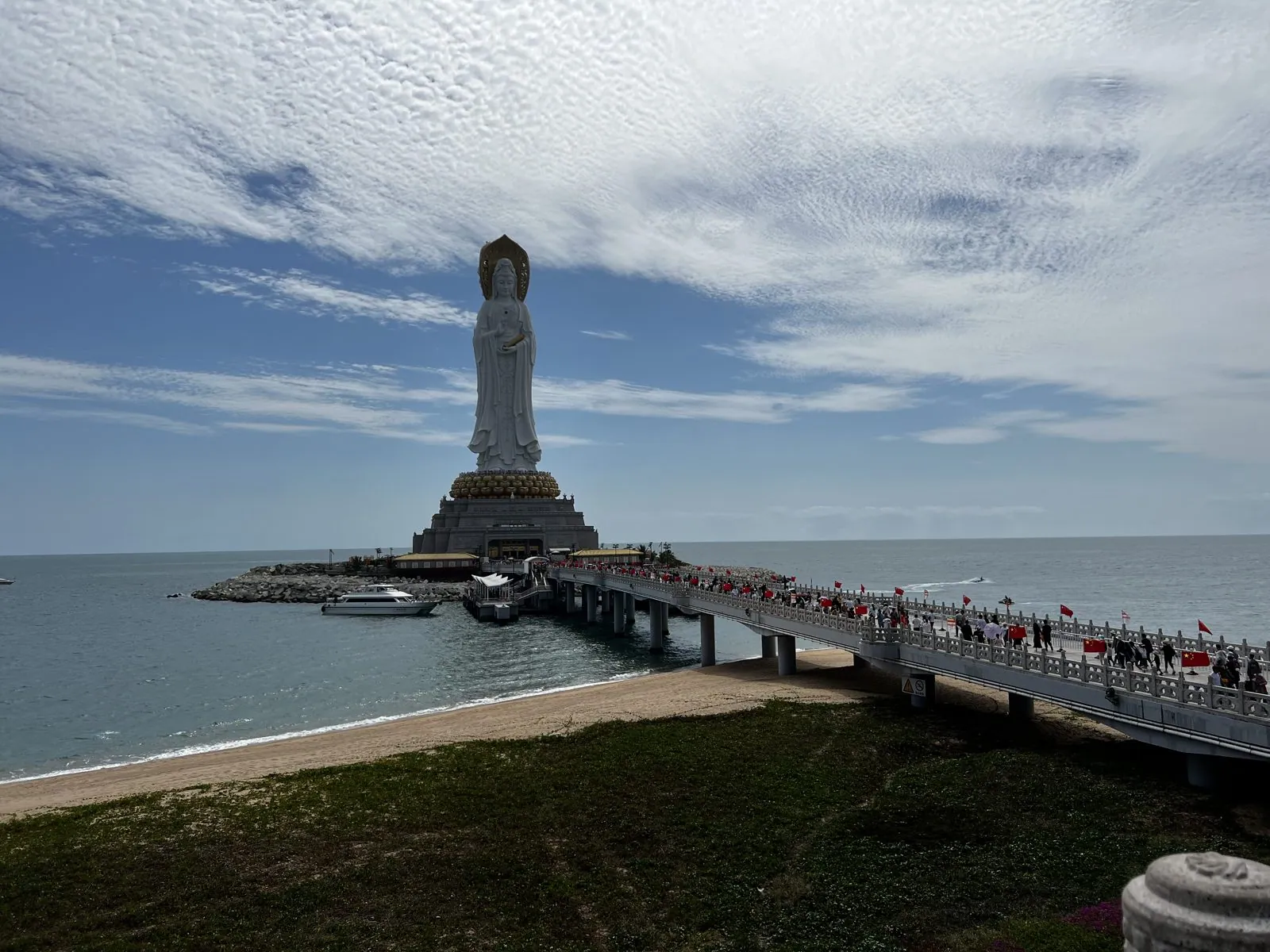
The reason everyone comes is visible from the gate: a white statue standing in the sea at the end of a long avenue. This is the Guanyin of Nanshan, the bodhisattva of compassion, 108 metres tall. Unveiled in 2005, it is one of the tallest statues in the world. It stands on its own artificial island just offshore, linked to the land by a long causeway. The statue has three faces looking in three directions, one towards the sea and two back towards the land, each holding something different: a sutra, a string of beads, a lotus. The idea is that her protection reaches everyone, whichever way they come from.
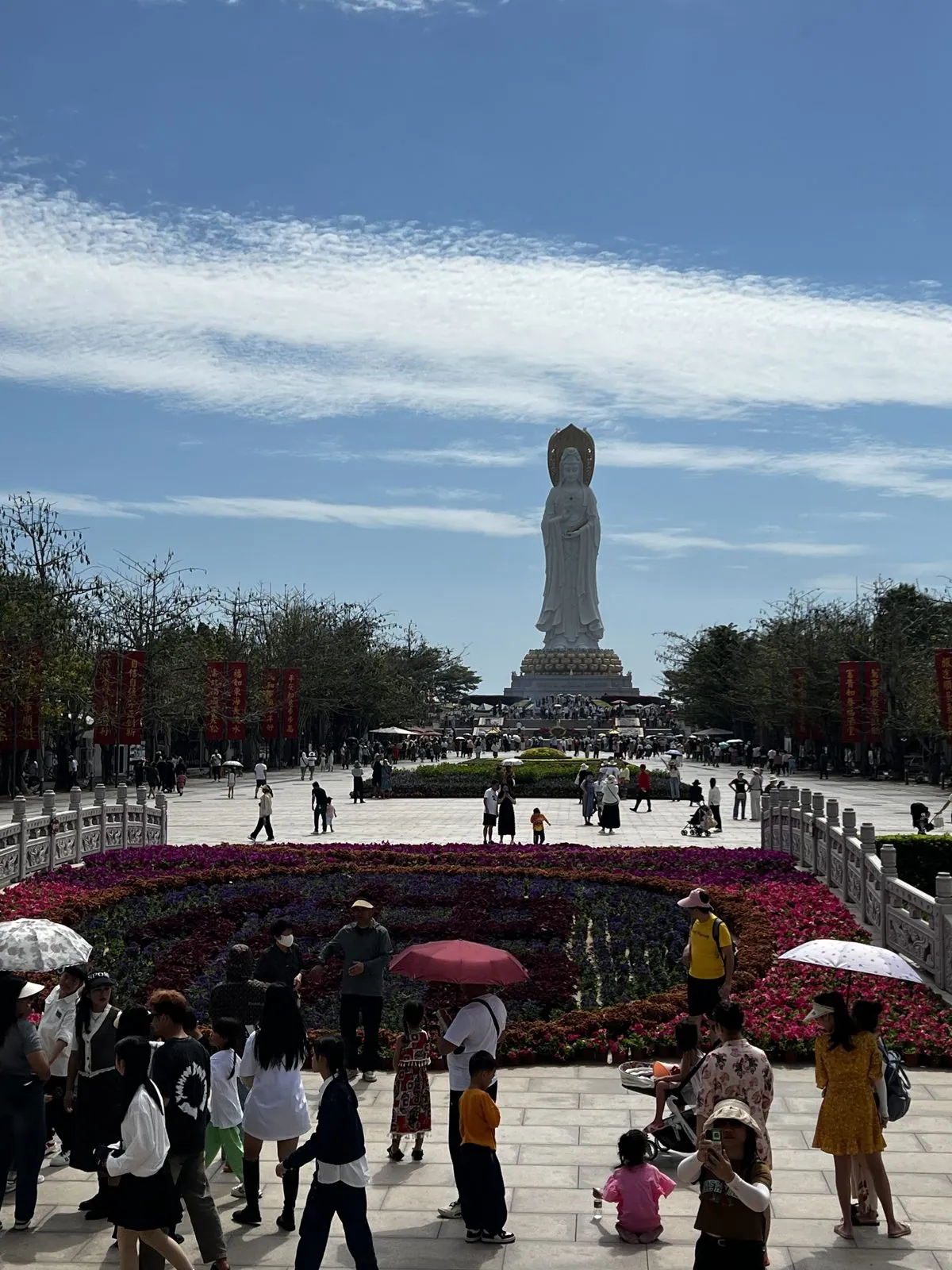
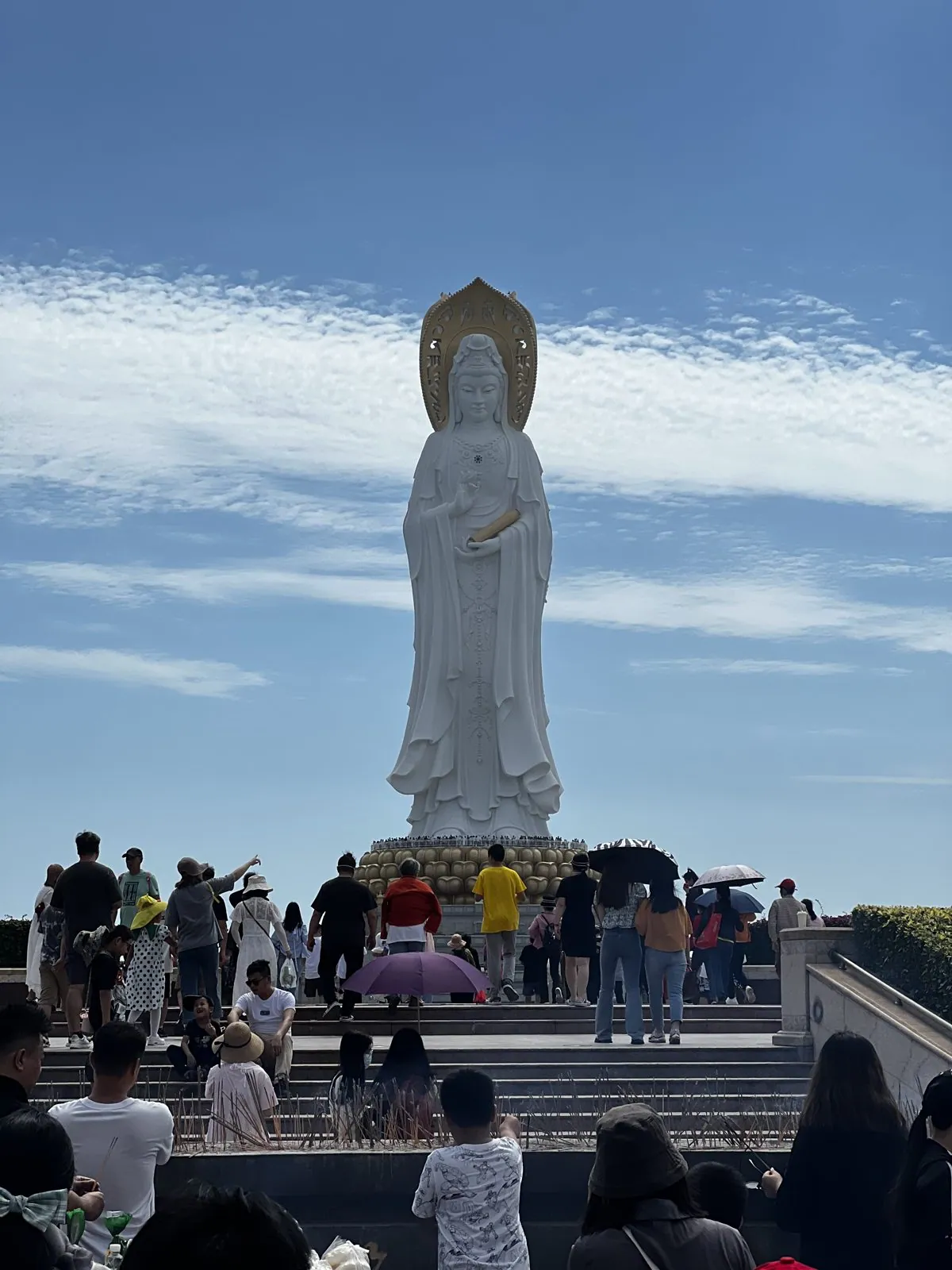
Up close, the statue is so big that it stops looking like a sculpture and starts looking like weather. The white figure is lit hard by the tropical sun against the blue, with a gold halo behind her head, and people mill around her base like ants at the foot of a lighthouse. The day was hot even in February, and the whole crowd moved at the slow, deliberate pace of people trying to stay in the shade of their umbrellas.
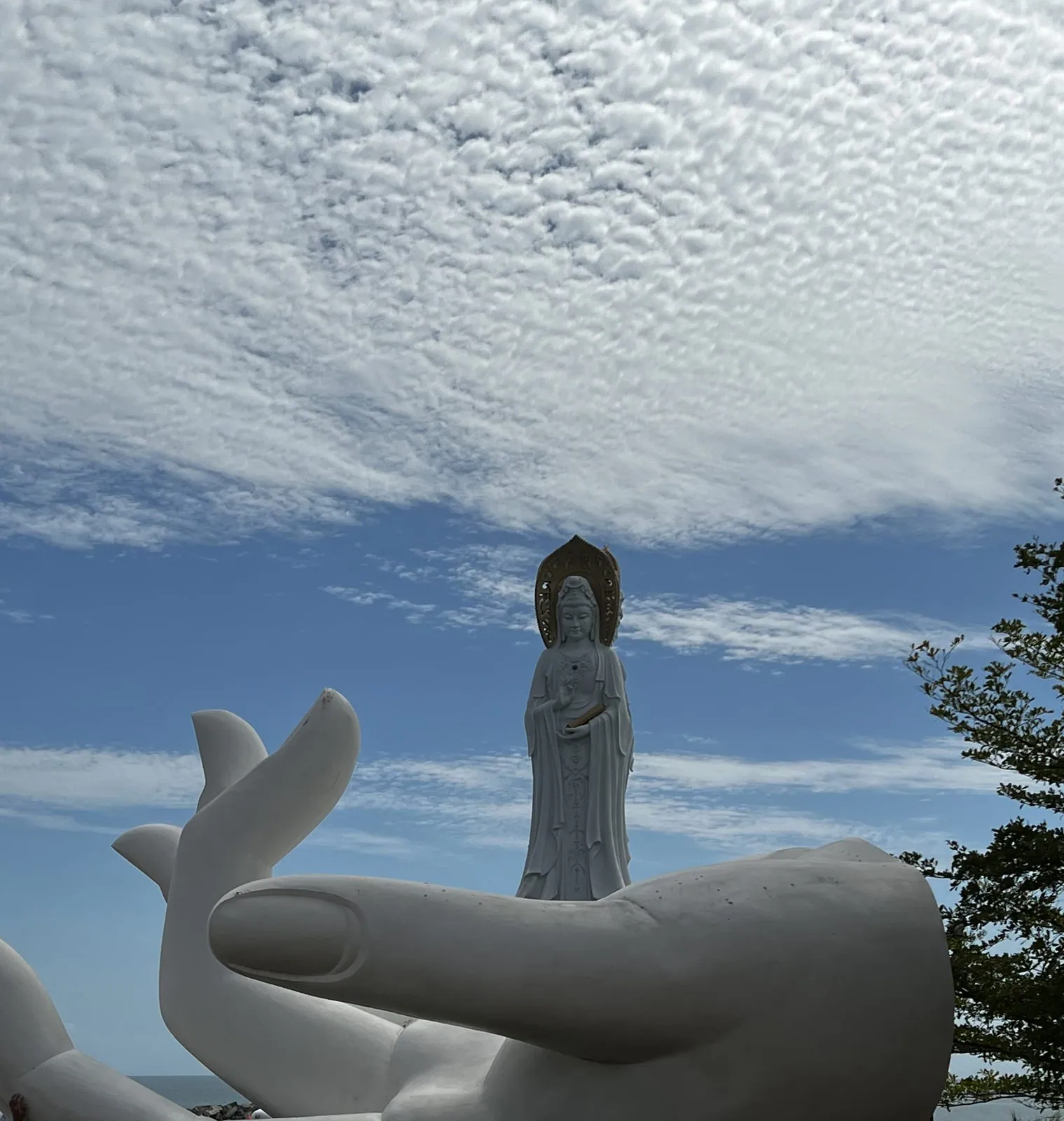
Along the shore, the park has set up a series of giant white hands, each one making one of the mudras, the symbolic hand gestures of Buddhist art. One holds its palm forward with a golden Dharma wheel set into it, thumb and forefinger touching in a circle, the gesture of teaching. They are clearly designed for one particular photo, and everyone takes it: line up the camera so that the distant statue appears inside the circle of the fingers, or cradled in the open palm. We were no exception.
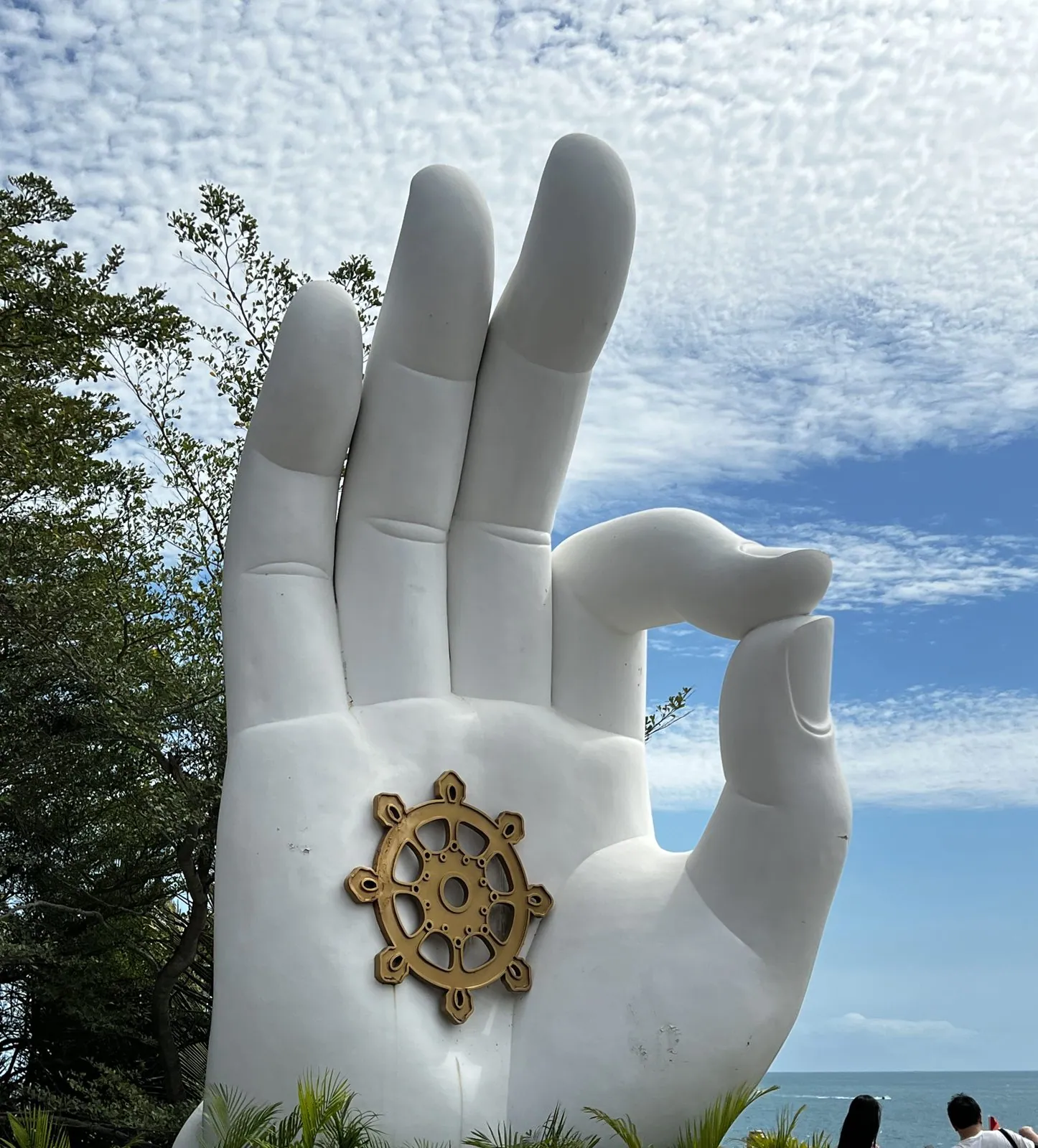
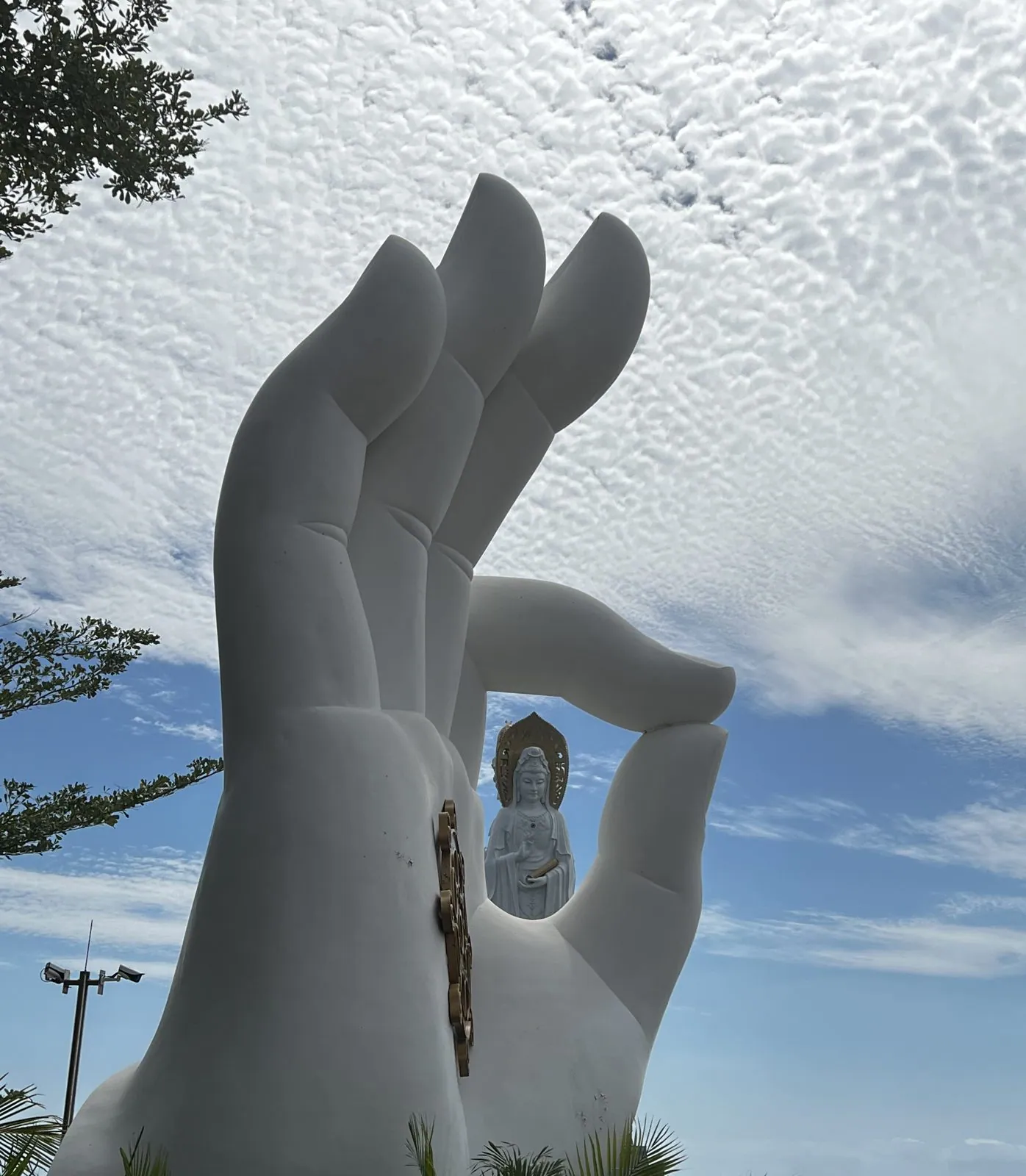
The third hand lies open, palm up, and from the right spot the statue appears to stand in it. It is a trick of perspective, but a gentle one, and it works best with the sea showing between the fingers.
From a terrace at the end of the park you can see the whole arrangement at once: the statue on its round island platform, and the causeway curving out to it across the water, packed with visitors and lined with red flags. It was one in the afternoon, the sun was nearly overhead, and the sea had that pale, milky blue that tropical water gets at midday. A vegetarian ice cream from a stand by the path seemed to be the done thing, so we did it.
Tianya Haijiao, the ends of the earth
By late afternoon we had moved east along the coast to Tianya Haijiao, which translates as "the edge of the sky, the corner of the sea", or more simply, the ends of the earth. For most of Chinese history this really was the end of the known world: a malarial island at the bottom of the empire, where emperors sent officials who had fallen out of favor. The most famous exile was the Song-dynasty poet Su Shi, banished to Hainan in his sixties in 1097. Today the phrase is used of lovers who will stay together "to the ends of the earth", and the beach is one of the most visited in China.
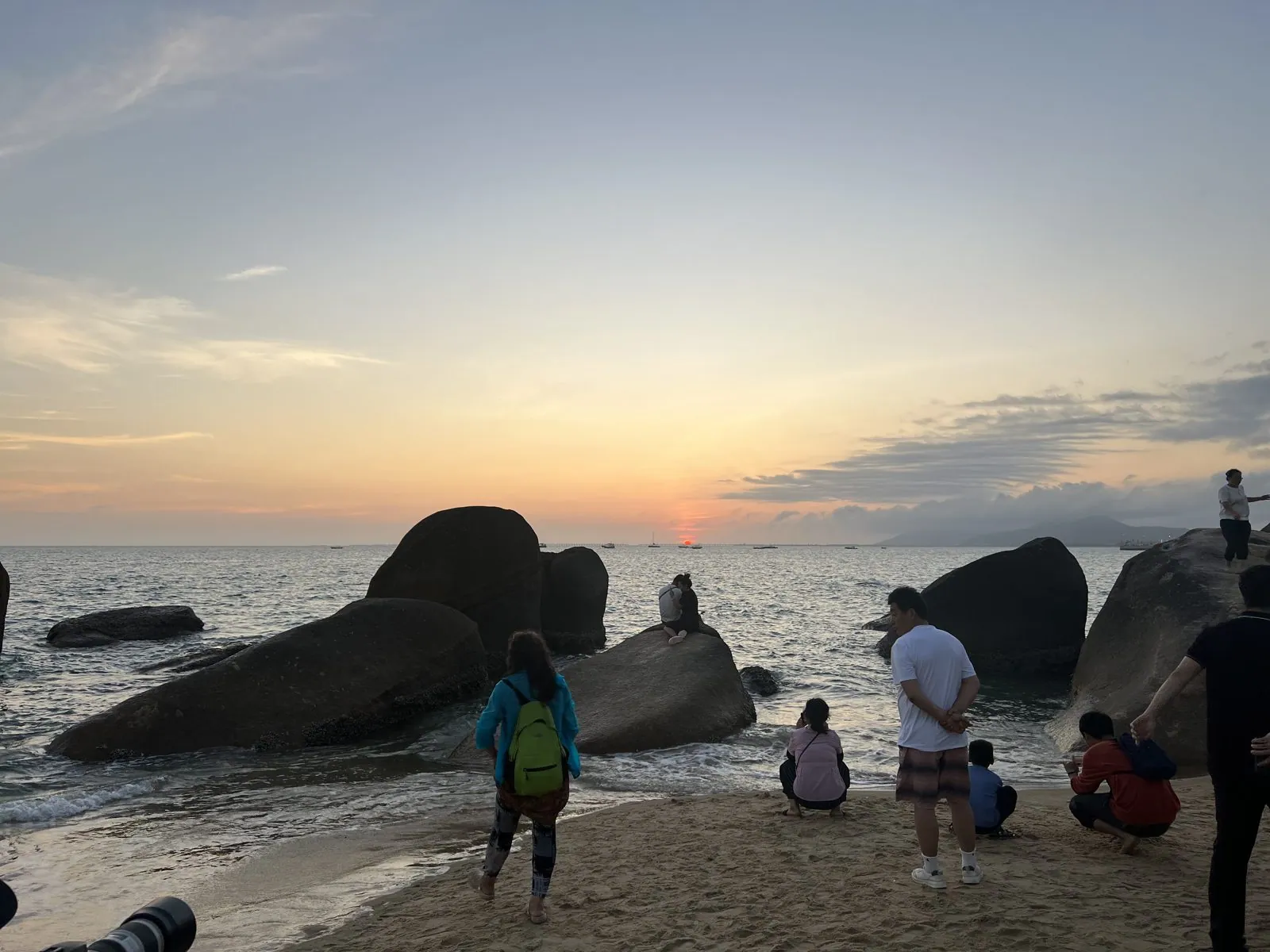
The coast here is a scatter of huge, rounded granite boulders, grey-black and smoothed by the sea, some standing on the sand and some out in the water like the backs of sleeping animals. At a quarter to five, the light was already going low and warm. Palm trees leaned out over the sand, families were spread under them, and the sea glittered silver in the backlight.
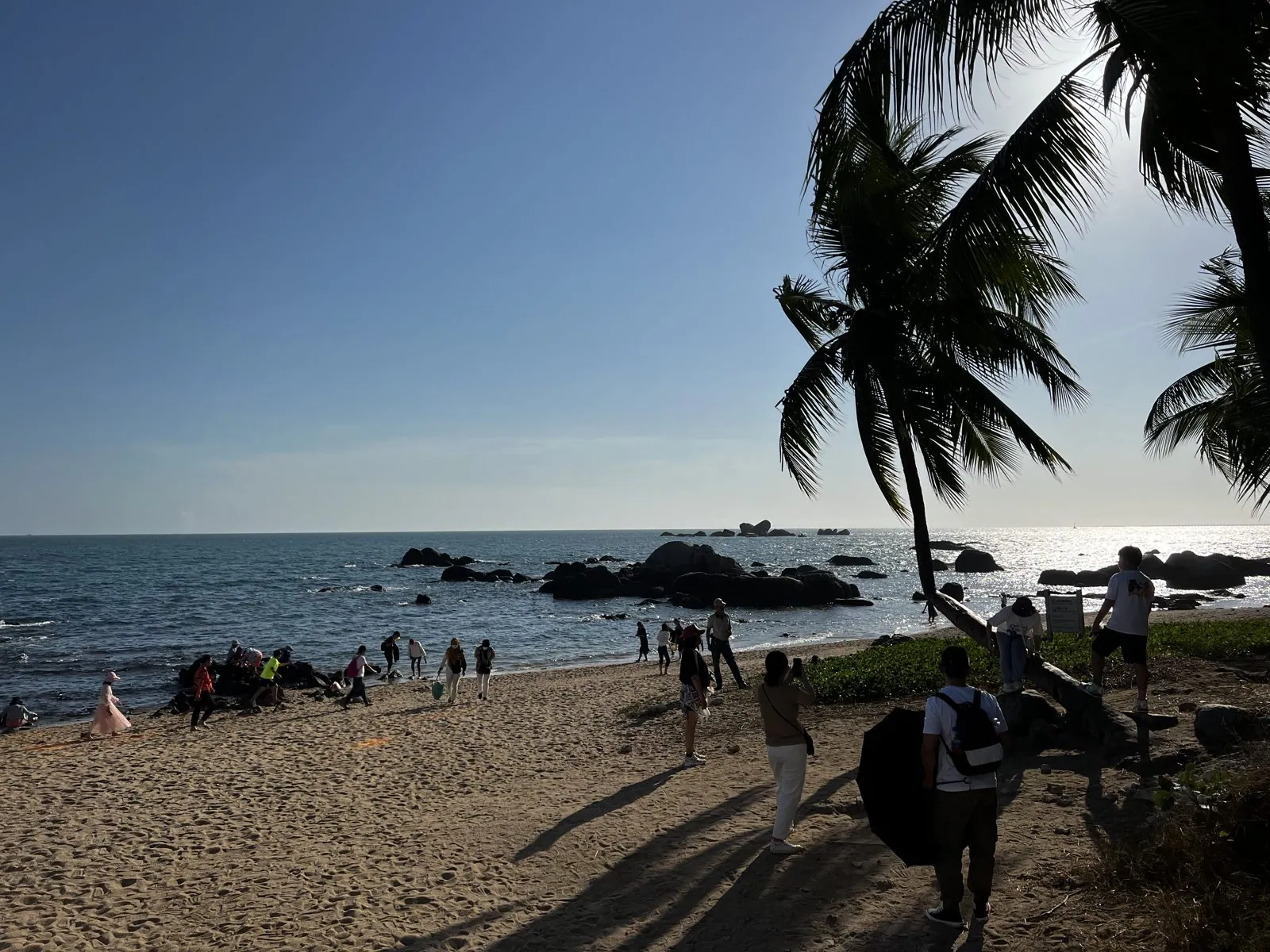
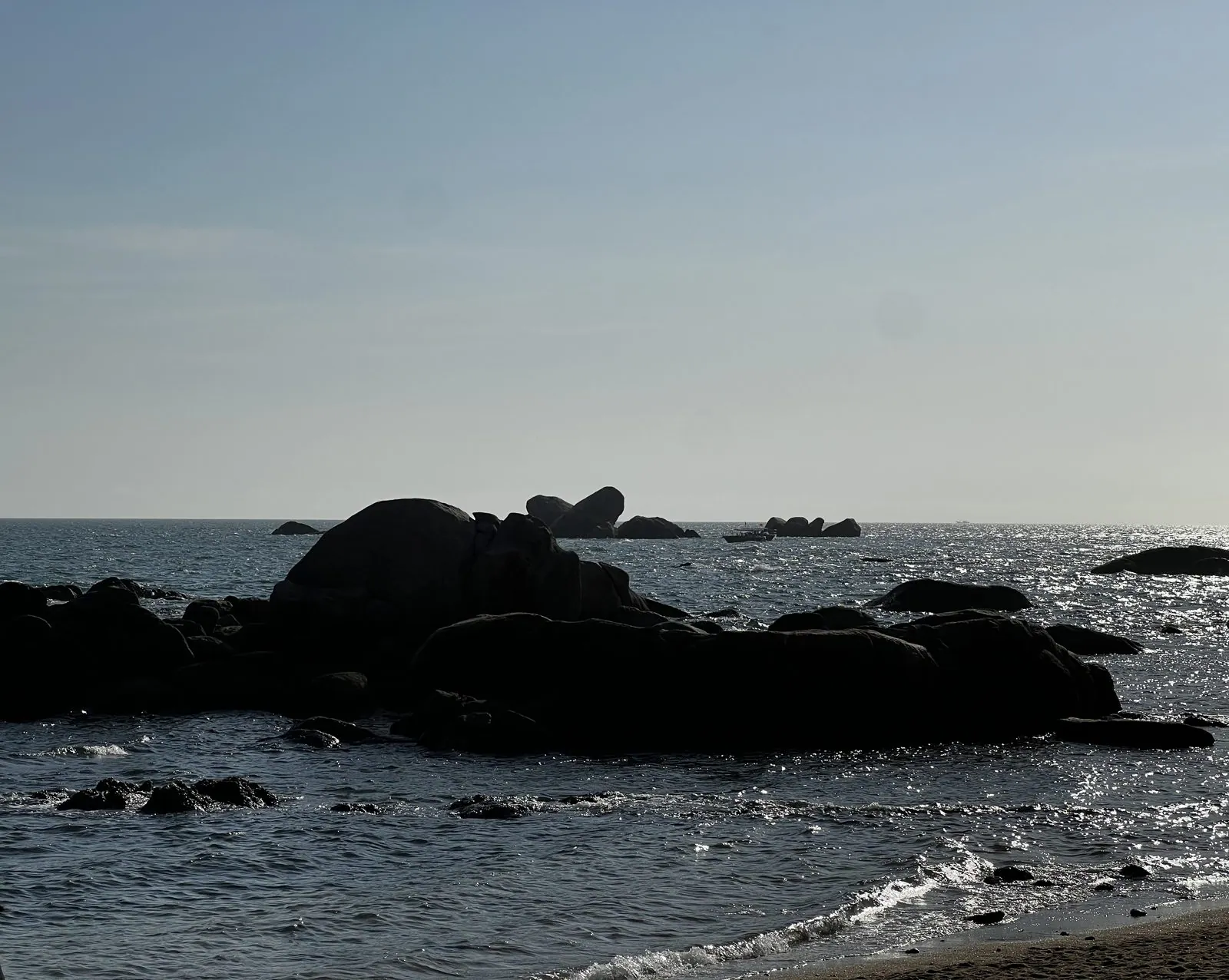
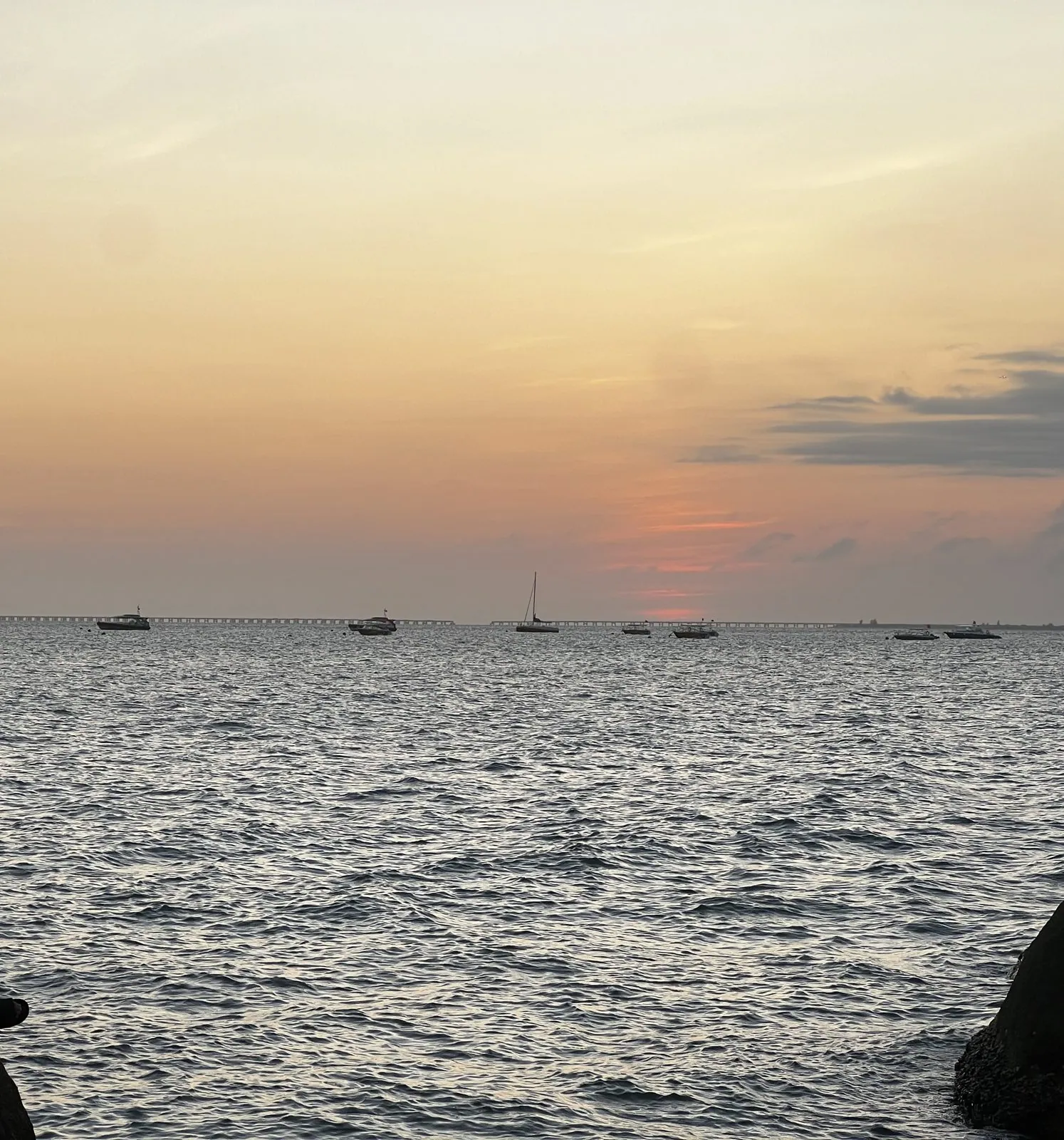
The sunset that evening was the reason most of the people on the island seemed to be on this beach. The sun went down almost exactly into the sea, a hard orange disk with a glittering path running straight to the sand, and the whole beach turned to silhouettes. People waded into the shallows with their shoes in their hands, posed for photographs, held up phones, and called to each other over the sound of the waves. A small boat crossed the path of light. For half an hour everything on the beach was gold.
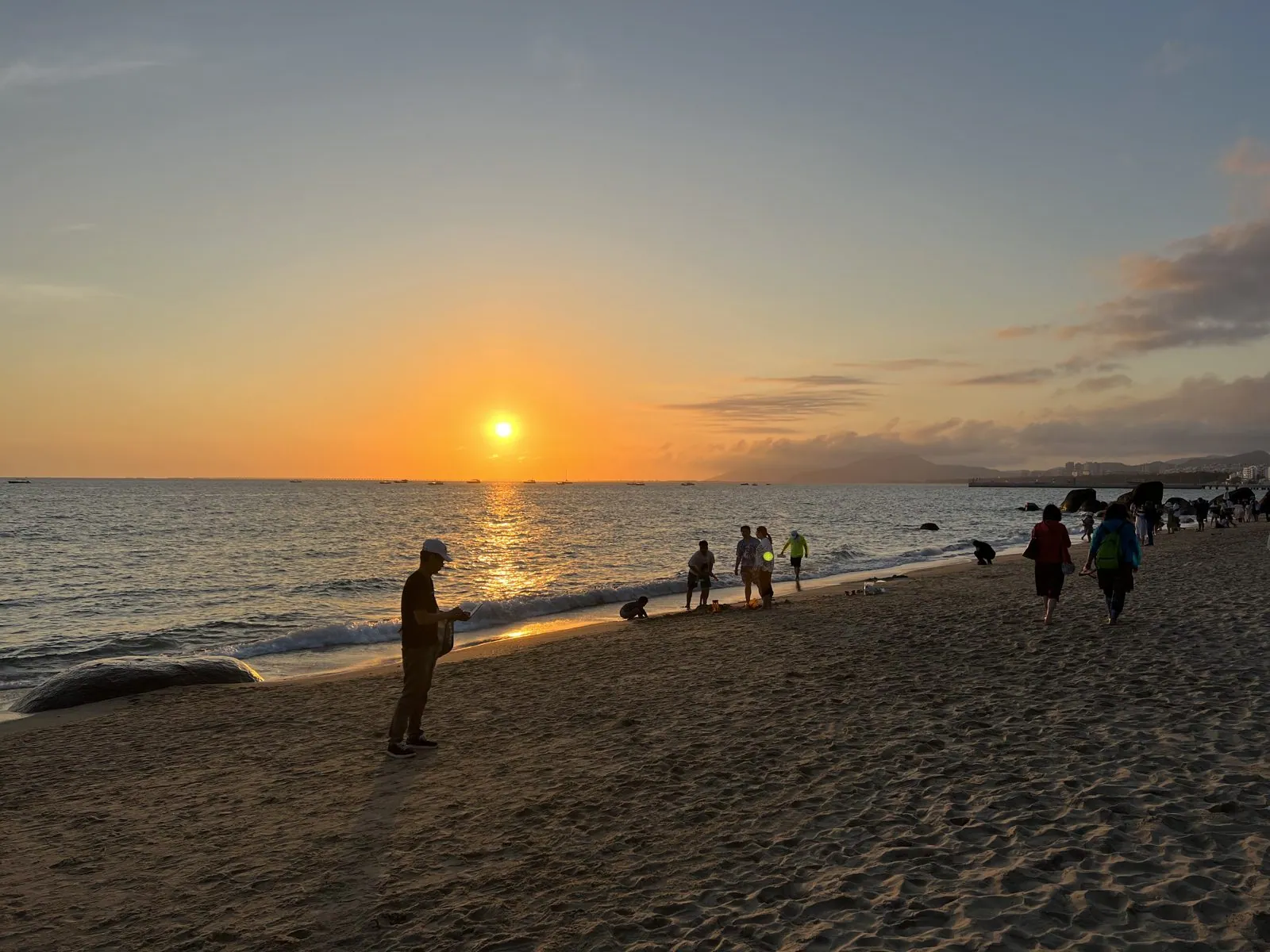
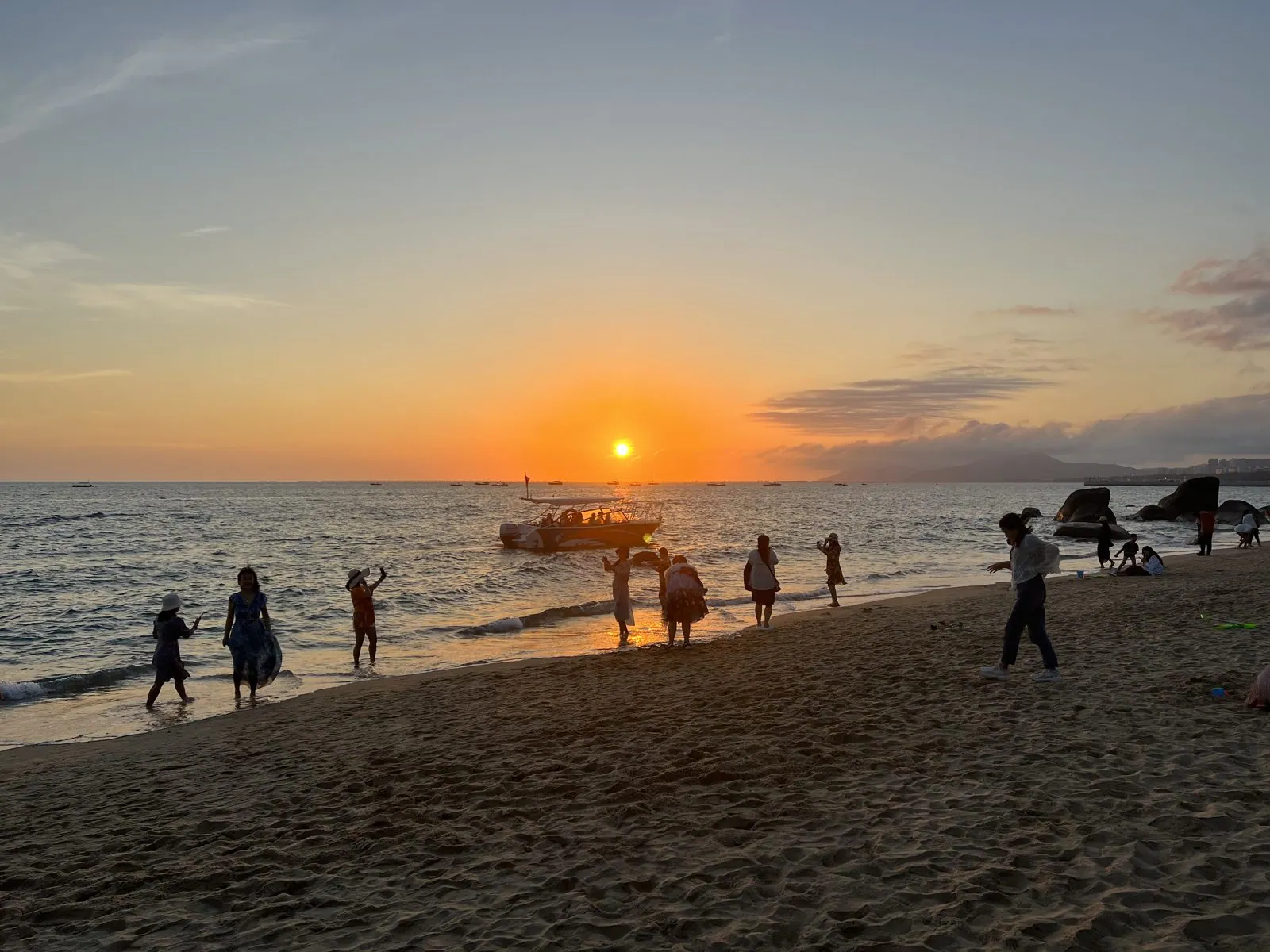
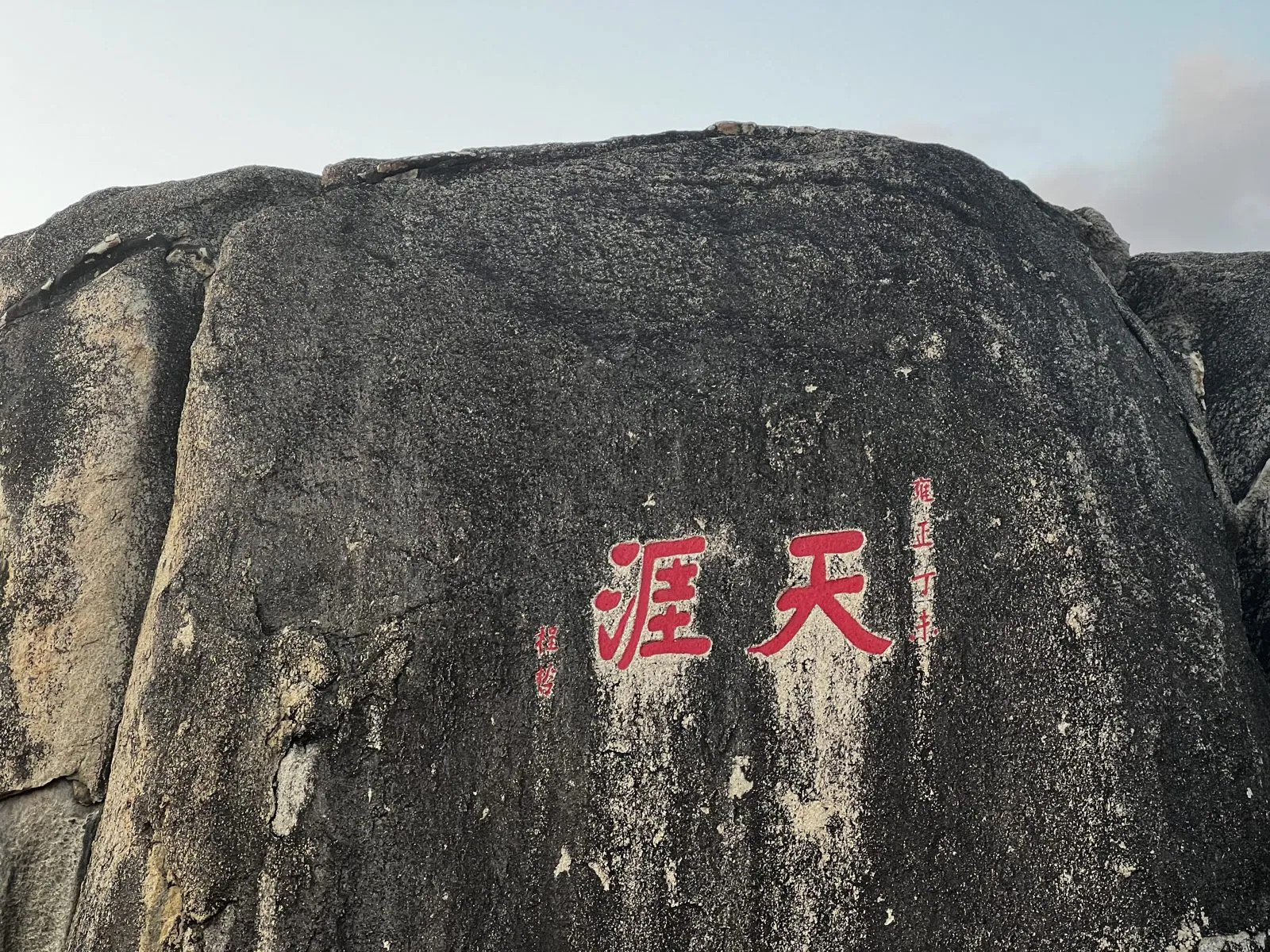
The most famous of the boulders stands at the end of the beach. It is carved with two big red characters, 天涯, "the edge of the sky". The inscription dates from the Qing dynasty, carved in the eighteenth century by a local official, and it gave the whole place its name. Up close the rock is huge, taller than a house, streaked with black and pale grey where rain has run down it for centuries, and the red characters are the size of a person.
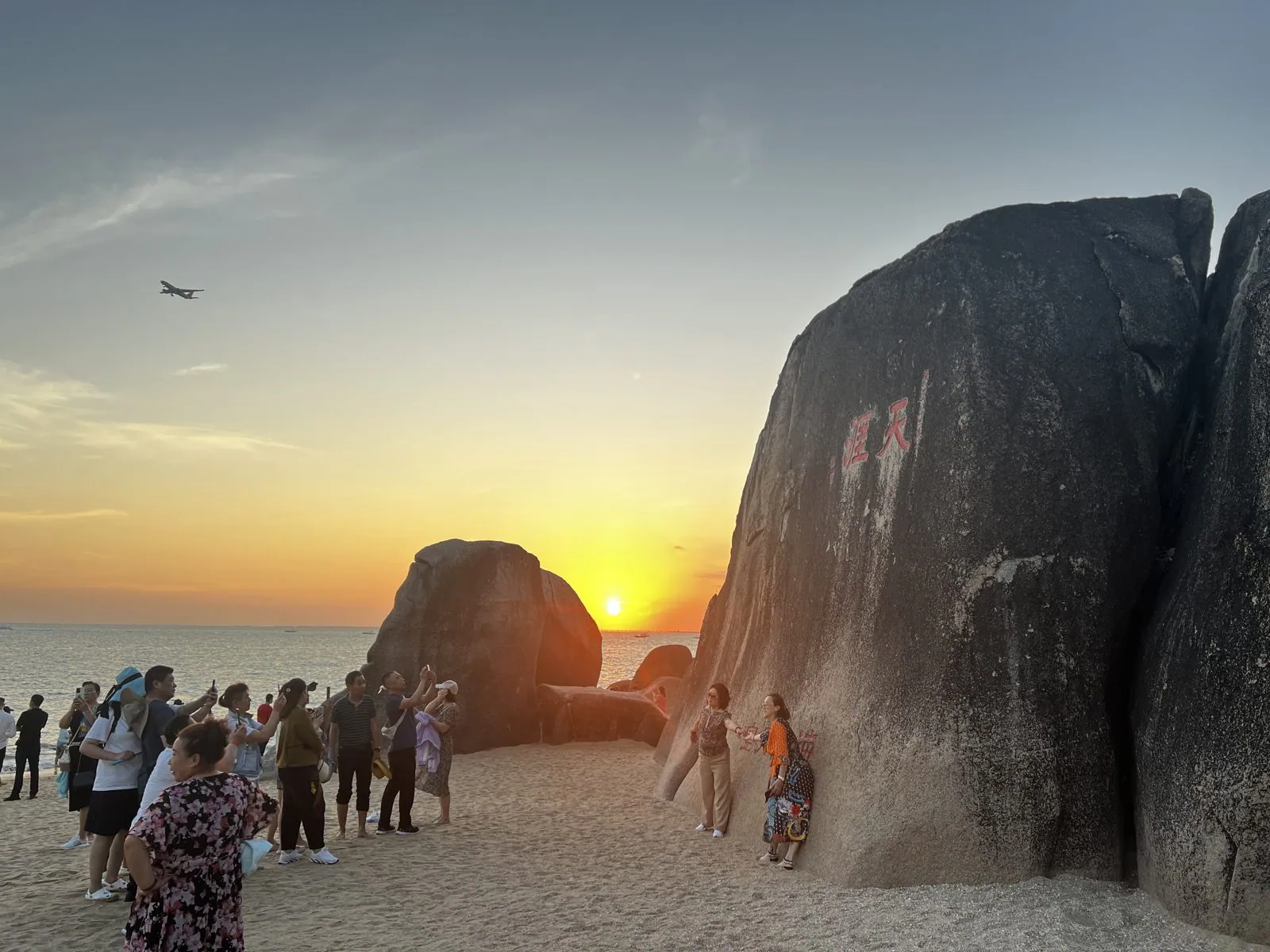
As the sun touched the horizon, a crowd packed in around the boulders to watch it go down between them. The sun slid into a gap between two great rocks, a plane crossed the sky above, and a hundred phones went up at once. It is a strange experience, watching a sunset at the ends of the earth with that many people. It's not lonely and it's not quiet, but there is something nice about it all the same: a whole beach of strangers who have come a long way to look at the same thing.
Then it was over, as fast as tropical sunsets always are. Five minutes after the sun went down, the sky had faded to a pale peach and grey, people were sitting on the rocks at the water's edge just looking out, and the ships at anchor in the bay had turned into small dark shapes.
Phoenix Island from above
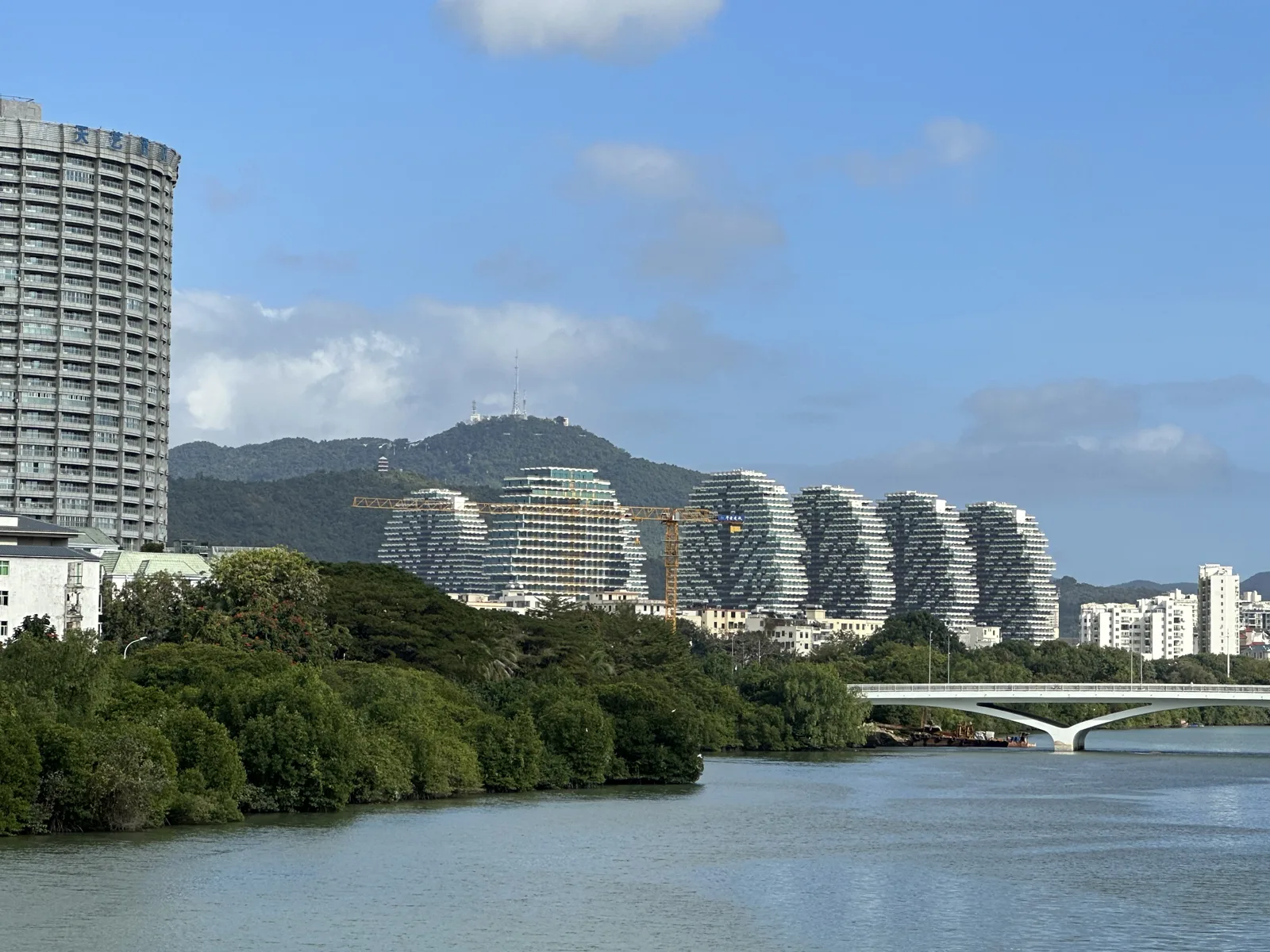
Sanya Bay's most recognizable landmark is Phoenix Island, an artificial island built out in the bay and joined to the city by a causeway. One end holds a cruise terminal; the other holds a row of towers shaped like enormous eggs, ribbed with curving balconies and topped with open steel crowns. Seen from the shore, the row of them looks like something from a science-fiction film, and they show up in nearly every photograph of the city. They are not the only odd shapes on the bay: on February 5th, across the mangroves, we saw another row of towers, these ones shaped like trees.
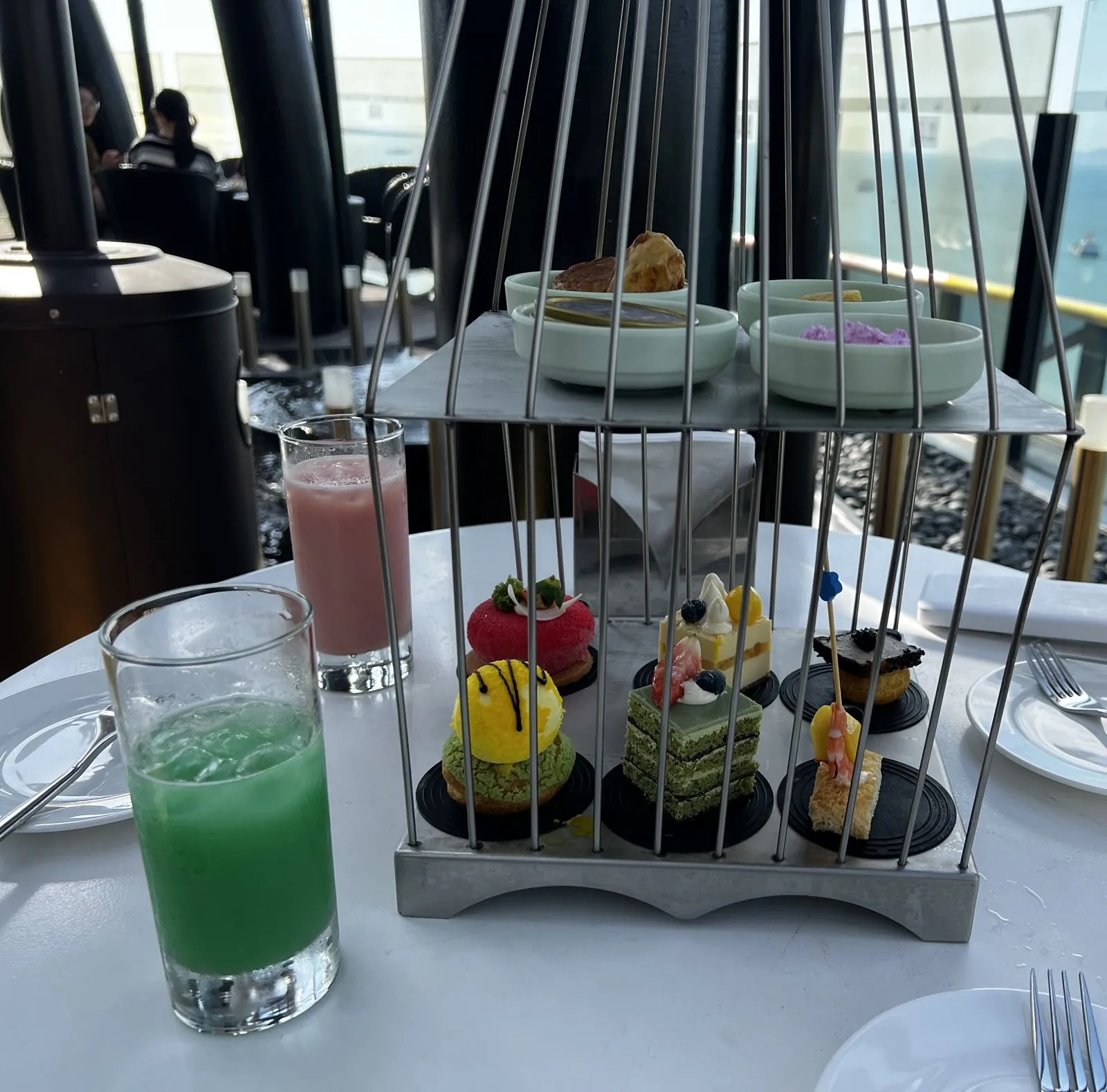
On the afternoon of February 8th we had afternoon tea at a bar high up, looking down on all of this. The tea came on a stand shaped like a birdcage, with tiny cakes in the brightest colors a pastry chef could manage, plus one bright green drink and one pink one. The sea filled every window behind it.
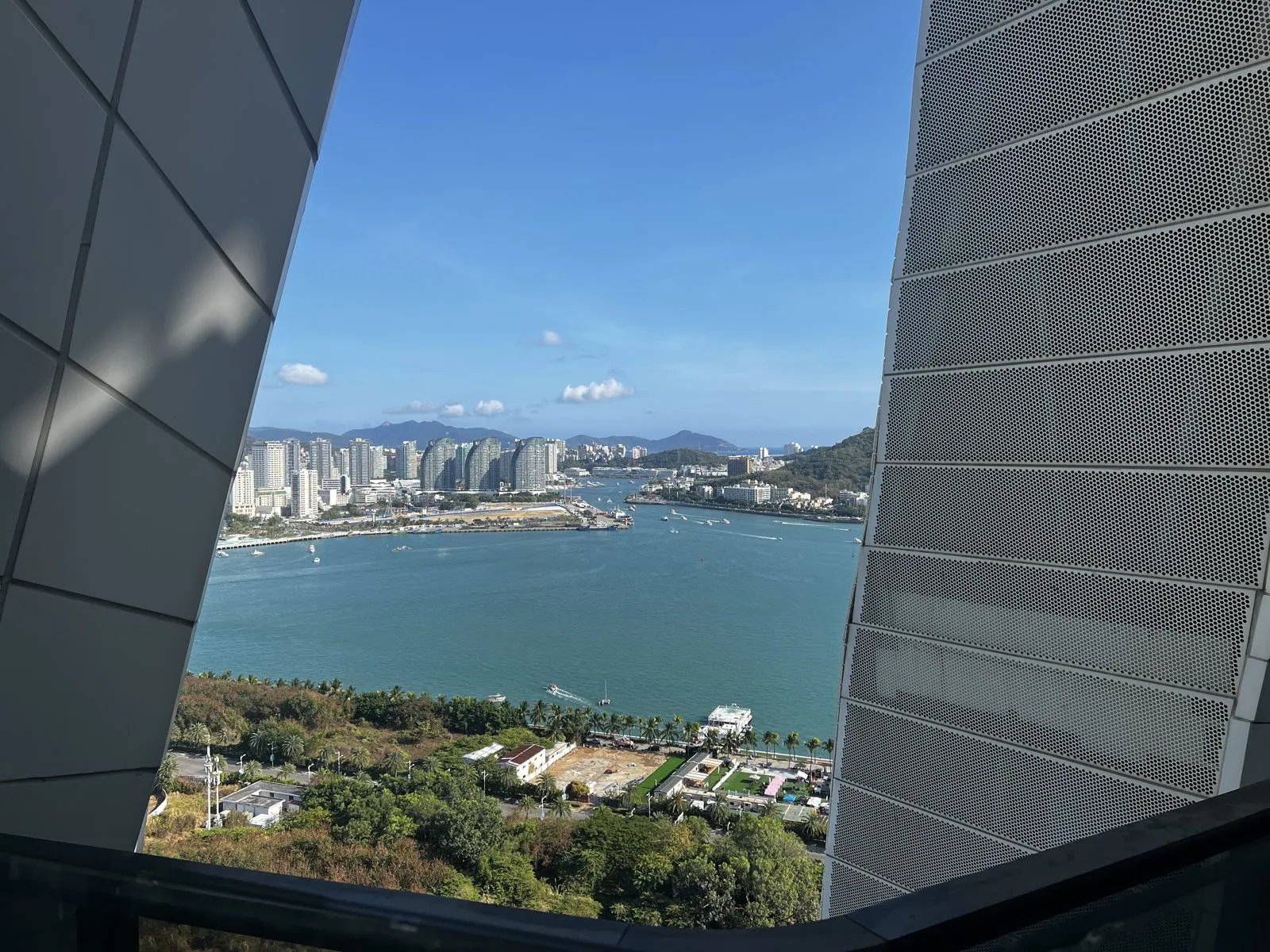
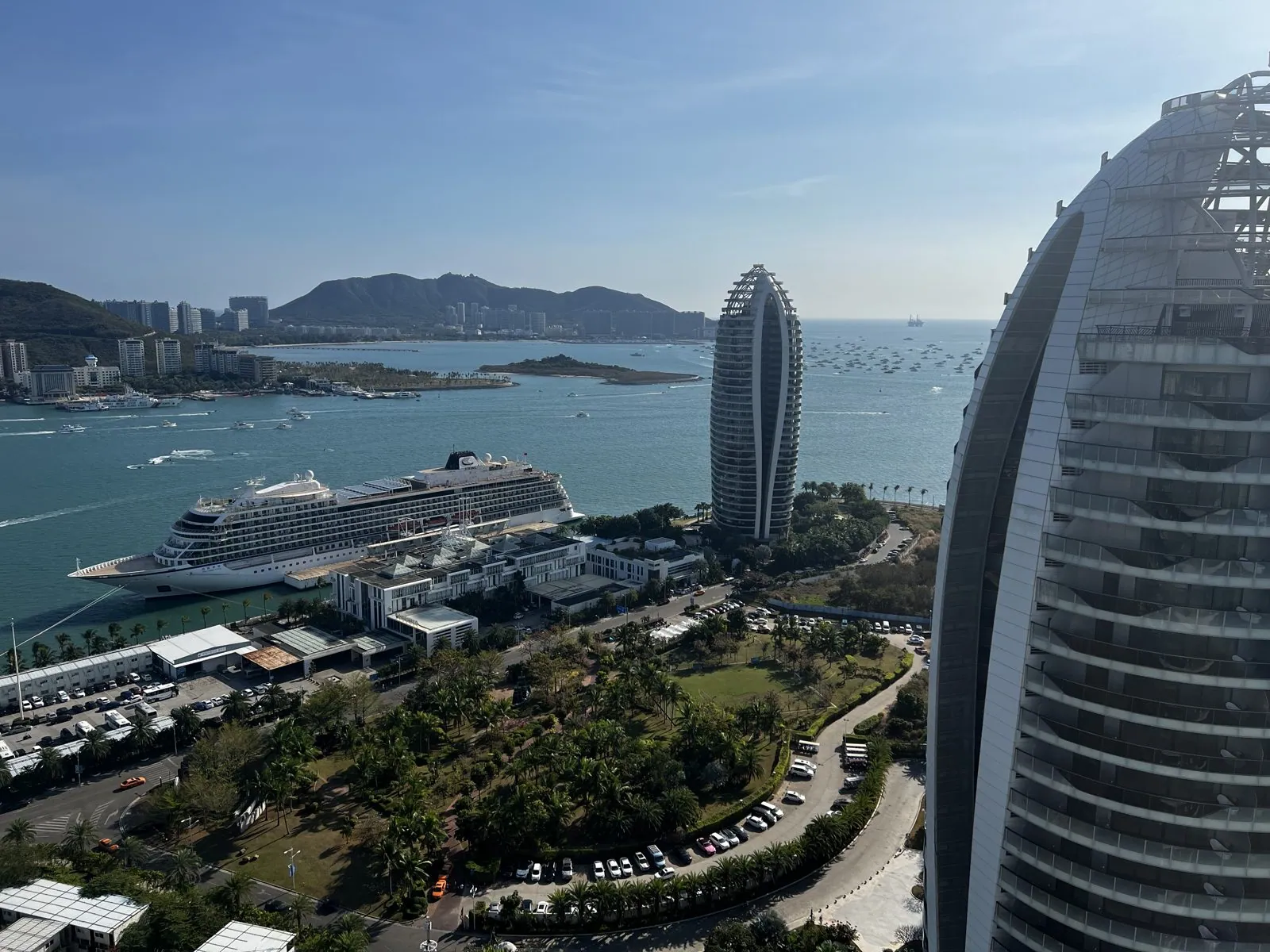
The view was the real reason to be there. Between the angled fins of the building's facade you could see straight across the water to the city and the green hills behind it. Turning the other way, the egg towers were right there, close enough to count the balconies, their steel crowns catching the light. Beyond them, a white cruise ship lay alongside the terminal. Far out on the open water, dozens of small boats sat at anchor, scattered like grains of rice across the bay, with a drilling rig on the horizon.
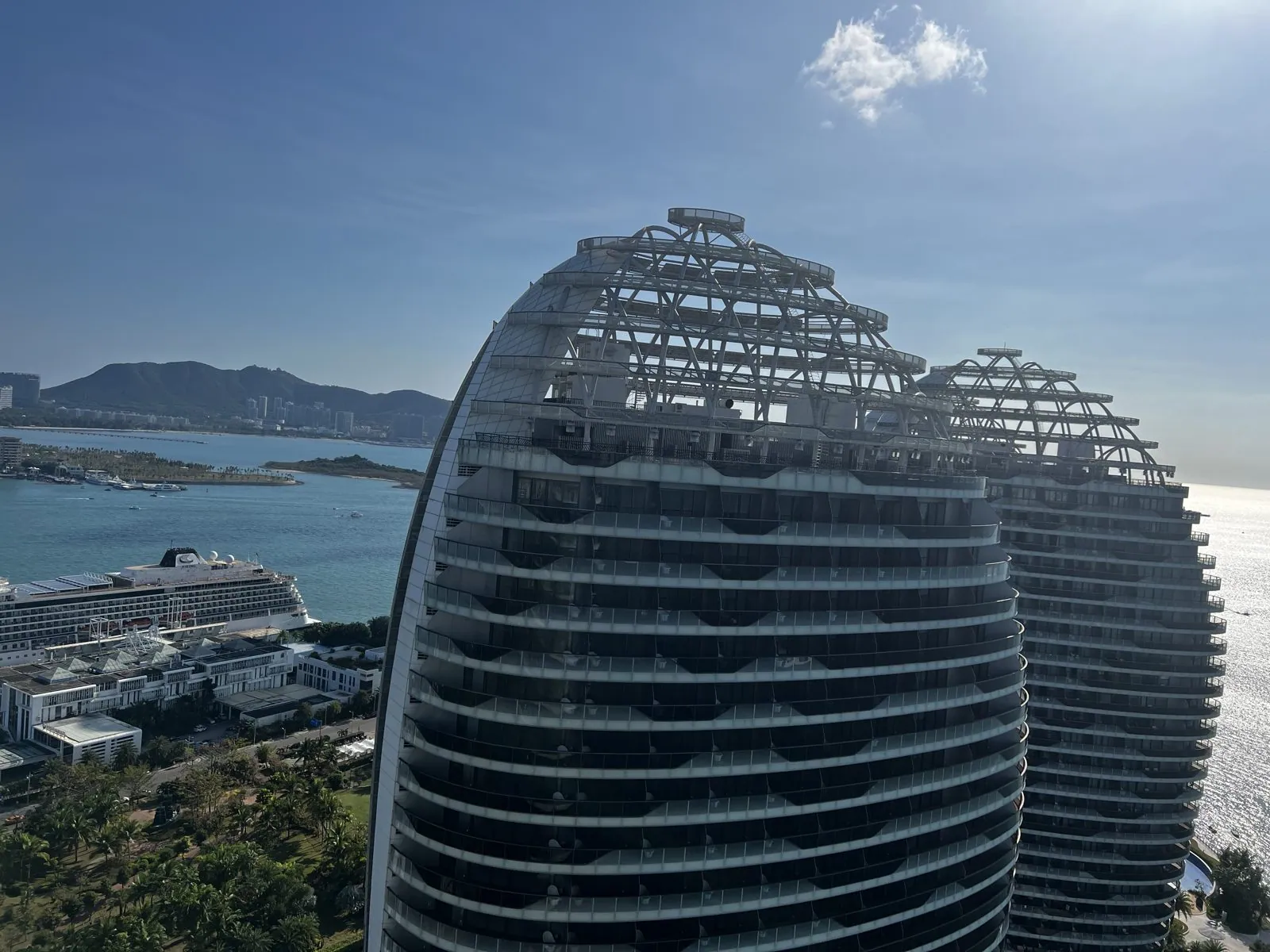
I find this kind of architecture hard to judge. On the one hand, a row of giant eggs on an artificial island is about as subtle as a fireworks display. On the other hand, in the late afternoon light, with the blue water all around, the green headlands and the white ships, it was undeniably beautiful, and it is impossible to mistake for anywhere else. That is more than most skylines manage.
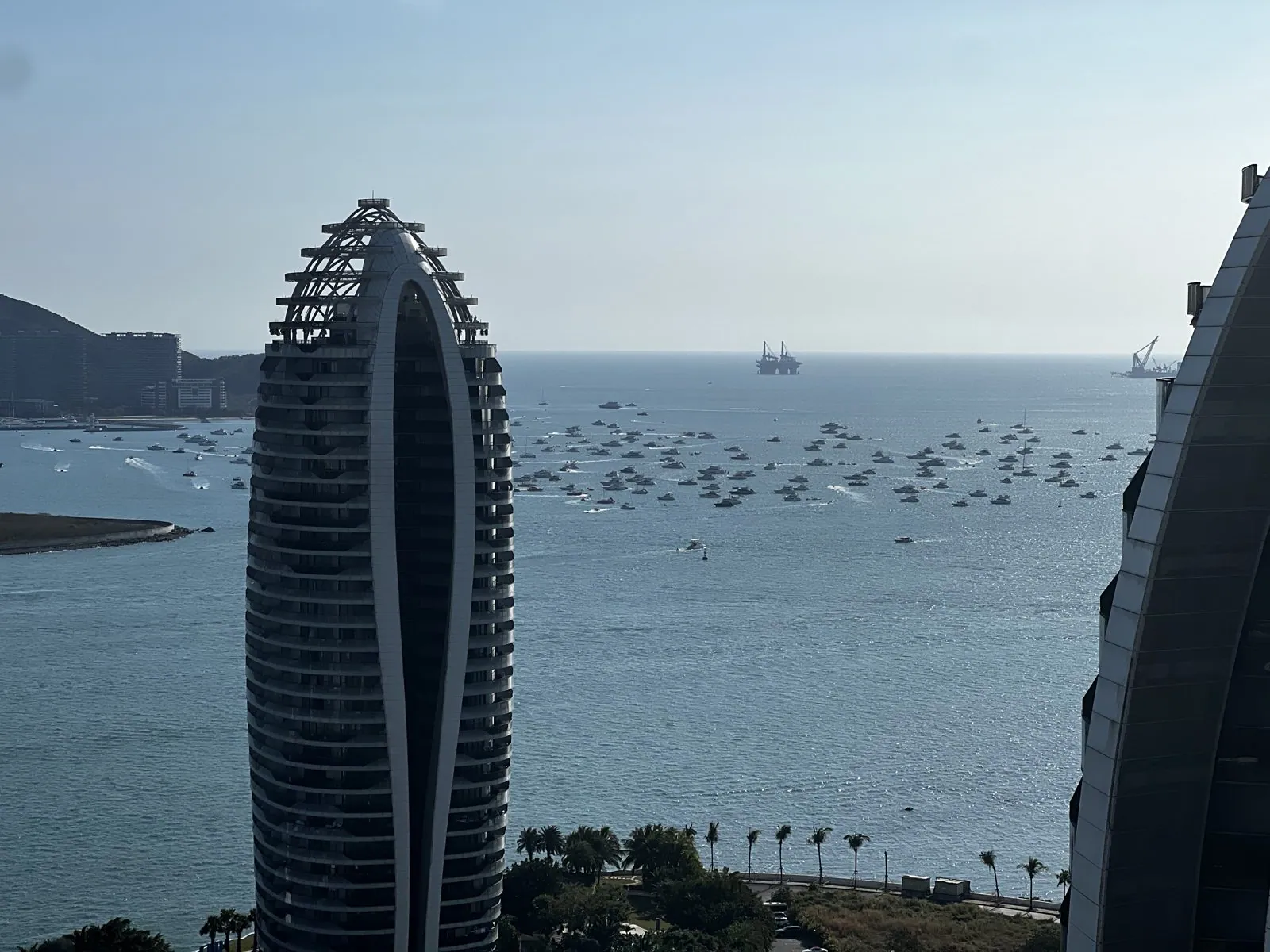
Later that afternoon we were over the bay ourselves. From a helipad on Phoenix Island, a small red helicopter takes visitors on short loops over Sanya Bay, and at about a quarter to five we took one, headsets on.
Luhuitou, the deer that turned its head
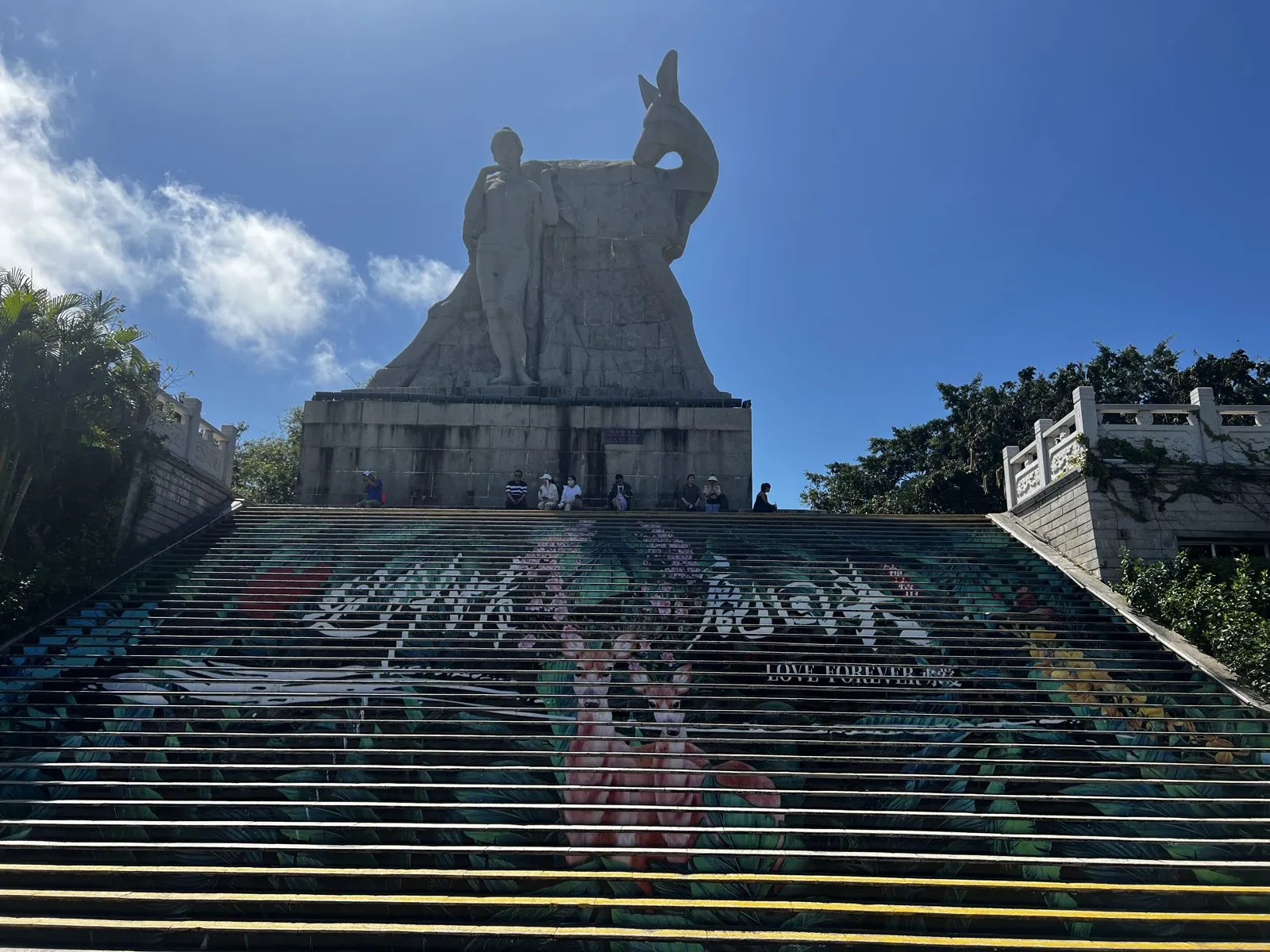
The next morning we climbed the other famous viewpoint: Luhuitou, the forested headland at the south end of Sanya Bay. The name means "the deer turns its head", and it comes from a legend of the Li people, Hainan's indigenous inhabitants. A young hunter chased a deer through the mountains for days until it was trapped at the edge of this cliff with nowhere left to run. As he drew his bow, the deer turned its head to look at him and became a beautiful young woman. They married and settled here, and the city, so the story goes, grew from their family.
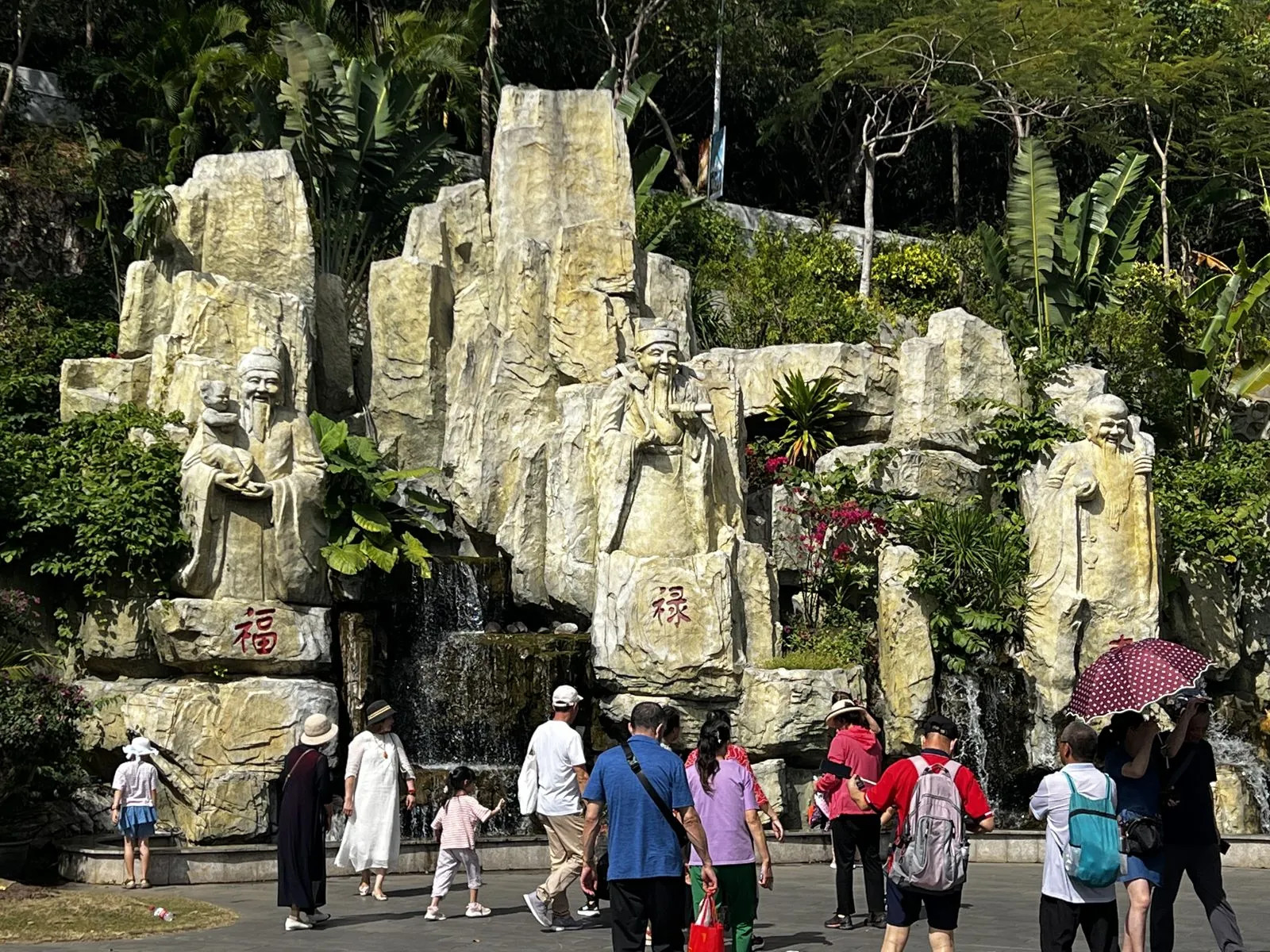
The path up starts with a rock garden of carved figures. Three tall stone sages stand on a cliff of artificial rock among palms and a small waterfall, carved with the characters for fortune and prosperity, and that morning a stream of visitors was passing at their feet. Then the road climbs through the trees to the top.
The hilltop park has the best views in Sanya. Looking west, the whole of Sanya Bay curves away into the haze: Phoenix Island with its five egg towers in a row and a white ferry moored in front, the long line of the city along the shore, and the mountains of the interior rising behind. The sky that morning was the kind of blue you only get by the sea, with a parade of fat white clouds marching across it, and bougainvillea in flower along the paths.
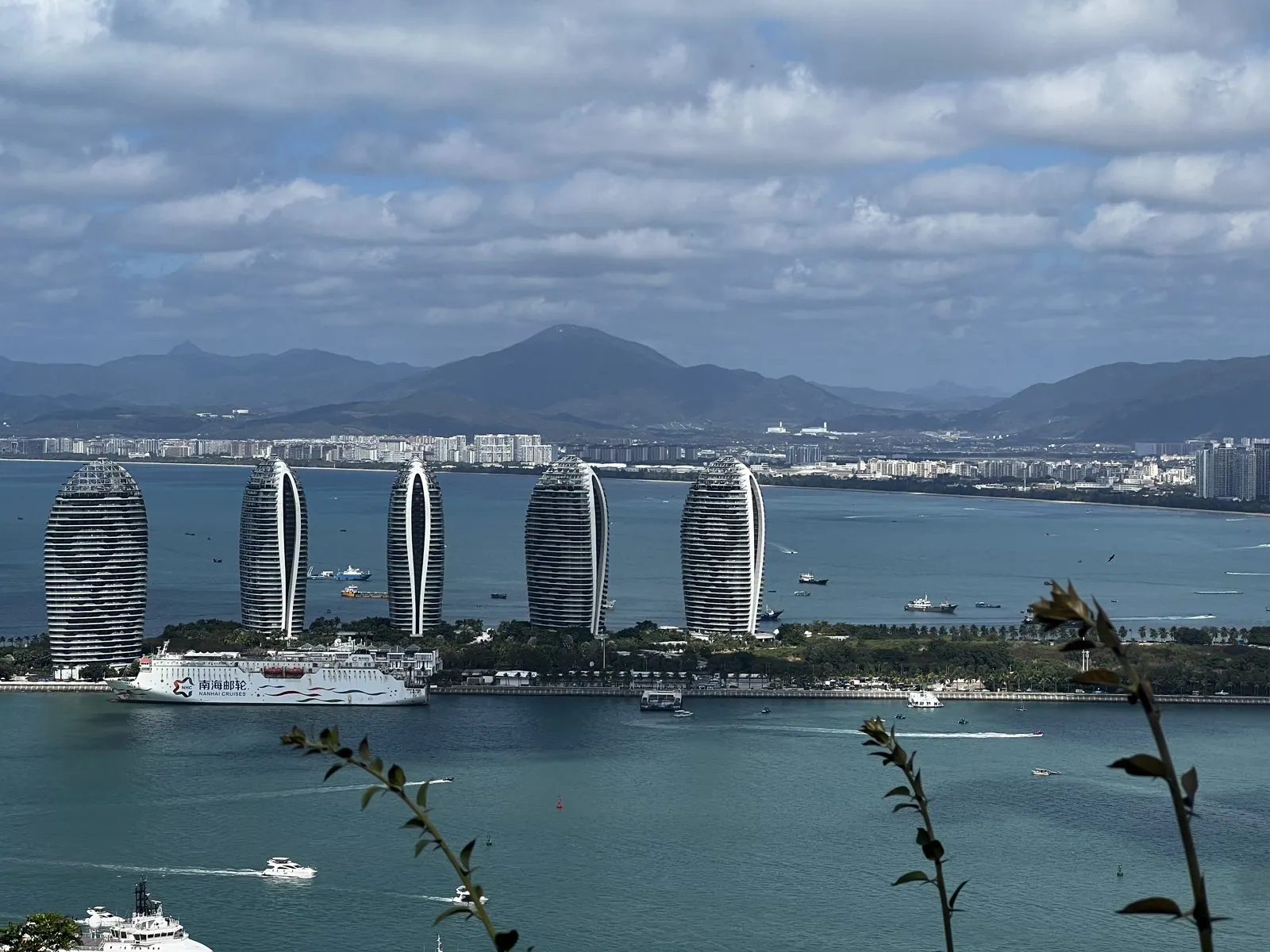
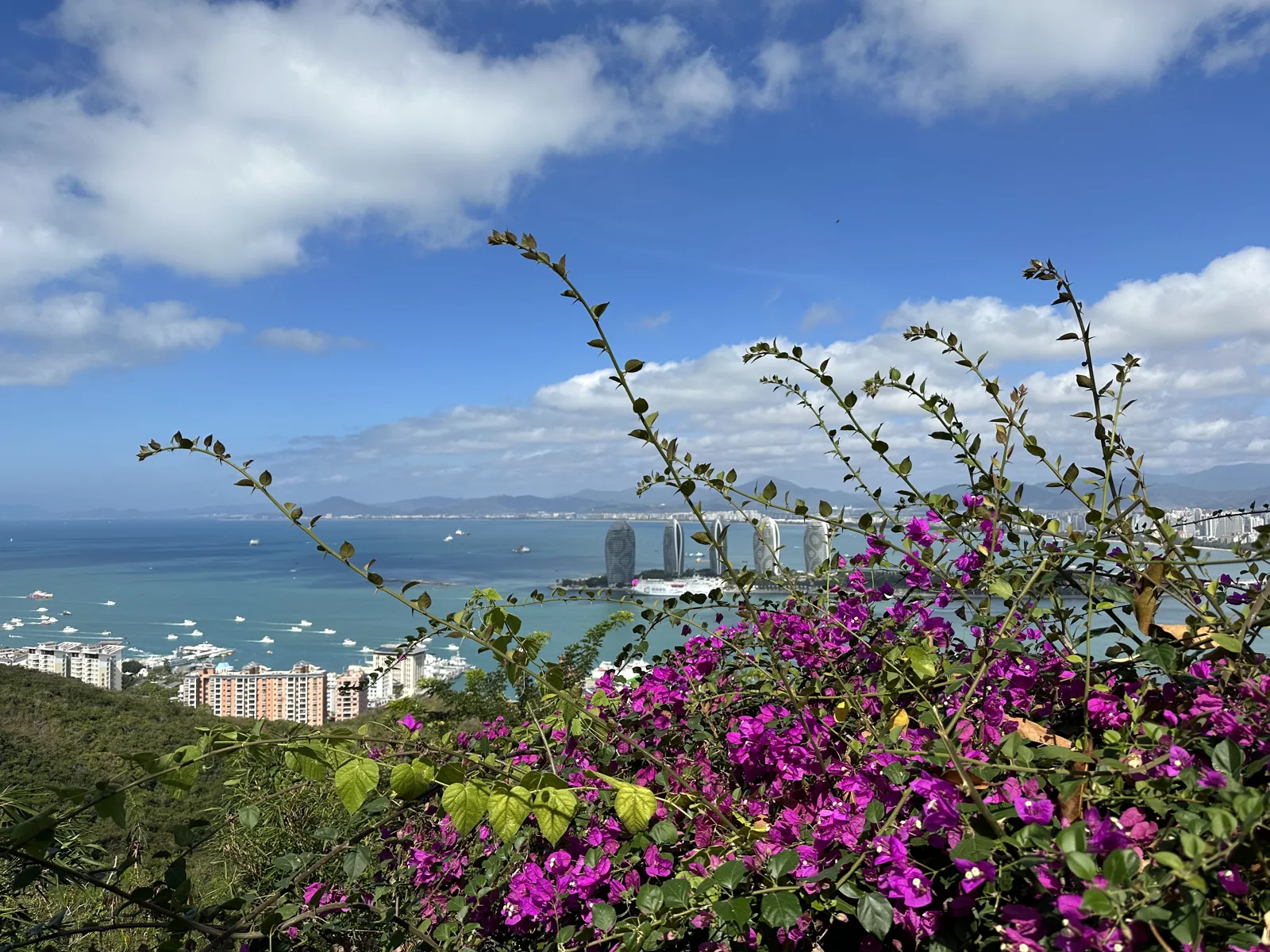
From different points around the summit you get different Sanyas. To the southeast, a quiet green coast curls around a small cove with a pier and a sandy beach, the sea beyond it a deep, clean blue. To the north, the view drops straight down into the marina: a forest of white masts and yachts packed into the harbor, with apartment towers lined up along the waterfront behind them like an audience. It's a reminder of what Sanya has become in thirty years. In the 1980s this was a small fishing town.
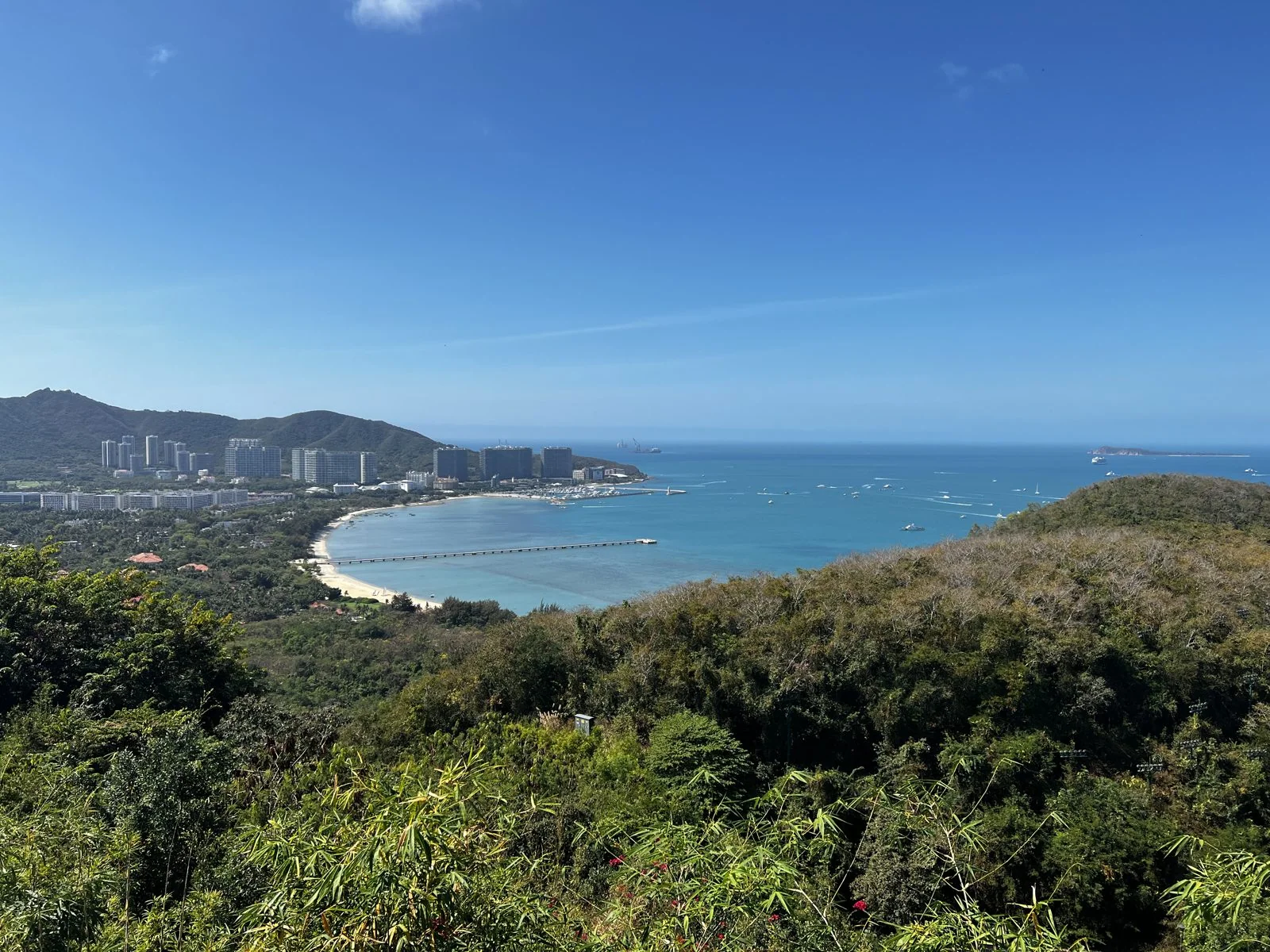
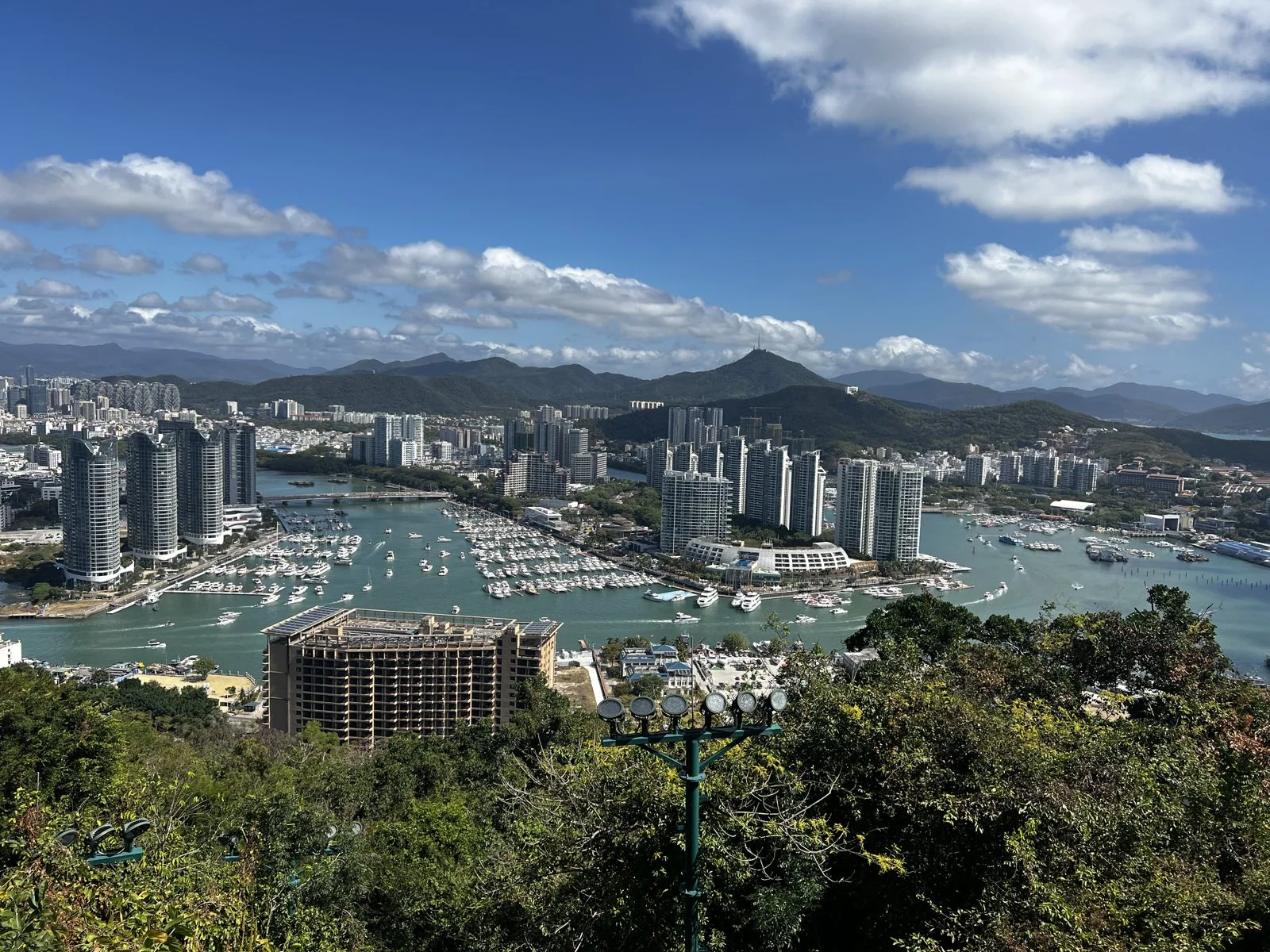
The statue that gives the hill its name stands at the very top, at the head of a long staircase painted with a mural and the words "love forever". It is a big stone group: the deer, head turned back over its shoulder, with the hunter and the woman beside it. Seen from the foot of the stairs against the noon sky, it is mostly silhouette. The hill is said to be a popular place to propose.
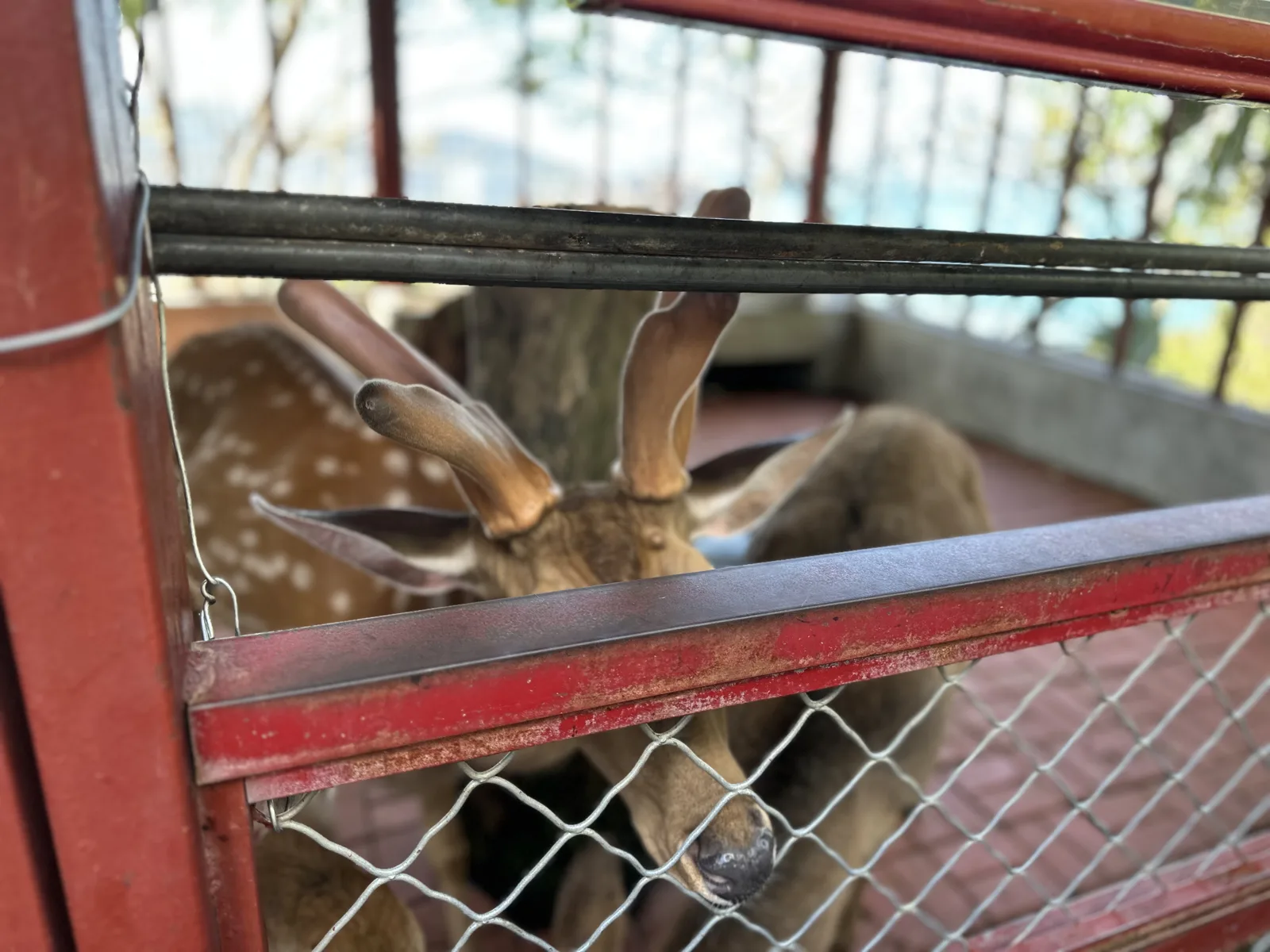
Near the summit, a few live sika deer were kept in a fenced enclosure.
Morels and birthday cakes
In the afternoon we went into the old part of town for some shopping of a very Chinese kind: dried goods. Hainan is famous for them, and the shops are like libraries of food. There were glass-topped bins of morel mushrooms, wrinkled and honeycombed, in neat rows; other mushrooms sliced and dried into pale curls; dried seafood, tea, nuts and roots. Everything was sorted by grade and stacked to the ceiling under bright lights. The smell inside is earthy and salty and slightly sweet, and it stays in your clothes.
Next door, a cake shop had filled its window with the most elaborate novelty cakes I have ever seen. There was a birthday cake topped with a pile of gold ingots and a bottle of baijiu, a cake shaped like a cartoon pig, one crowned with roses and another with a motorcycle, and several decorated with a "2023" for the new year. Every single one was a little sculpture, and none of them looked like they wanted to be eaten.
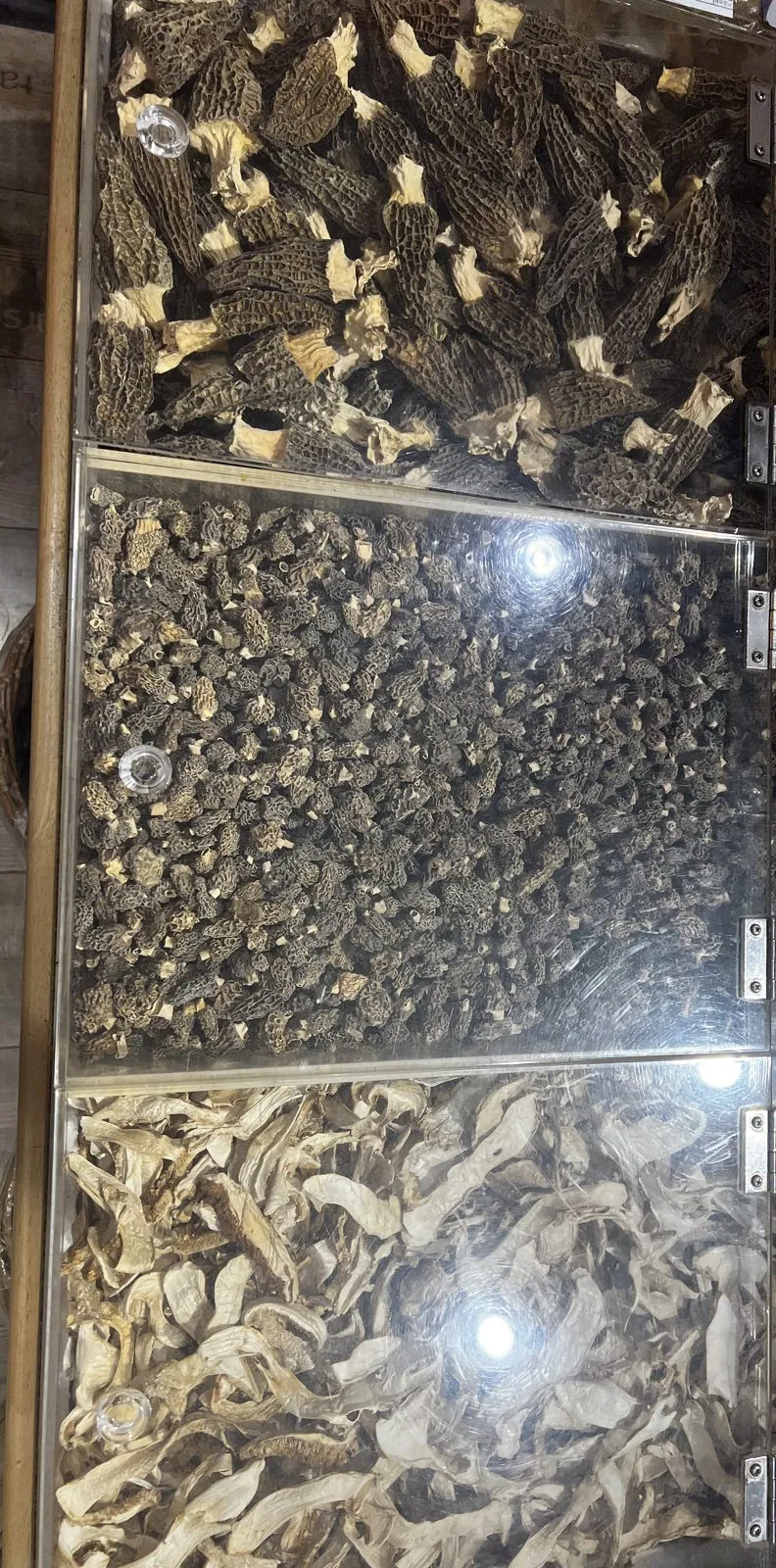
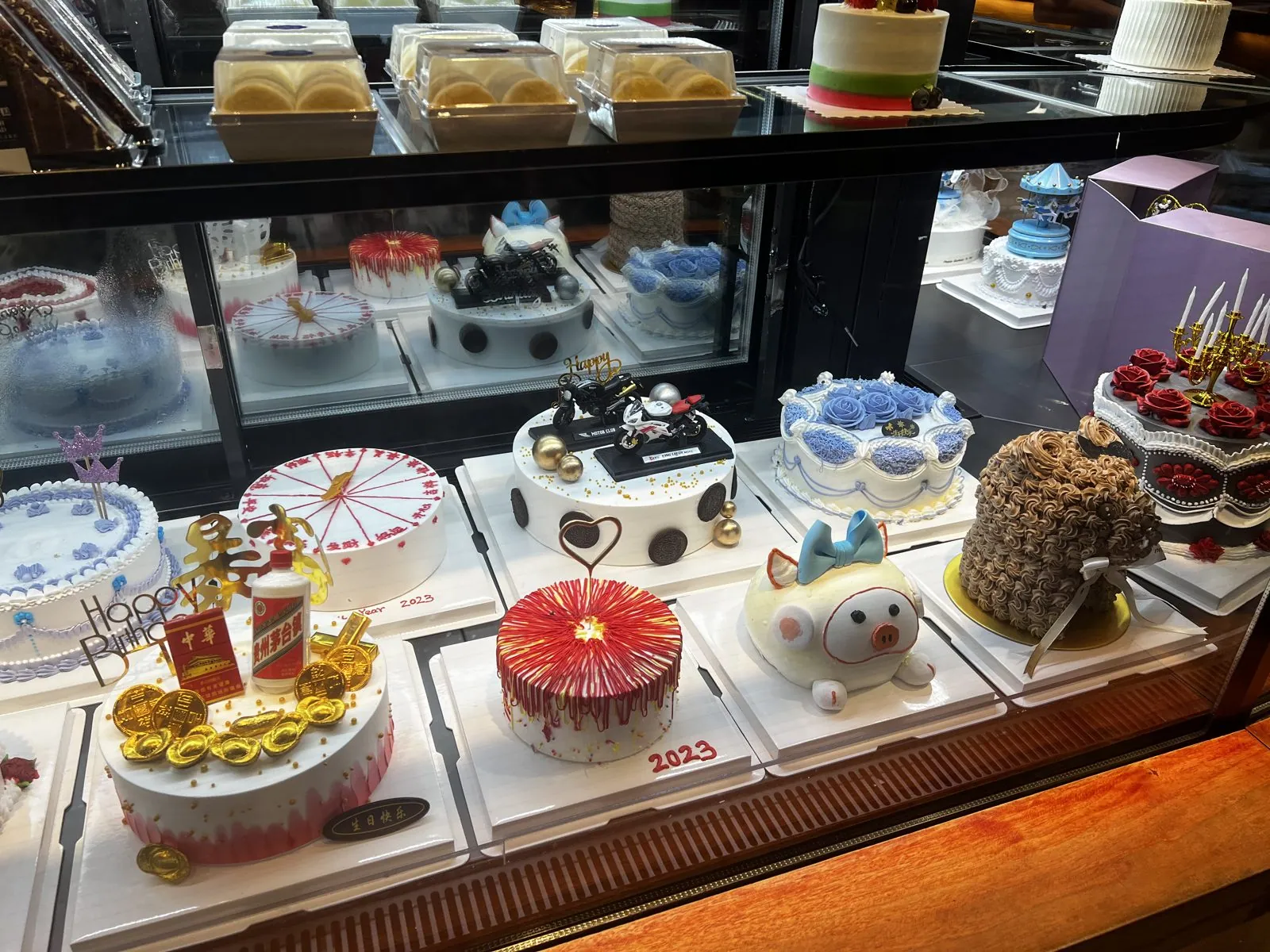
Act III: Shenzhen, straight up
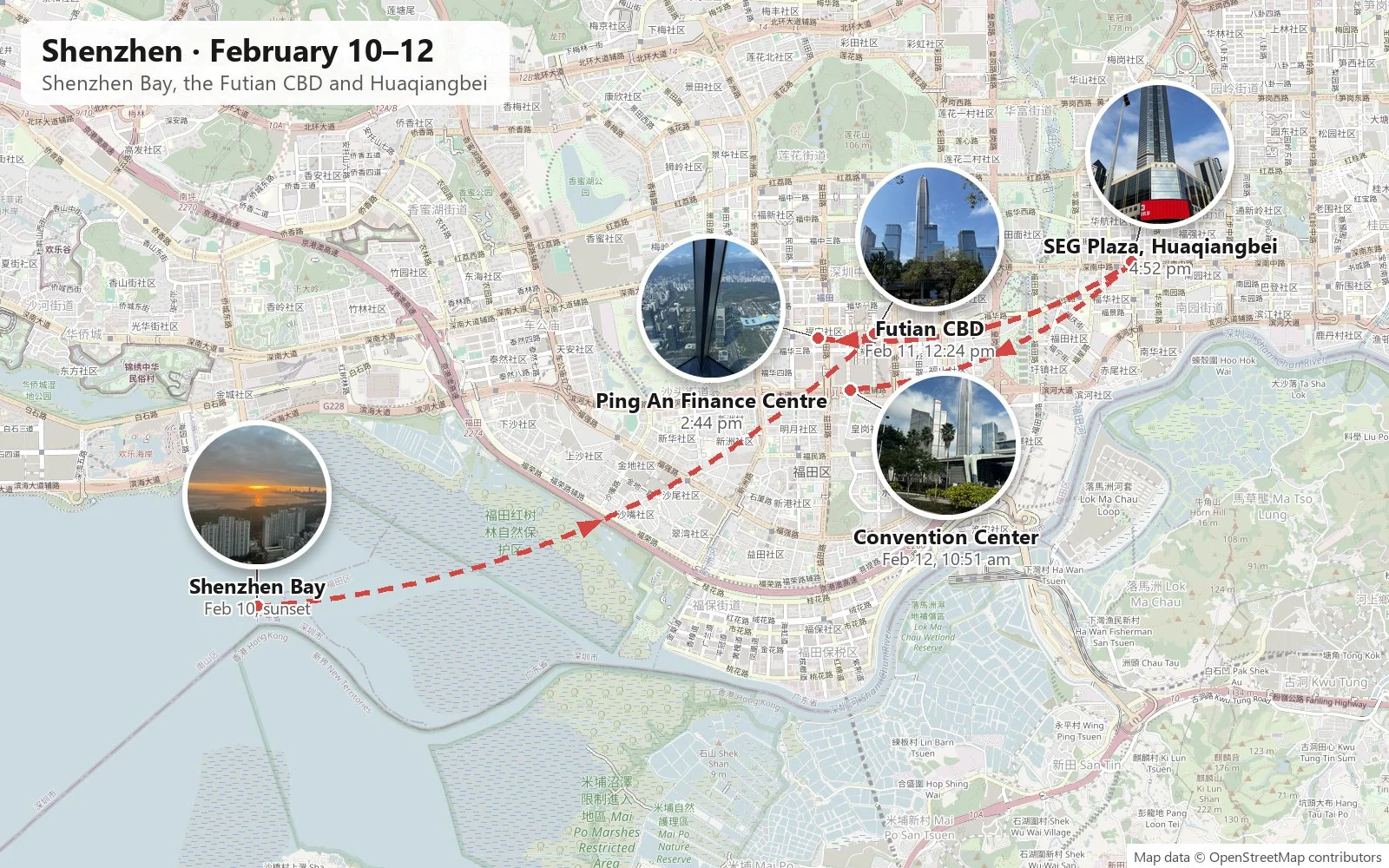
On February 10th we flew from Sanya to Shenzhen, an hour and a bit north across the South China Sea. If Sanya is China's beach, Shenzhen is its machine room. In 1980, when Deng Xiaoping made it the country's first Special Economic Zone, it was a small border town facing Hong Kong across a river. Today it has more than seventeen million, and it builds a large share of the world's phones, drones and circuit boards. It is a city with almost no "old" in it, and it doesn't seem to miss it. We were there mainly to see friends, and the photos below are from the hours in between.
Sunset over Shenzhen Bay
We saw the city first from a high floor in Futian, the central district, at half past five in the afternoon. Below was the Shenzhen you don't see on postcards: a dense field of older six- and eight-story apartment blocks, the "urban villages" that were once actual villages and are now packed with housing, with new forty-story towers rising out of them and cranes on the skyline. Beyond them was the long, flat water of Shenzhen Bay, with the mangroves along its edge and the towers of the far shore in a haze. The sky was heavy with cloud.
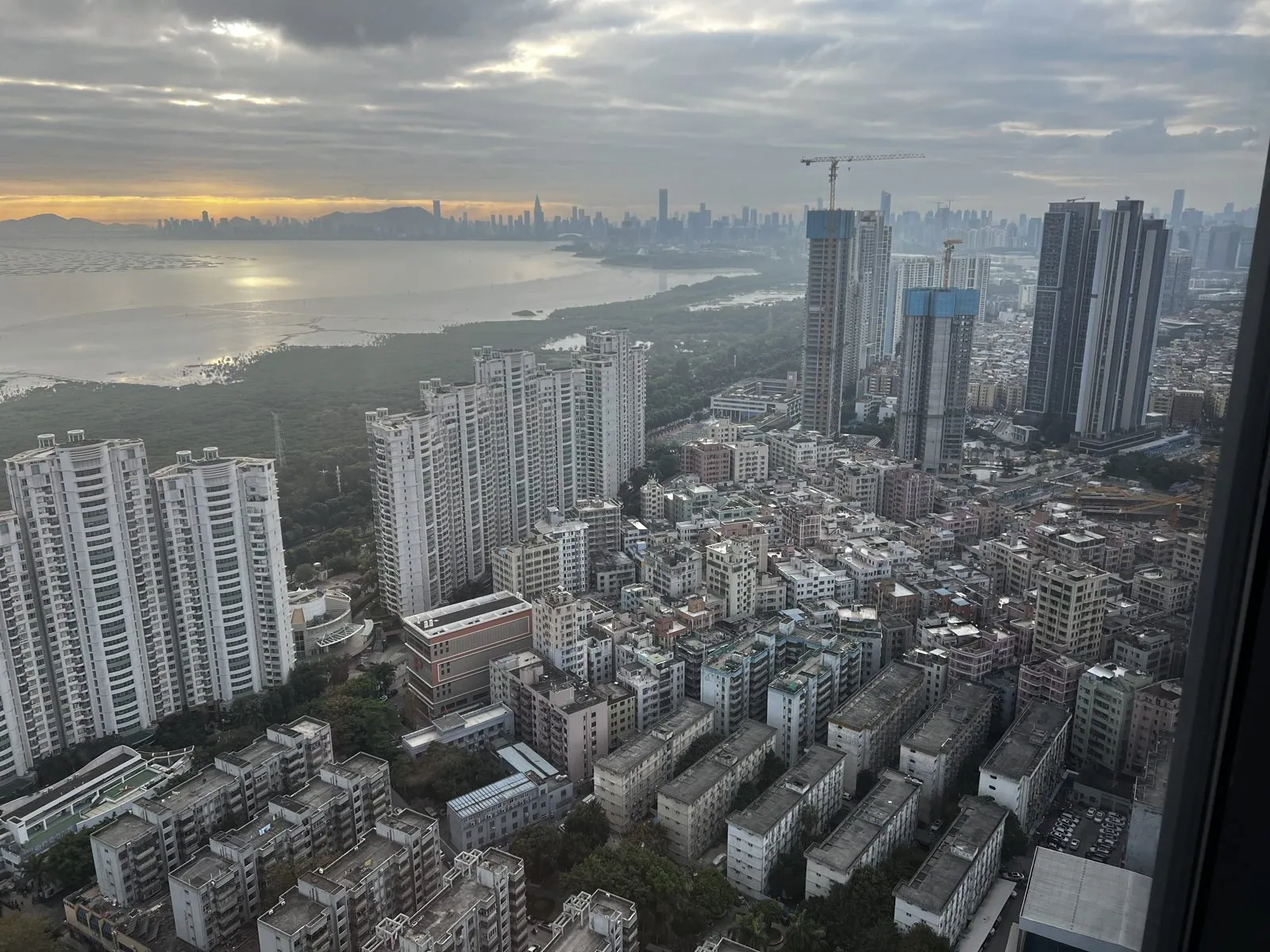
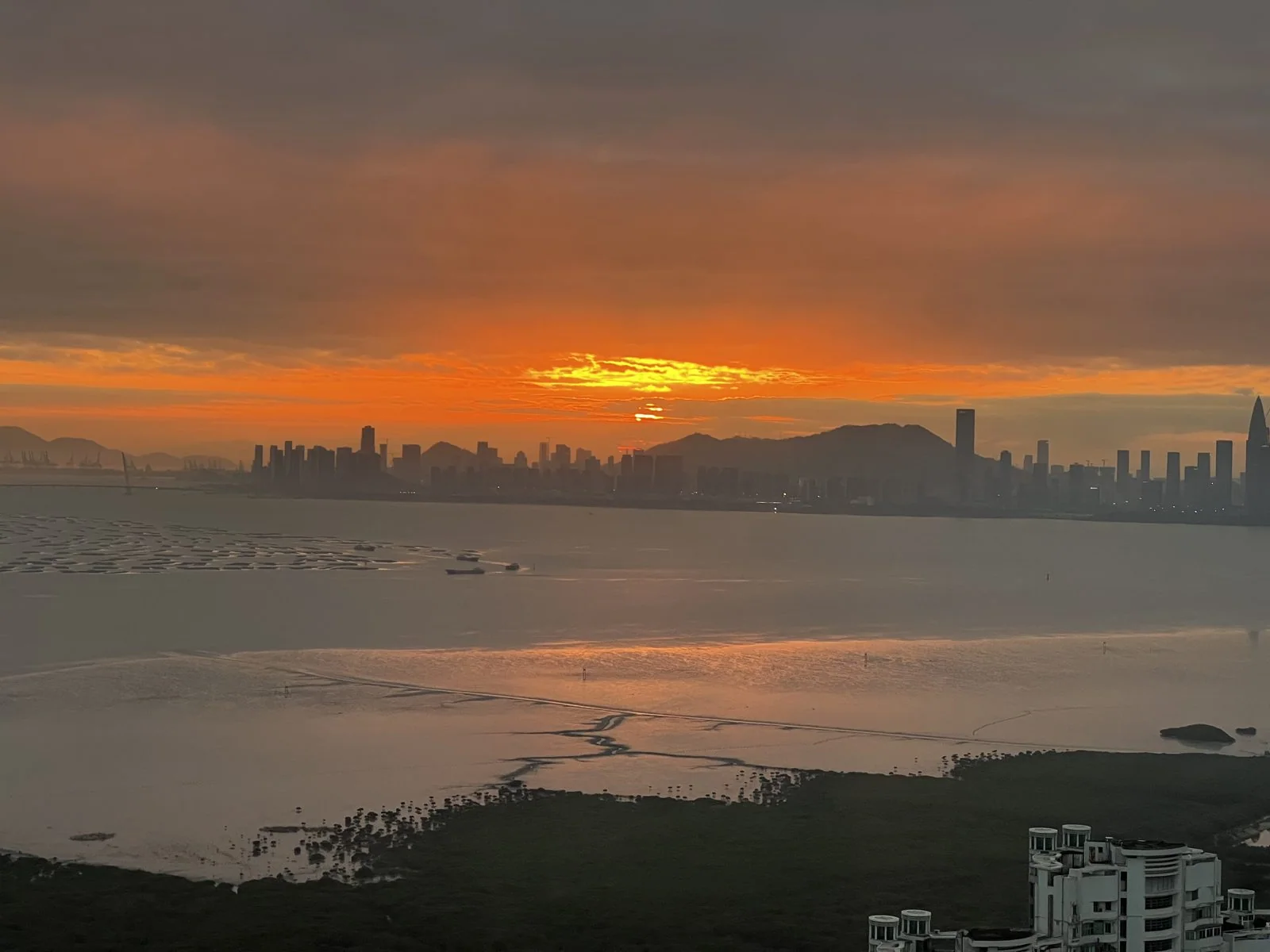
Then, at about six, the sun dropped into the gap between the cloud and the horizon, and the whole view caught fire. For ten minutes the sky over the bay burned orange. The sun sat like a coal on top of the distant skyline, and a column of molten light ran across the water and the mudflats toward us. The low tide had left the bay a mirror of shallow water and sandbars, and every channel in it glowed. The mangroves at the edge of the bay, part of a nature reserve where migrating birds spend the winter, turned to a black lace border along the bottom of the frame.
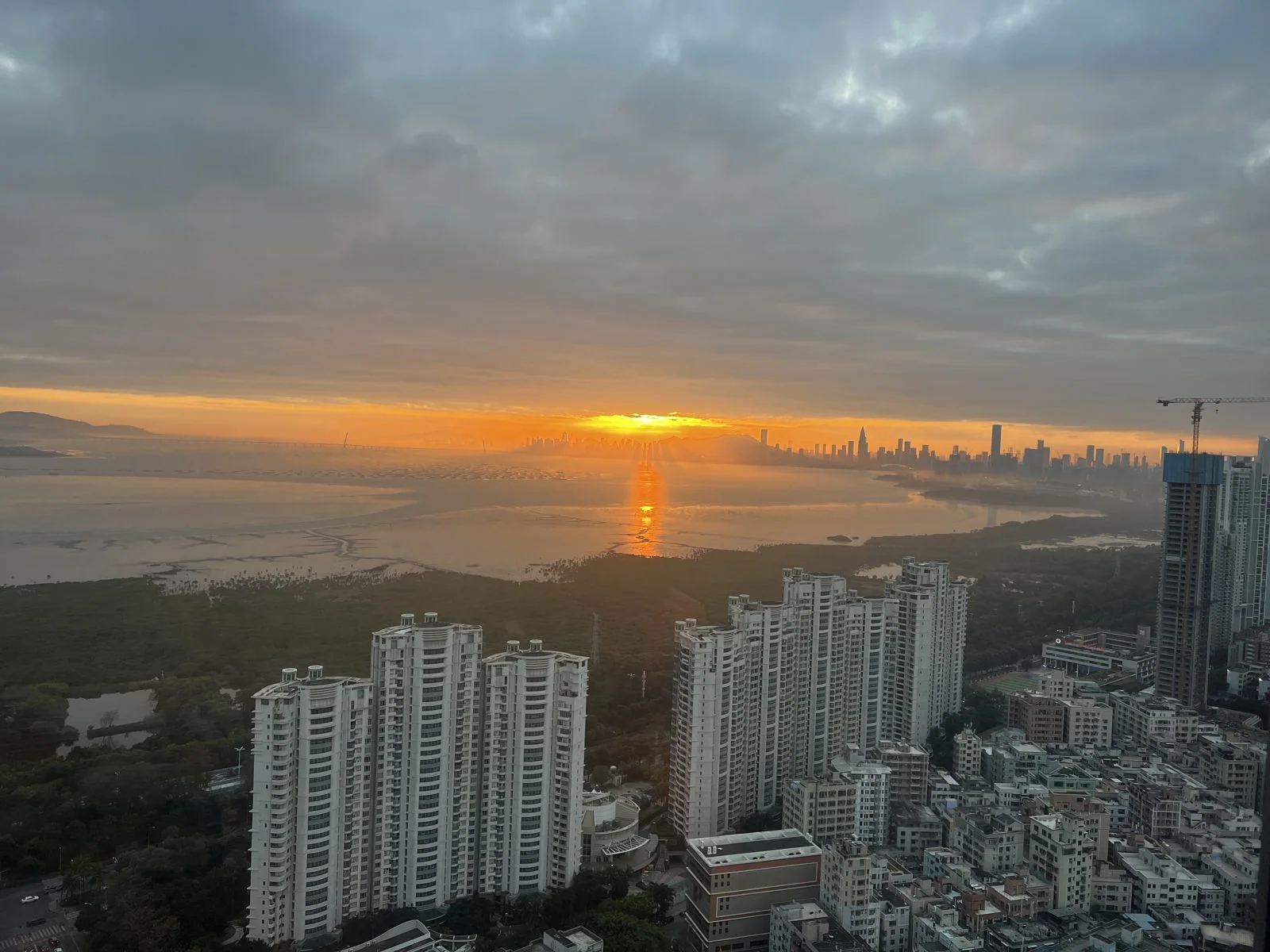
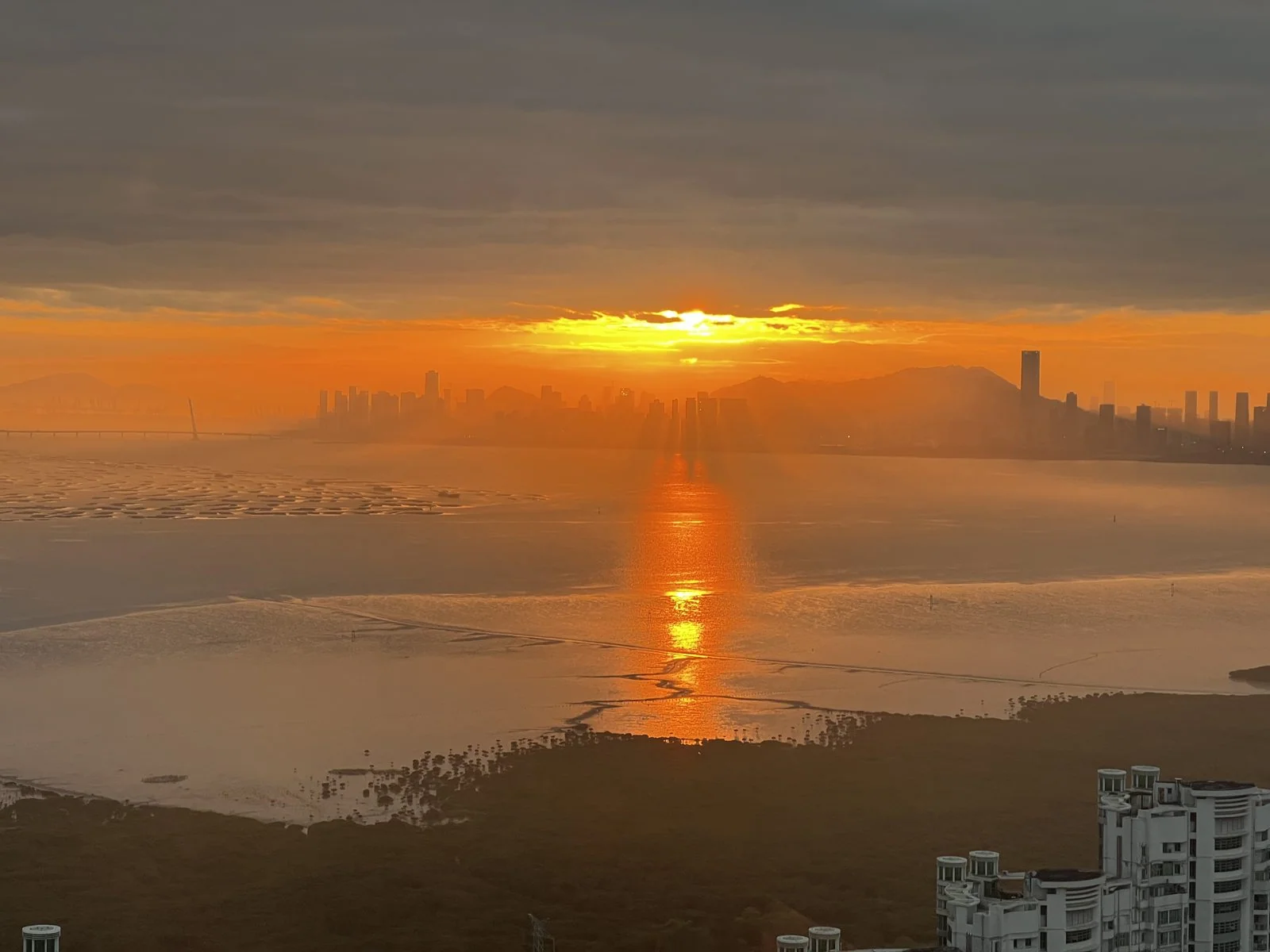
By ten past six it was nearly over. The sun had gone behind the far towers, leaving the bay a sheet of dull copper and the clouds above it a smoldering orange-grey. It was the second great sunset over water in five days, and they could hardly have been more different: one on a beach in a crowd of thousands, the other through a window, with a whole city spread out below in silence.
The Futian CBD
The next morning was bright and clear. In February 2023 COVID testing booths were still part of the street furniture in Chinese cities, a last leftover of the previous three years. We took the metro to the Futian Central Business District. Futian's CBD was planned from scratch in the 1990s as the new center of a new city. It is laid out on a grand north-south axis of parks and civic buildings, and around it stands a forest of glass towers, most of them less than twenty years old.
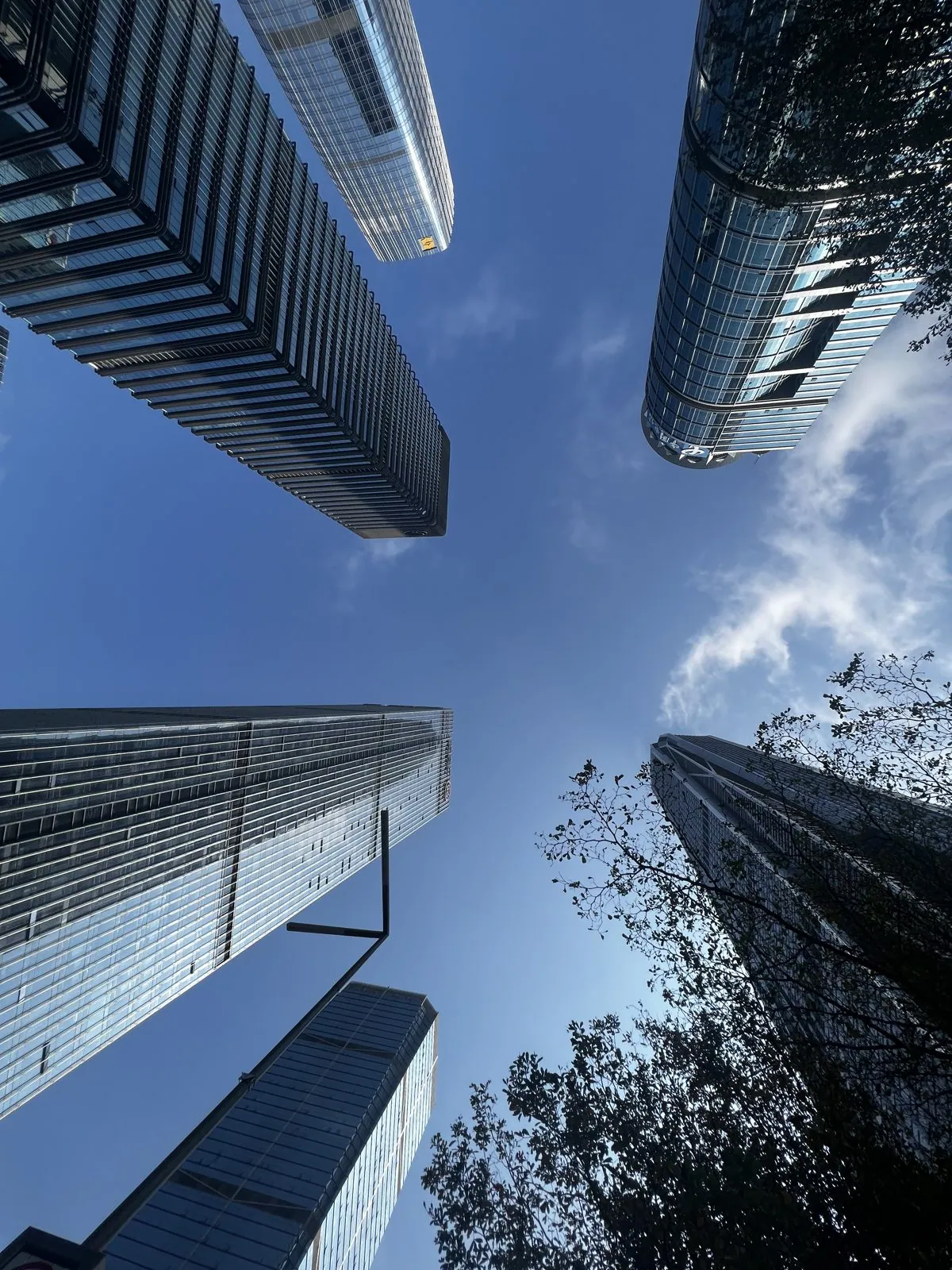
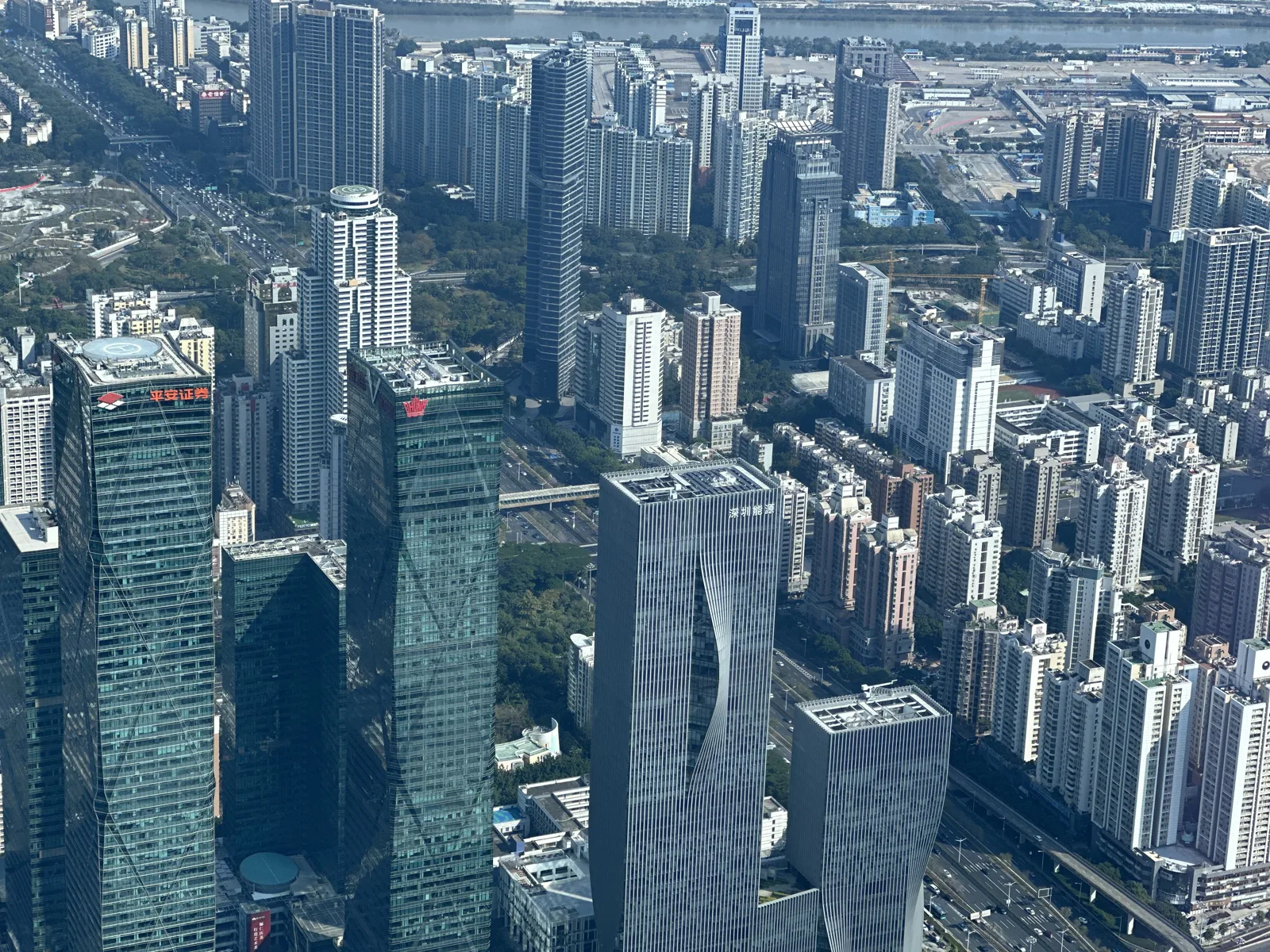
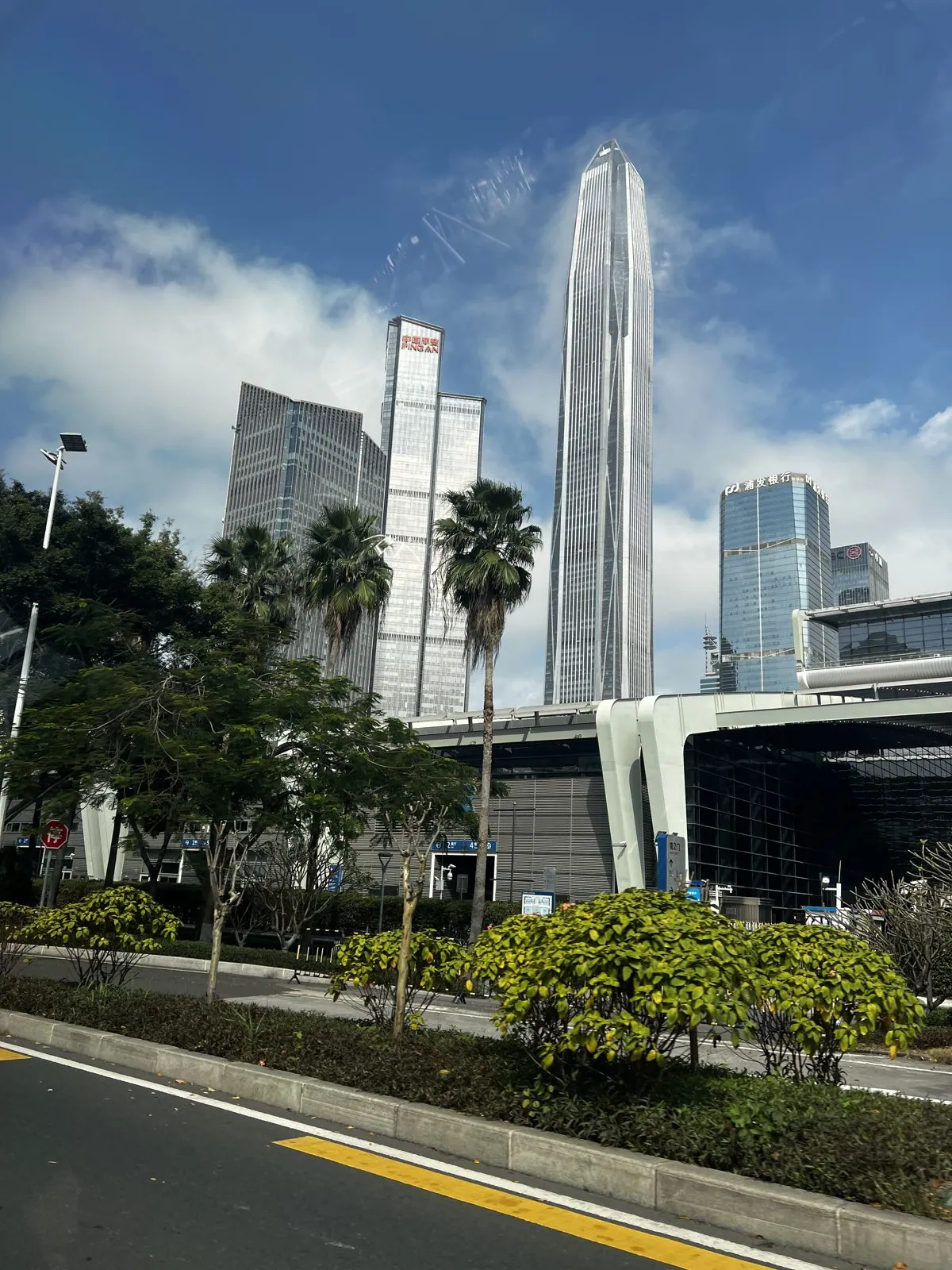
Above all of them rises the Ping An Finance Centre: 599 metres of stone-ribbed steel and glass with a stepped, faceted crown. Designed by the American firm Kohn Pedersen Fox and finished in 2017, it is the second-tallest building in China after the Shanghai Tower, which we had seen from the Bund a week earlier. It was planned with a spire that would have taken it past 660 metres, but the spire was dropped over concerns about air traffic. From the street you can't see the top without tipping your head all the way back. Standing at its foot and looking straight up, the surrounding towers converge into the sky like the walls of a canyon.
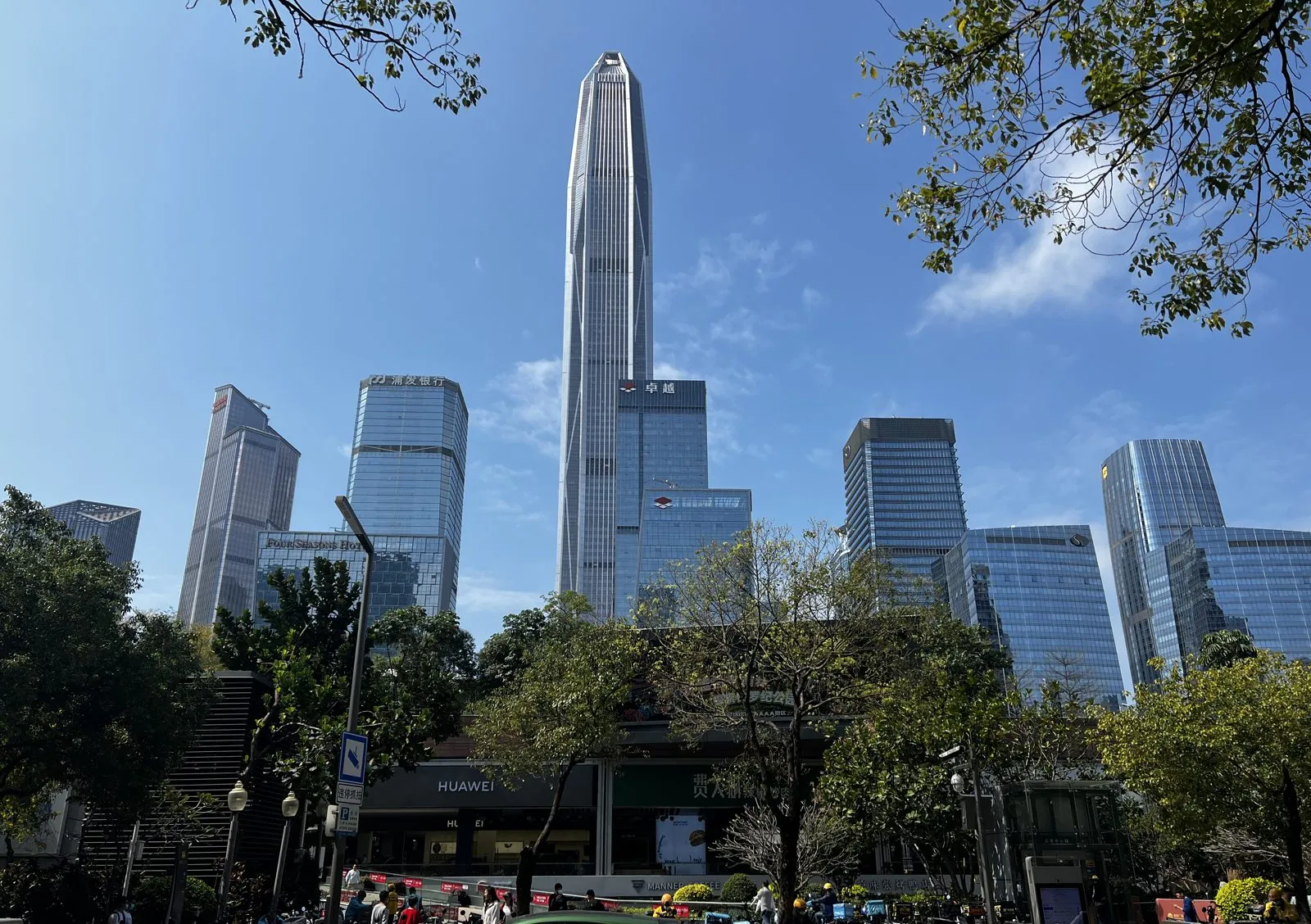
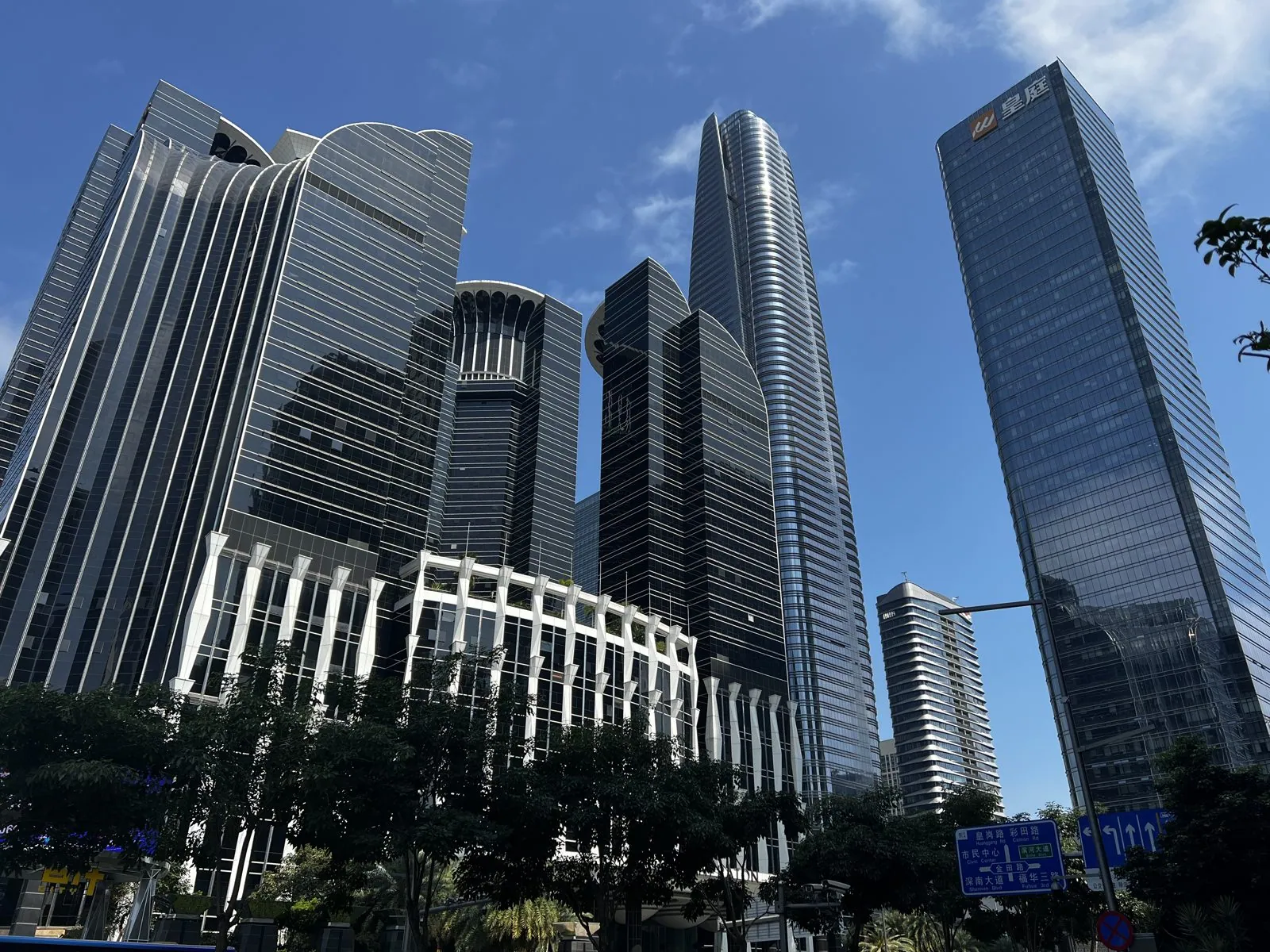
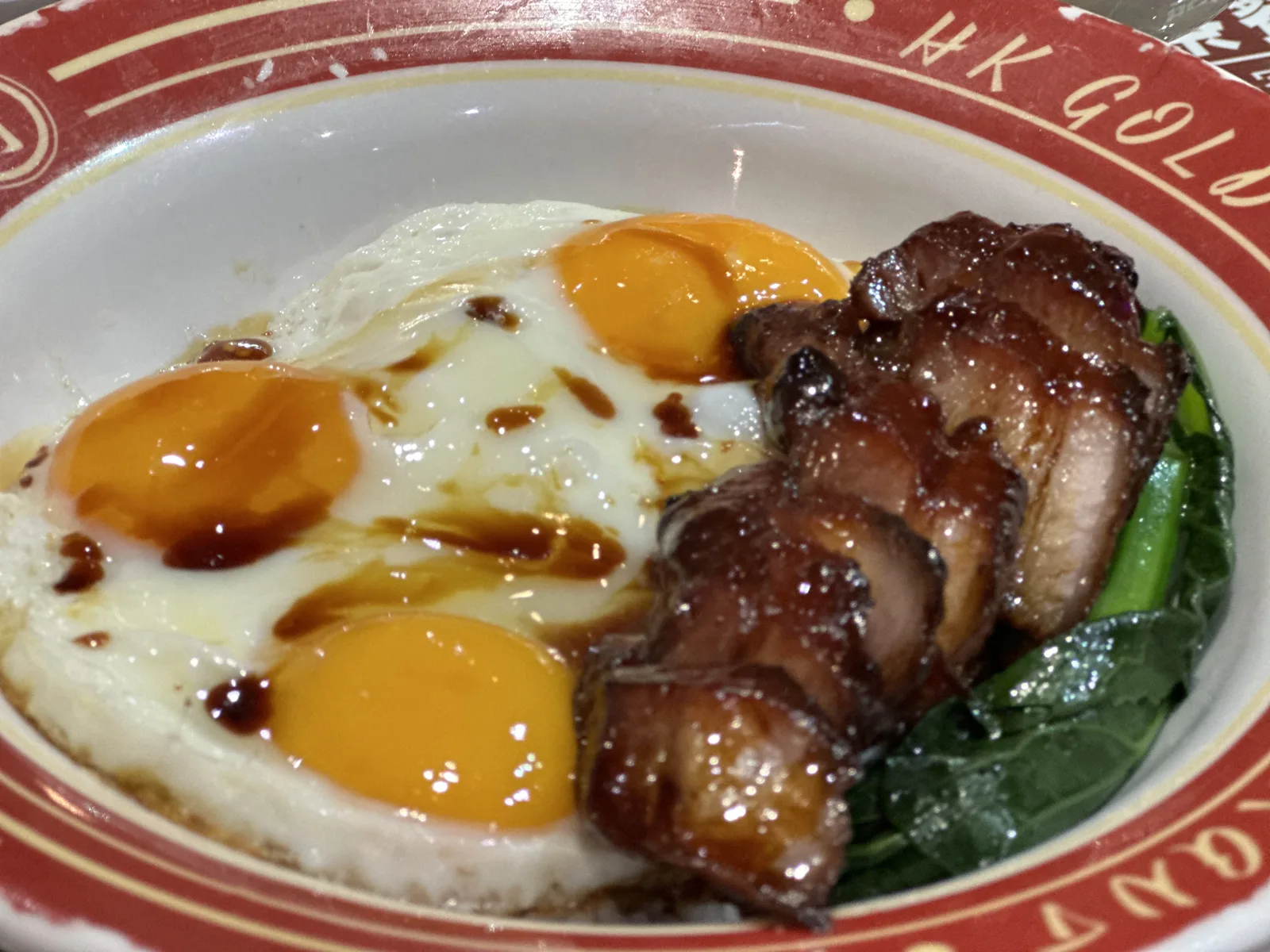
The street level of the CBD is surprisingly green: wide boulevards lined with banyan trees, plazas with palms, and the sound of traffic softened by all the leaves. It is also very clean and very new. Brunch was at a Hong Kong-style café: char siu, two fried eggs and greens. Then we went up.
118 floors up
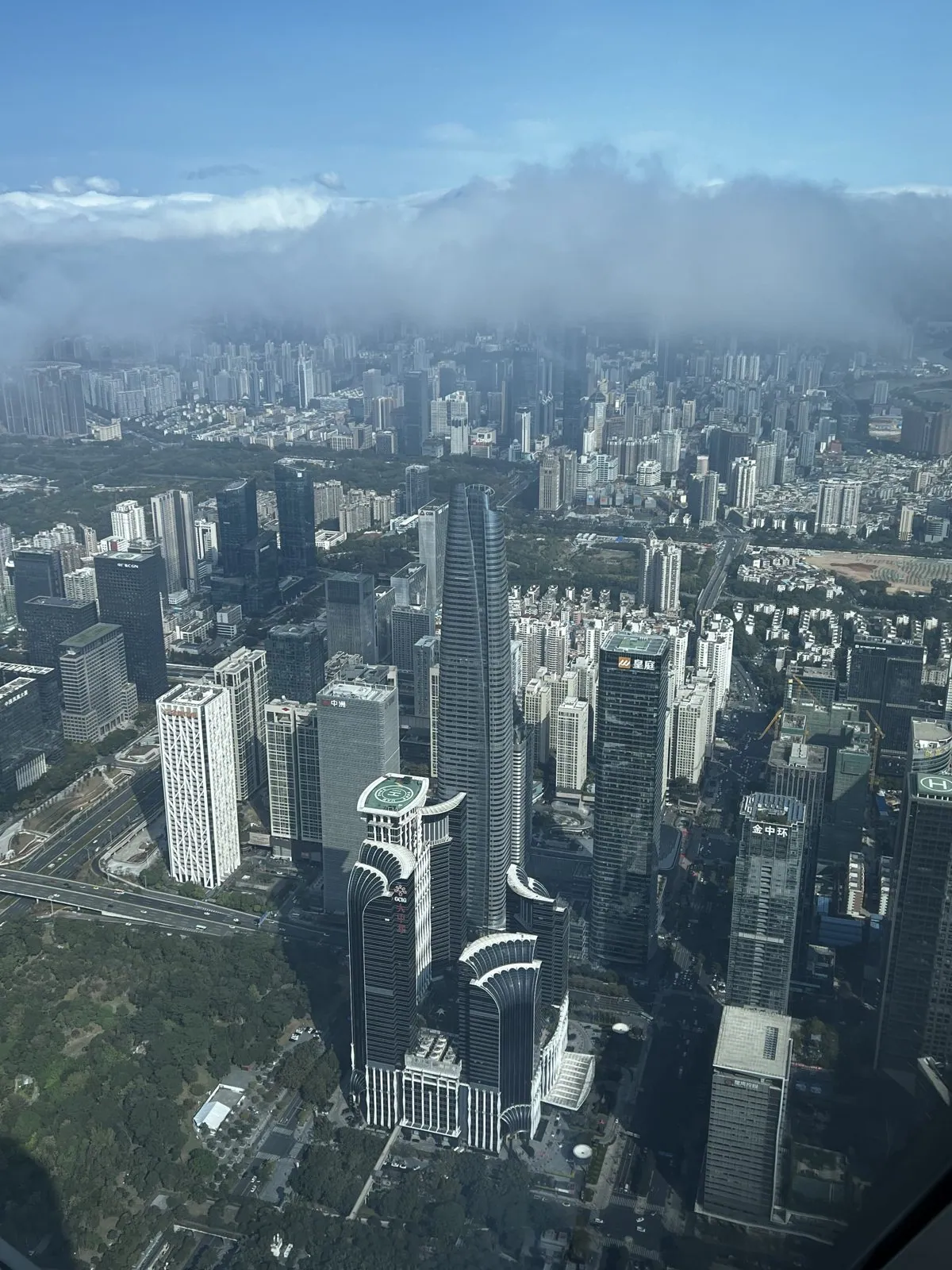
We went up for afternoon tea at the restaurant on the 118th floor of the Ping An Finance Centre, 572 metres up, two floors above the observation deck. The elevator ride up is fast enough to make your ears pop. When the doors open, the city is suddenly below you as if you were looking down from a plane. The windows are set at an angle between heavy dark steel mullions, so in many places you are looking down past your own feet.
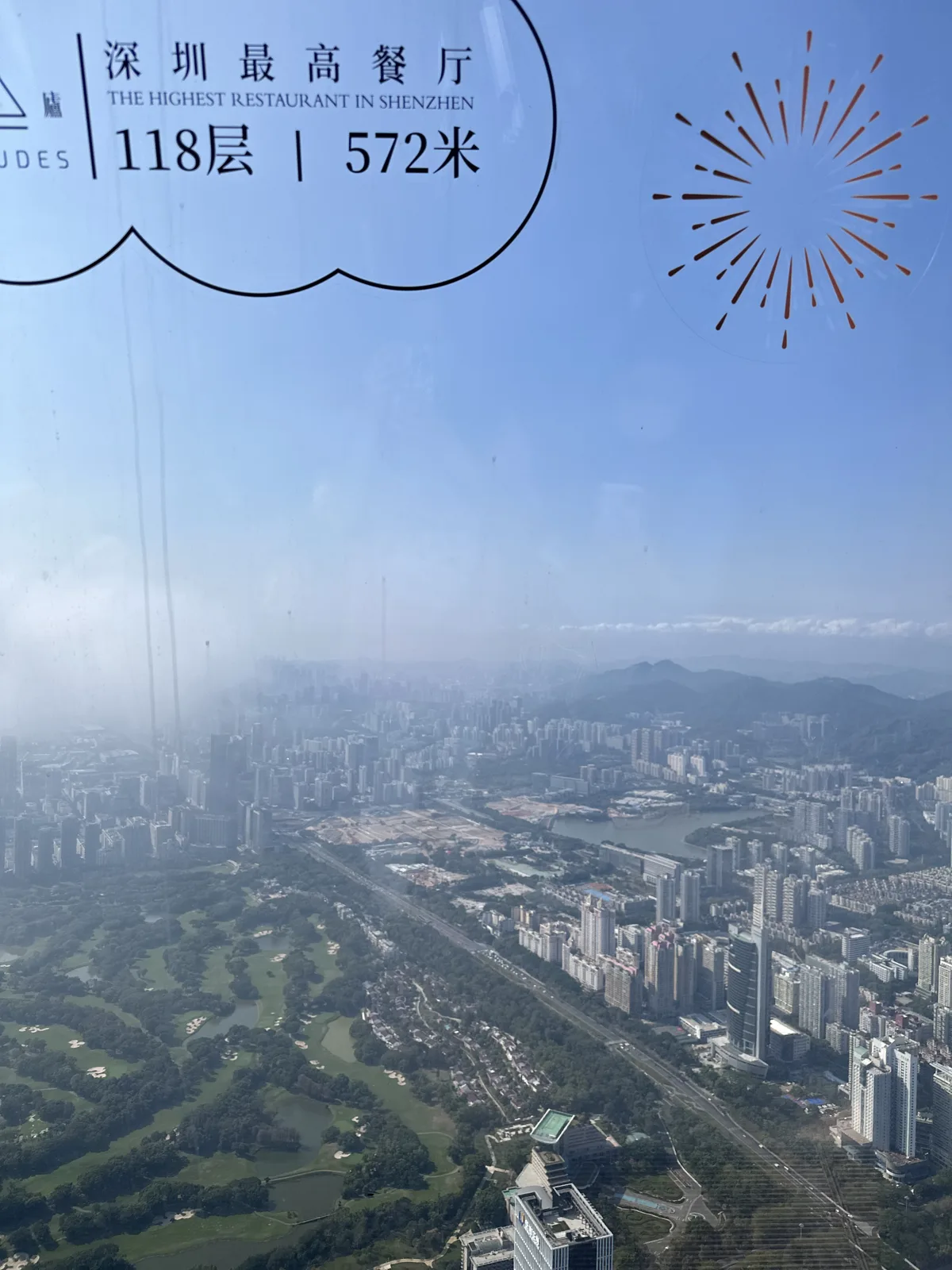
Straight below, the CBD's axis was laid out like an architect's model. The green spine of the central park ran north. In the middle sat the Civic Center, with its vast blue roof and a yellow hump in the center, designed to suggest a giant bird spreading its wings. Behind it, Lianhua Mountain park was a dark green patch among the towers, and beyond that more towers went on and on until they faded into the mountains along the northern horizon, half hidden by a long bank of cloud.
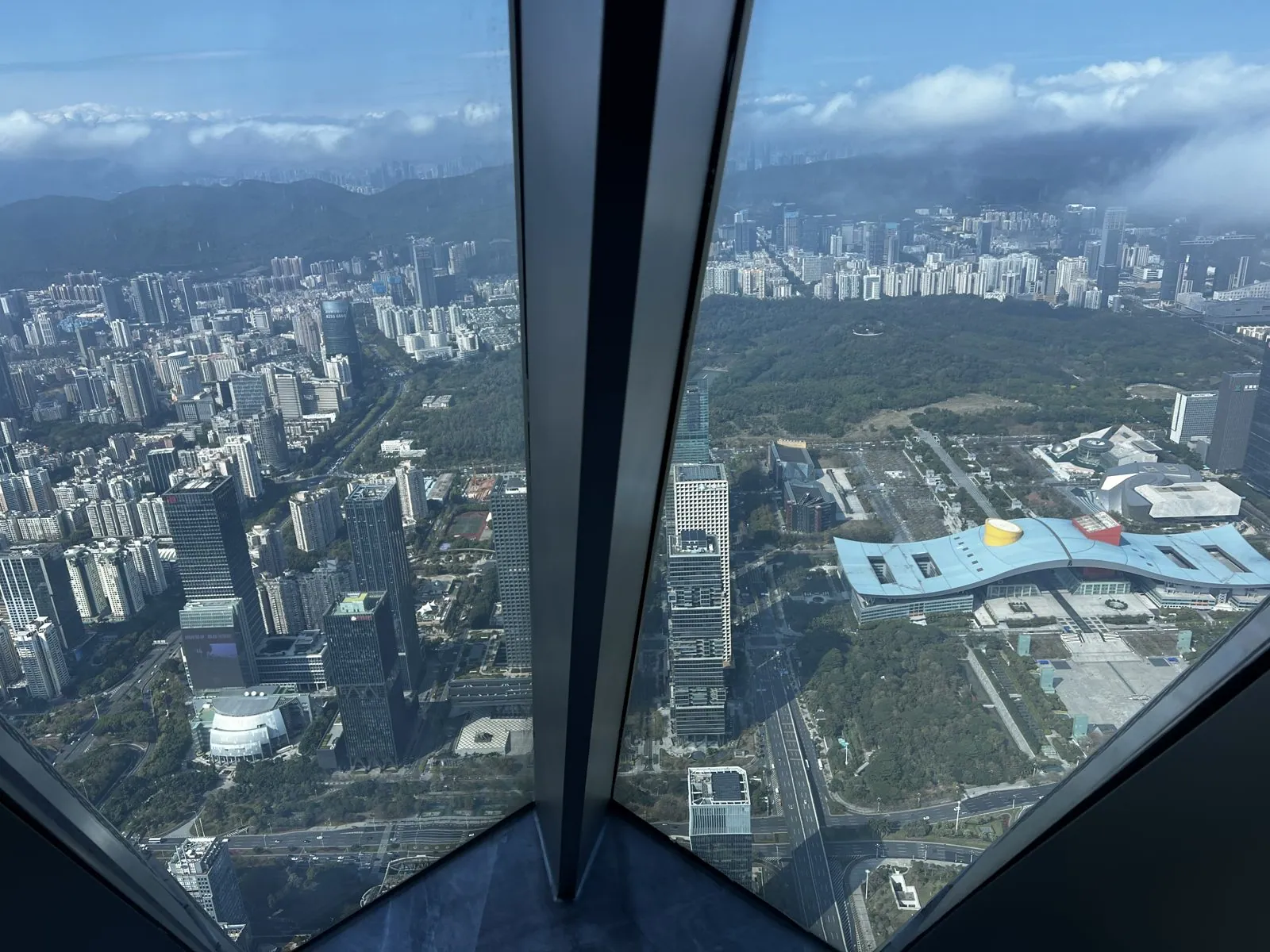
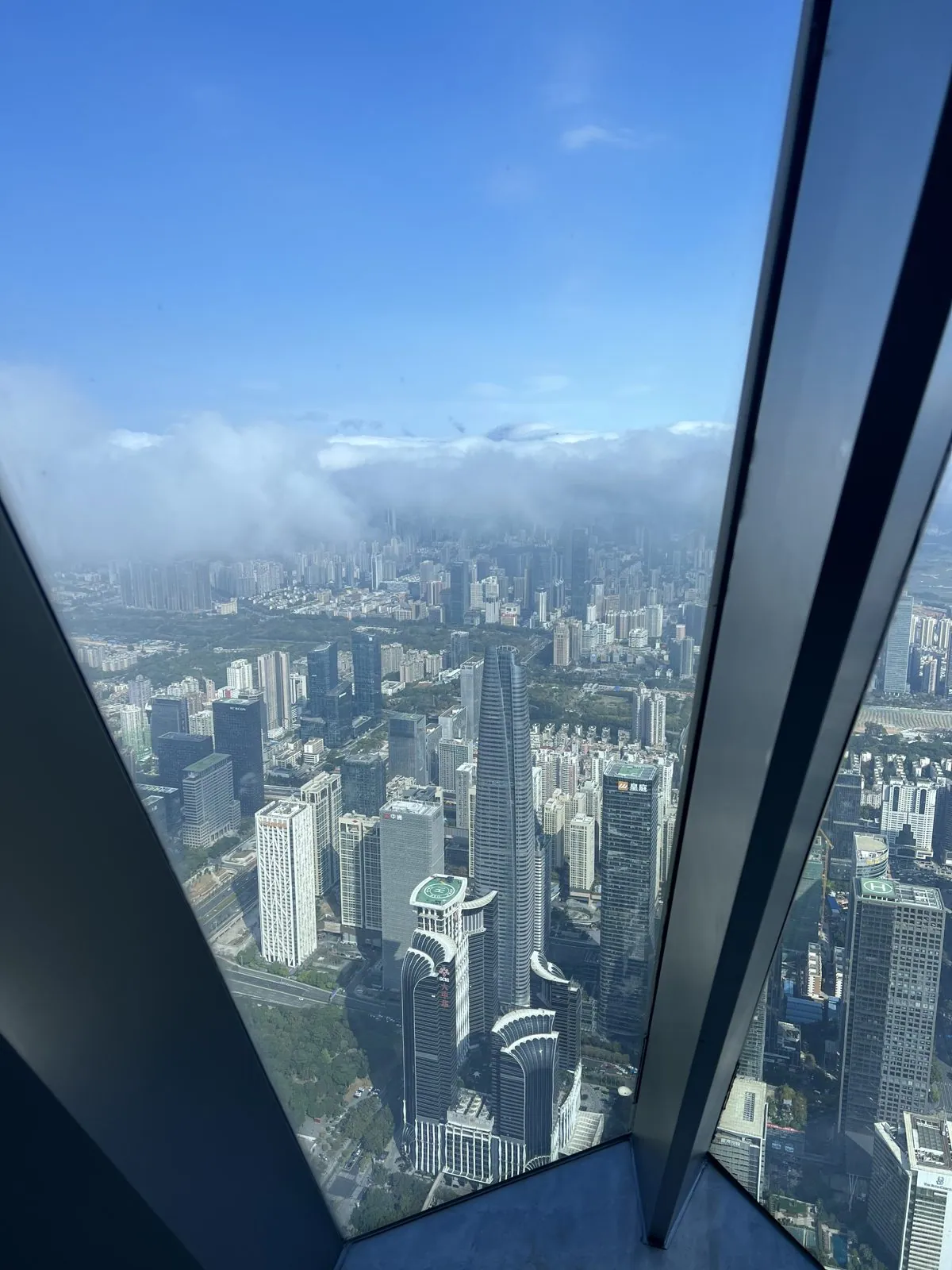
To the south, the view ran out over the low ground along the bay toward Hong Kong. Shenzhen Bay shone in the haze, and across the Shenzhen River the hills of the New Territories rose behind it. The glass reflected the sun and the room behind us, so every photograph has a ghostly layer of the room itself superimposed on the city. The effect is oddly appropriate: the city and its reflection, both of them new.
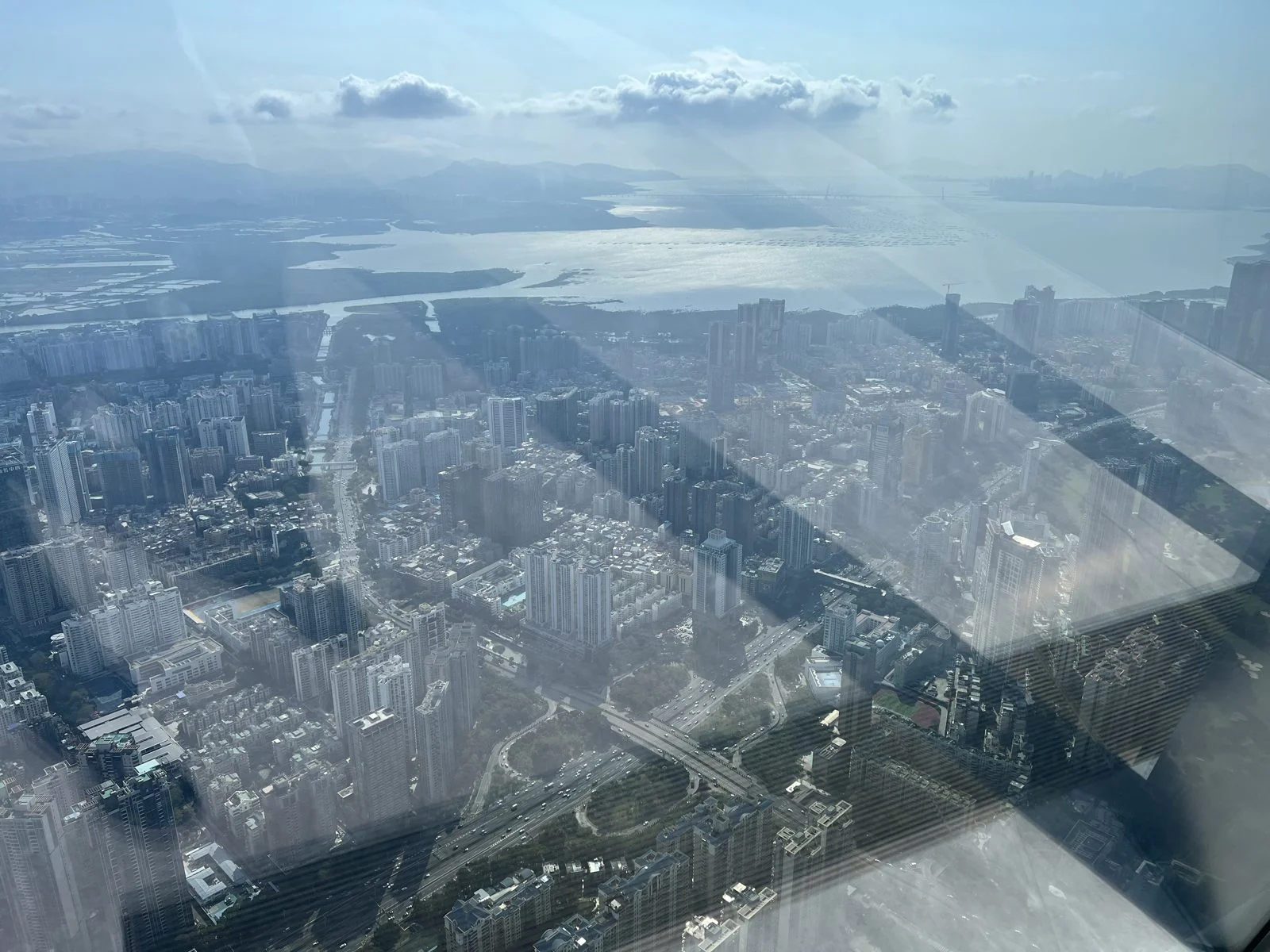
Looking west, the towers of the CBD stood shoulder to shoulder far below, their rooftop helipads and crowns tiny from up here. The long grey roofs of the Convention and Exhibition Center lay at their foot, and a river of apartment blocks ran away beyond them toward the horizon. Around three o'clock, the clouds that had been sitting on the mountains all afternoon began to slide down over the northern districts. For a few minutes the edge of the city disappeared into white, as if the map simply stopped there.
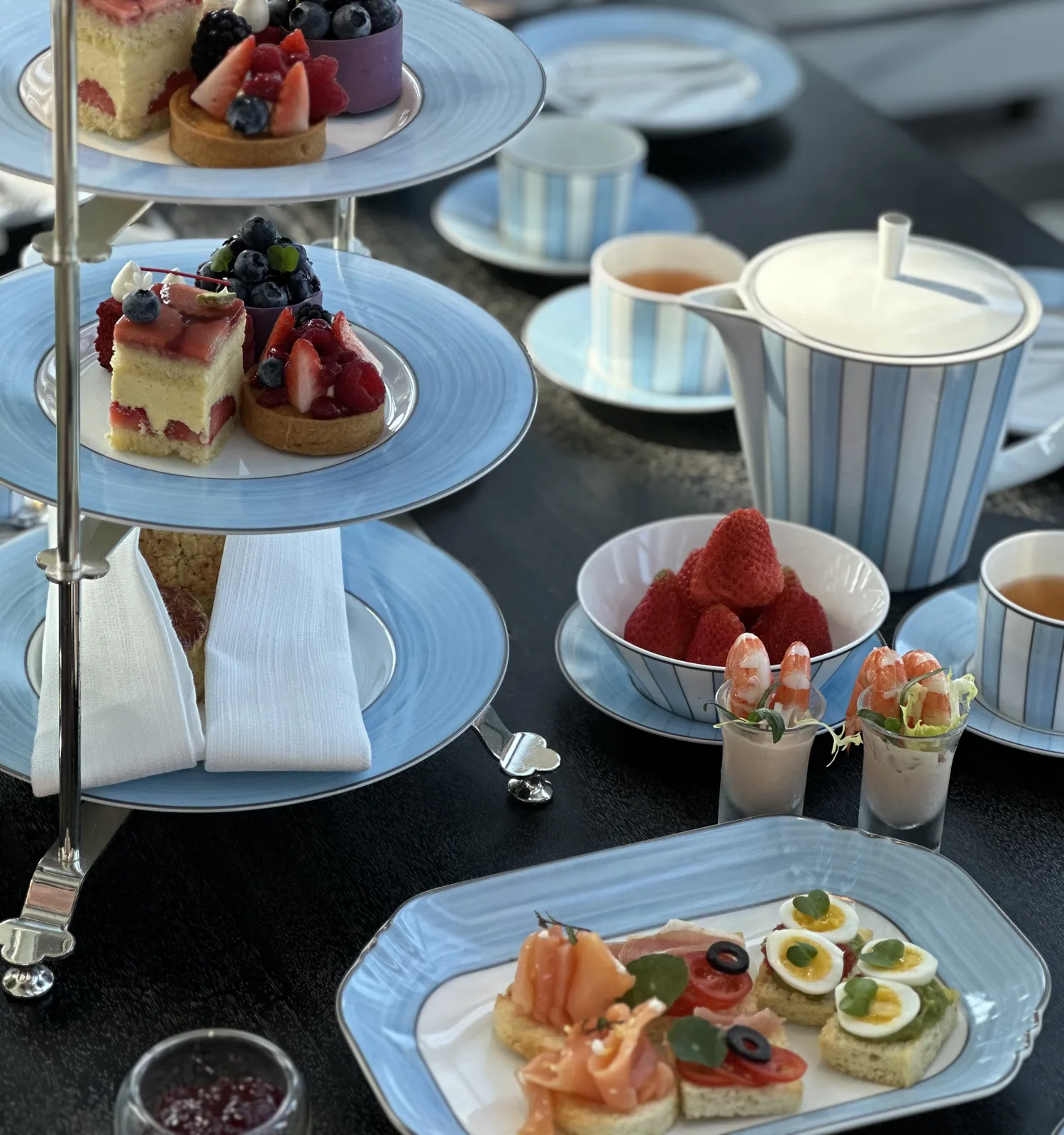
The afternoon tea came by the same angled windows: berry tarts and small cakes on a tiered stand, canapés, strawberries and a pot of tea.
Huaqiangbei
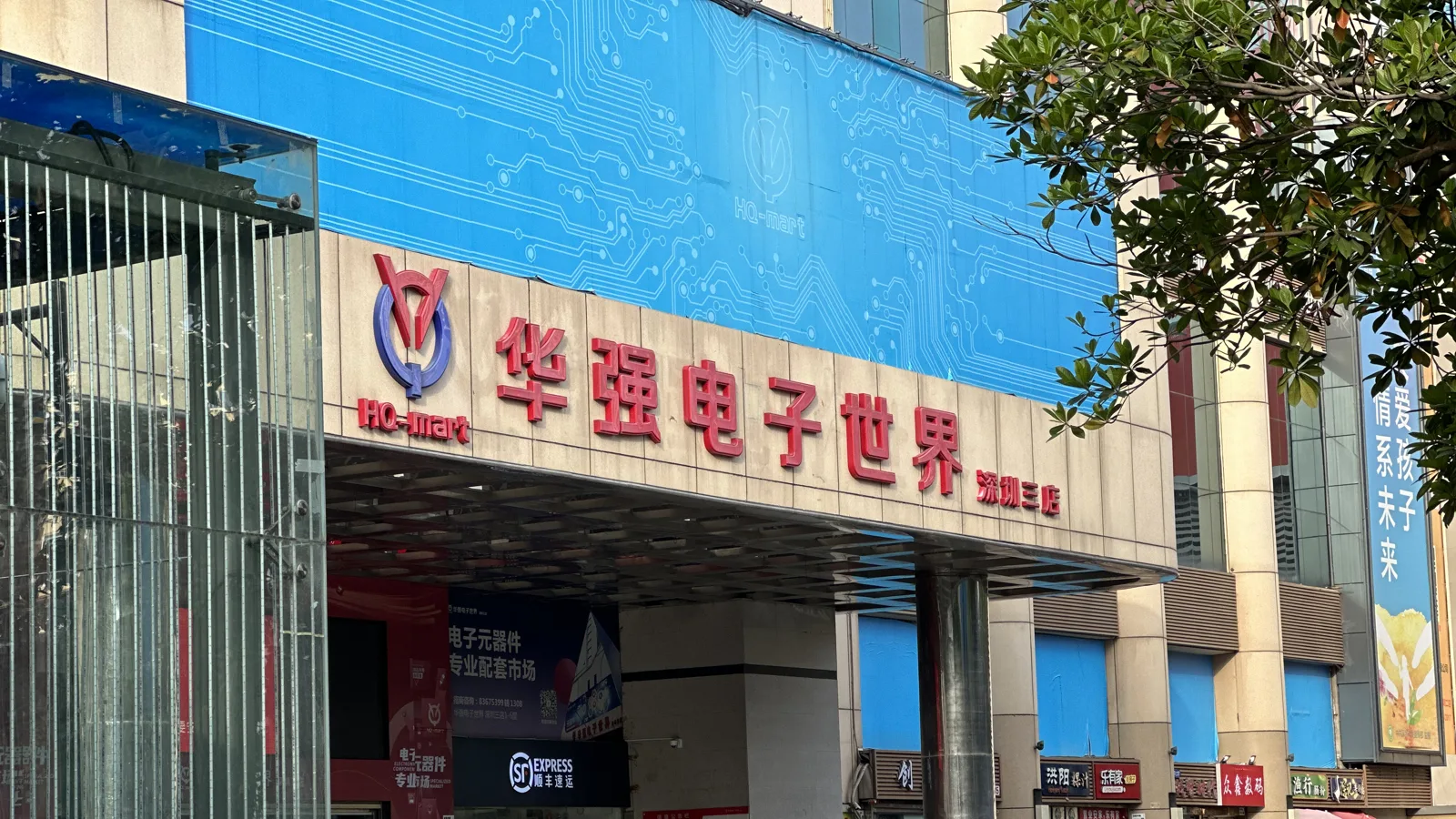
Late in the afternoon we went a couple of kilometres east to Huaqiangbei, the electronics district that has been called the hardware capital of the world. It is a grid of multi-story malls where every floor is divided into tiny stalls, each selling one kind of thing: connectors, LEDs, phone screens, chargers, drones, chips by the reel. If you need a part, someone here has a box of ten thousand of them. Hardware startups from around the world come here to build prototypes in days that would take months anywhere else.
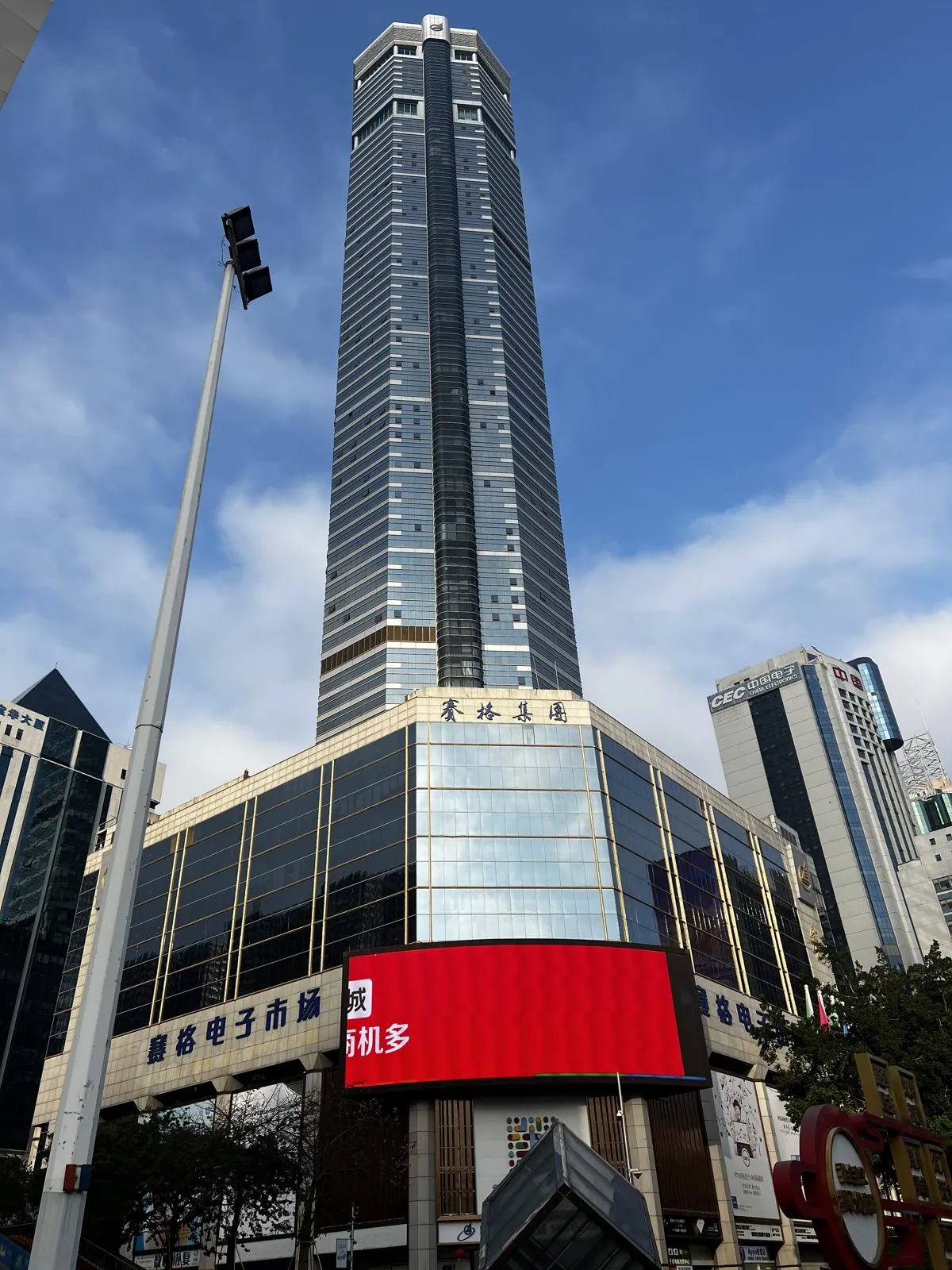
Its landmark is SEG Plaza, a tower of more than seventy floors finished in 2000, with the electronics market in its podium, its base wrapped in red video screens. In May 2021, on a calm day, the tower began to visibly wobble. Thousands of people fled the building, and a nervous city watched it on livestreams for days. Engineers eventually blamed wind-induced vibration of the mast on its roof, which was later removed. From the street on a sunny February afternoon, it looked perfectly steady.
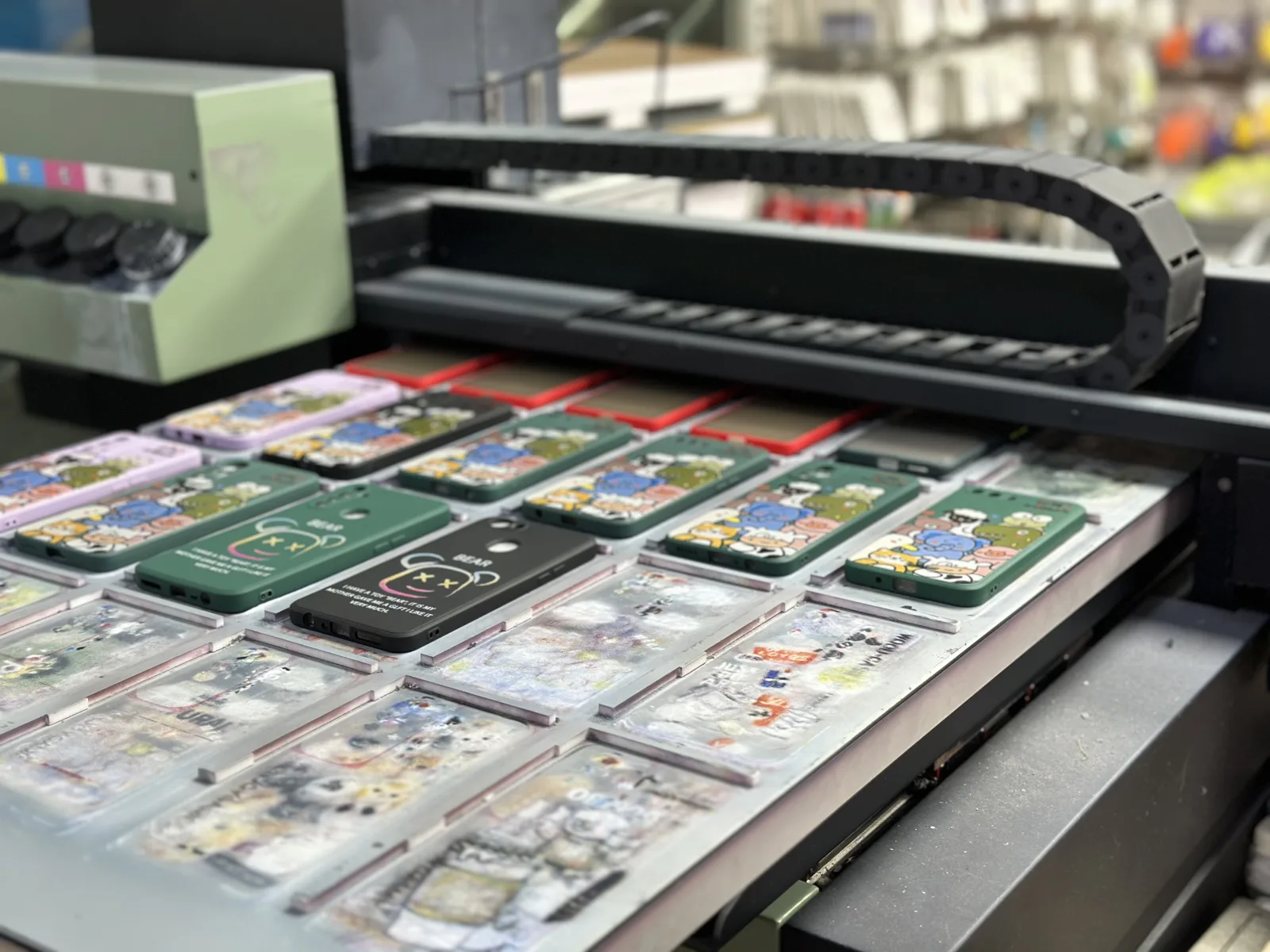
In one shop a flatbed printer was printing a whole tray of custom phone cases at once.
One last Cantonese brunch
Our last morning in China, February 12th, began with a walk past the Convention and Exhibition Center, where the Ping An tower stood over the palms like an exclamation mark. It was the same tower we had been looking down from the afternoon before, now looking down on us.
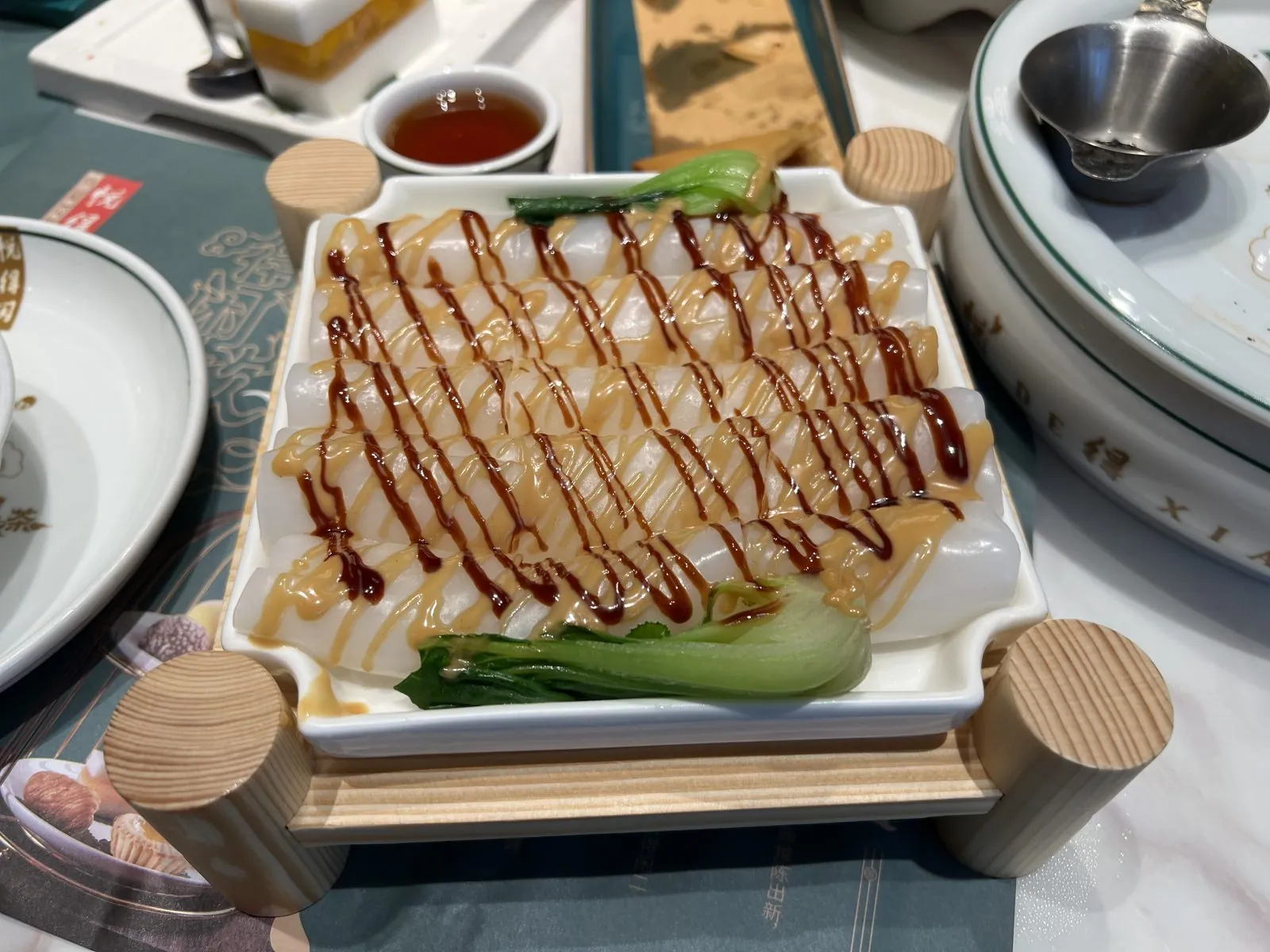
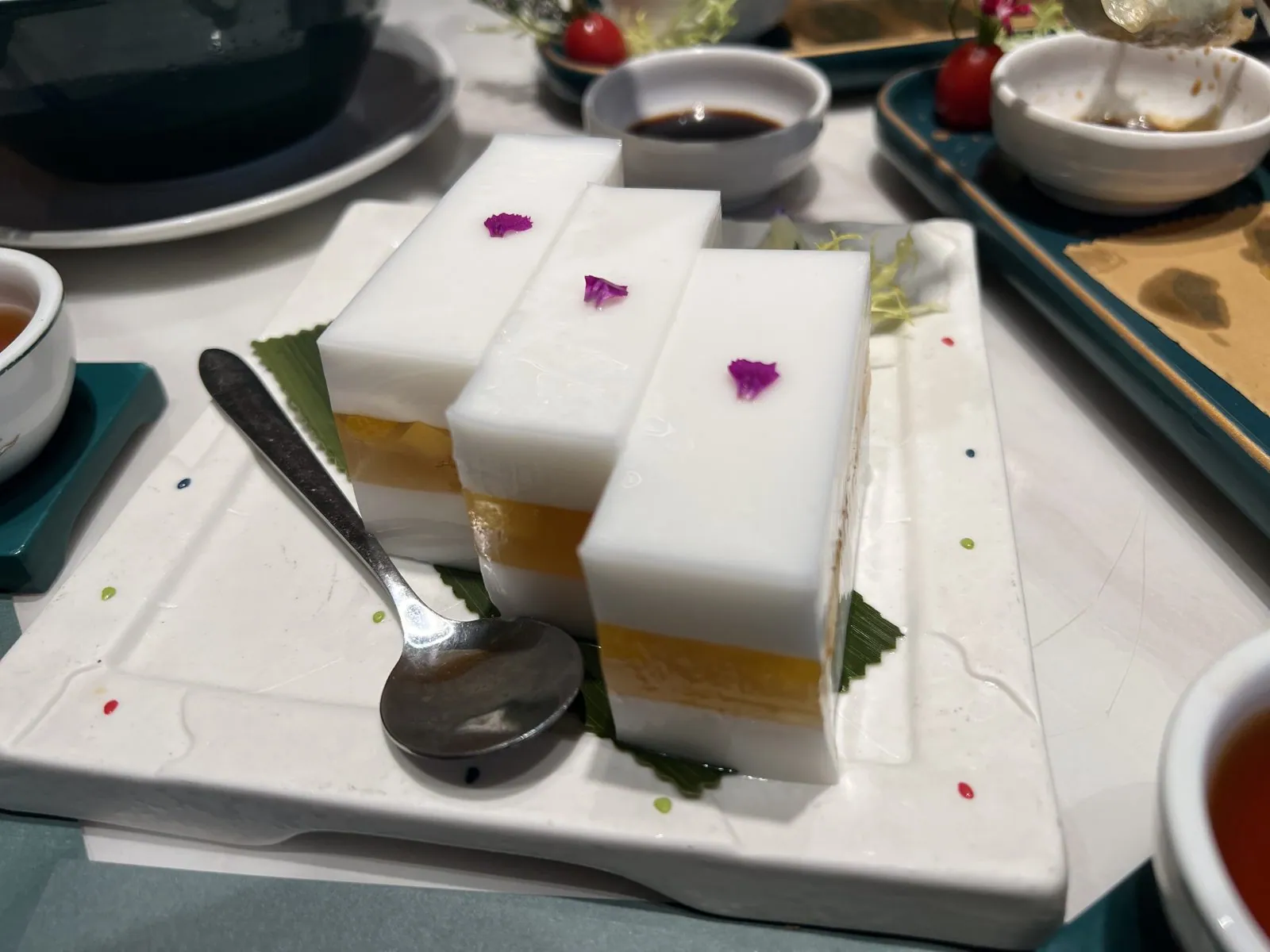
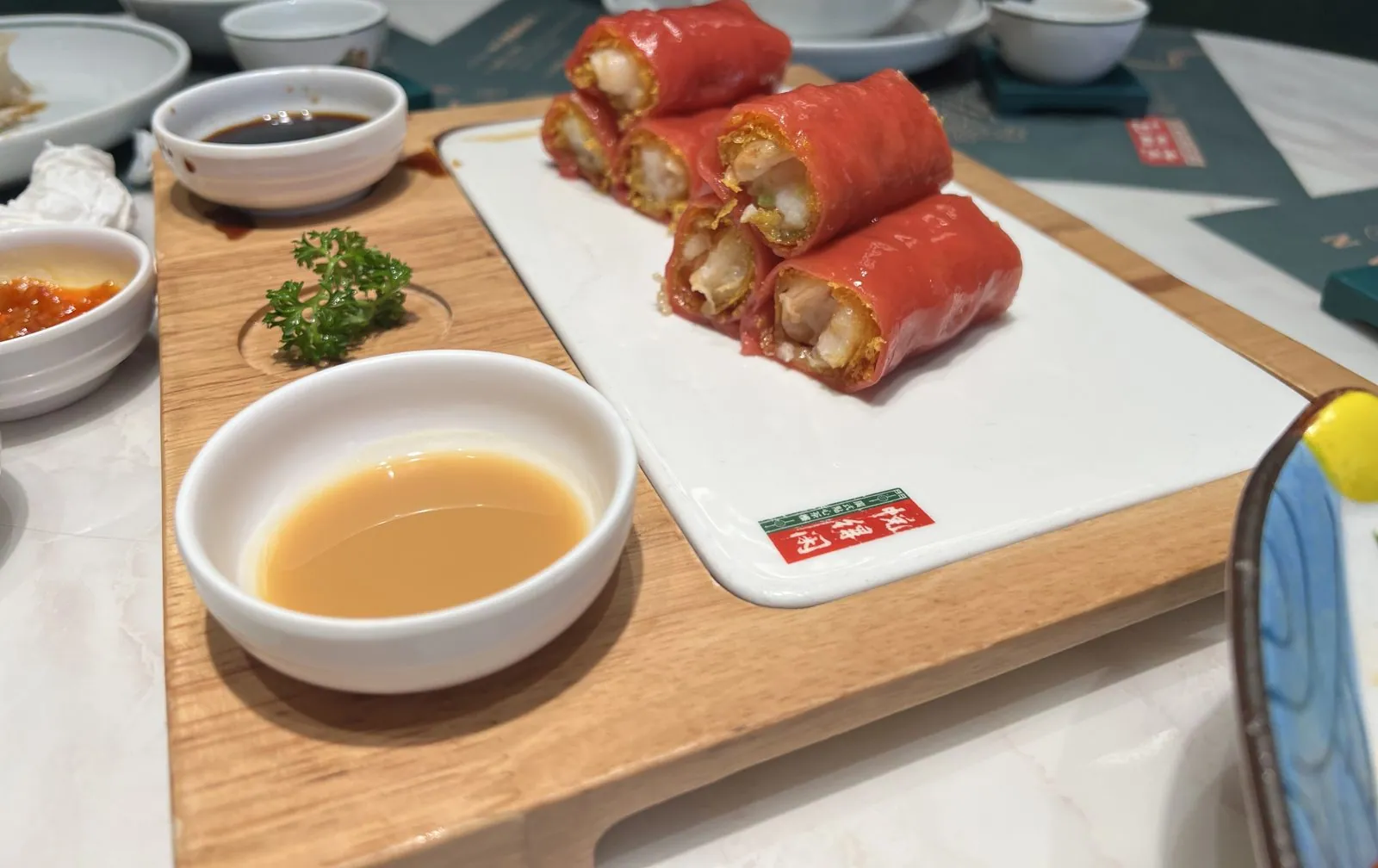
Then came the meal any trip to Guangdong has to end with: a Cantonese brunch of dim sum. Shenzhen sits in the Cantonese-speaking south, a few miles from Hong Kong, and morning tea is a serious institution here: pots of tea, a table filling up with small plates and bamboo steamers, and a long, slow late morning. Our table filled up fast. There was cheung fun, slippery rice-noodle rolls drizzled with sweet soy and sesame sauce, served on a little wooden stand. There was a cool, wobbly coconut cake in white layers over a band of yellow. And there were crispy red rice rolls, a newer Cantonese favorite: shrimp wrapped in a crunchy fried layer and then in a thin, bright red rice sheet, served with a dipping sauce.
The red rice rolls are all about contrast: a soft, slippery rice sheet on the outside, a crunchy fried layer inside it, and a whole shrimp at the core, best eaten quickly before the crunch goes soft.
Home, the long way round
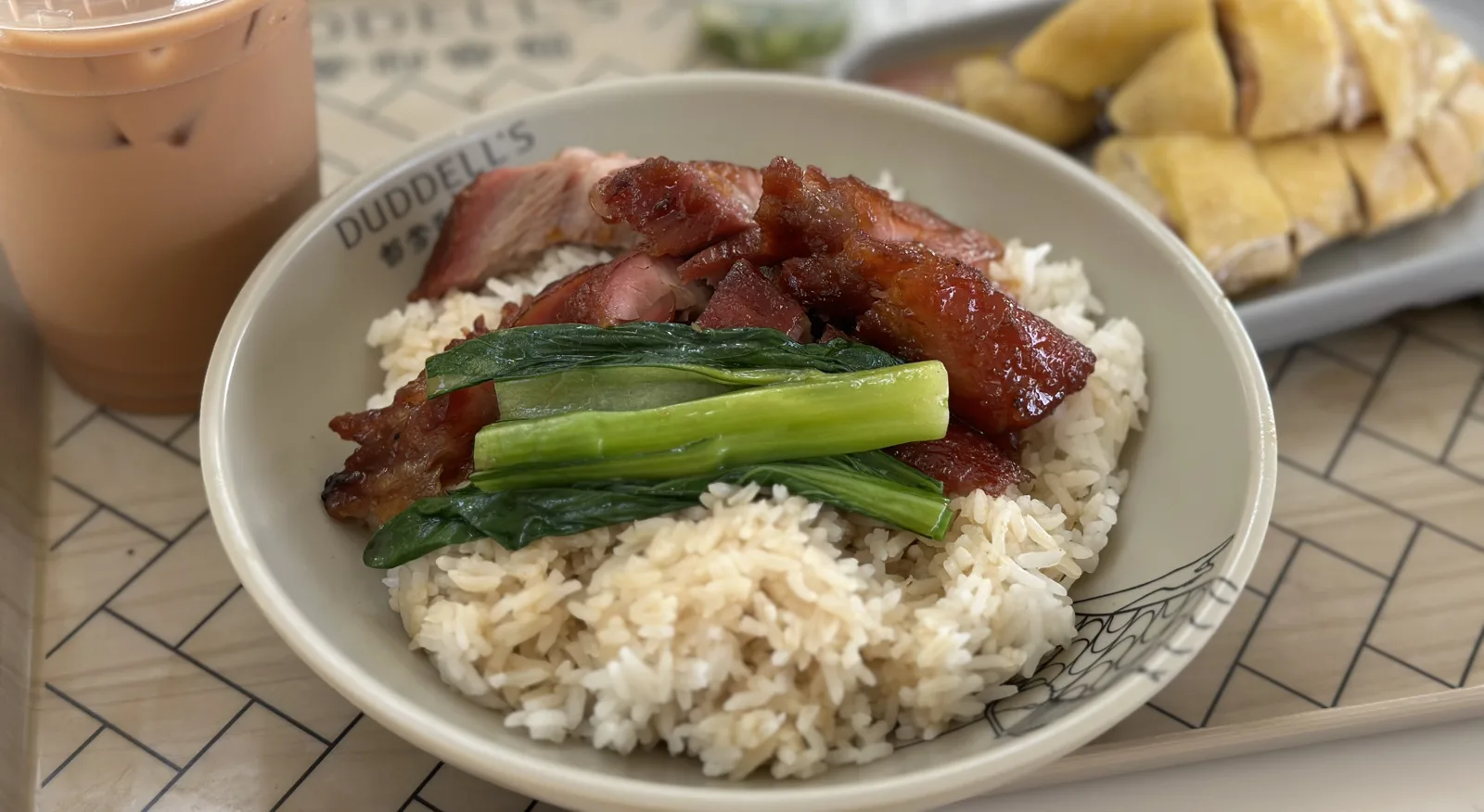
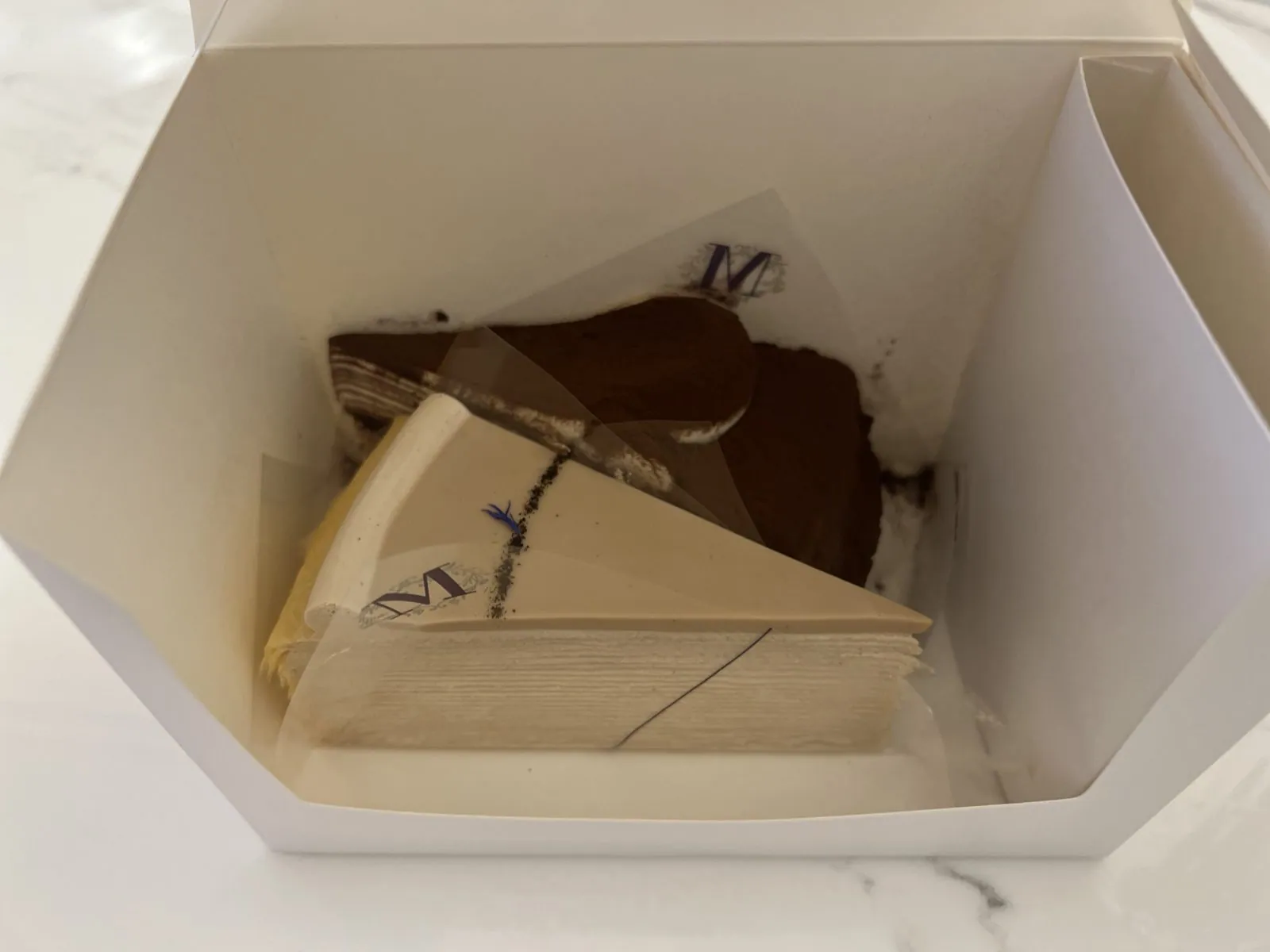
That afternoon we crossed back to Hong Kong the unglamorous way, by metro to the border and a taxi on the other side, and by late afternoon we were at Hong Kong International Airport again, two weeks after the long night there. There was a last plate of char siu rice with an iced milk tea. The bakeries were open this time, and a couple of boxes of cake slices from the airport's Lady M counter, a mille crêpe and a tiramisu among them, got us to the gate.
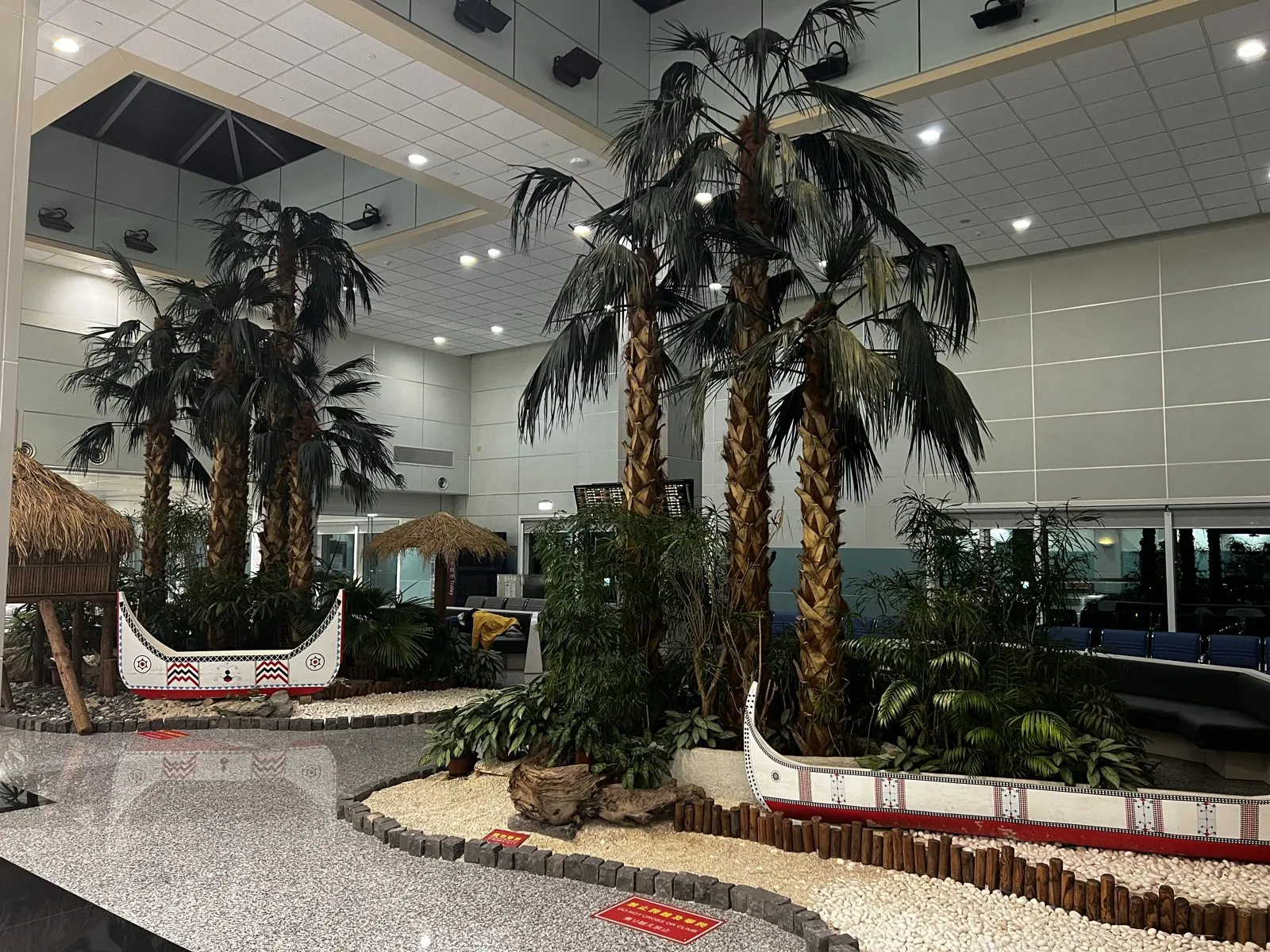
The way home went through Taipei, with a short connection at Taoyuan airport late that evening. Taoyuan has decorated its transit areas with small exhibitions about Taiwan, and the one by our gate, at half past ten at night, was an indoor garden of palms with a pair of carved canoes. They are in the style of the Tao people of Orchid Island off Taiwan's southeast coast, whose plank boats are painted white with red and black triangles and concentric eyes on the prow. A wall nearby introduced the sixteen officially recognized Indigenous peoples of Taiwan. It was a strange, gentle last stop: an empty terminal at night, a tropical garden under fluorescent light, and a long flight east ahead.
Thanks to the date line, a flight that leaves Taipei late at night lands in Los Angeles earlier the same day, so on paper a trip like this ends a few hours before it finishes. Seventeen days, three cities, two oceans' worth of sunsets, and a lot of rabbits. Looking back through the photos, what strikes me most is the range: a grey winter beach and a tropical one, a Ming garden and a 599-metre tower, a crowd of thousands at the ends of the earth and an empty airport at three in the morning. It was a good way to spend the weeks after a deadline. Nothing was due, and the doors had just opened.
Some photos in this post are my wife's.
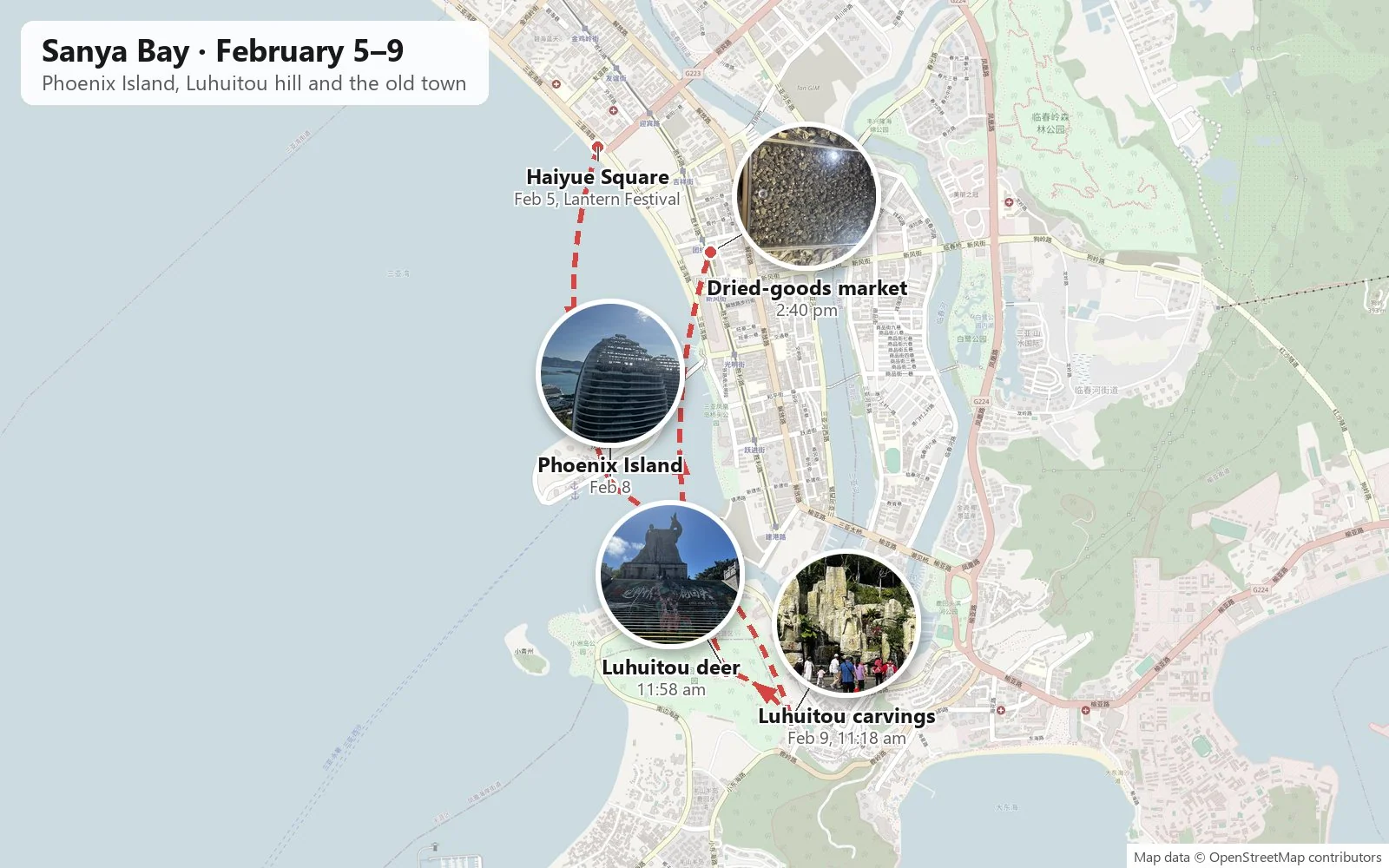
Maps built from the trip's photo timestamps and locations. Photo locations have been removed from the published images. Day maps: map data © OpenStreetMap contributors; each stop is placed where its photo was taken, hotels and home are never marked, and the dashed lines show the order of stops, not the exact roads.
Likes and comments
React with an emoji or leave a comment. Signing in with GitHub is required.