← Misc · December 2023
Summer at Christmas
SIGGRAPH Asia in Sydney, my first SIGGRAPH talk, a day on the harbour, and two days in Canberra.
Sydney (Darling Harbour, Taronga Zoo, the harbour ferry, SIGGRAPH Asia 2023) → Canberra (the zoo, ANU, the Parliamentary Triangle, the National Gallery) → Sydney (a night at the Opera House) → home
one conference · one first SIGGRAPH talk, at 9 a.m. · two cities · two zoos · one Opera House, photographed from every side · sunsets after eight in the evening, a week before Christmas
Every December, SIGGRAPH Asia, the Asian edition of the big computer graphics conference, lands in a different city of the Asia-Pacific. In 2023 it landed in Sydney. For a graphics student based in Los Angeles that meant two unusual things at once: a conference in a city I had only ever seen in pictures, and a week of high summer in the middle of December. The jacket stayed in the suitcase. The shopping centers played Christmas carols while people walked past in shorts and sunglasses, and the sun did not set until after eight.
This was also, looking back, the first of a series. The following summer's post on this site begins at SIGGRAPH in Denver, and conferences have a way of turning into trips. As with that one, everything below is pieced together from the camera roll: where each photo was taken, and when. Where the photos are silent, I have kept quiet too. The shape of the week is simple. There are two days of Sydney before the conference got going, then the conference itself, then a side trip to Canberra, the capital, and one last night in Sydney at the Opera House.
Darling Harbour, the first evening
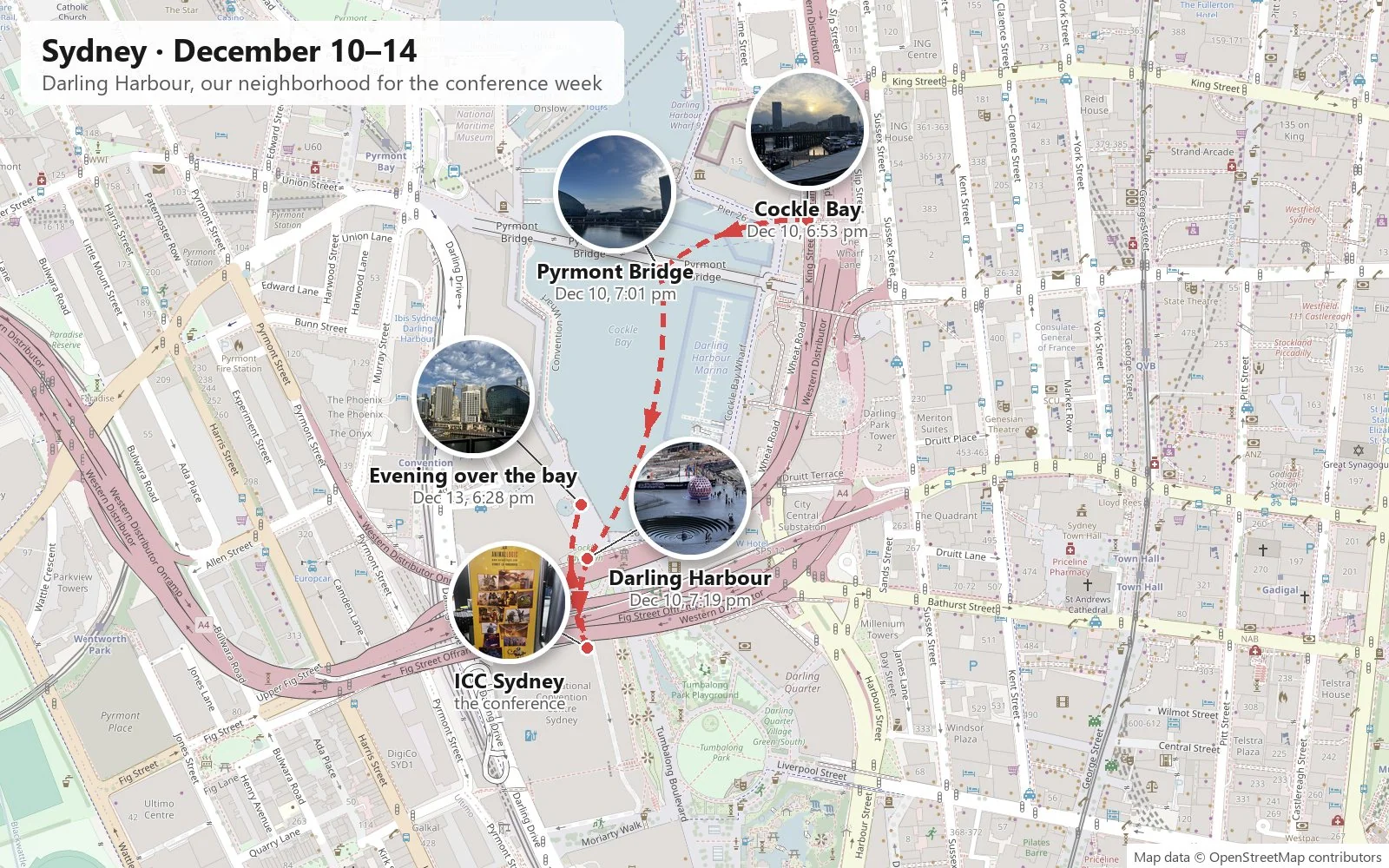
We landed on Sunday, December 10th, after the overnight flight across the Pacific, and the camera roll opens that evening at Darling Harbour. We were staying at the Novotel there, and this was our neighborhood for the week, because the conference was held at the International Convention Centre at the bay's southern end. Just before seven, the sun was a pale disc in a sky full of thin, feathery cloud, sinking behind the towers of Pyrmont, and the old timber piers of Cockle Bay Wharf had gone dark against the glare.
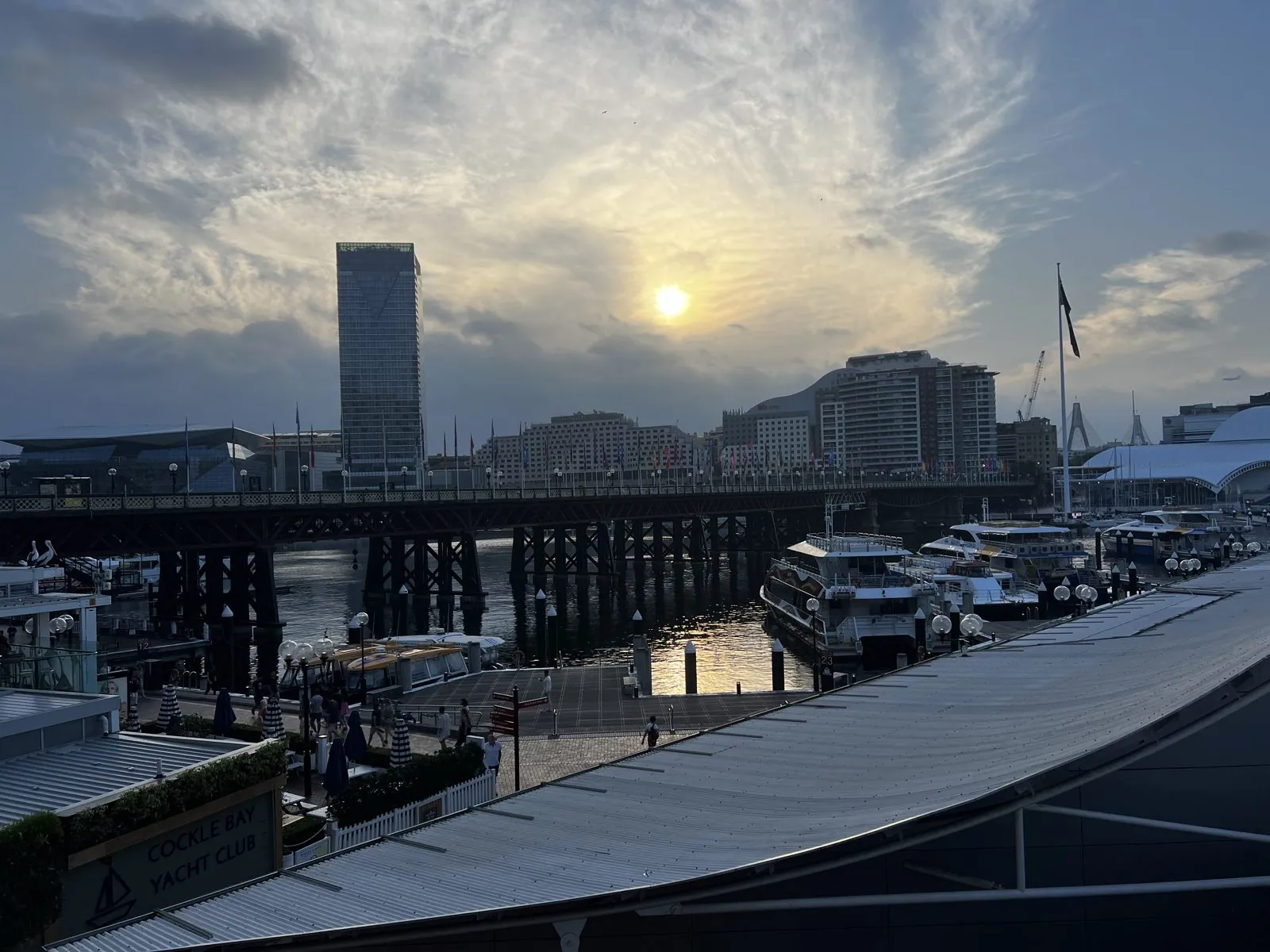
Darling Harbour used to be the working end of Sydney. For more than a century it was wharves, warehouses and railway goods yards, and it was rebuilt as a waterfront of museums, restaurants and promenades in time for Australia's bicentenary in 1988. The ferries still come in. That evening, catamarans in blue and yellow livery were tied up along the wharf, and across the water the new skyline of Barangaroo stood out. The tallest tower, the twisting white one, is Crown Sydney, finished in 2020 and now the tallest building in the city.
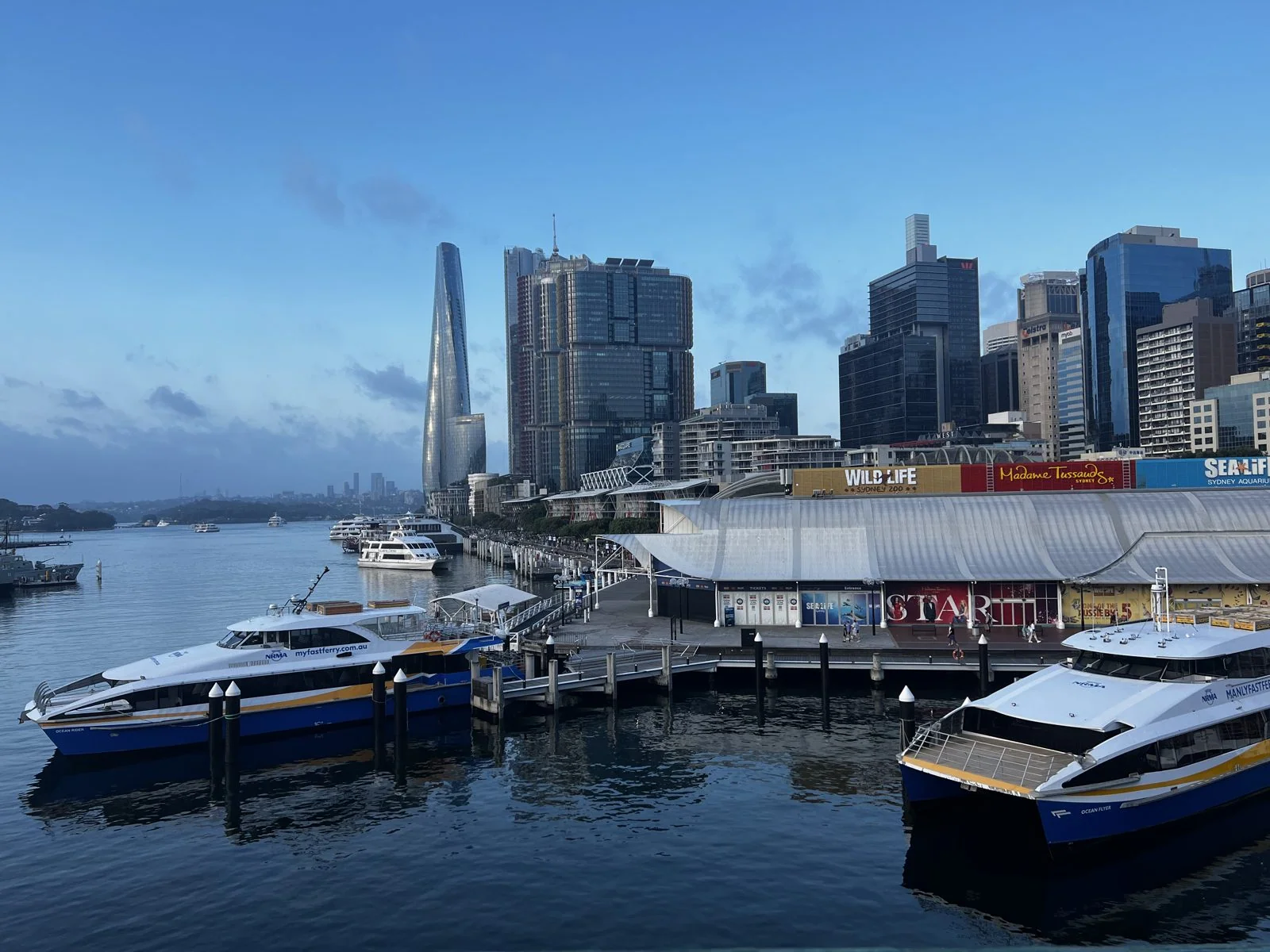
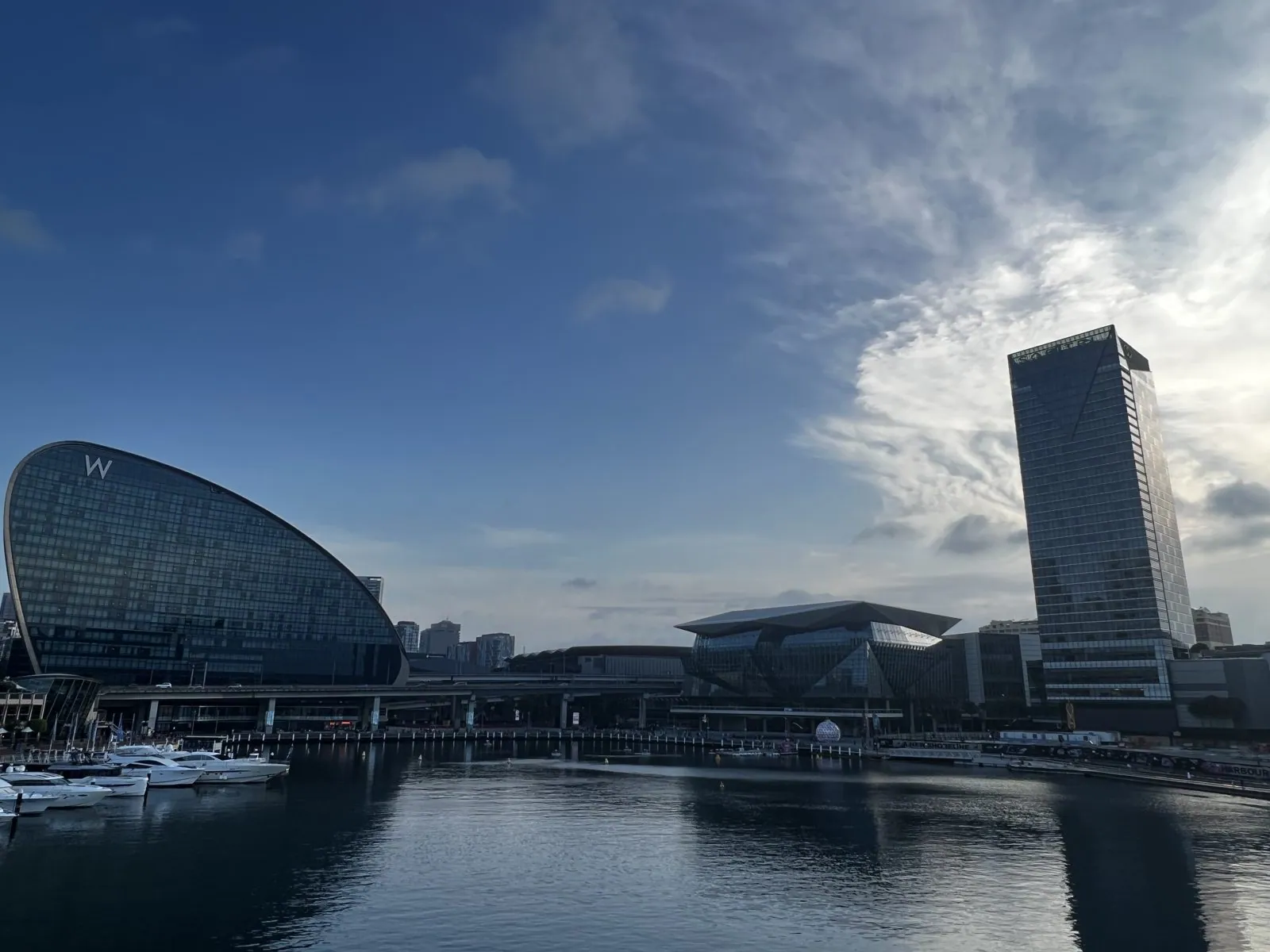
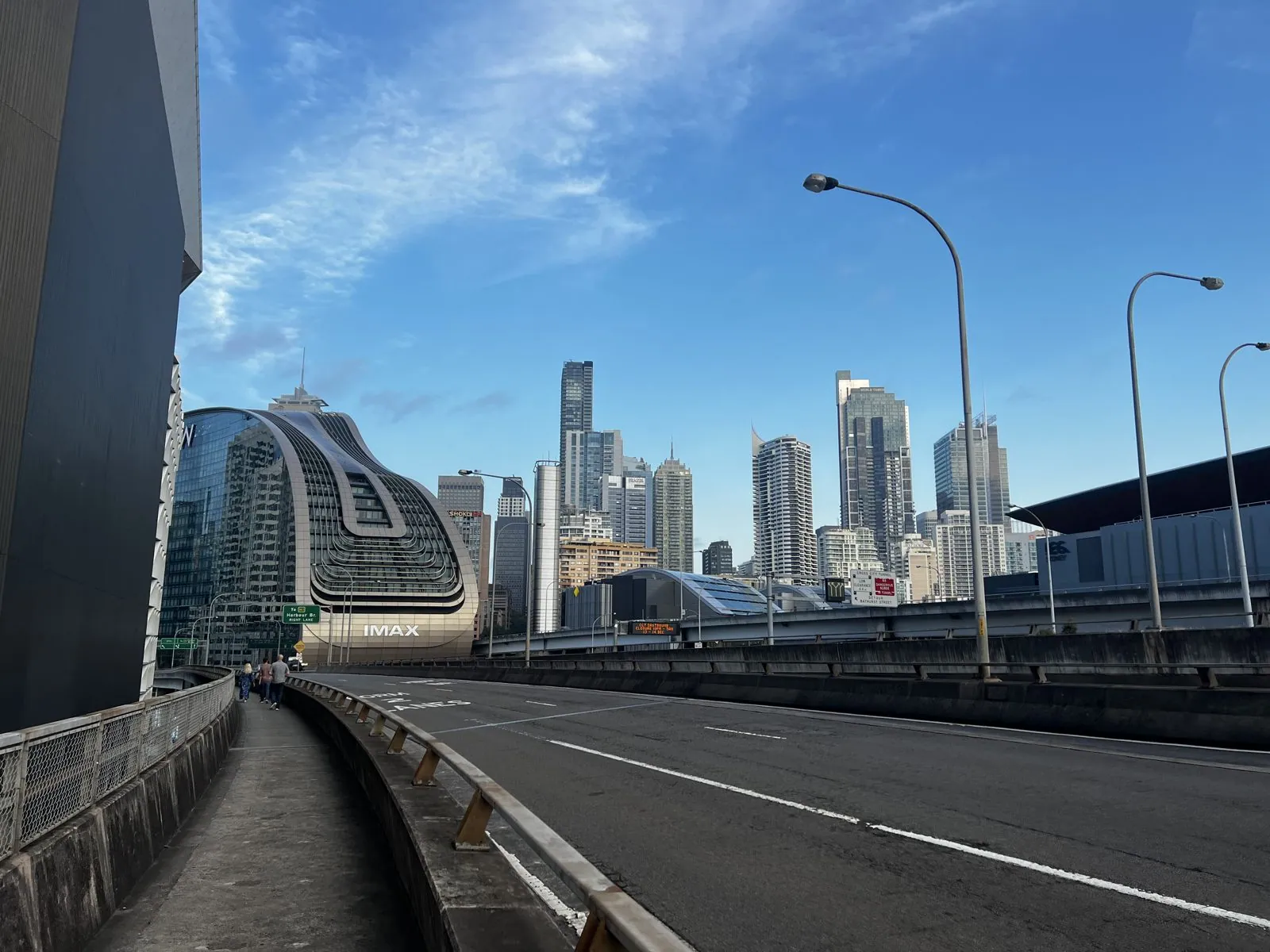
We walked out onto Pyrmont Bridge, which crosses the bay on low iron trusses. It opened in 1902 as one of the first electrically powered swing bridges in the world. Its central span still swings open to let tall ships through, though these days it carries only people. From the middle of it the whole basin opens up. On one side are the convention center and its glassy neighbors. Facing them is a new building whose curved glass shell bulges out over the expressway like a wave about to break, with an IMAX sign tucked under its chin. The water was dead flat, and it doubled everything.
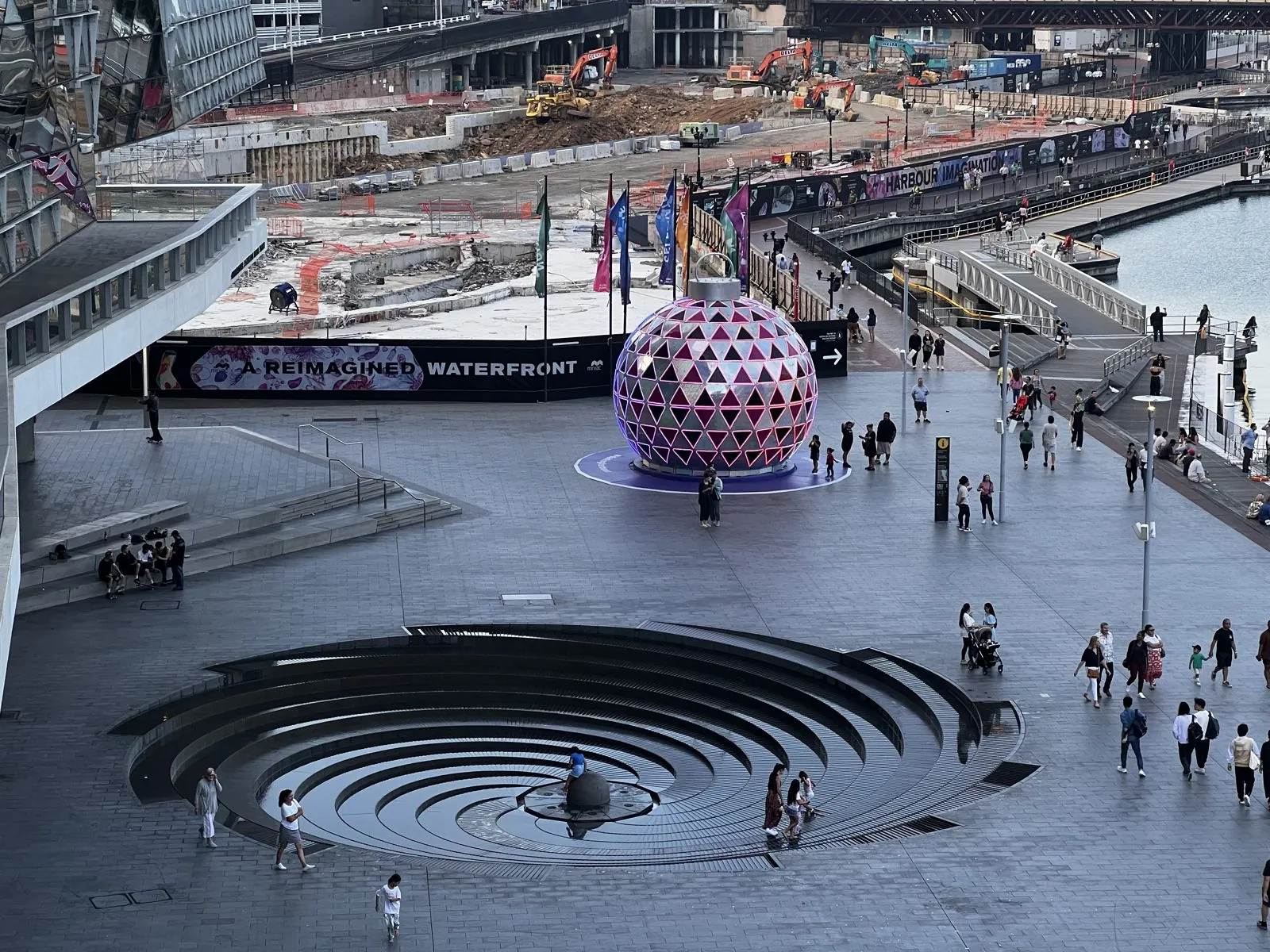
Down at the south end, the waterfront plaza was busy with families out in the long evening light. Children ran around a sunken spiral of stone steps, and nearby stood a giant pink lattice ball, which in December could only be read as a Christmas ornament. Behind it, hoardings promised "a reimagined waterfront" in front of a construction site, a reminder that this part of Sydney is still being rebuilt.
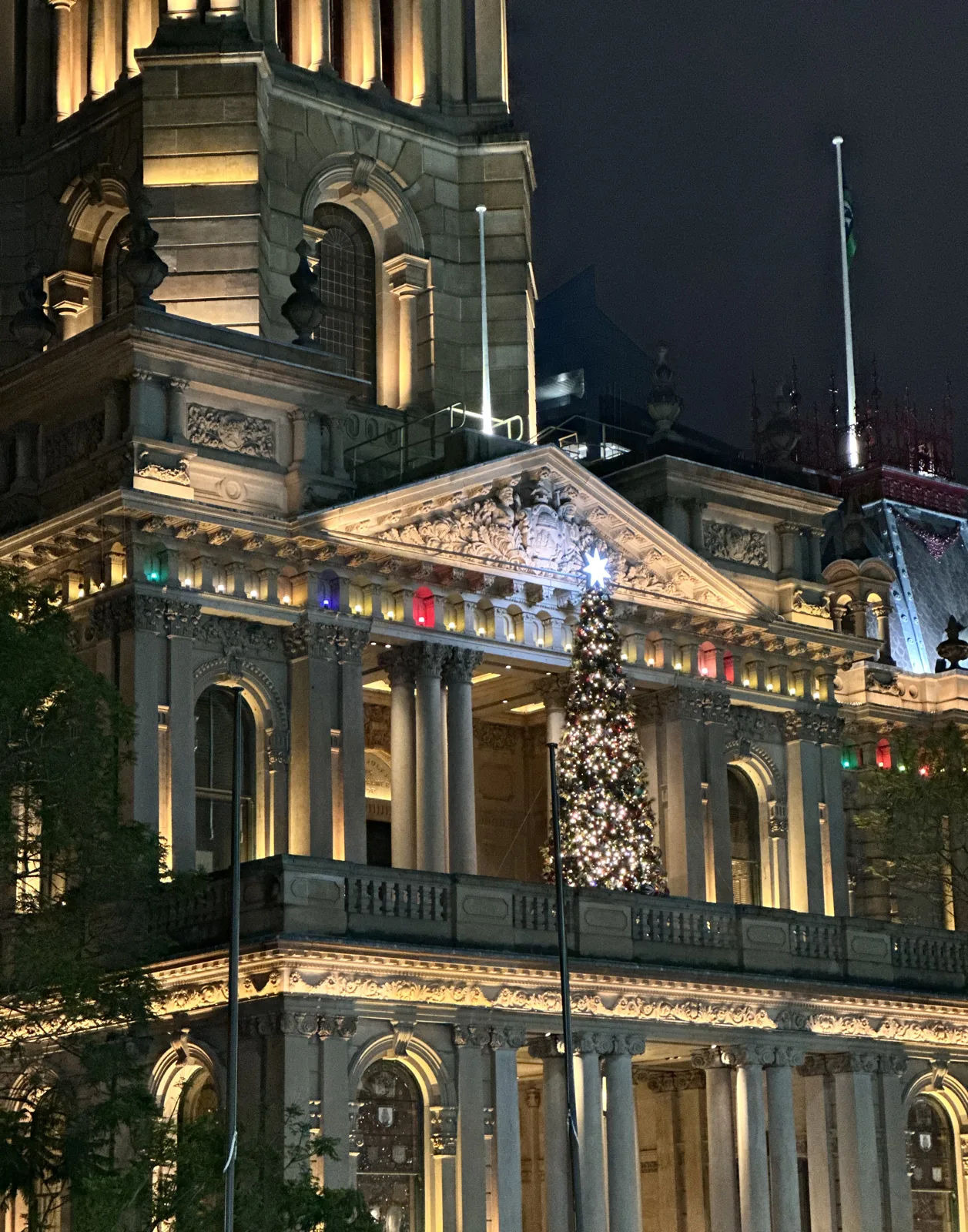
Later that night, Sydney Town Hall was lit up, with a Christmas tree glowing in front of its columns.
A day on the harbour
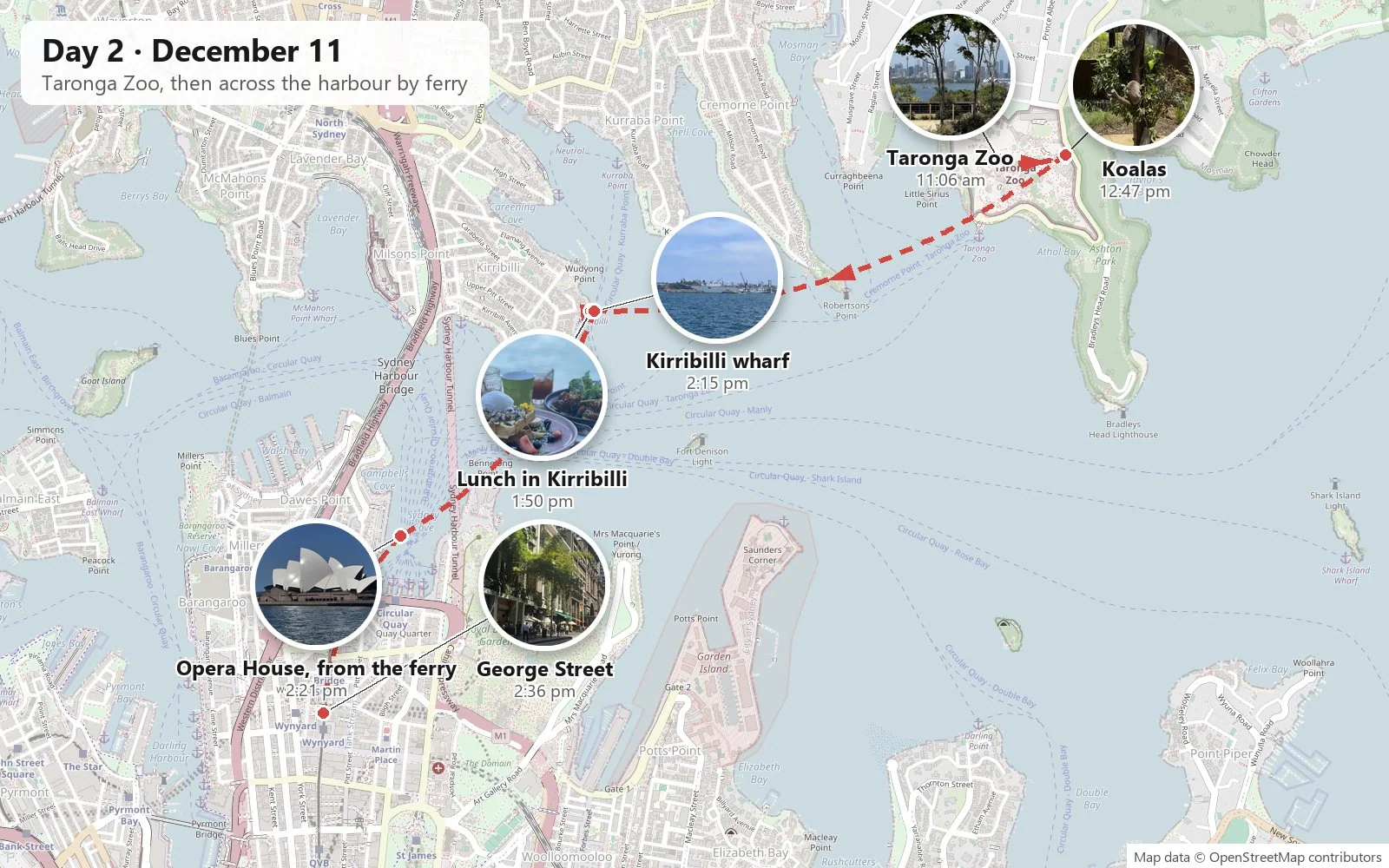
Monday was the one full free day before the conference, and we spent it on and around the water. The morning began across the harbour at Taronga Zoo, on the steep north shore in Mosman. The zoo moved to this site in 1916, and it may have the best view of any zoo in the world. "Taronga" is usually translated as "beautiful view" or "water view", and it is not false advertising.
Giraffes with a skyline
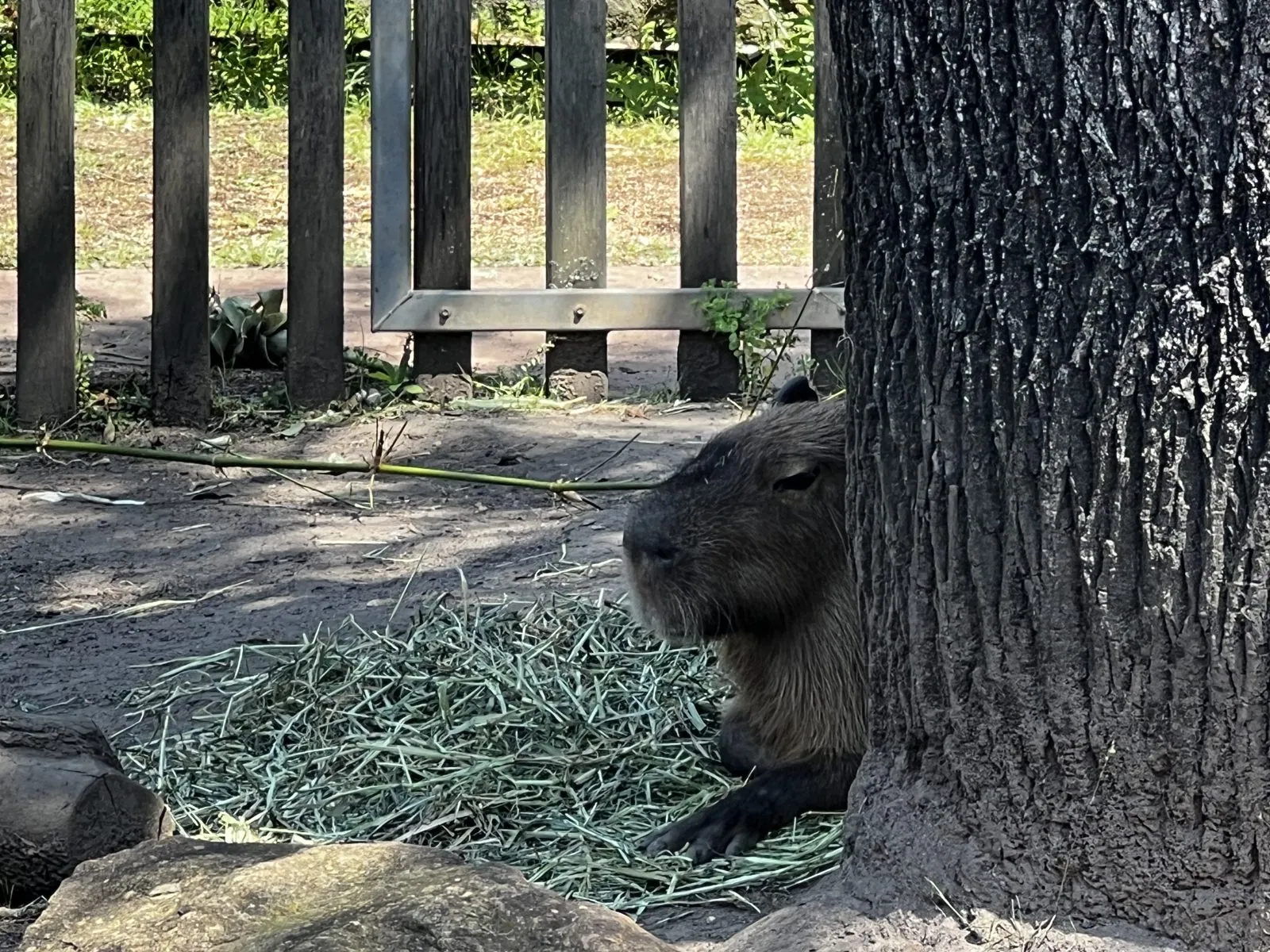
The first animal of the day was a capybara, which had dragged itself into the shade of a tree beside a pile of fresh greens. It looked supremely unbothered, as capybaras always do. It was already warm at eleven in the morning, with the kind of dry, bright Australian heat that makes shade the most valuable thing in any enclosure.
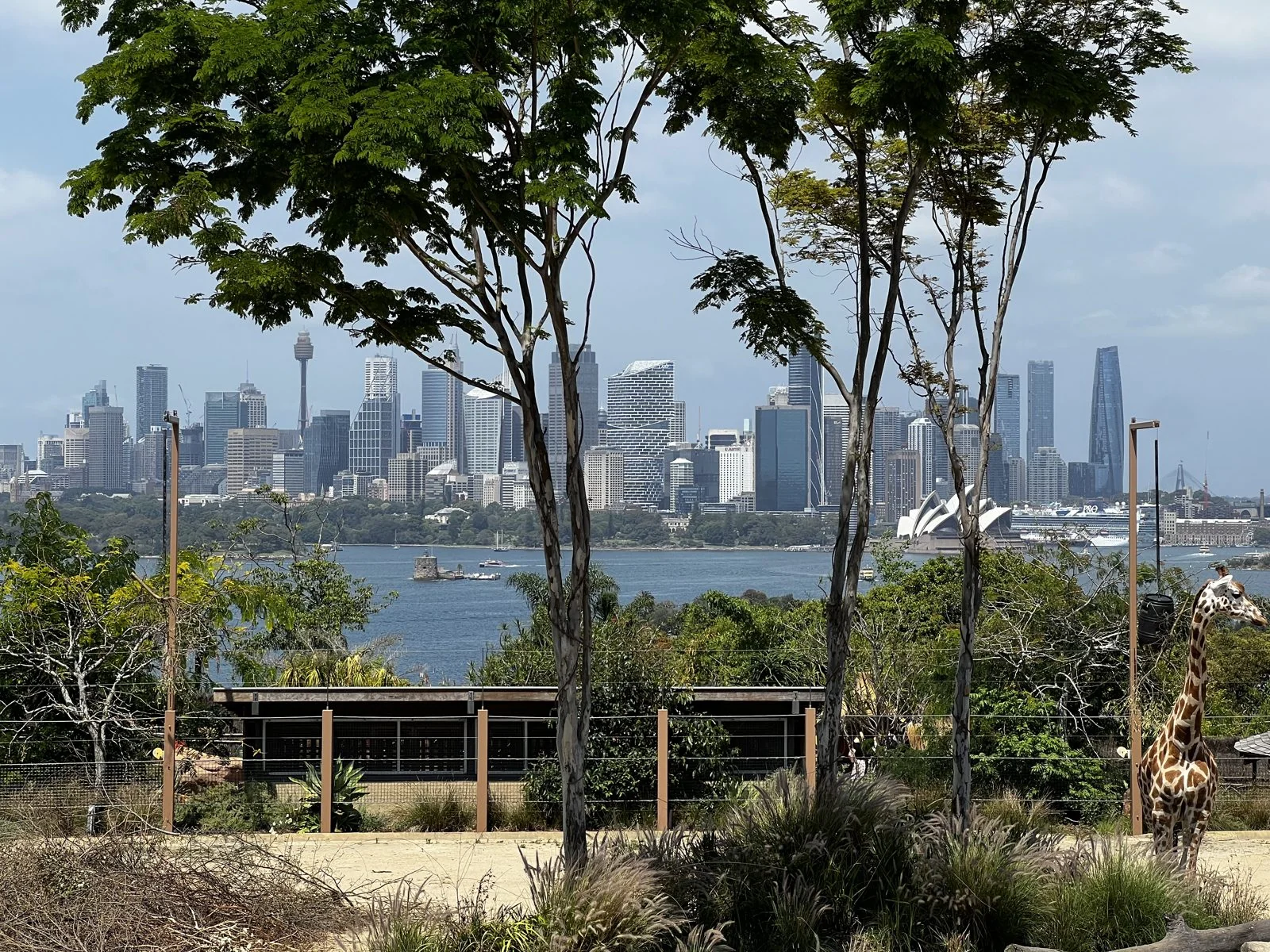
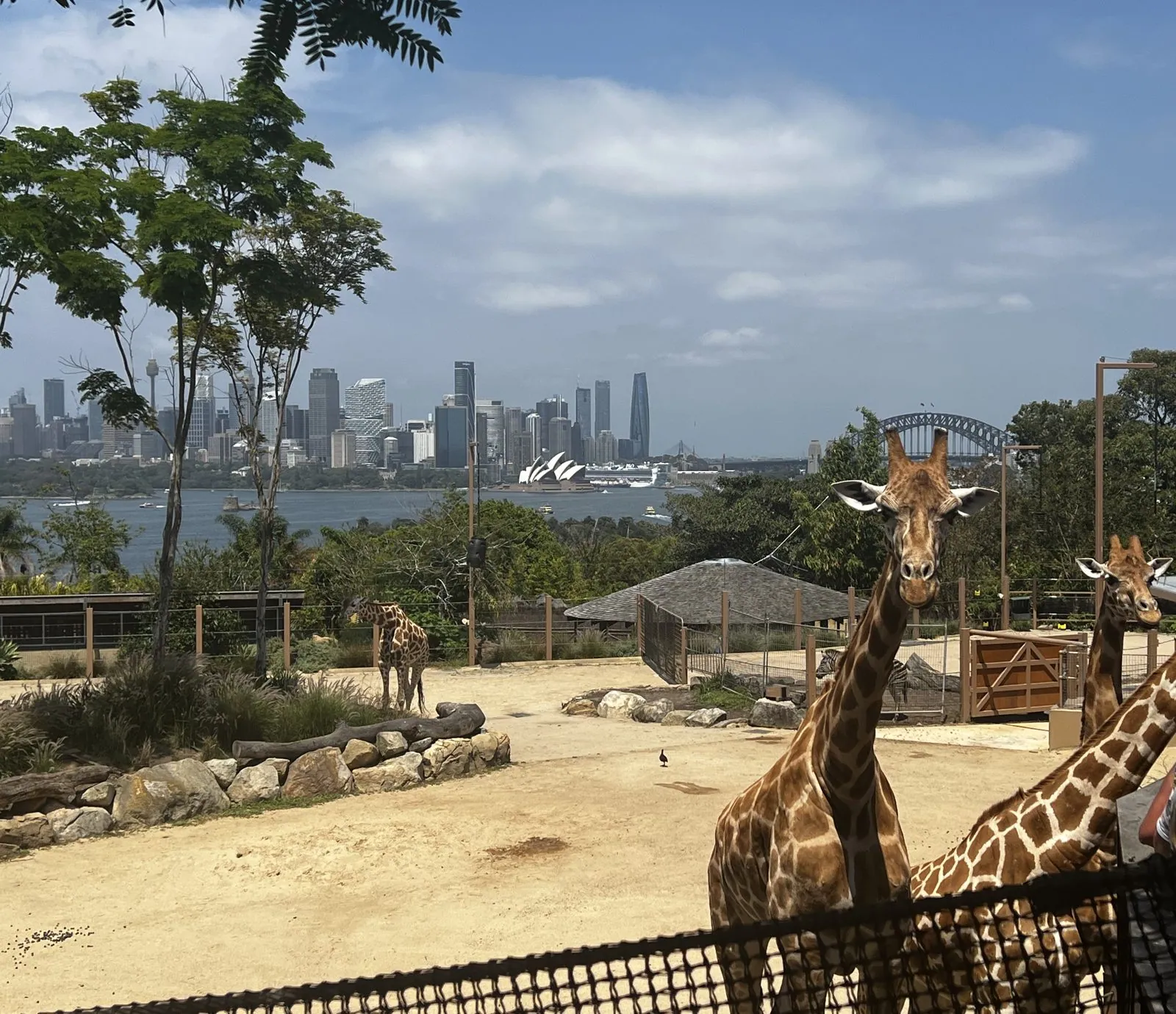
Then came the famous view. The giraffe enclosure sits on a terrace high above the water, and the zoo's planners put it where the giraffes have the city as a backdrop. Over their sandy yard, across a band of trees and a mile of blue harbour, stands the whole of downtown Sydney. You can pick out Sydney Tower, the white sails of the Opera House at the waterline, and the arch of the Harbour Bridge. The giraffes, a whole herd of them, stood around ignoring one of the most photographed views on Earth. Two of them wandered over to the fence and peered down at us with the polite, slightly superior interest that giraffes bring to everything.
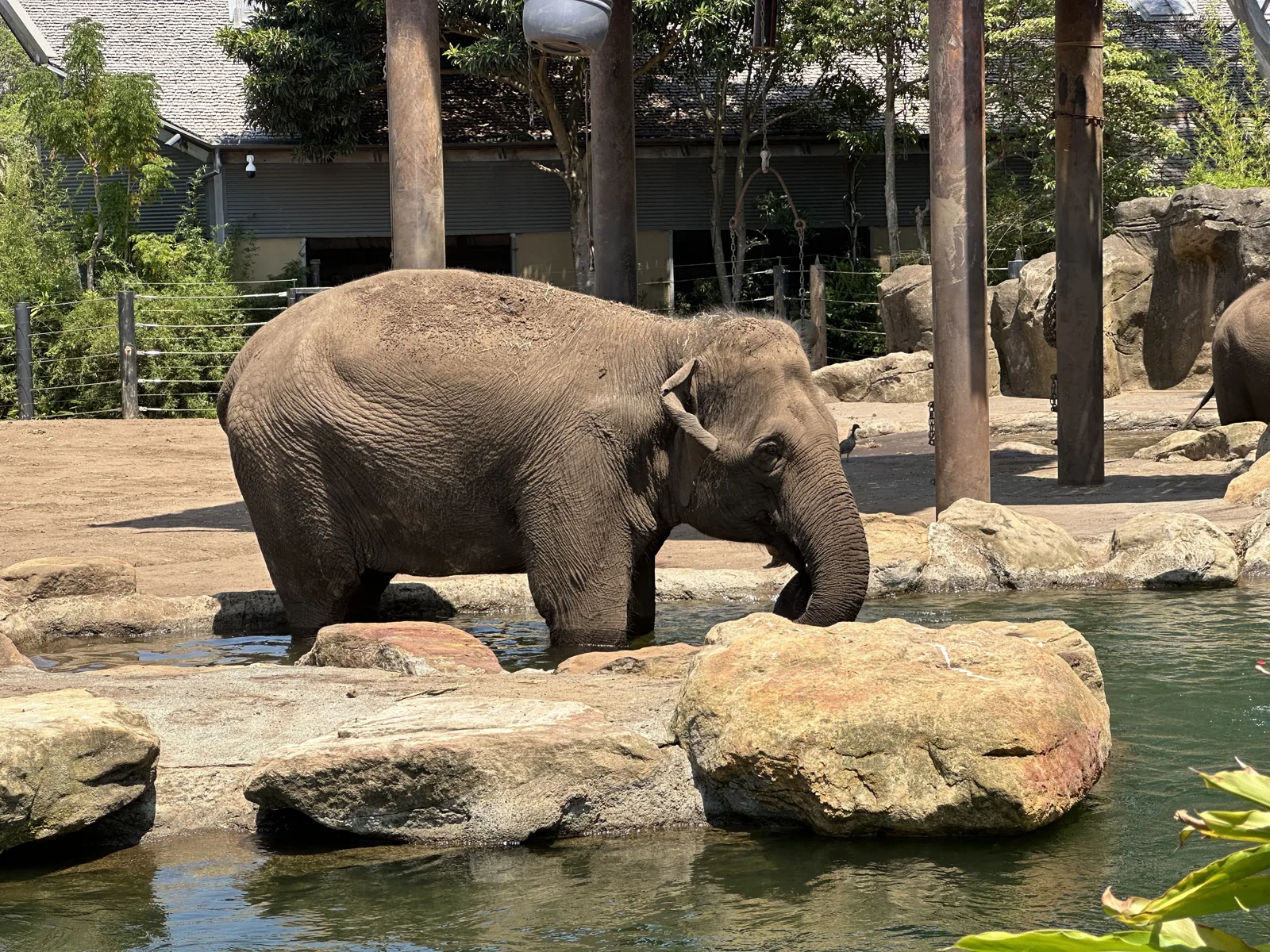
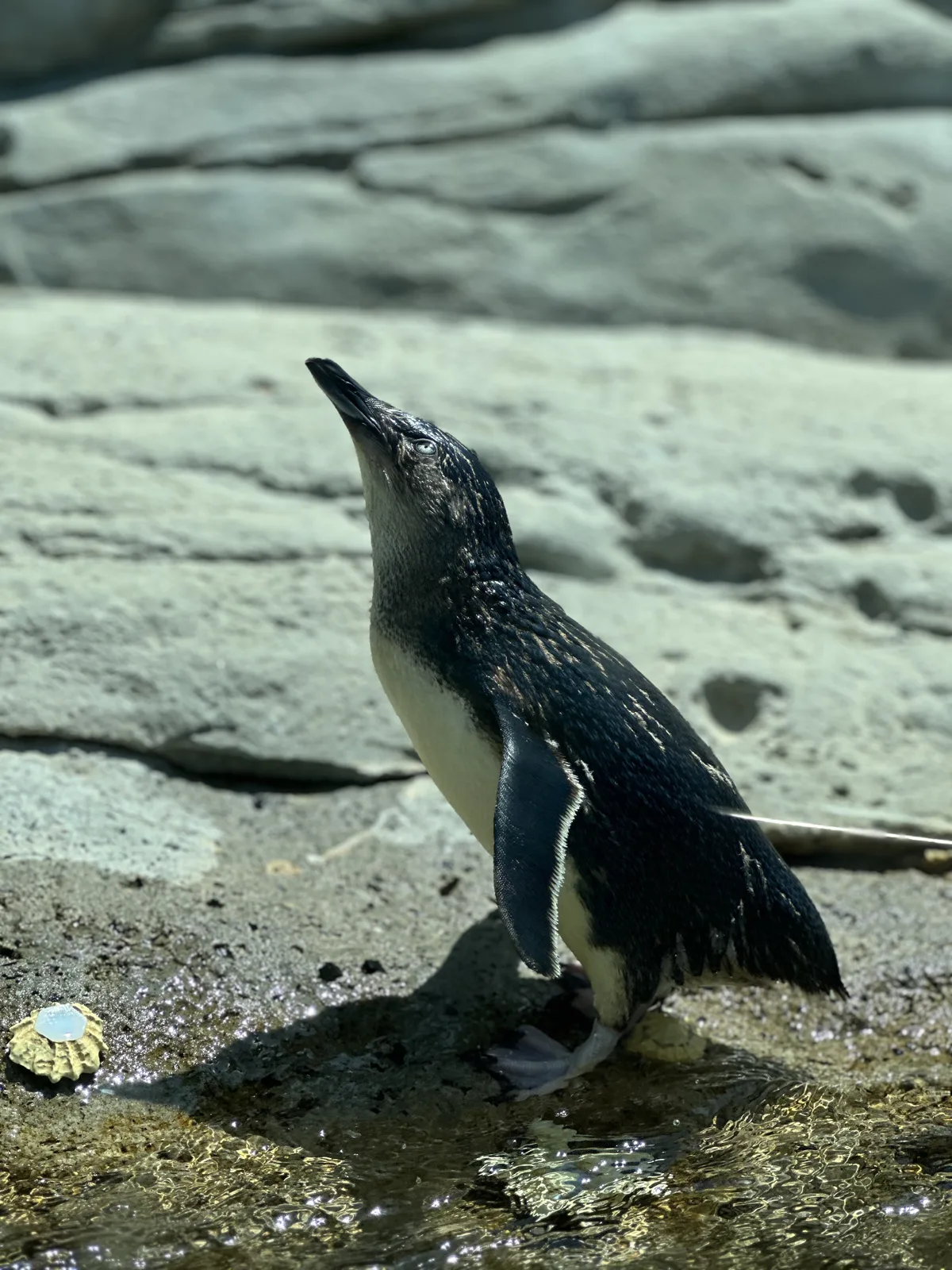
Elsewhere in the zoo we passed the lions, all asleep on the warm rocks, an elephant standing in its pool, and a little penguin standing on a rock.
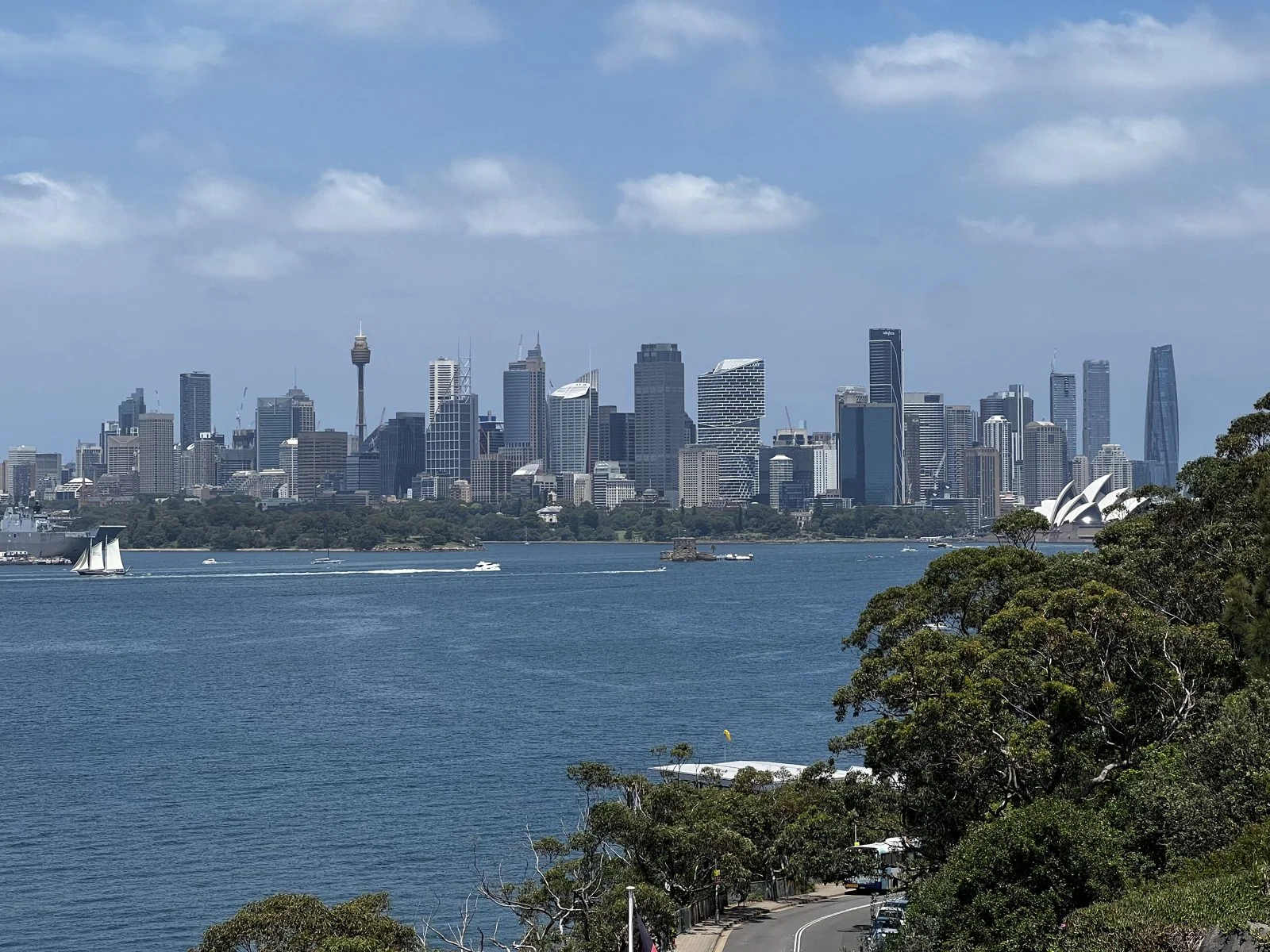
A little lower down the hill, past the zoo's own wharf, the trees open up and the view becomes the whole harbour. Sailboats were tacking across the water, a ferry was crossing, and on the far side the city ran in one unbroken line of towers from the grey ships of the naval base on the left to the Opera House on the right. The sky had those small, flat-bottomed fair-weather clouds that drift across Sydney in summer, and the water was the deep blue that only a harbour this size, open to the ocean, seems to manage.
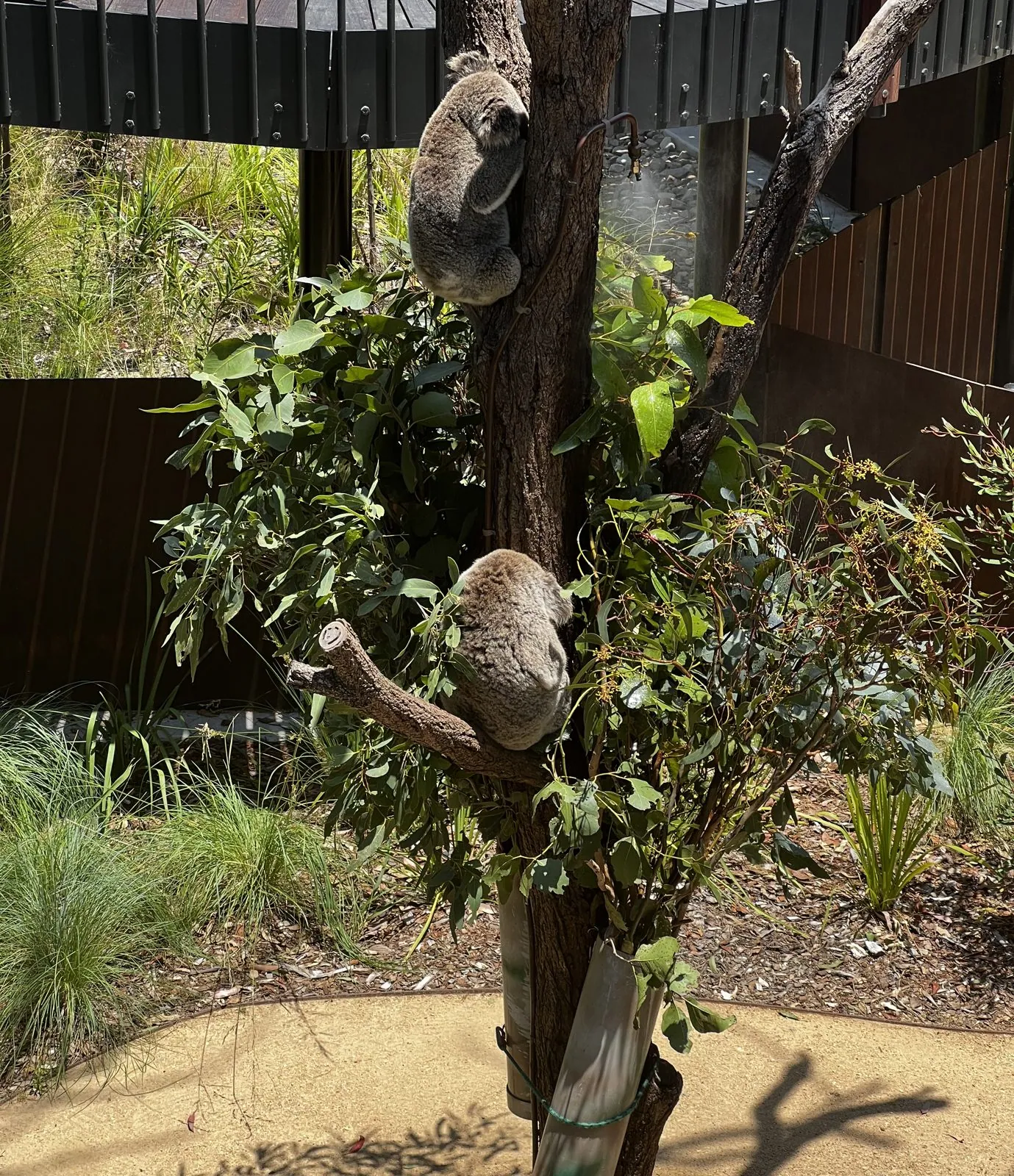
Before leaving we found the koalas, two of them, wedged into the forks of a eucalyptus tree in a planted enclosure near the top of the zoo. Koalas sleep for up to twenty hours a day, a habit usually blamed on their diet of eucalyptus leaves, which are tough, low in energy and mildly toxic. These two were keeping to schedule. Neither of them moved the whole time we were there.
Lunch on the water in Kirribilli
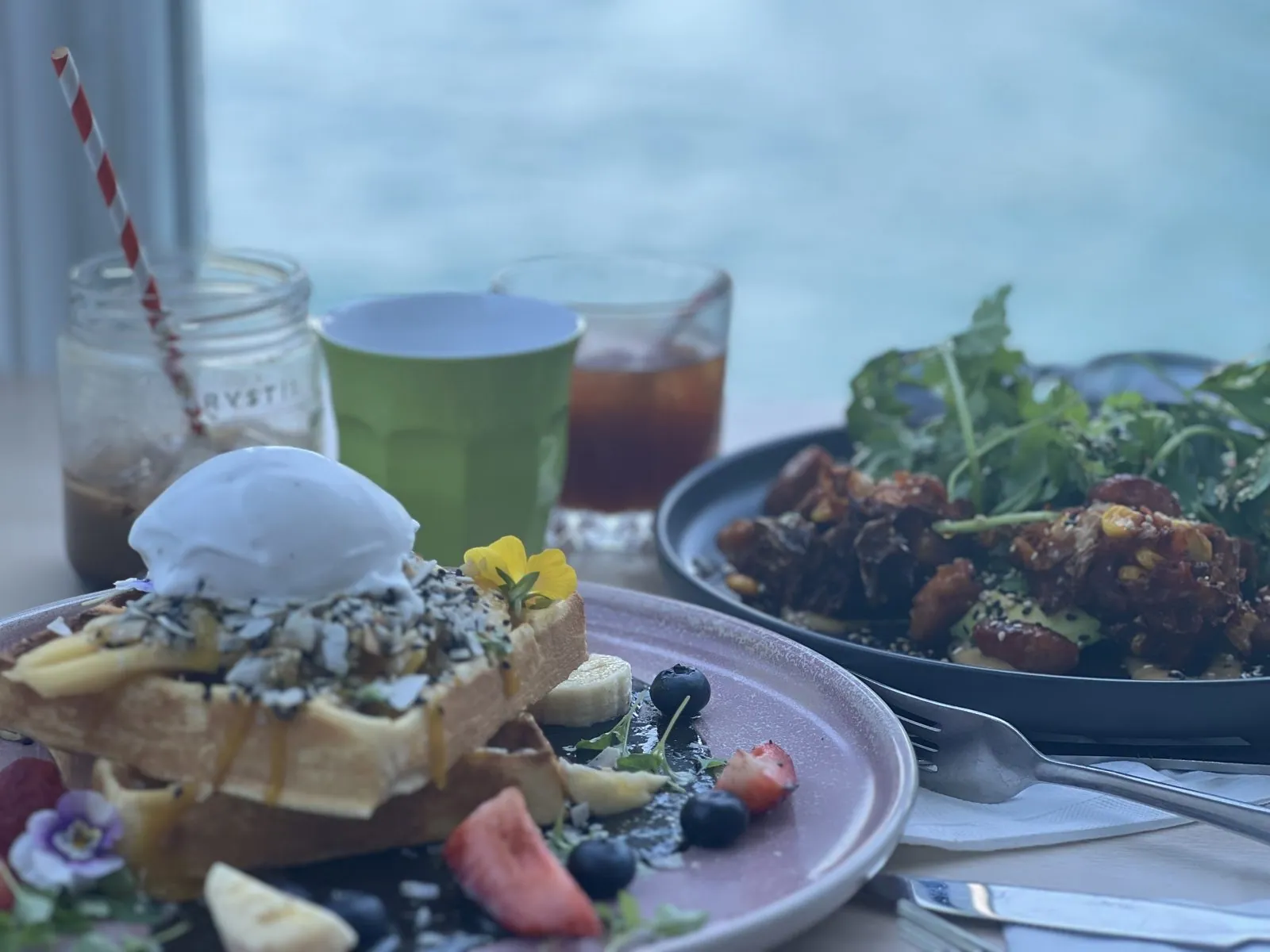
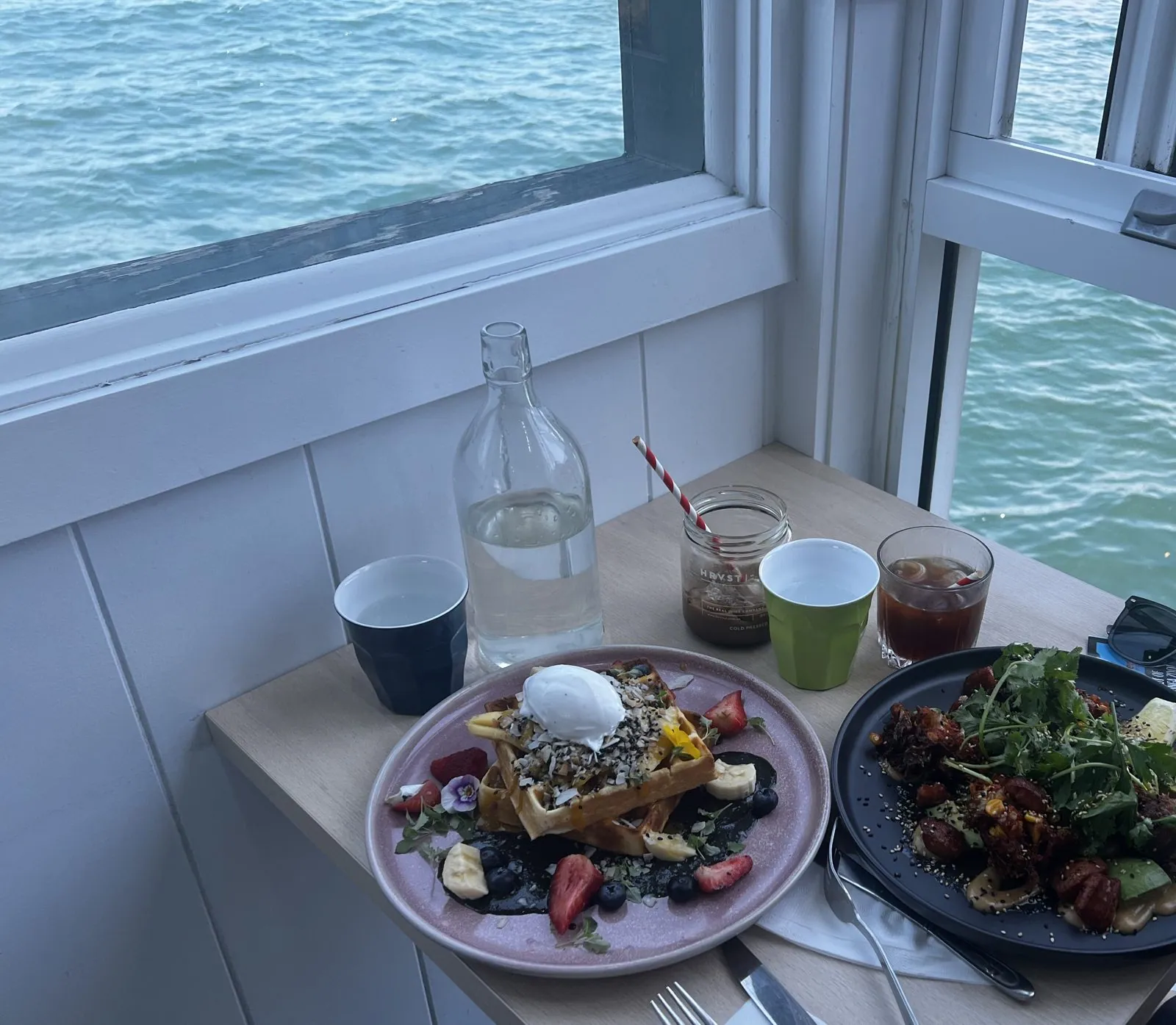
Lunch was a few bays west in Kirribilli, at a small café perched so close to the water that the window seemed to open straight onto the harbour. The table was a narrow ledge under a sash window, the water a startling turquoise just beyond the glass, rocking gently with the wake of passing ferries. On the plates were a waffle piled with fruit, blueberries, edible flowers, toasted coconut and a scoop of ice cream, and a bowl of glazed fried chicken under a heap of rocket.
The ferry past the Opera House
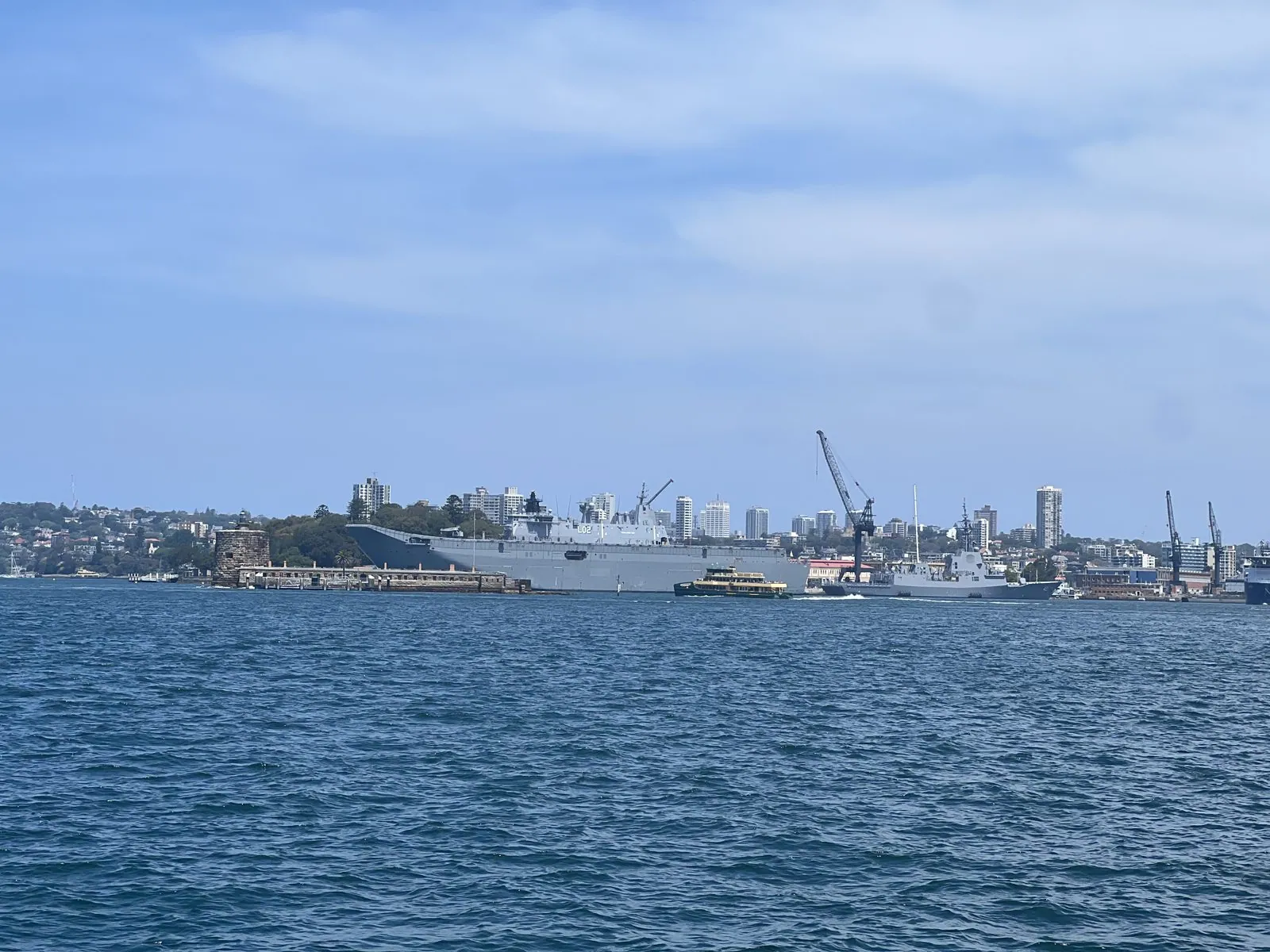
Then we took the ferry back across. From the wharf in Kirribilli you look east down the harbour, and that afternoon the view was of Garden Island, the Royal Australian Navy's main fleet base on the east coast. A big grey warship was tied up alongside its cranes, looking out of place among the sailboats.
The crossing to Circular Quay takes only a few minutes, but it passes the single most famous building in the southern hemisphere at close range. The ferry swung out from under the Harbour Bridge, and there was the Sydney Opera House, a cluster of white shells on its own point of land, close enough to see the pattern of the tiles. From the water the building makes sense in a way it never does in photographs. It is designed to be seen from all sides and from below, and a harbour ferry is exactly the right place to see it from.
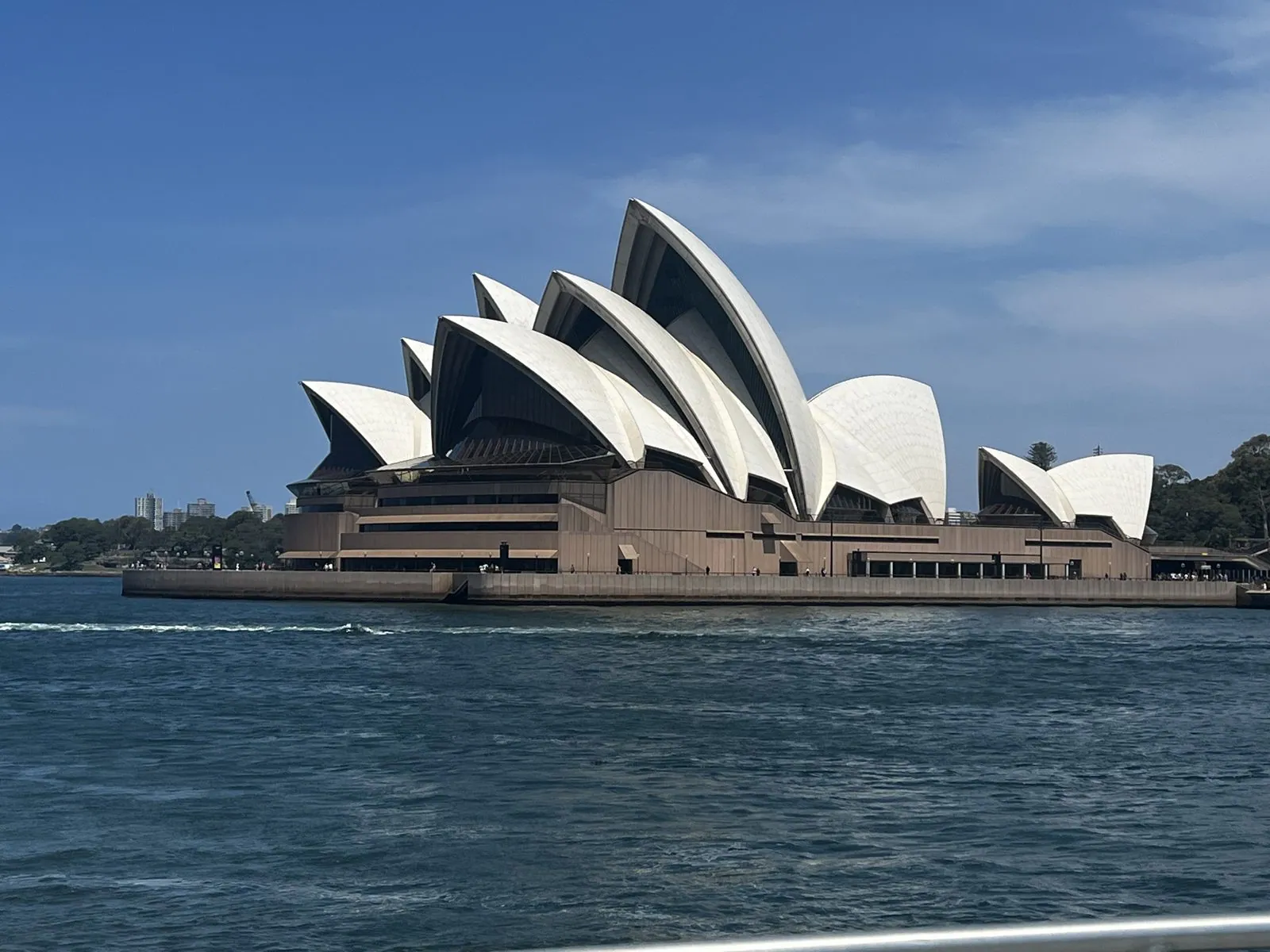
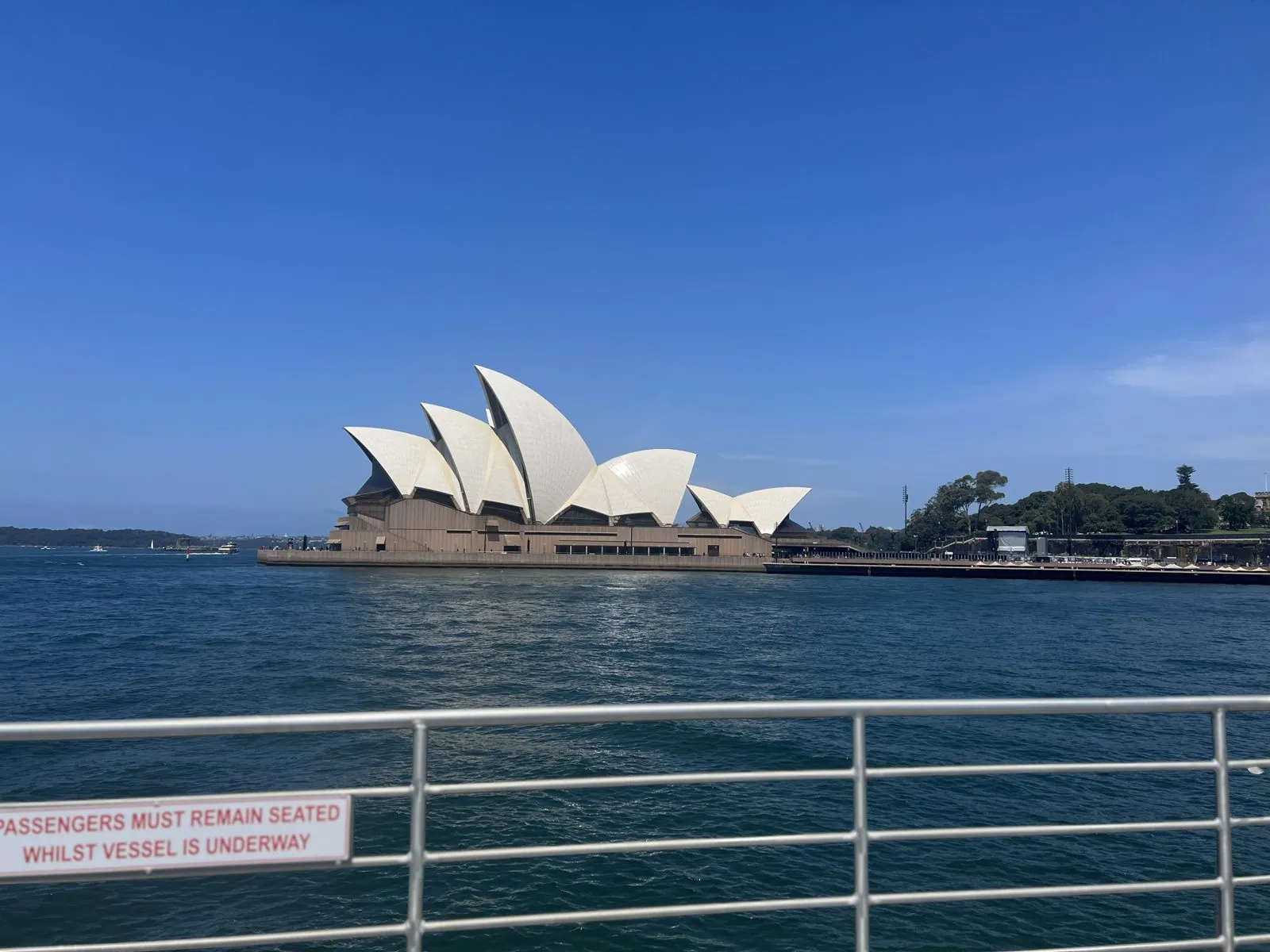
For someone who works in computer graphics, the Opera House is also a story about geometry. The Danish architect Jørn Utzon won the design competition in 1957 with sketches of soaring free-form shells that nobody knew how to build. For years he and the engineers at Ove Arup tried parabolas and ellipsoids, and some of the earliest computers ever used in structural engineering ground through the calculations. Nothing worked until Utzon found what became known as the "spherical solution". Every shell is cut from the surface of the same sphere, so all of them share the same curvature and could be built from standard, prefabricated ribs. It is a beautiful piece of reasoning: a building that looks completely free is in fact made from one shape.
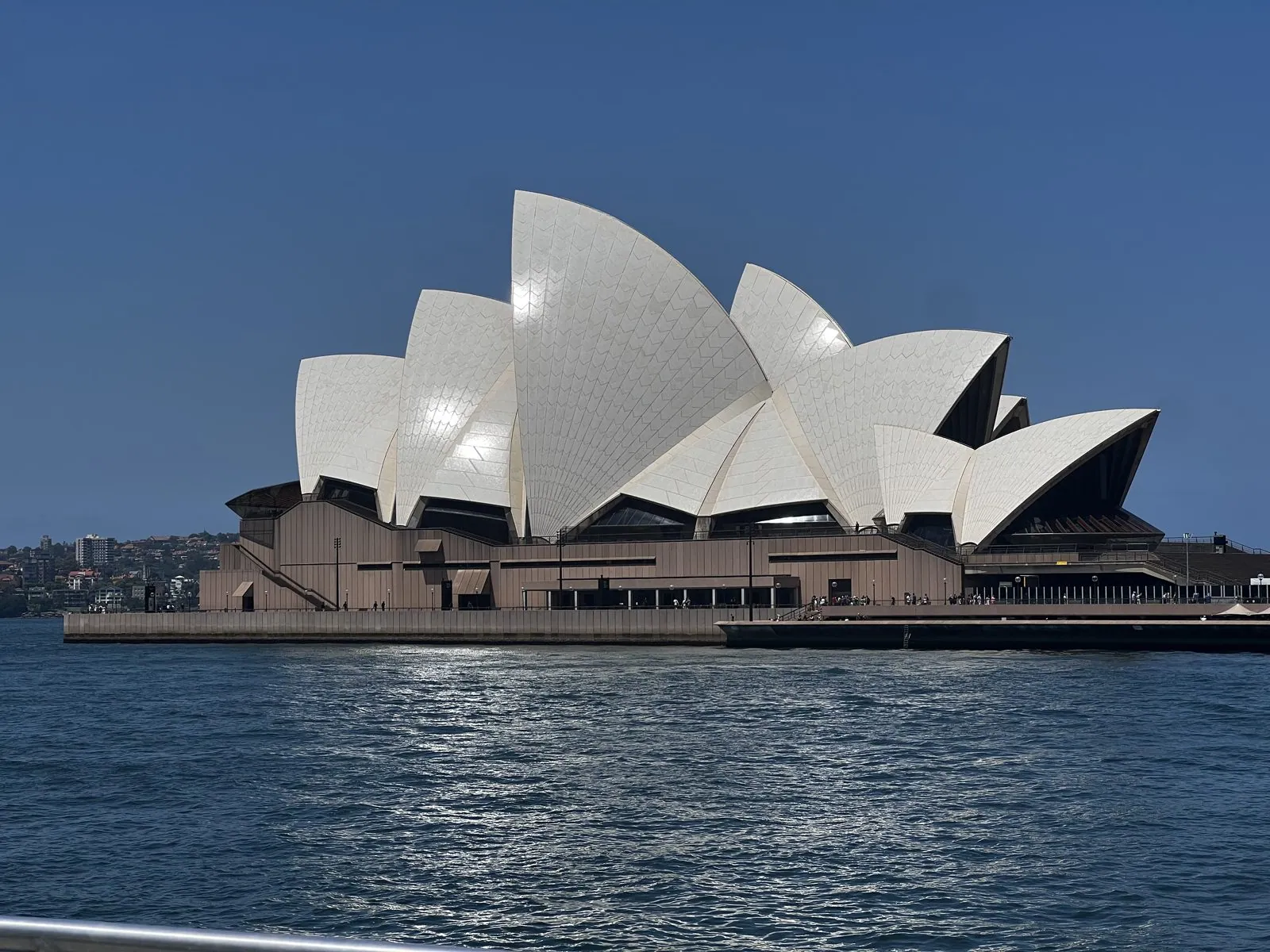
The tiles are their own story. There are just over a million of them, made in Sweden in two finishes, glossy white and matte cream, and laid in a chevron pattern, so that the shells shine without blinding anyone. In the hard afternoon sun they glittered like snow. The building took sixteen years to finish, cost many times its budget, and lost its architect along the way: Utzon resigned in 1966 and never returned to see it completed. It opened in 1973 and became a UNESCO World Heritage Site in 2007, one of the youngest buildings ever listed.
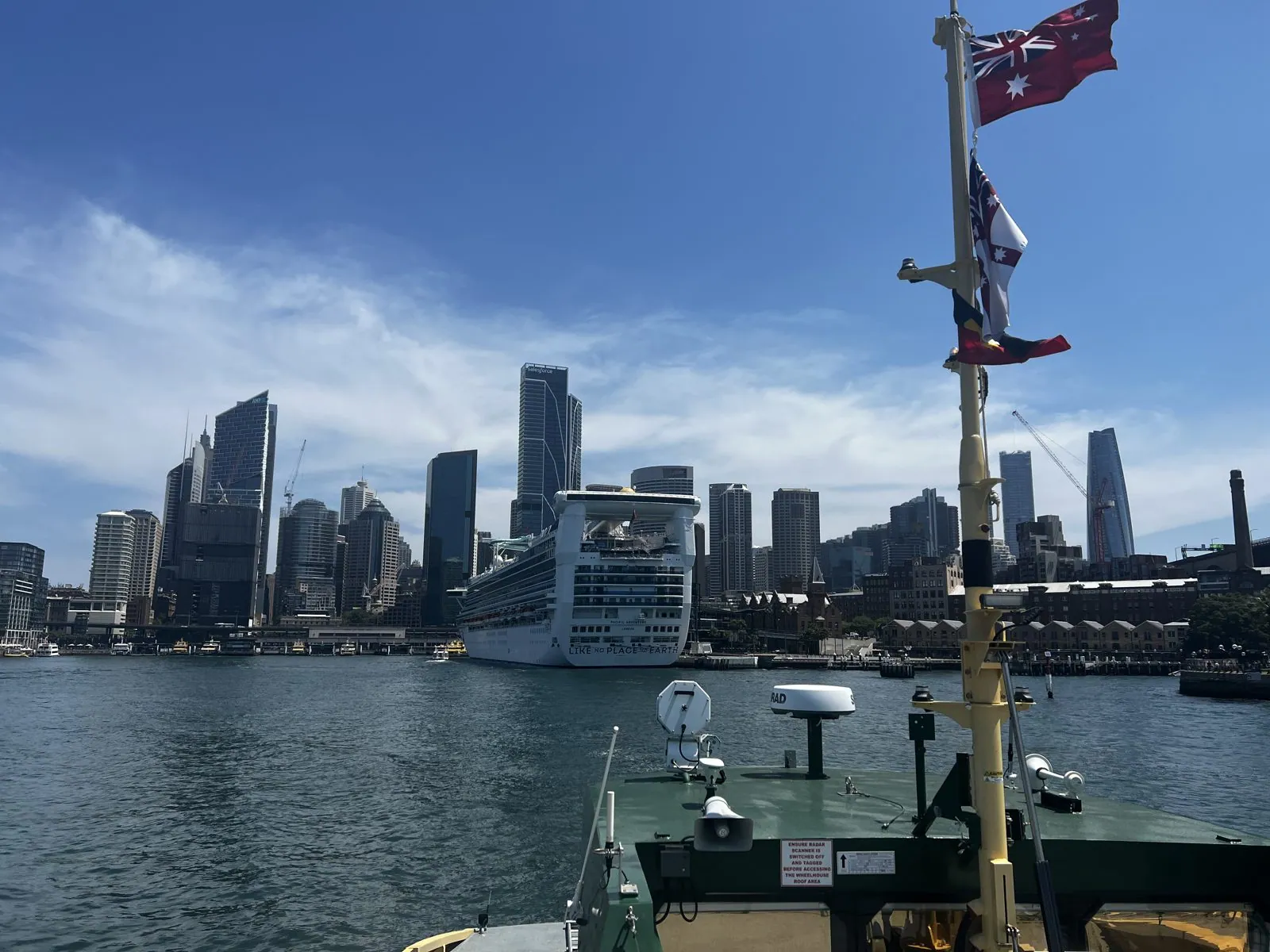
Coming into Circular Quay, the ferry's bow, with its flags and its little mast, pointed straight at the city. A cruise ship the height of an apartment block was berthed at the Overseas Passenger Terminal, its white flank lined up against the glass towers behind.
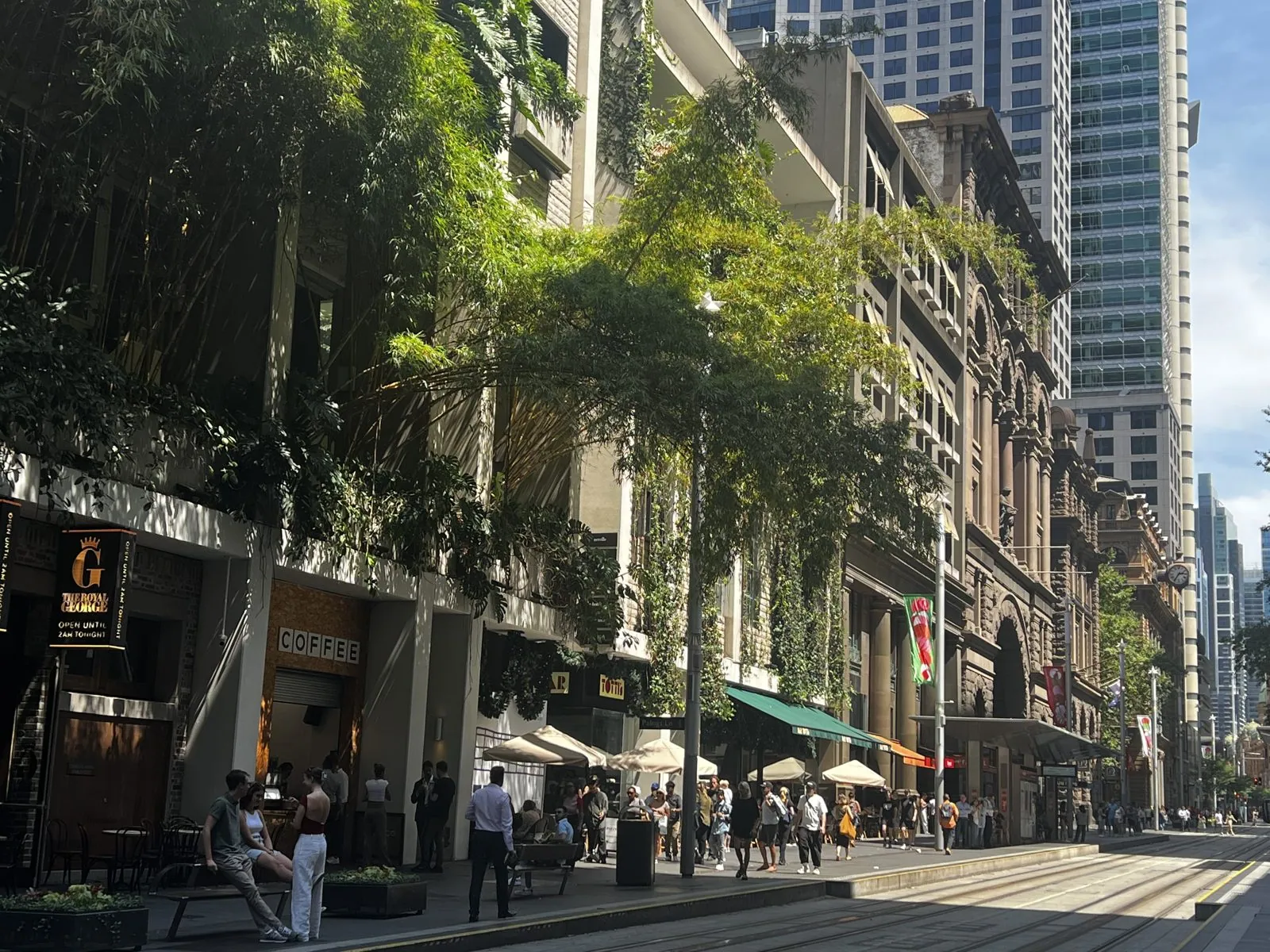
From the quay we walked up into the city. Since 2019 a long stretch of George Street, Sydney's oldest street, has been closed to cars and given over to the light rail and to people on foot. The result is a shady sandstone canyon of old banks and hotels, with trees and creepers spilling off the façades, café tables on the pavement, and a tram gliding silently down the middle every few minutes. It was half past two on a Monday, and half the city seemed to be out getting coffee.
SIGGRAPH Asia 2023
Then came the conference. SIGGRAPH Asia 2023 ran from December 12th to 15th at the International Convention Centre Sydney, the long glass-and-steel building at the south end of Darling Harbour, which opened in 2016. If you have been to the summer SIGGRAPH in North America, the Asian edition is the same conference in a more compact form. It has the technical papers, the courses, the exhibition, the art gallery and the computer animation festival, but it feels more like a large family gathering than a festival. For the conference days I was on my own: my wife flew to Melbourne on Monday evening and was back on Thursday afternoon.
For me it was also a debut. I was there to present a paper, Capturing Animation-Ready Isotropic Materials Using Systematic Poking, which had appeared in ACM Transactions on Graphics, and it was my first talk at any SIGGRAPH. The program, it is fair to say, did not roll out the red carpet. The talk was at nine in the morning, in the earliest paper session of the day, which is an hour when even the speakers are still looking for coffee. The session was also a slightly puzzling home for it. It was first announced as "All About Rendering", then quietly renamed "All About Animation", and the other papers in it were mostly about animating characters, while mine was about poking soft objects to measure what they are made of. A paper about squishy materials, in a session about character animation that used to be about rendering: it had, at least, a certain shape-shifting logic to it.
The audience was what you would expect at nine o'clock on a conference morning: small, loyal, and caffeinated. I gave the talk anyway, with all the seriousness of someone who had rehearsed it far too many times, and it went fine. Every SIGGRAPH speaker has to give a first talk somewhere. Mine just happened to be at breakfast, on the other side of the world, in a session that could not decide what it was about.
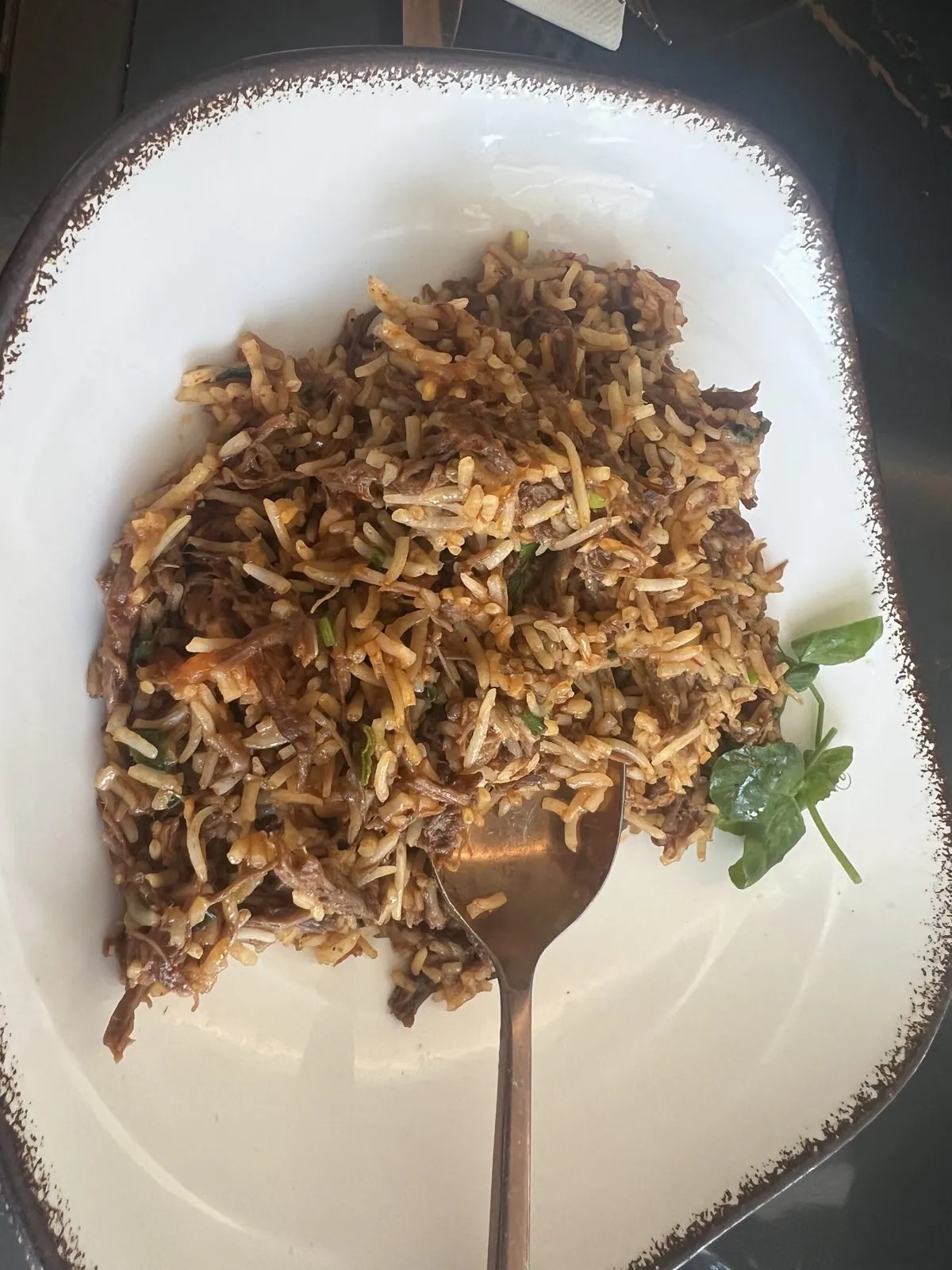
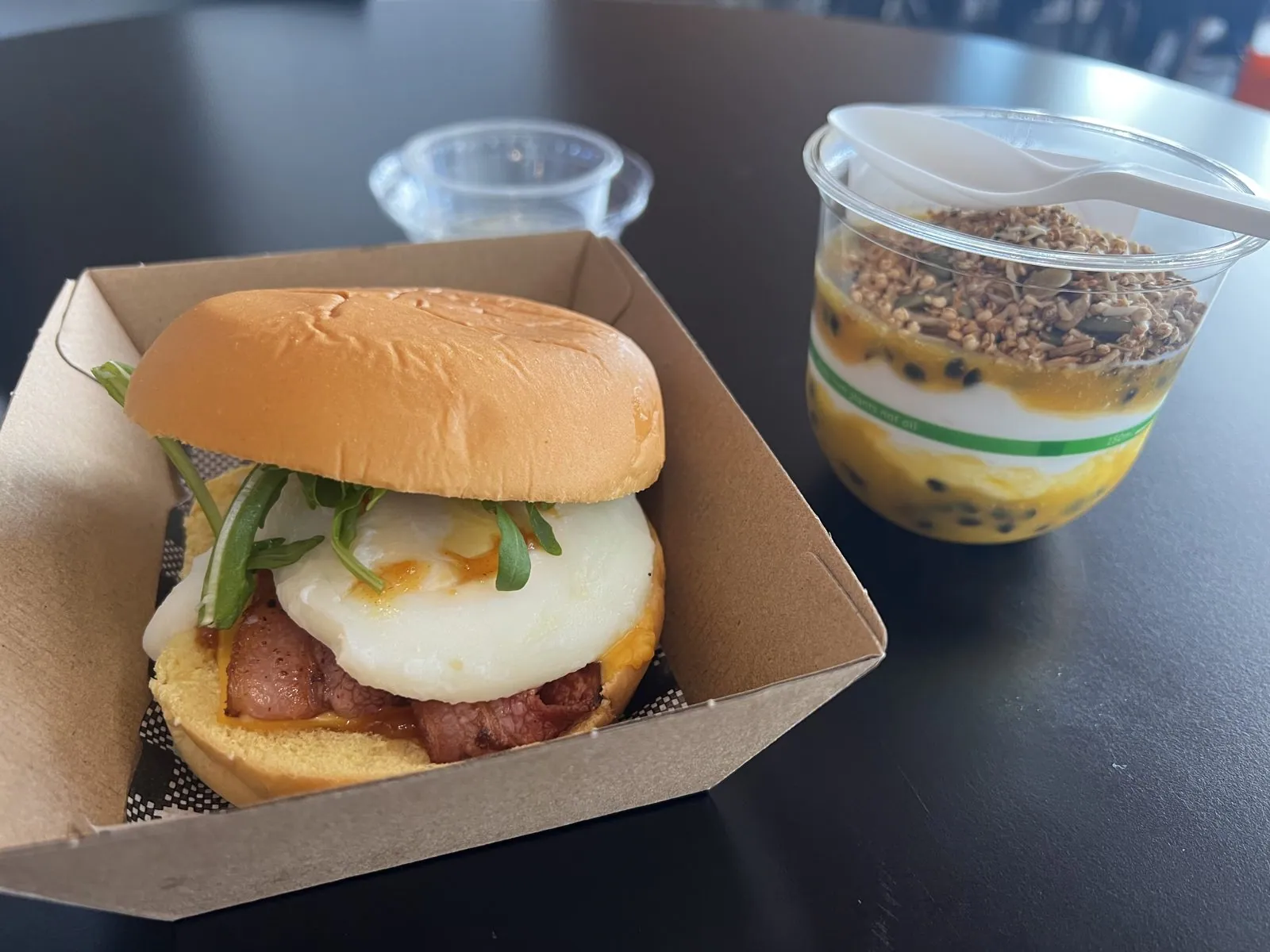
The rest of a conference day looks, in the camera roll, mostly like lunch. On Tuesday it was a spiced rice dish heaped in a white bowl, eaten near the venue. On Thursday the camera recorded the exhibition-hall menu in detail: a cup of coconut yoghurt layered with mango and passionfruit under a crust of granola, and a breakfast burger with bacon, cheese and a fried egg.
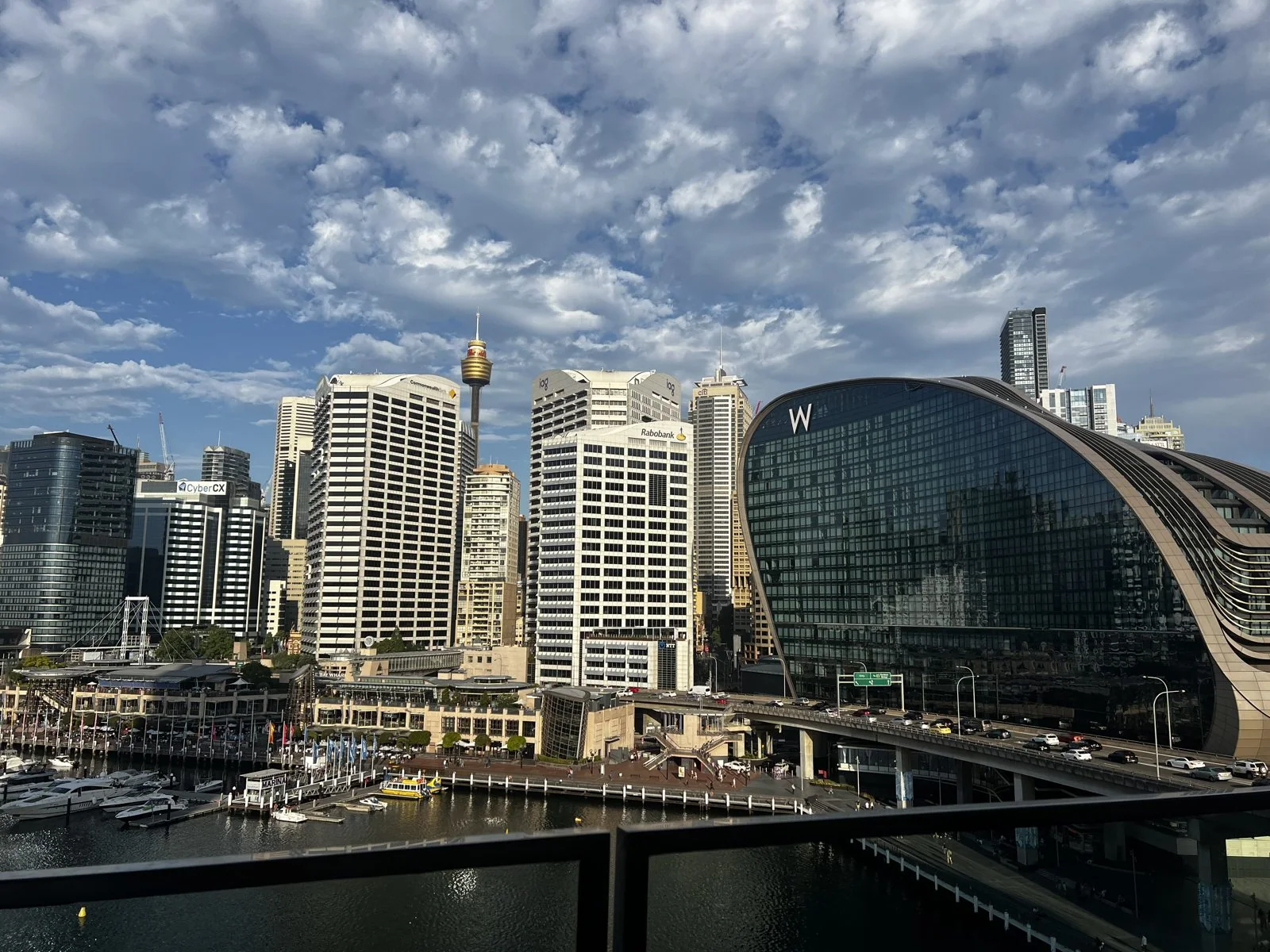
On Wednesday evening, a little before half past six, the light over Darling Harbour was spectacular. The sky was packed with small puffy clouds, like a field of cotton, and below them the city towers, Sydney Tower and the curved glass building we had seen on the first night were lit gold by the low sun. Underneath, the marina was full of boats and the expressway was full of people heading home.
The exhibition floor
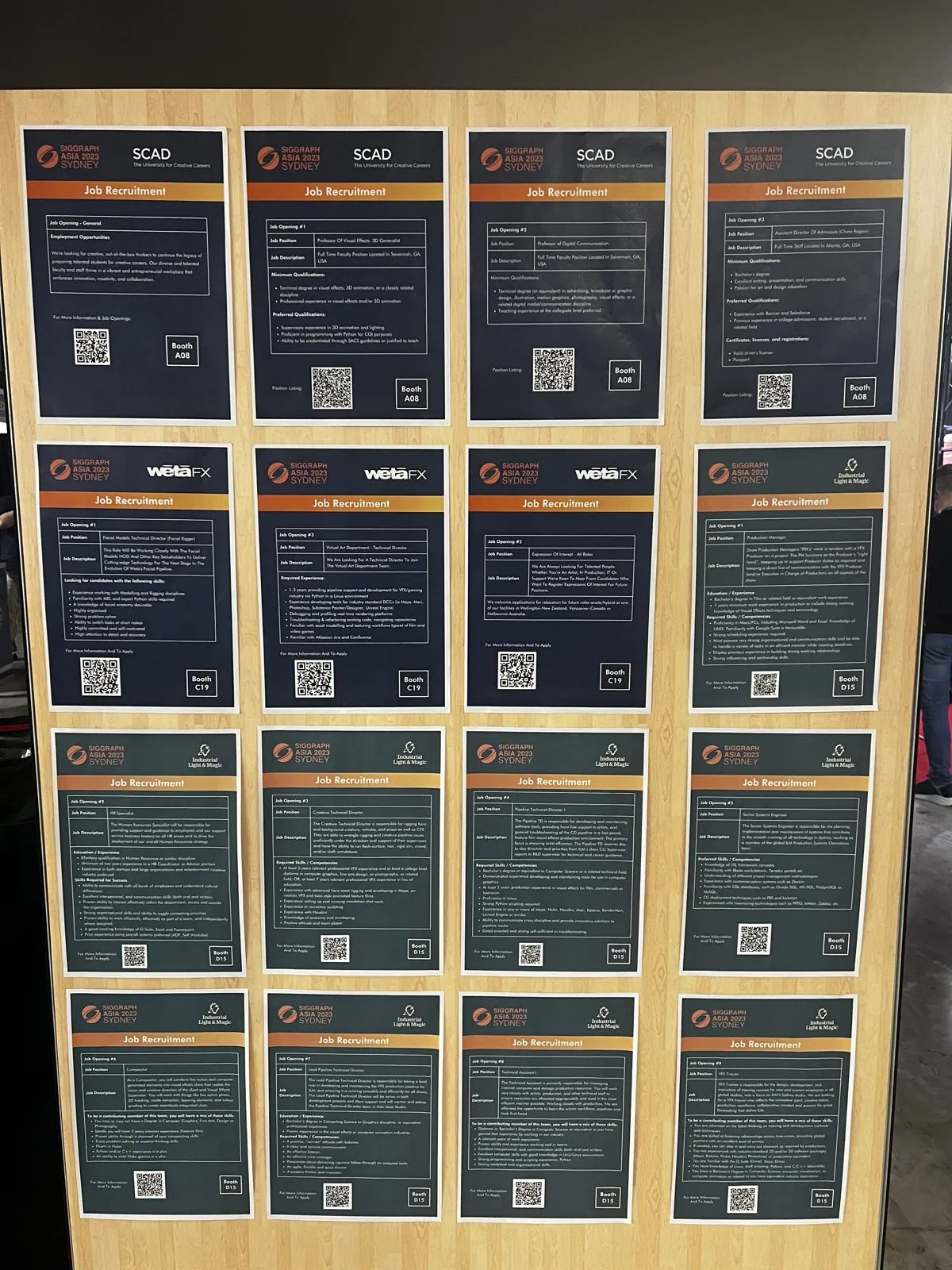
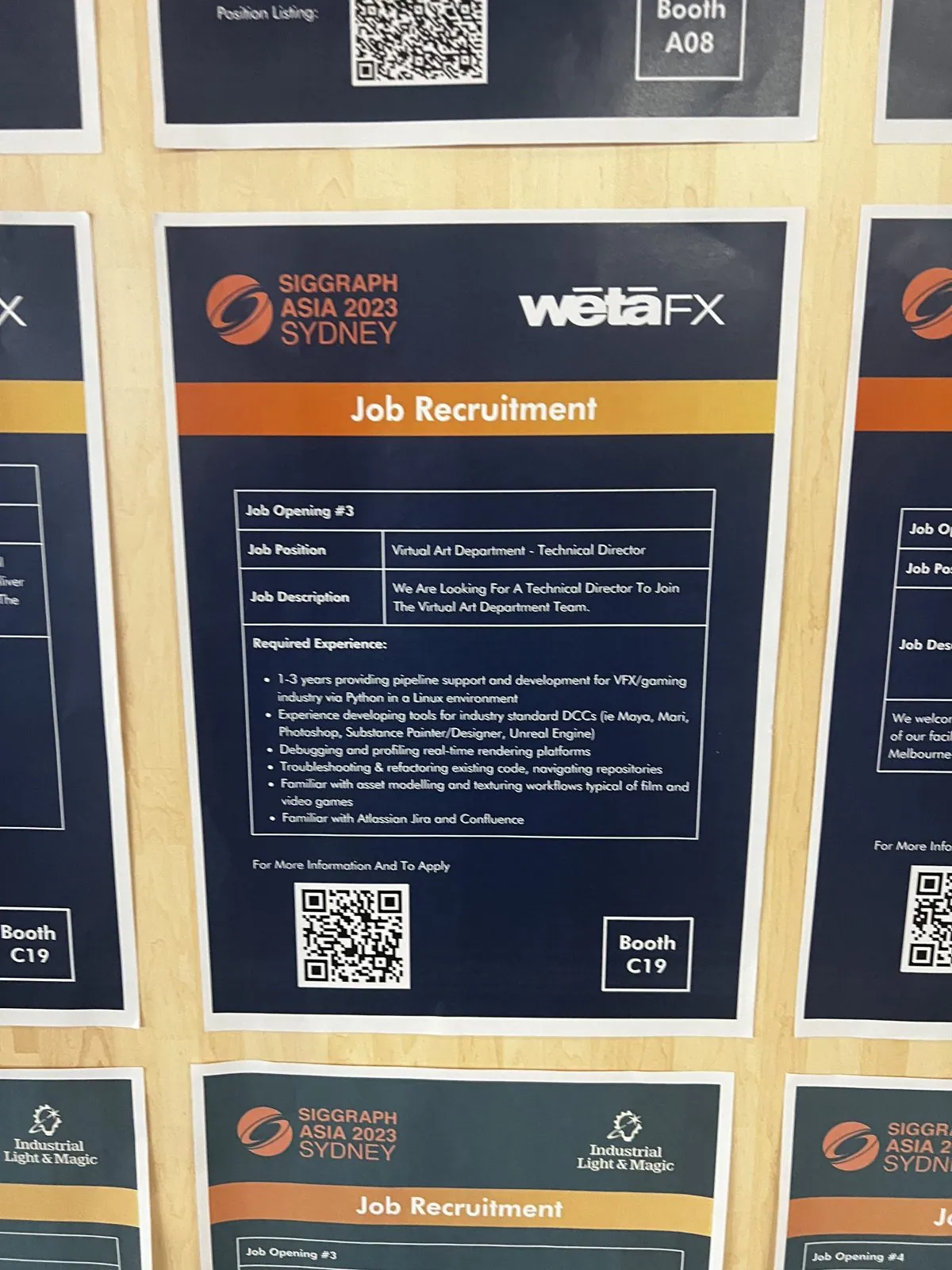
Thursday morning was spent on the exhibition floor. One wall was given over to recruitment: board after board of printed job ads, each under the conference logo and a studio's name. Weta FX, the visual effects company from Wellington behind The Lord of the Rings and Avatar, was hiring technical directors and riggers. Industrial Light & Magic and an art and design school had boards of their own. Every ad ended in a QR code and a booth number. For a room full of students, it was the most-read wall in the building.
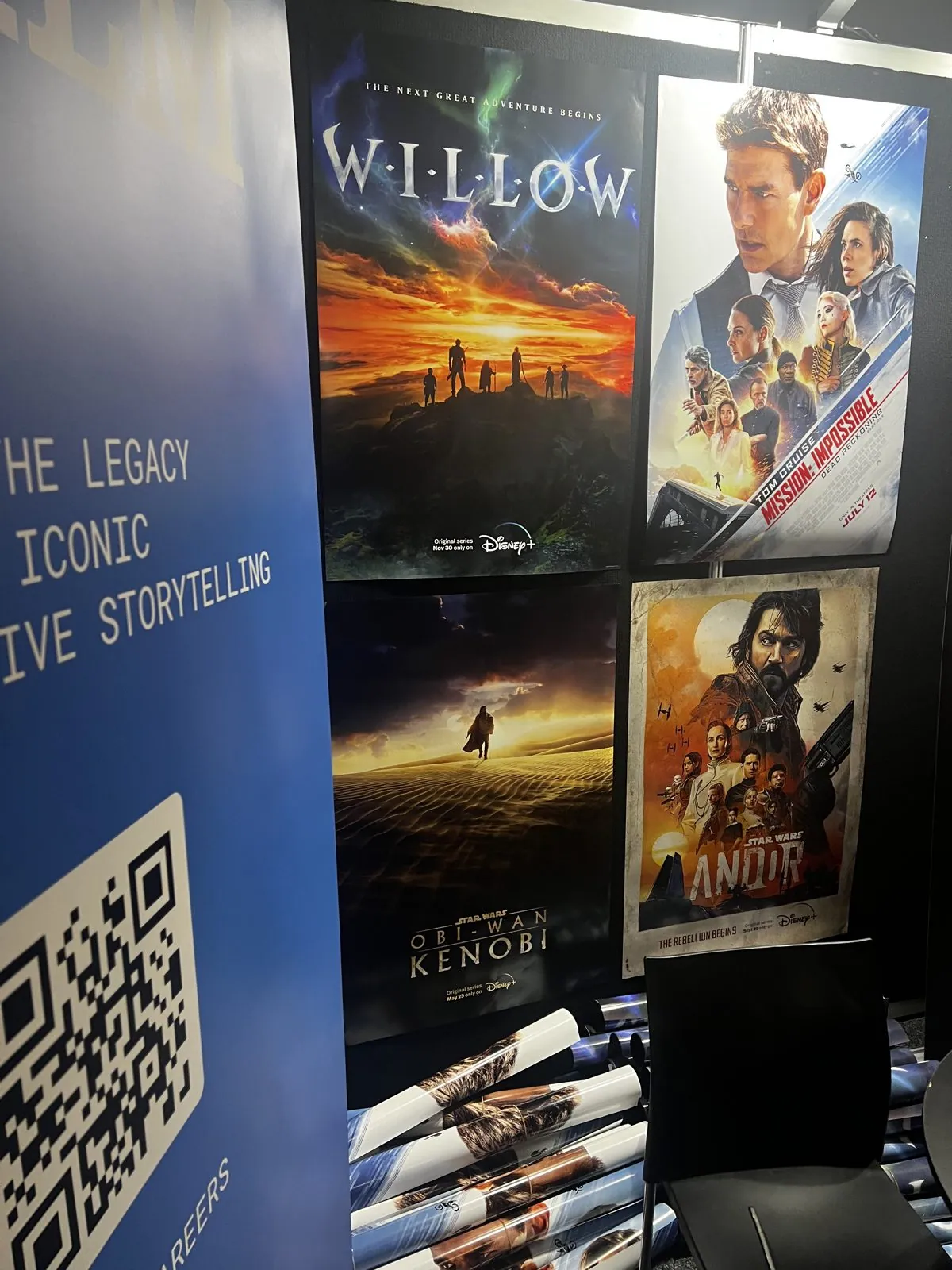
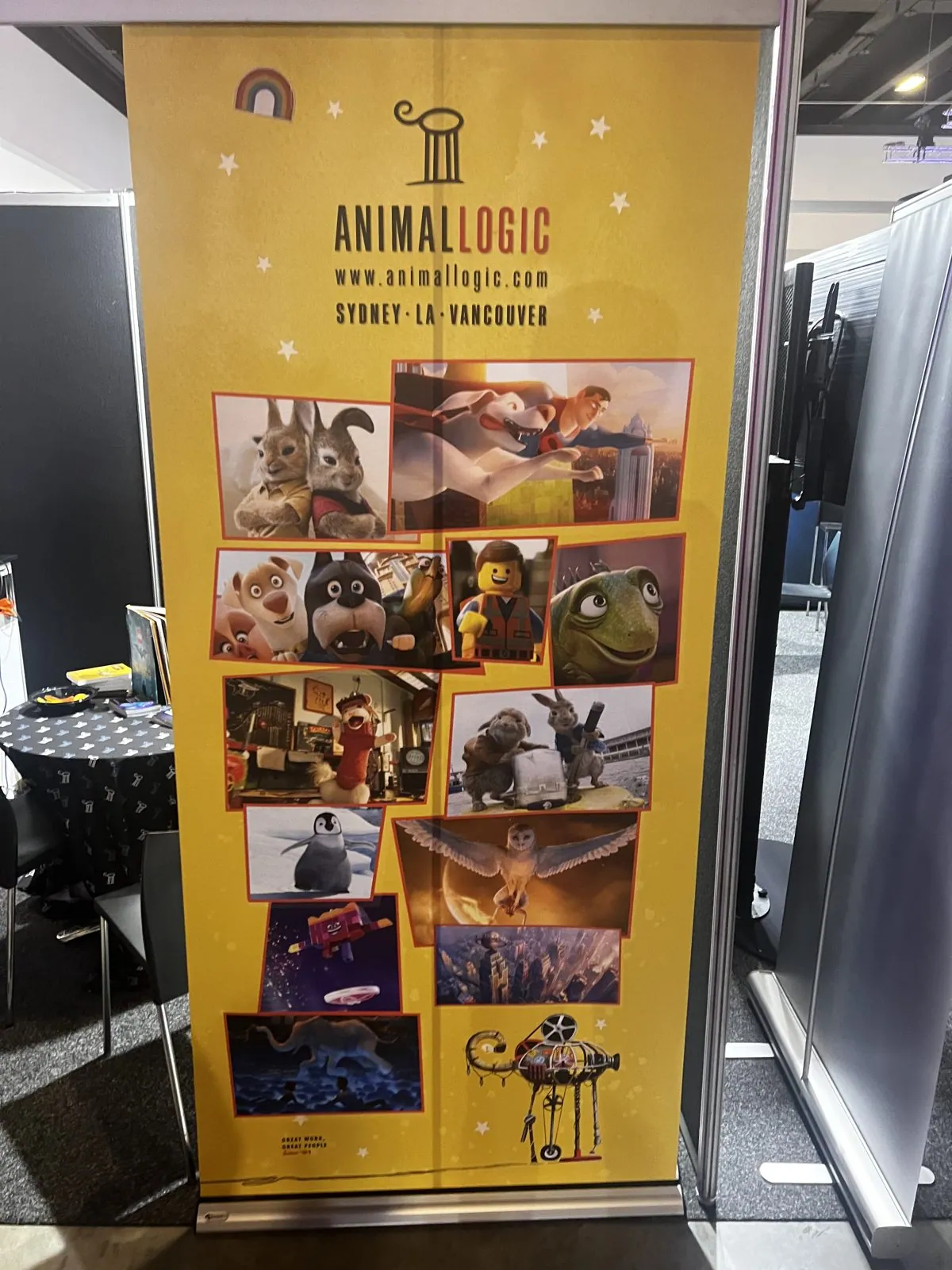
The booths had the same mix of art and industry you find at every SIGGRAPH. One was hung with film posters from shows and films its artists had worked on: Willow, Mission: Impossible, Obi-Wan Kenobi and Andor, under a slogan about "the legacy of iconic storytelling". Another was a tall yellow banner for Animal Logic, the Sydney studio that made Happy Feet, The LEGO Movie and Peter Rabbit. Its characters were all lined up on the banner: penguins, owls, a LEGO construction worker and a pair of rabbits. It felt right to find them here. For a lot of graphics people, Animal Logic is a large part of the reason Sydney is on the map at all.
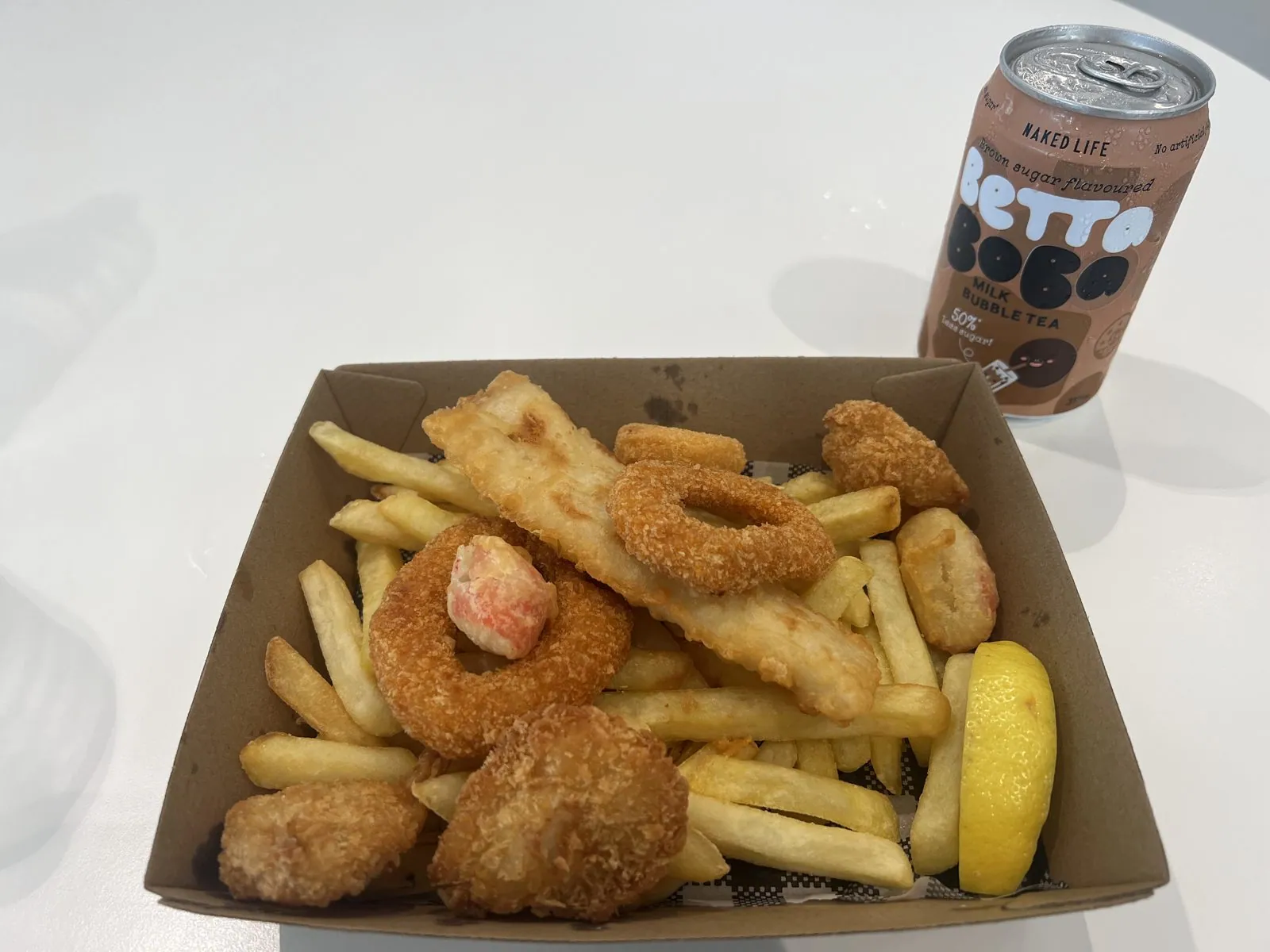
Lunch that day was the most Australian meal of the week: fish and chips in a cardboard tray, with calamari rings, a wedge of lemon, and, less traditionally, a can of milk bubble tea.
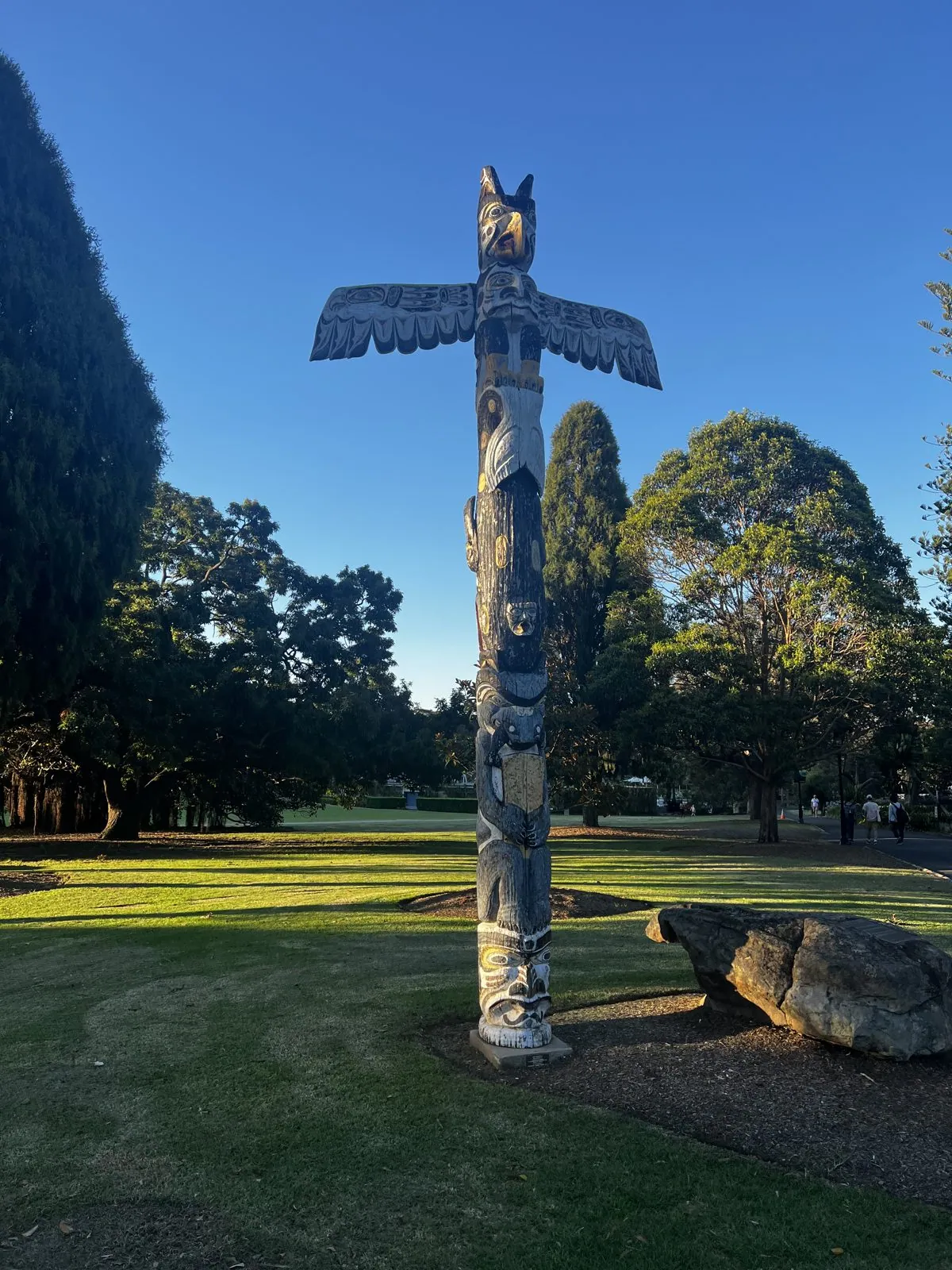
That evening we went for a walk a couple of kilometers south, toward the University of Sydney. In a park off Cleveland Street, under tall old trees, stood a carved wooden pole topped by a bird with outstretched wings, catching the very last of the sun at seven o'clock. The lawns had gone gold and the shadows stretched halfway across the park. It was a quiet end to a loud day.
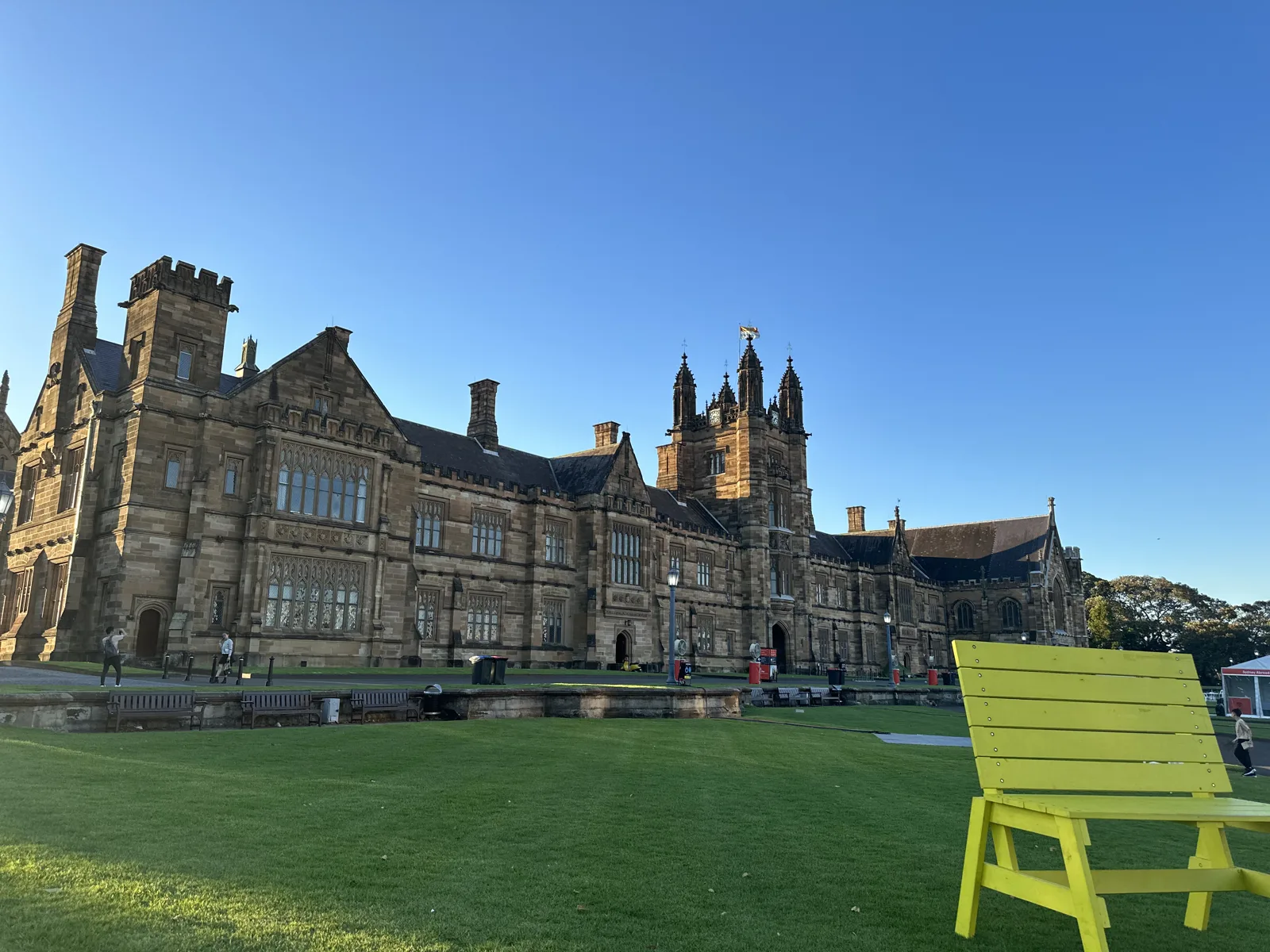
A few minutes further on was the University of Sydney itself, where the sandstone Gothic front of the Main Quadrangle was glowing gold in the last of the sun.
That night, with my wife back from Melbourne, we moved to the Hilton in the middle of the city, to a room on the 43rd floor.
Canberra
On Friday we went to Canberra, about 280 kilometers southwest of Sydney, by coach, if memory serves. Canberra is a capital that was invented on purpose. When the Australian colonies federated in 1901, neither Sydney nor Melbourne would accept the other as the capital, so the constitution required a new city to be built in New South Wales, at least a hundred miles from Sydney. An international design competition in 1912 was won by two architects from Chicago, Walter Burley Griffin and Marion Mahony Griffin. Their plan is still the city's skeleton: grand axes lined up on the surrounding hills, and an artificial lake in the middle.
The National Zoo and Aquarium
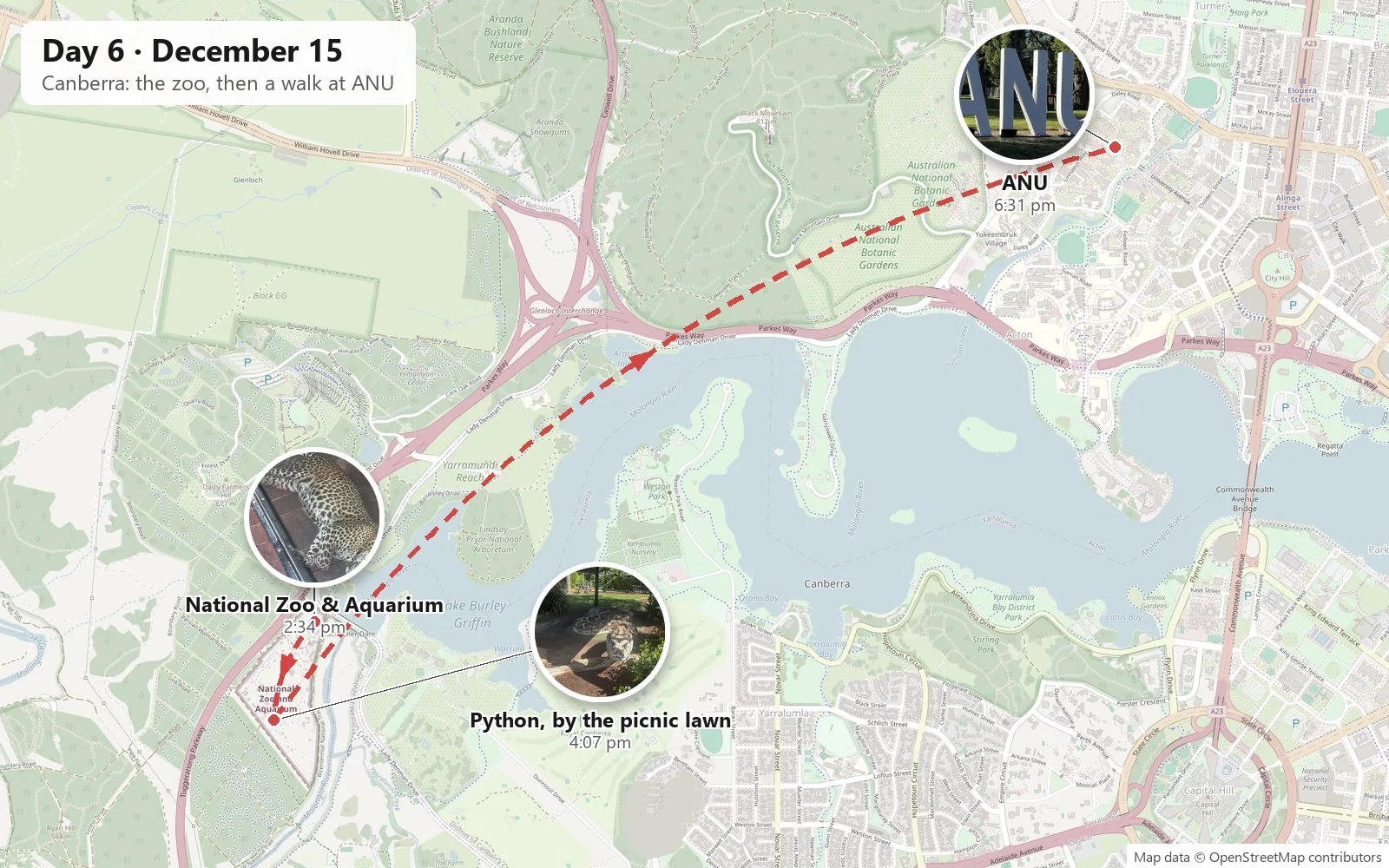
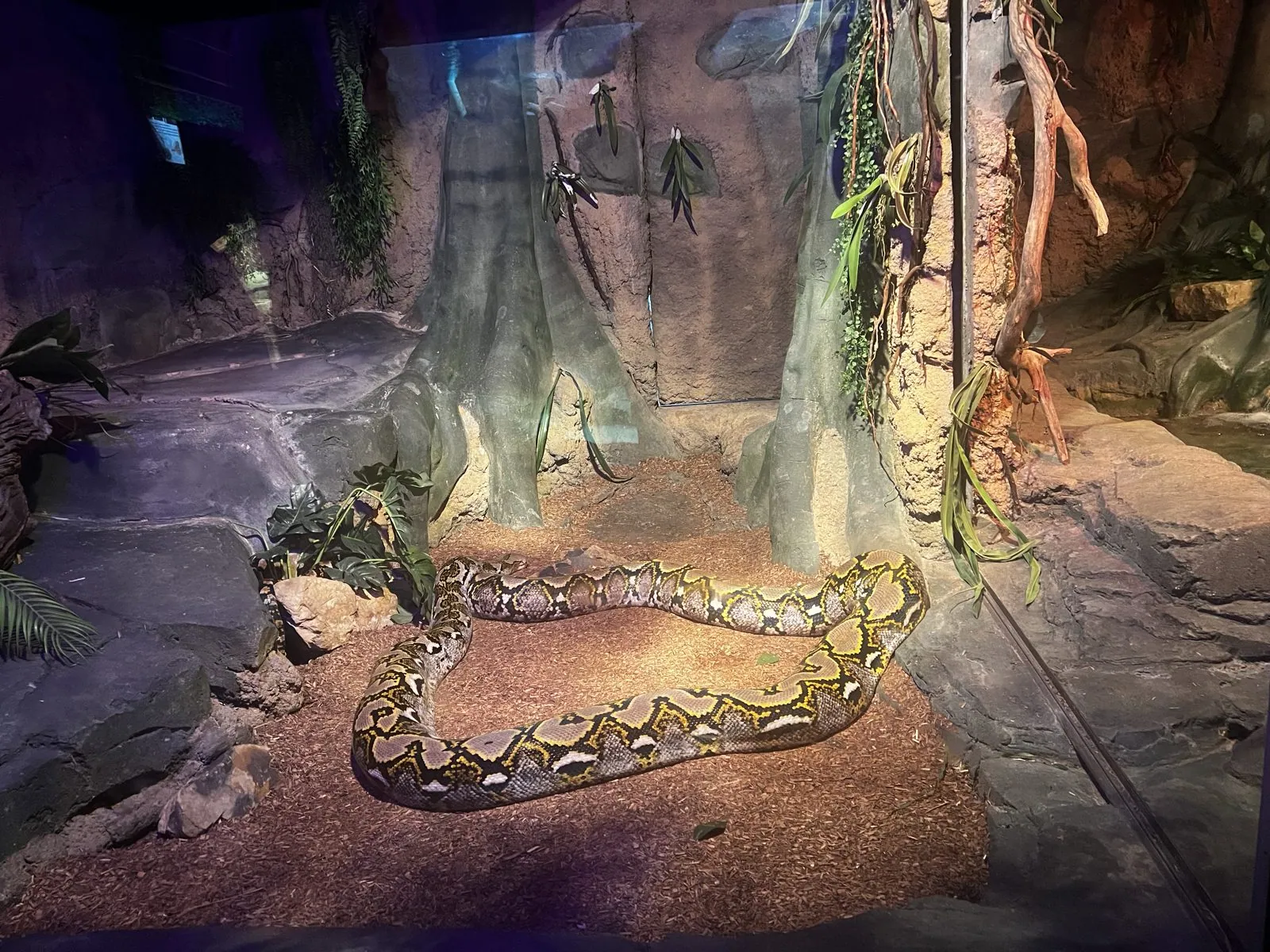
In the afternoon we went to the National Zoo & Aquarium, at the western end of Lake Burley Griffin beside the dam that holds the lake in. It is a smaller, more intimate zoo than Taronga, and in places you get remarkably close to the animals. In a dim indoor exhibit, a reticulated python lay looped across a sandy floor under artificial vines. Reticulated pythons are generally counted as the longest snakes in the world, and they can reach more than six meters.
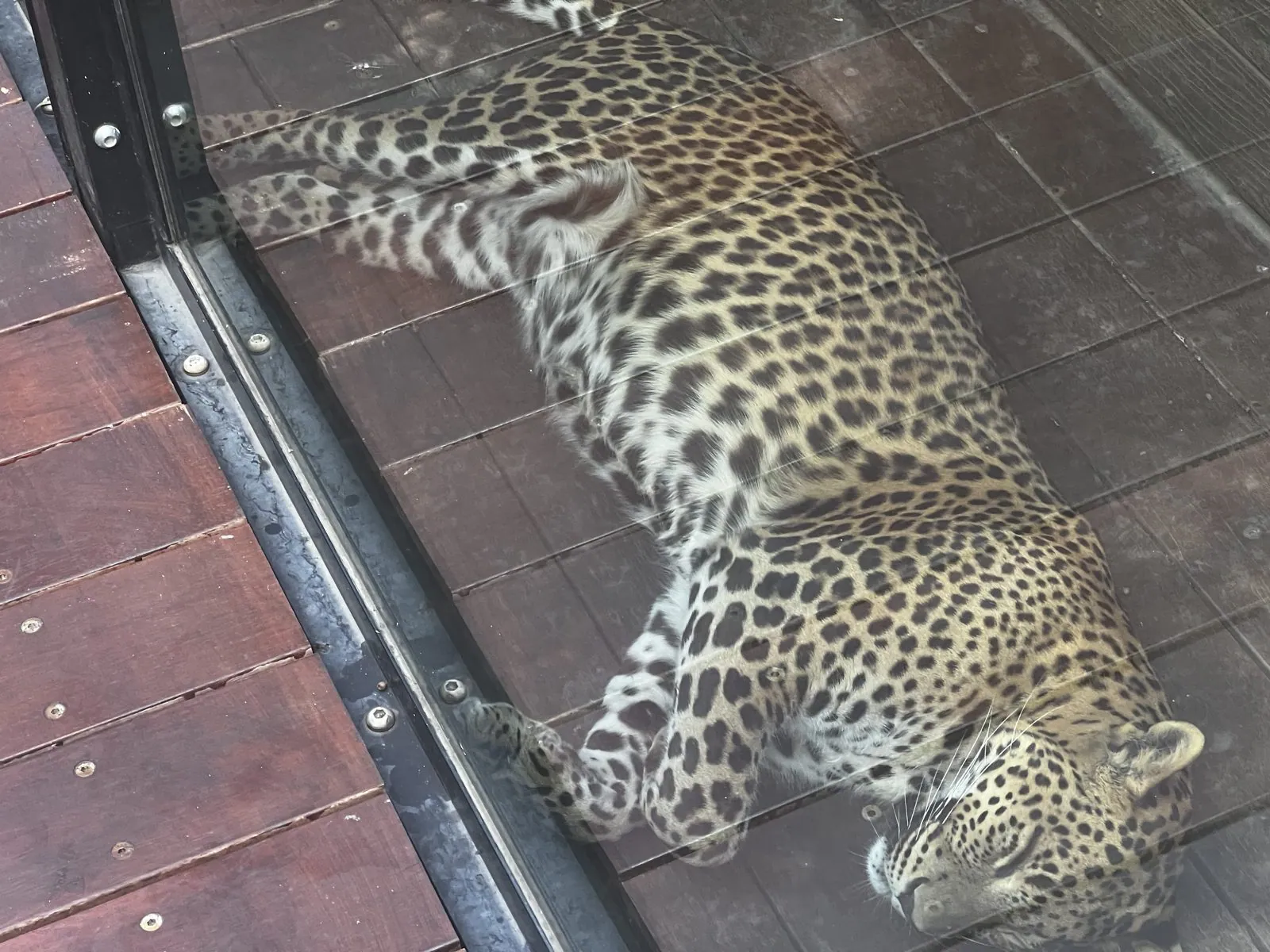
The leopards were asleep, flat out on a wooden deck in the afternoon heat, and the only thing between them and us was a pane of glass. Up close a sleeping leopard is a lesson in pattern. The rosettes get smaller and denser toward the head and legs, and the whole coat looks as though it was procedurally generated with a great deal of care. Next door, the capuchin monkeys had a tall mesh house of ropes and platforms, with a view out to the trees.
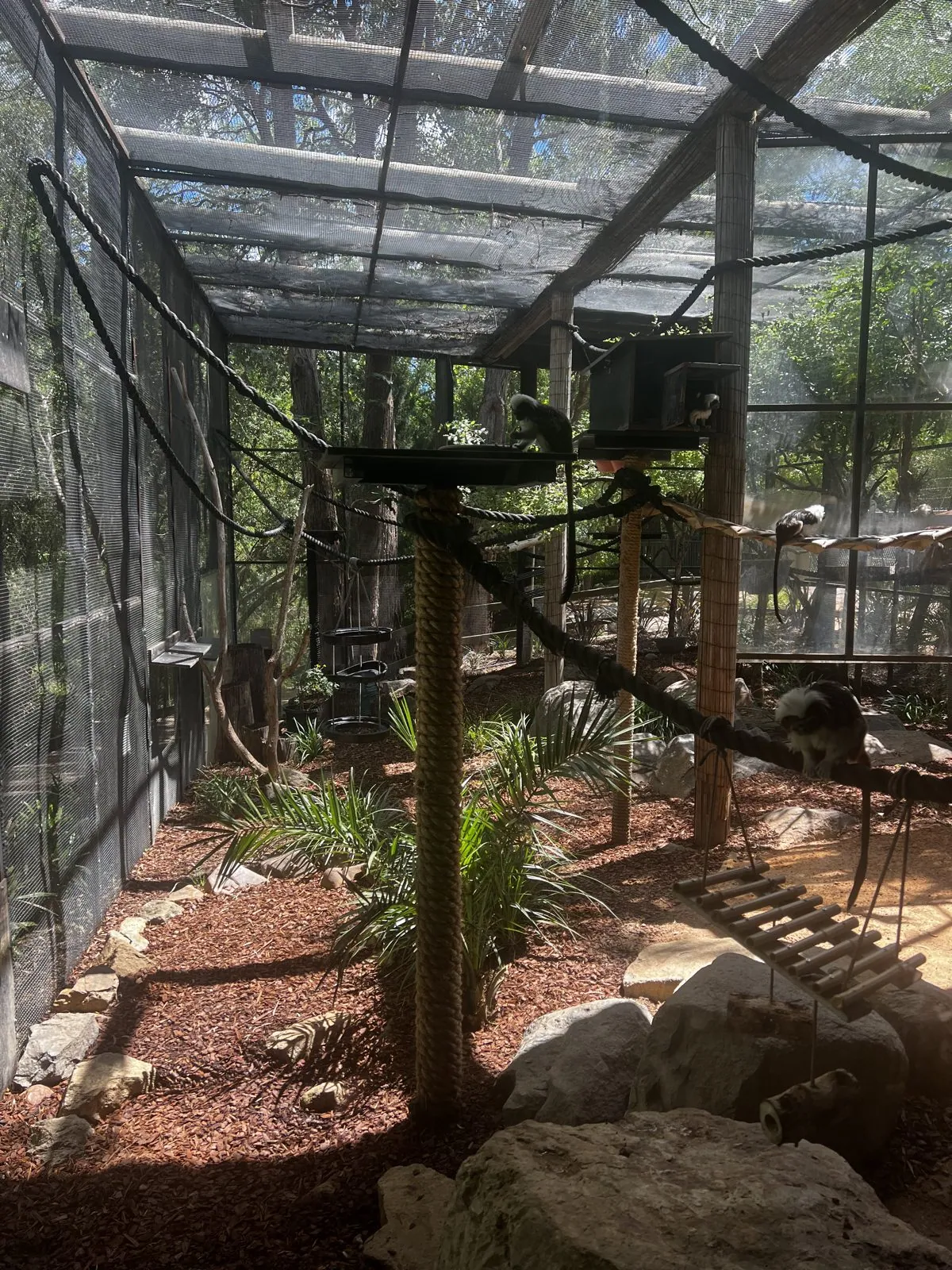
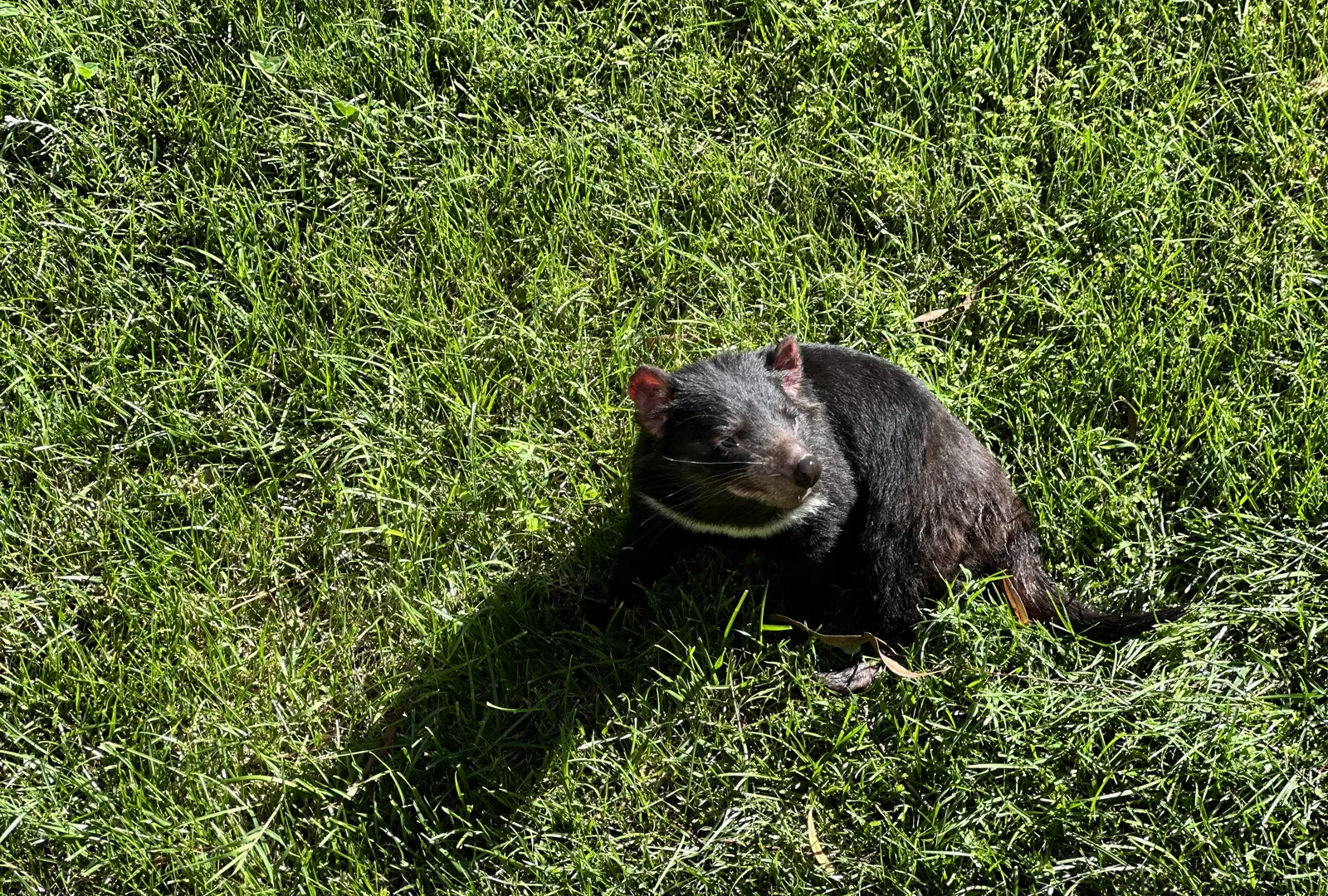
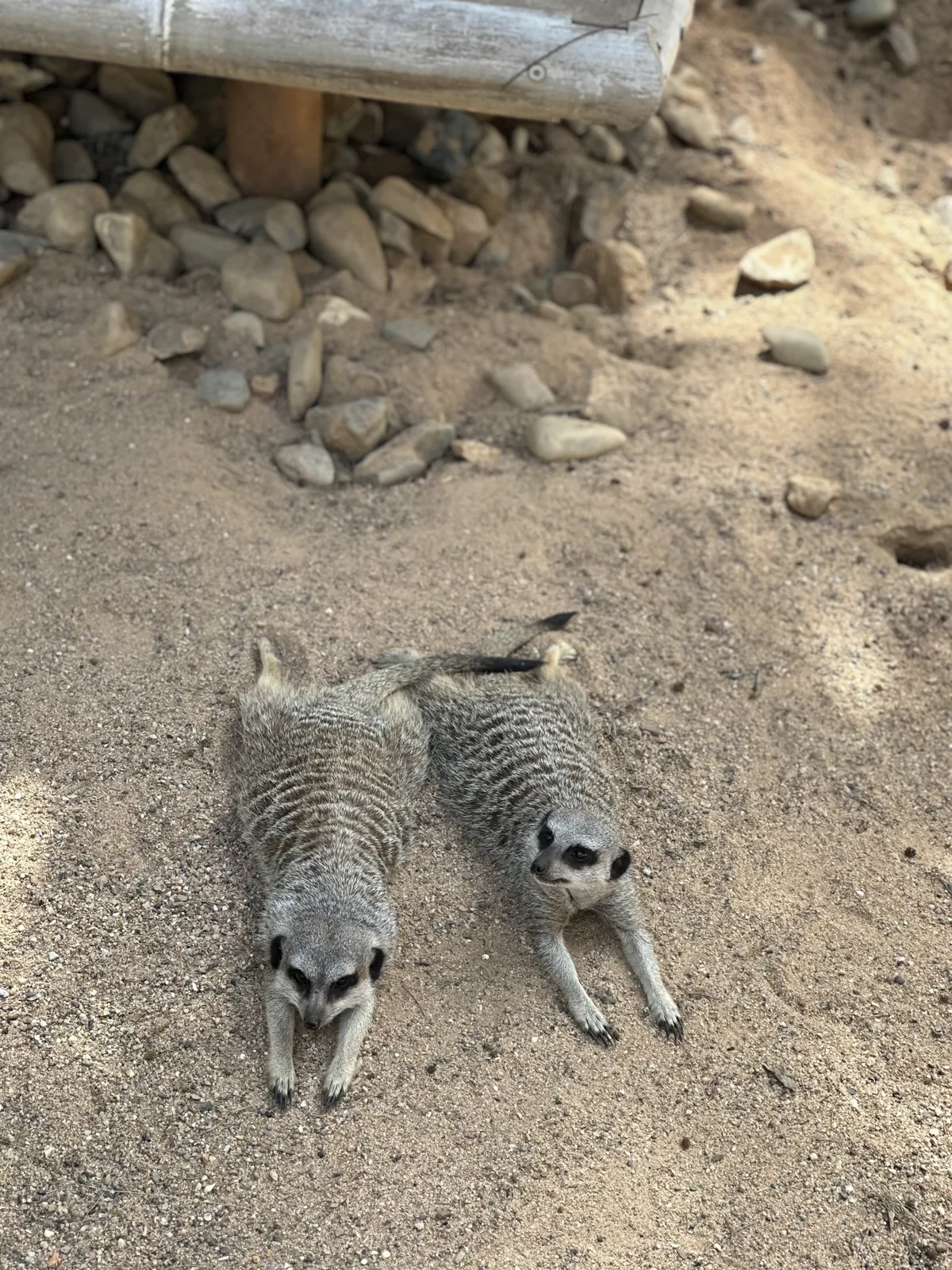
Elsewhere, a Tasmanian devil was sunning itself on a patch of lawn, and two meerkats lay flat on their bellies in the sand.
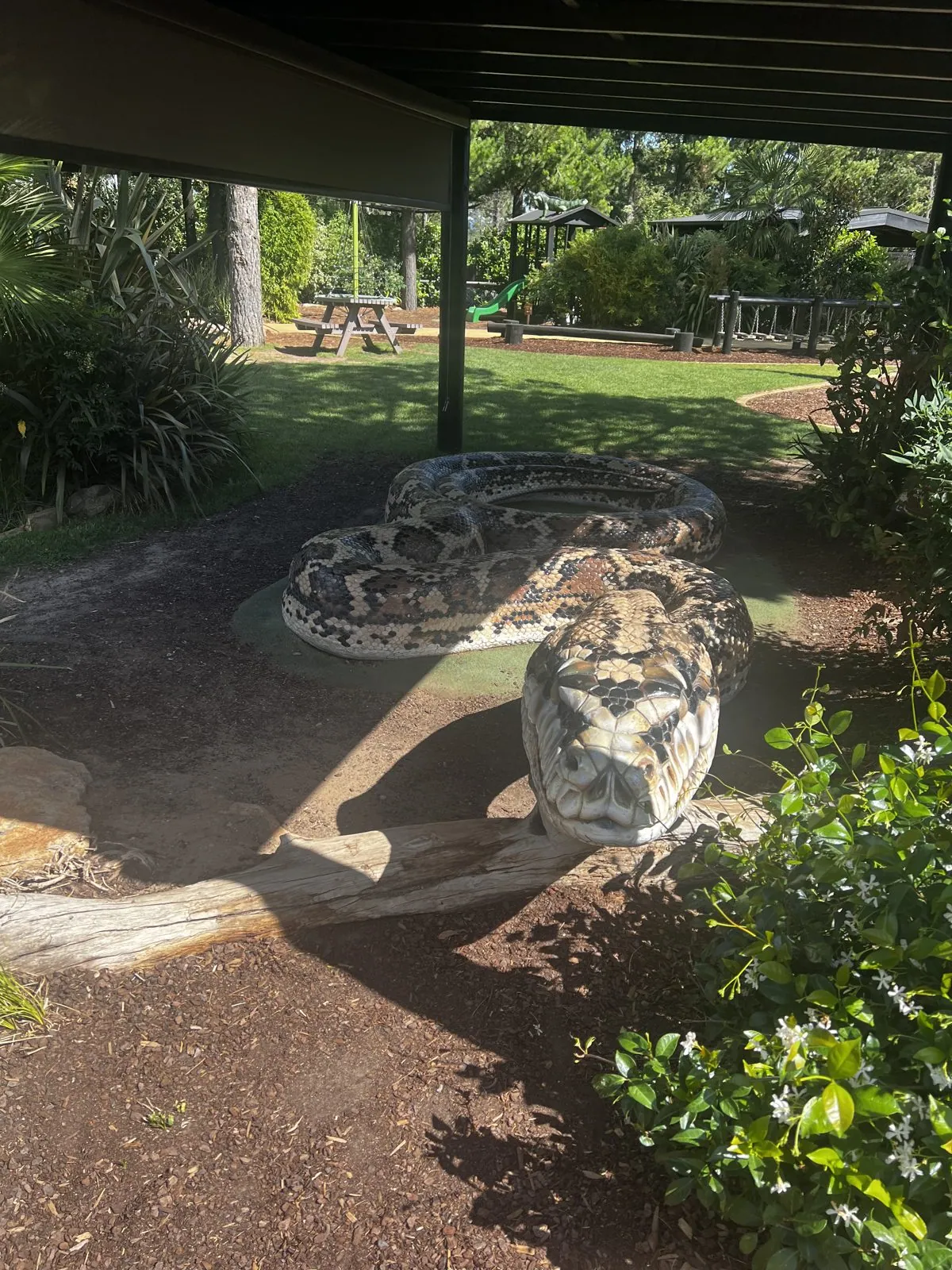
Near the picnic lawn, under a shade roof, lay the biggest snake of the day. It was a python the size of a sofa, coiled on the bare earth with its head raised. It was also, we are fairly confident, a sculpture, which is the only reason anybody was standing that close.
An evening at ANU
Around six we walked across the campus of the Australian National University, which spreads along the lake's northern shore at the foot of Black Mountain. ANU was founded in 1946 as a research university for the new nation, and it is still the only university established by Australia's federal parliament. The campus is green and spread-out, with gum trees everywhere. One new building had a façade of white hexagons, each framing a window, like a honeycomb tipped on its side. Out on a lawn, three giant white letters spelled out the university's name for anyone who needed a photo.
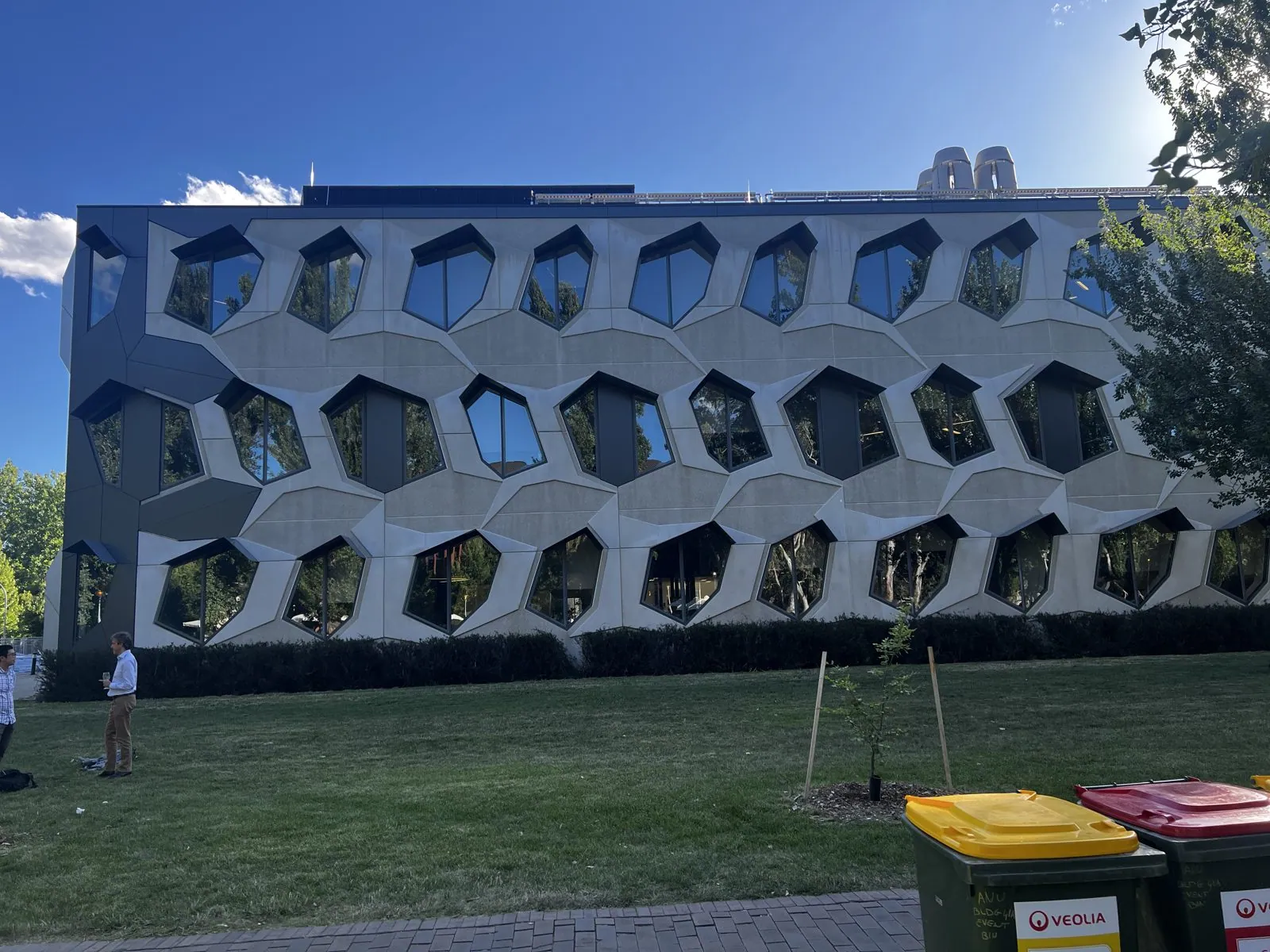
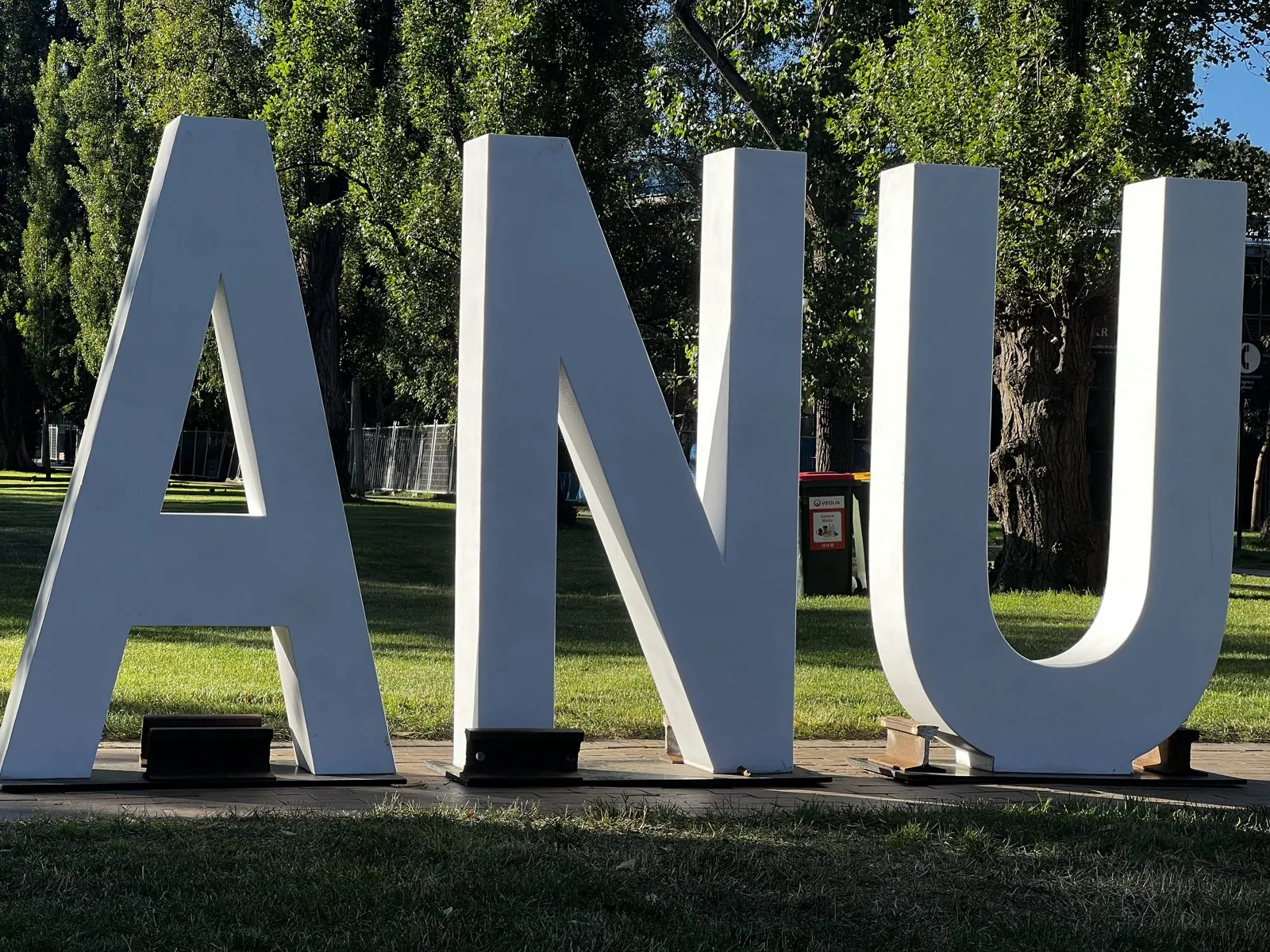
We spent that night in Canberra.
The Parliamentary Triangle
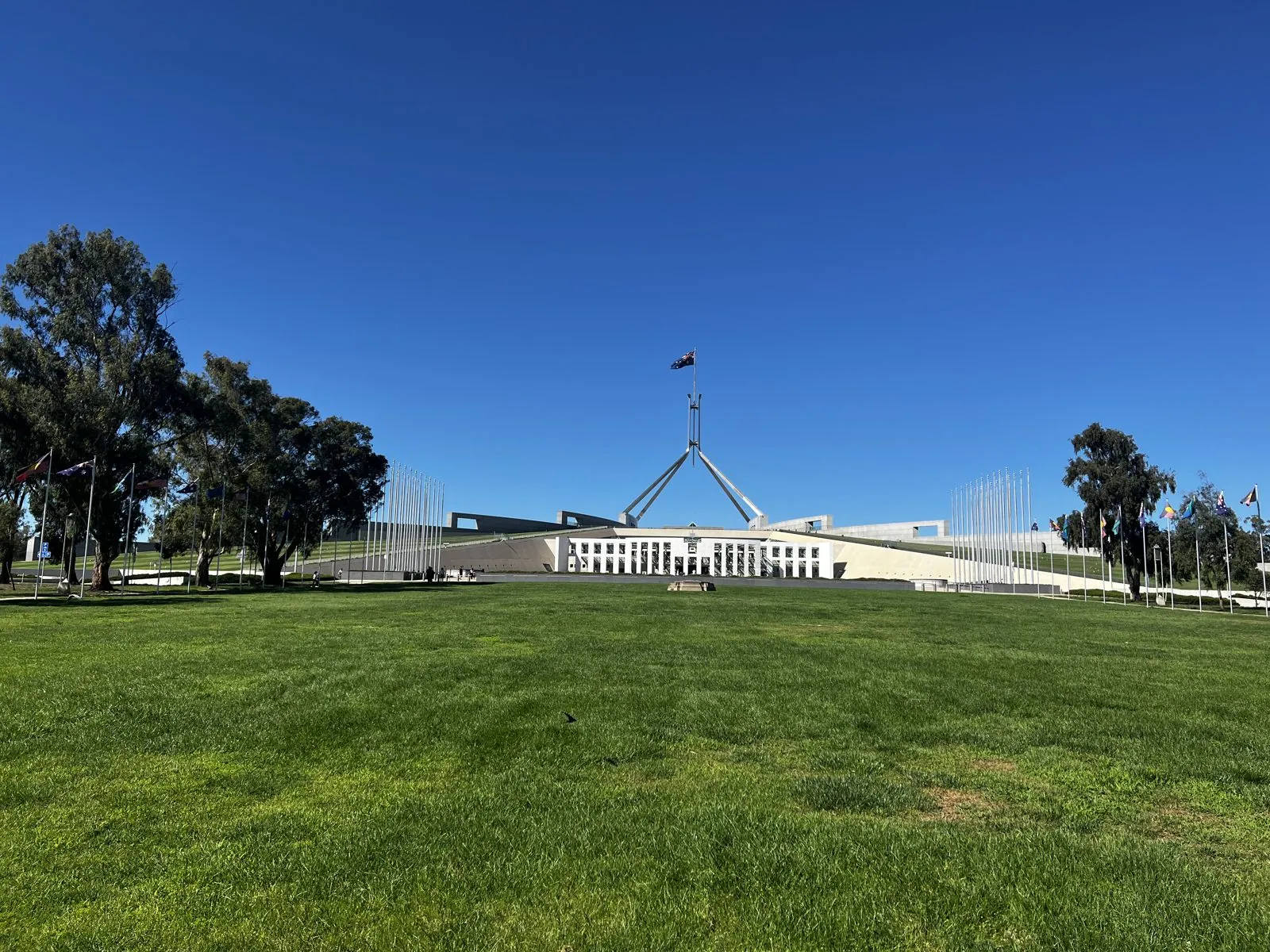
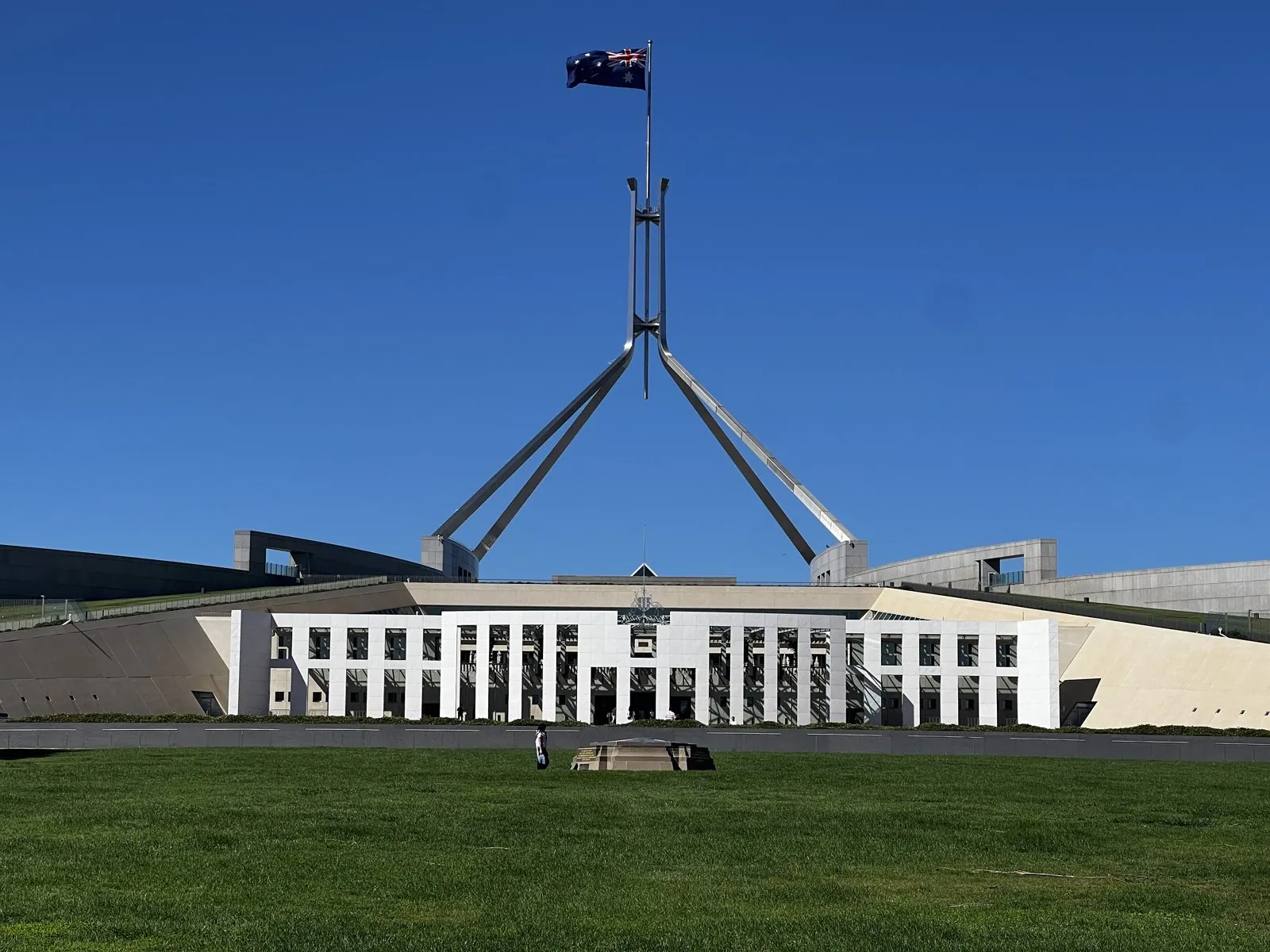
Saturday morning was the reason for coming to Canberra. At half past nine, under a sky without a single cloud, we were on the lawns in front of Parliament House. The building opened in 1988, Australia's bicentennial year, and its architects, Mitchell/Giurgola & Thorp, did something unusual with it. Rather than put the parliament on top of Capital Hill, they dug it into the hill, so the building sits inside the landform with grass sweeping up and over its roof. The idea was that the people should, quite literally, stand above their representatives.
Above it all stands the flagpole: four stainless-steel legs leaning together into a single mast, eighty-one meters tall, flying a flag roughly the size of the side of a double-decker bus. From the far end of the lawn the whole building almost vanishes into the hill, and what is left is a white colonnade, a long green slope and that enormous steel tripod against the blue.
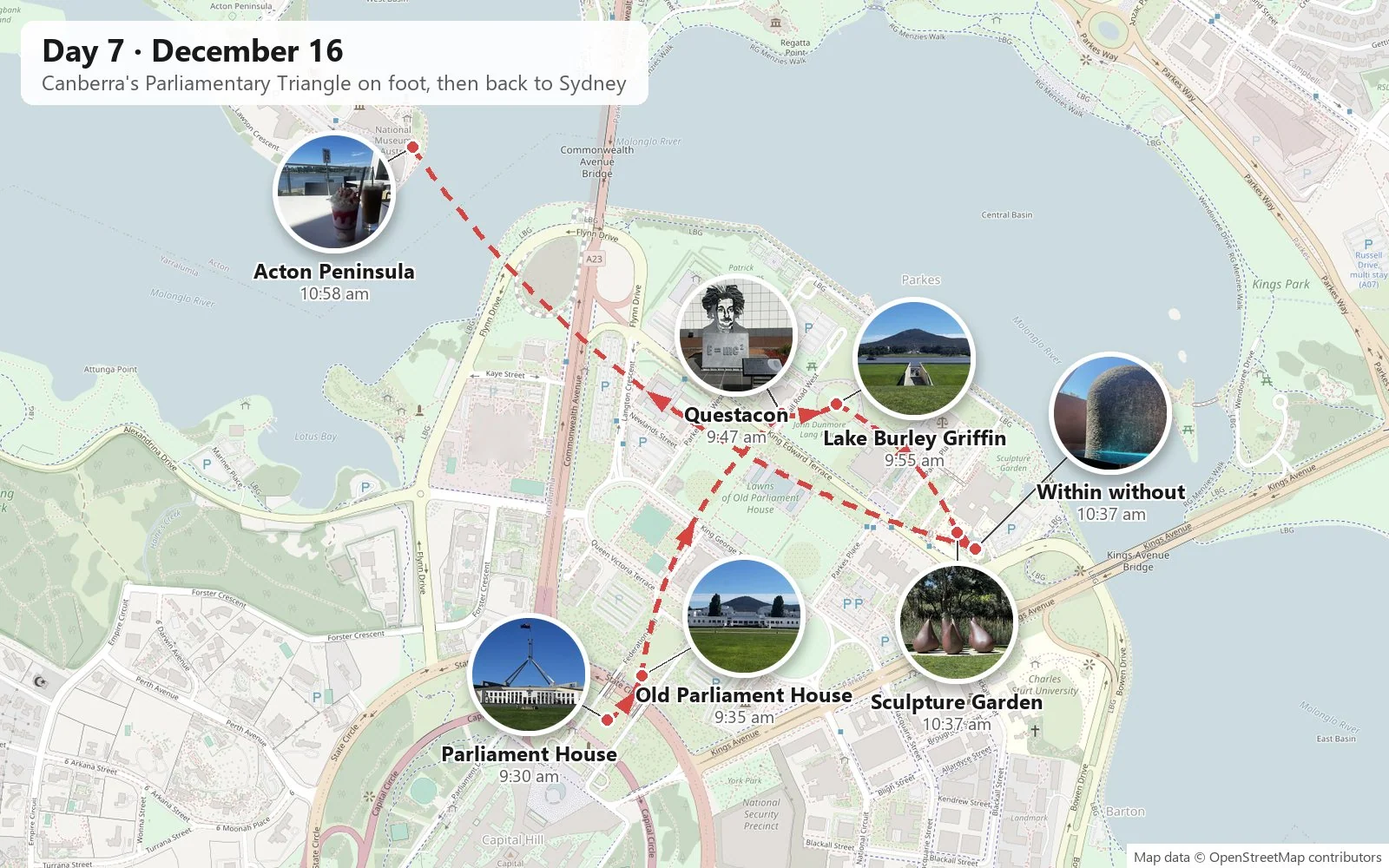
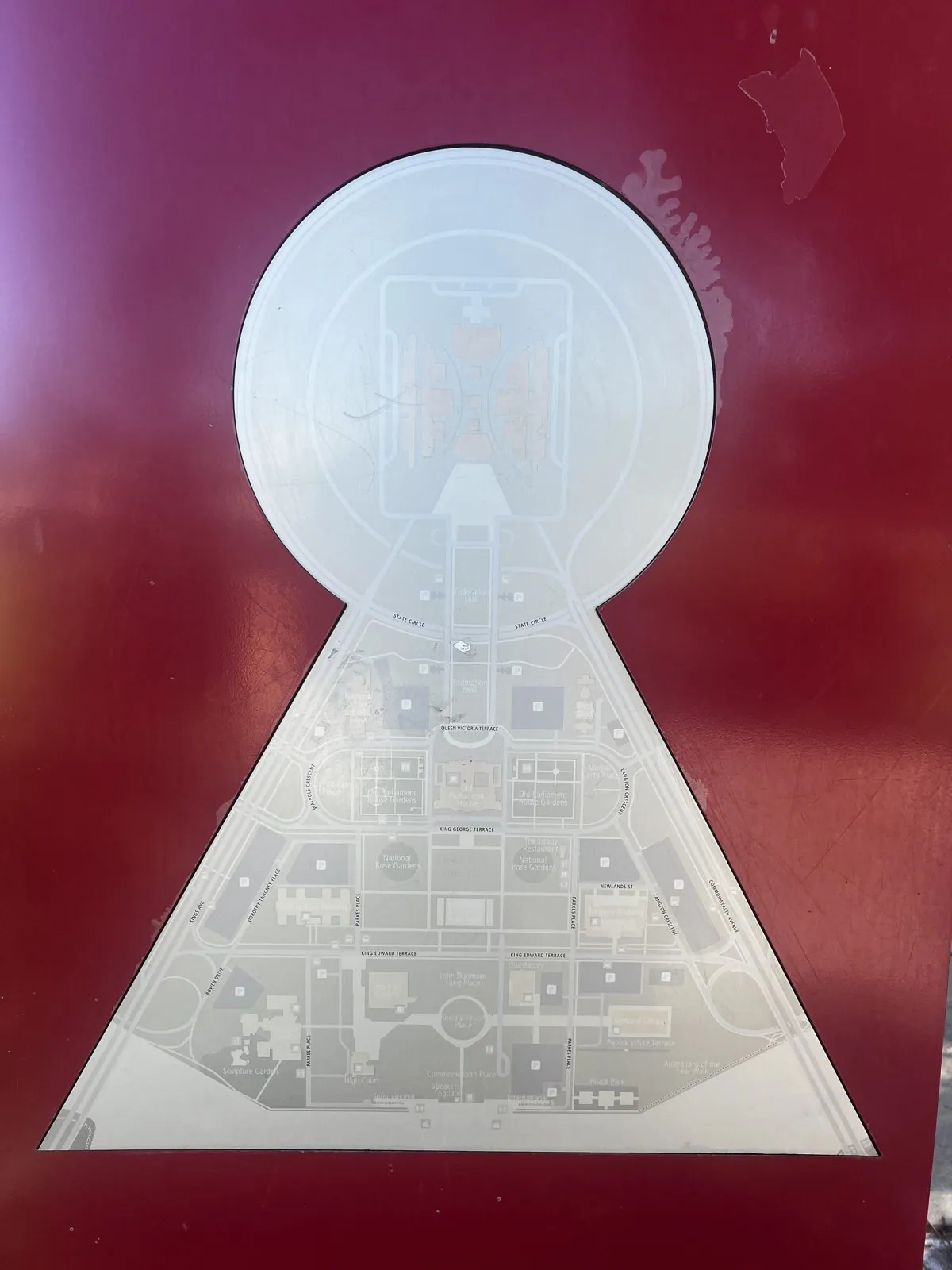
A red sign nearby carried an etched map of the whole district, and its shape explains the city in one glance. The circle at the top is Capital Hill, ringed by its road. The long triangle below it is the Parliamentary Triangle, the wedge of land running down to the lake. The Griffins designed it to hold the institutions of the nation: parliament, the courts, the library and the gallery. The shape is a keyhole.
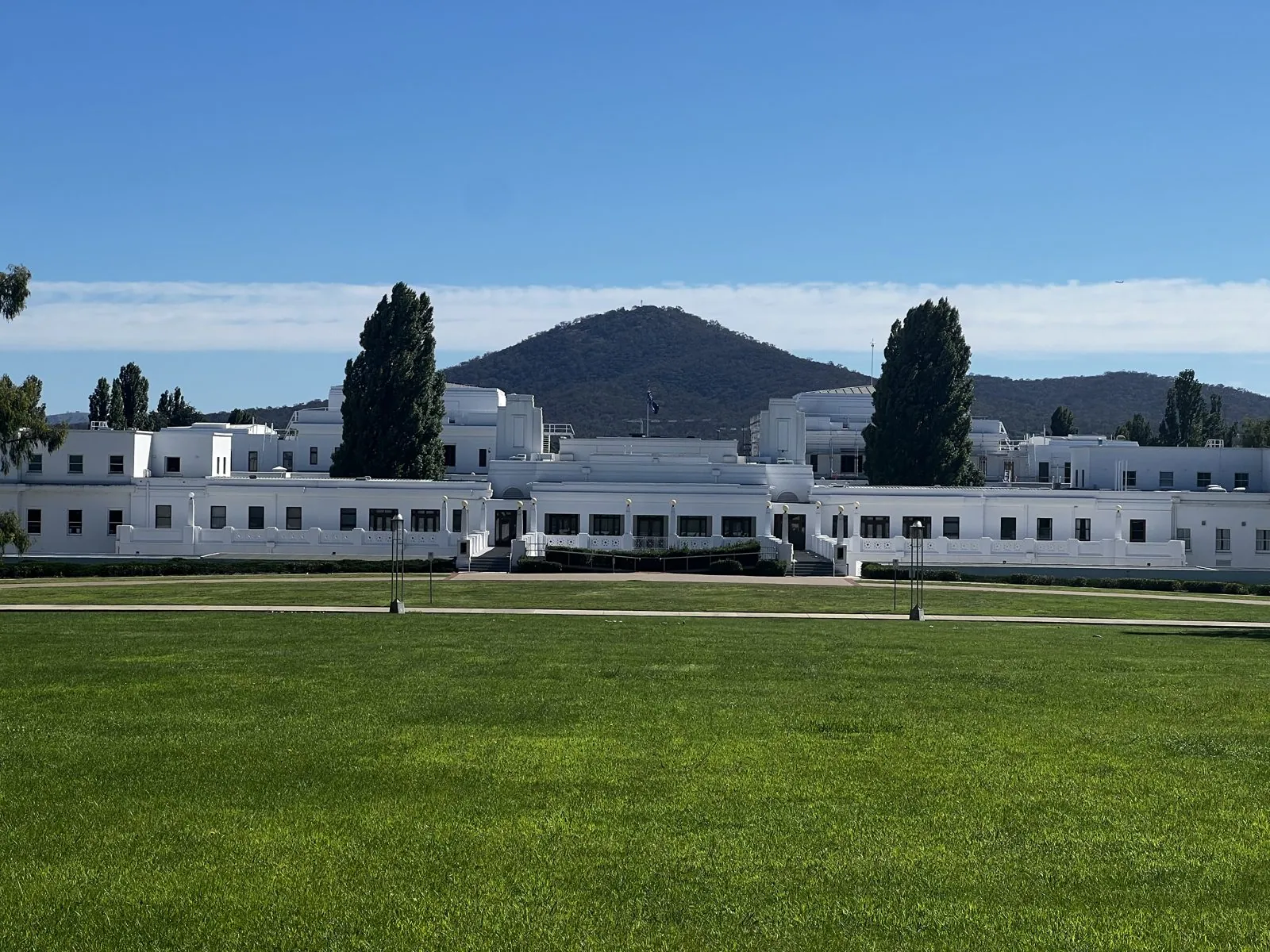
Looking north from Parliament House, the land axis runs straight down the slope to Old Parliament House, a long, low white building that served as the "provisional" parliament from 1927 until the new one opened in 1988, a provisional period of sixty-one years. It is now the Museum of Australian Democracy. Directly behind it, exactly on the axis, rises the dark cone of Mount Ainslie. That alignment is not a coincidence. The Griffins laid out the whole city by sighting from hilltop to hilltop.
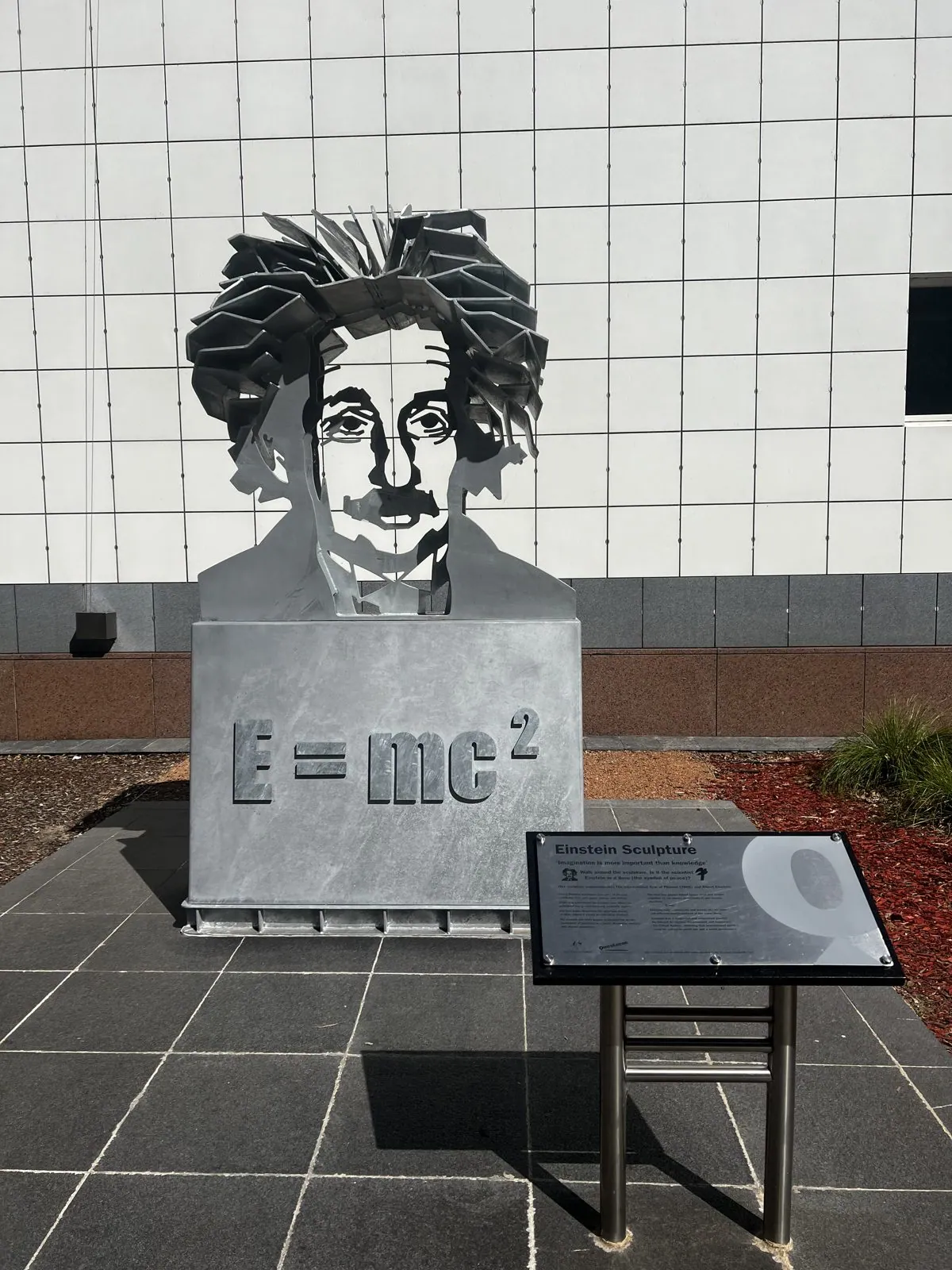
Walking down toward the lake we passed Questacon, the national science centre. Its building was a joint gift from Australia and Japan for the 1988 bicentenary. Outside the entrance stands a cut-steel portrait of Albert Einstein, all hair and moustache, on a block stamped with the most famous equation in physics. It is the kind of sculpture that only works for one person, and for him it works perfectly.
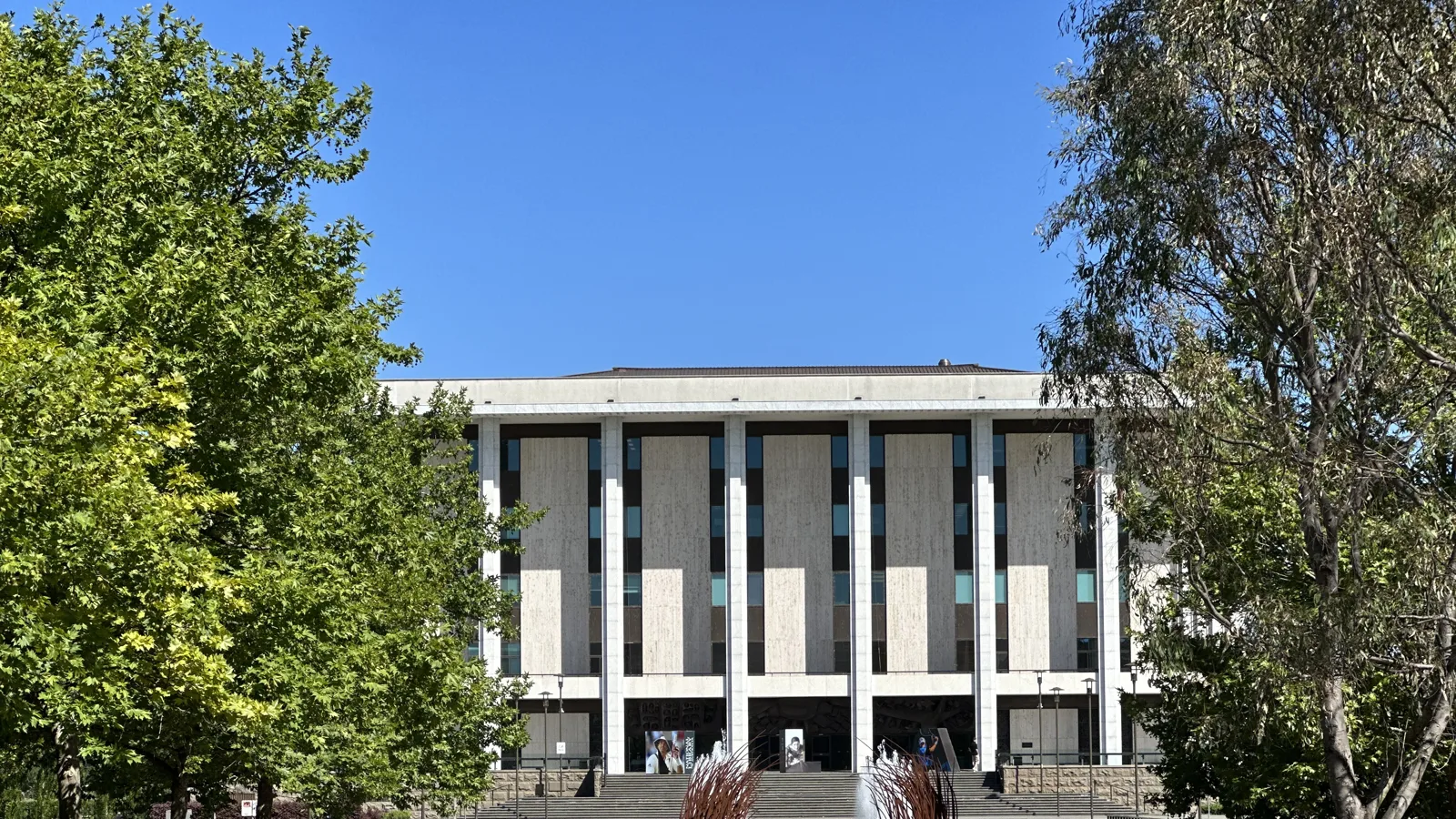
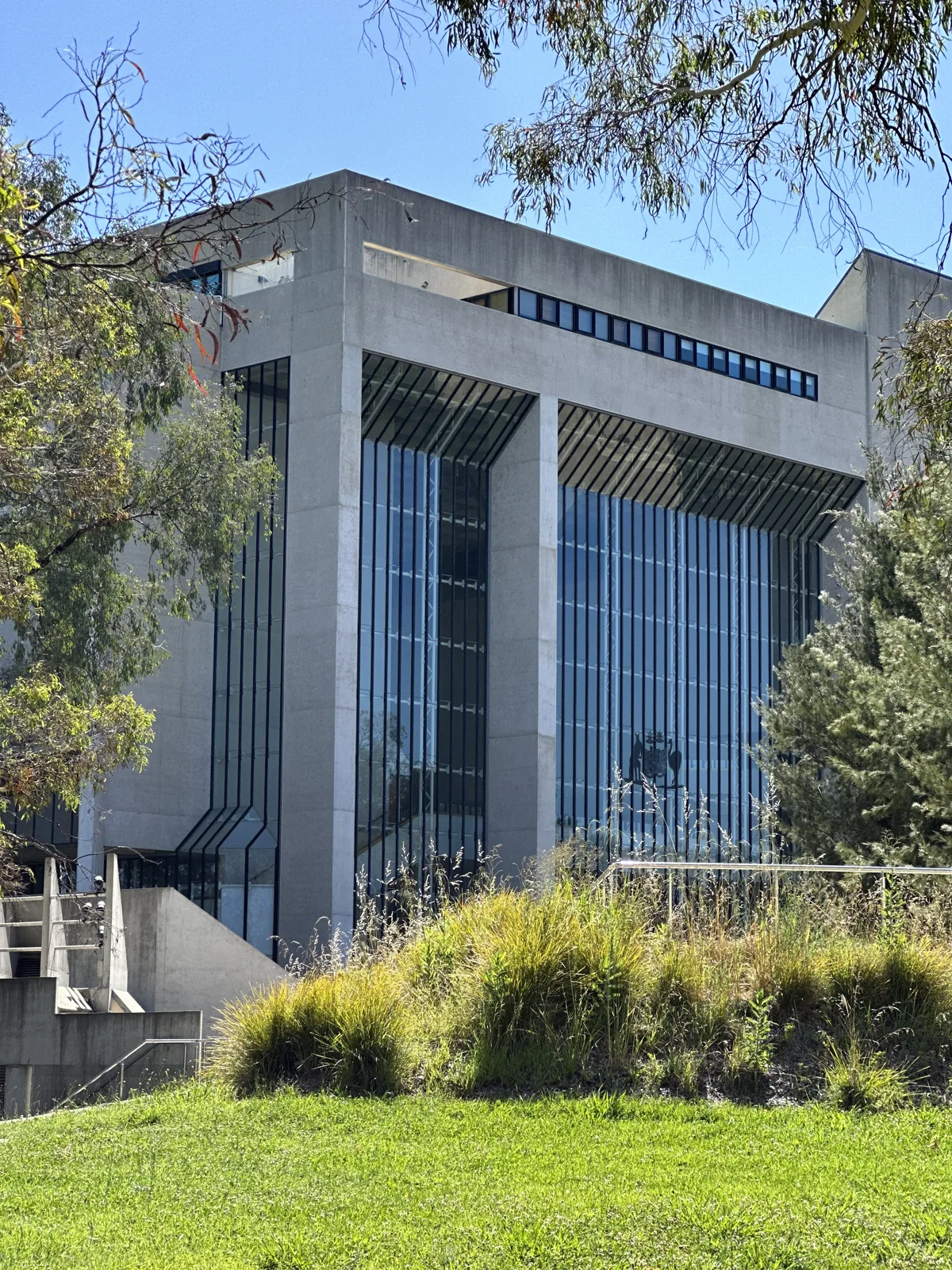
Along the way we passed the National Library and the High Court, a tall building of glass and concrete near the lakeshore.
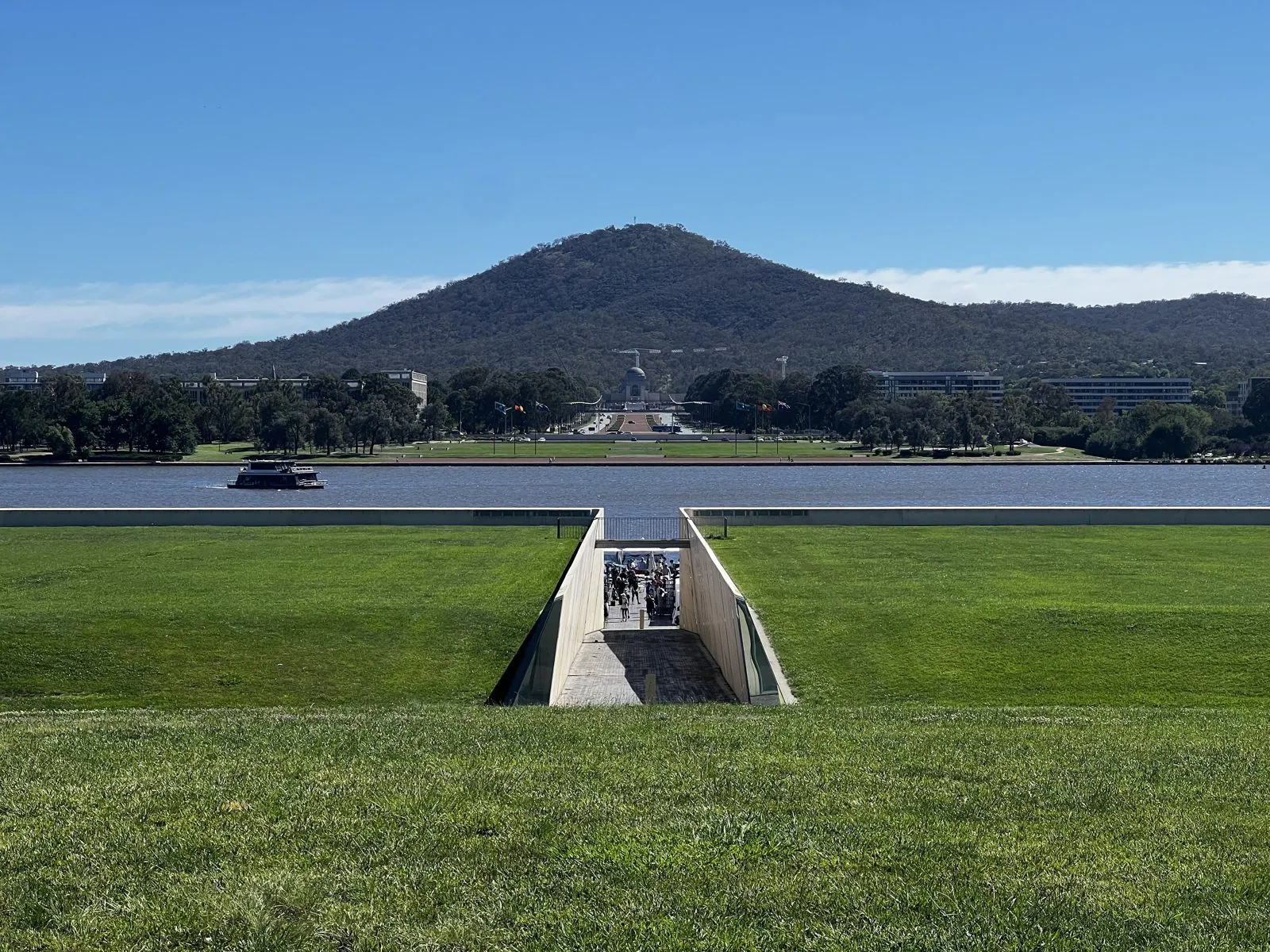
At the bottom of the slope, the land axis meets Lake Burley Griffin. The lake was finished in 1964 by damming the Molonglo River, half a century after the Griffins drew it. From the shore you can see the whole second half of the axis at once: across the water, up the long red avenue of Anzac Parade, to the copper dome of the Australian War Memorial at the foot of Mount Ainslie. A tourist boat cut across the lake. For a capital city, Canberra on a Saturday morning is astonishingly quiet.
The National Gallery, and a room for the sky
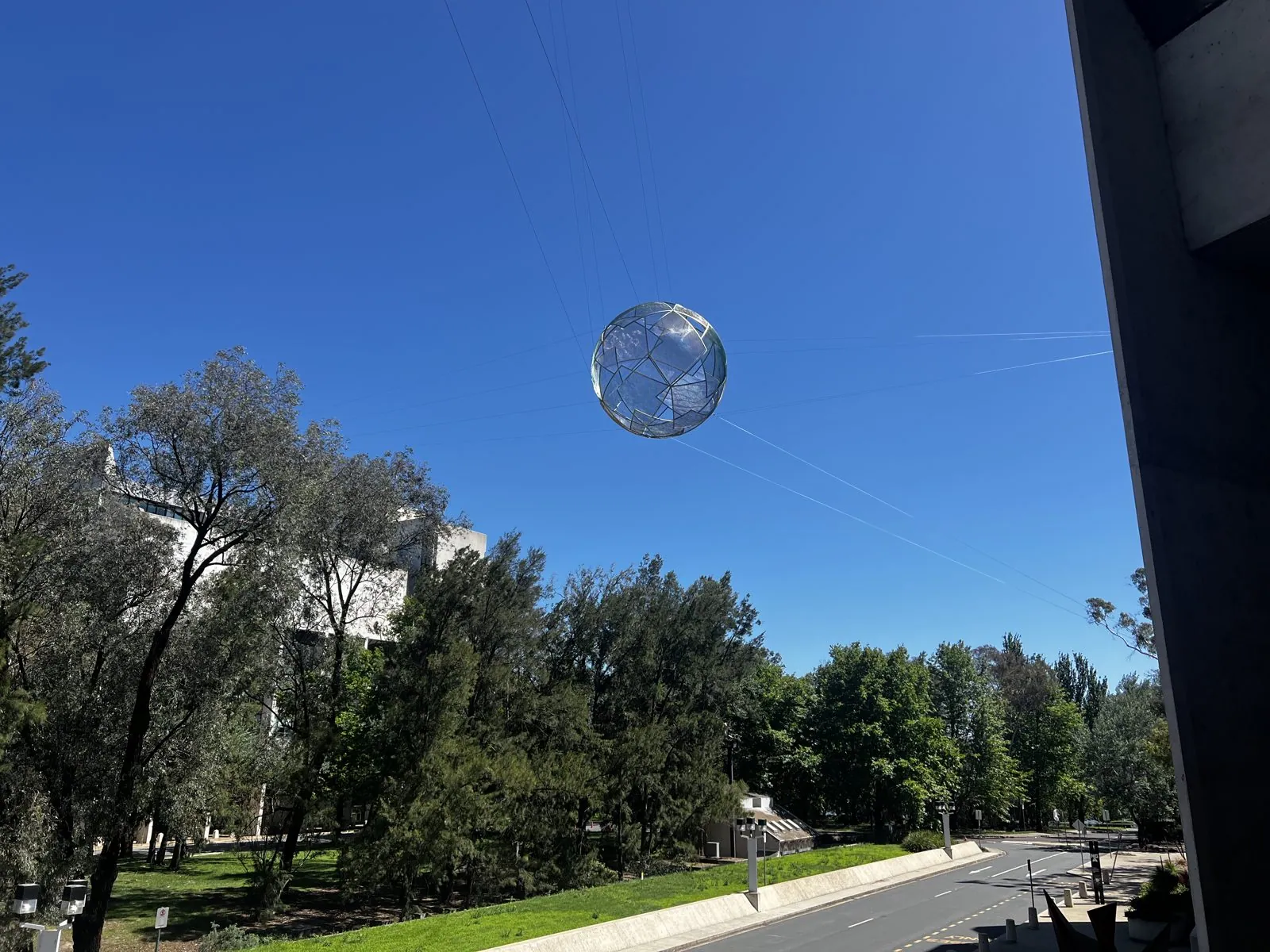
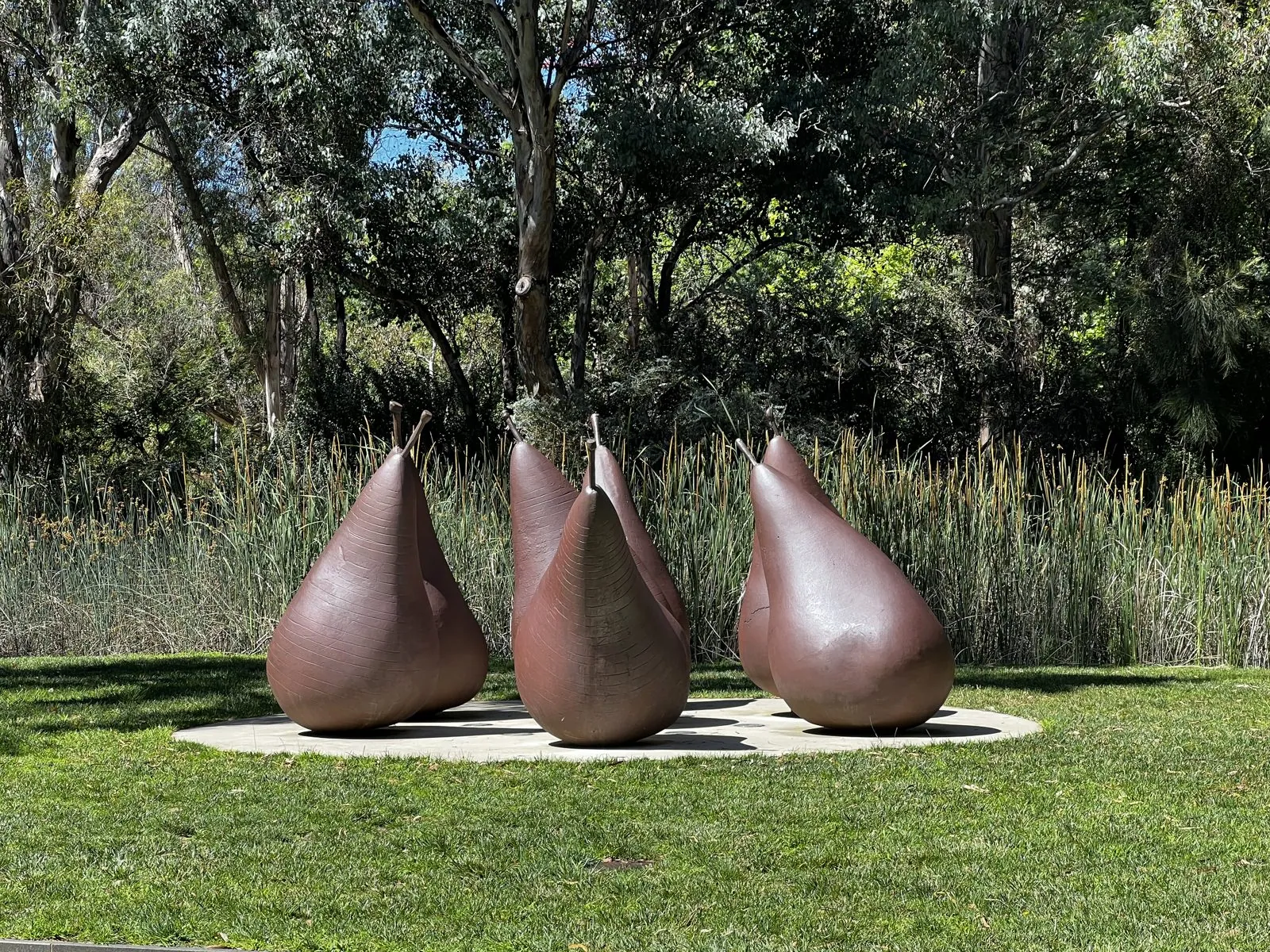
The last stop on the triangle was the National Gallery of Australia and its sculpture garden, which wanders through native bush along the lakeshore. Above the road by the gallery, a mirrored sphere hung from cables high in the air, catching the sun. In a clearing stood George Baldessin's Pears, a group of giant bronze pears that look as if they had rolled off a still life and kept growing.
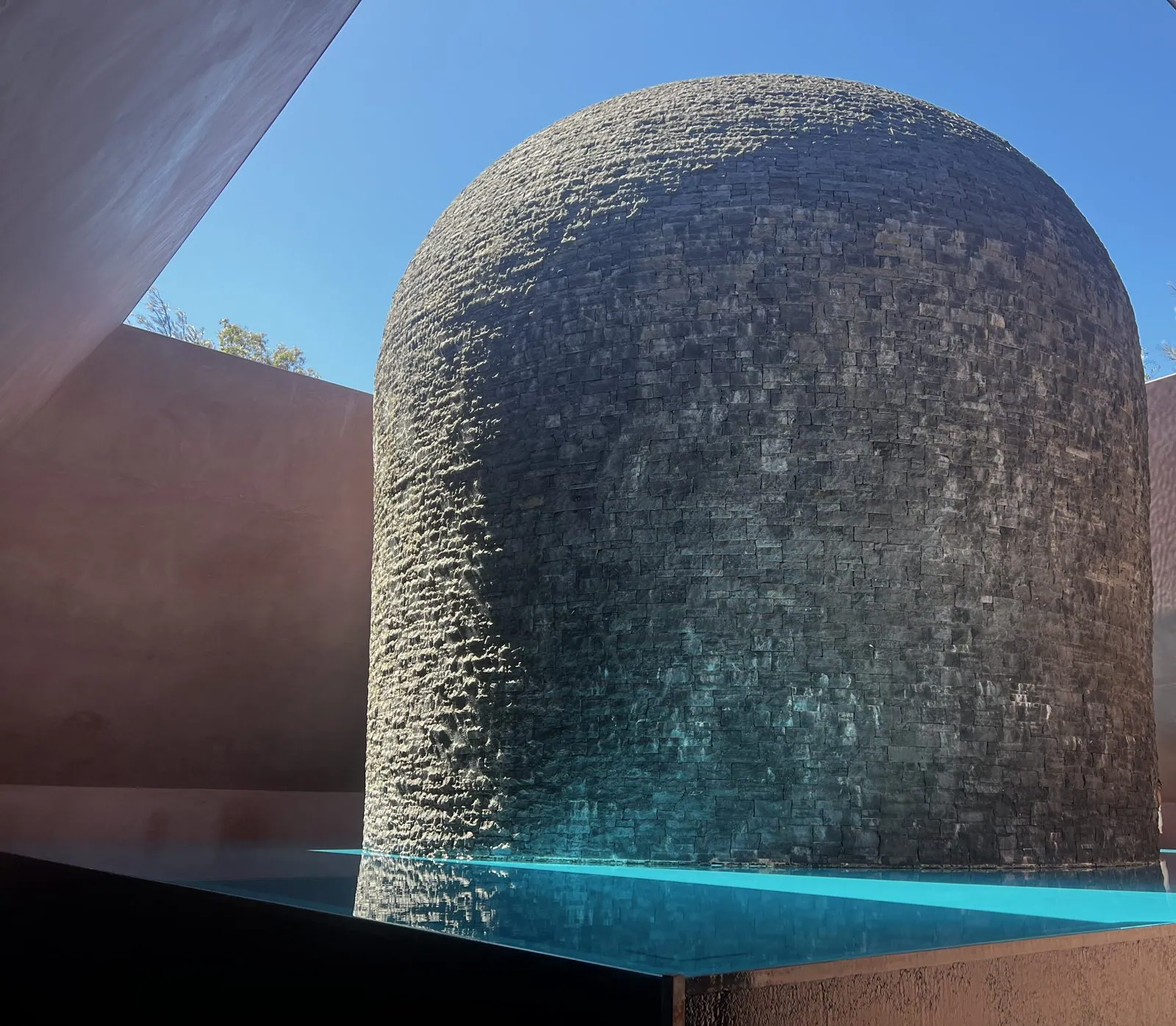
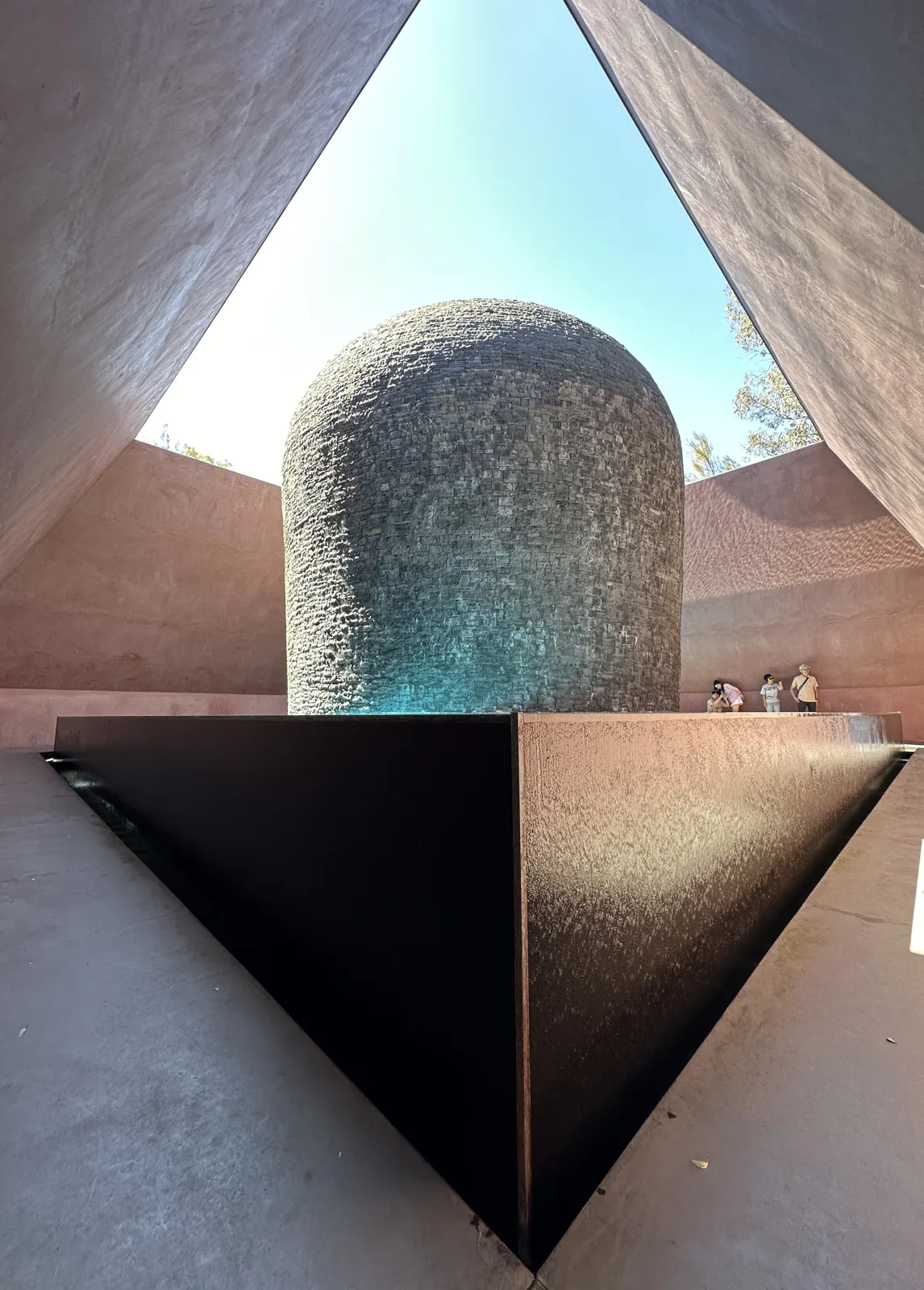
And then there was the piece I had most wanted to see: James Turrell's Within without, opened in 2010. From the outside it is just a grassy mound in a pond. You walk down a ramp into it and find yourself in a square, open-roofed chamber with tall, sloping walls the color of red earth, framing a hard triangle of sky. In the middle, surrounded by a pool of brilliant turquoise water, stands a domed stupa of dark basalt. Inside the stupa, which we could only look at from outside, is a round room with an opening in the roof. Turrell has spent his career making rooms whose only subject is the light of the sky. Even from the courtyard the effect is uncanny. The walls are so plain and the pool so blue that the sky above looks less like sky and more like a flat panel of color someone has painted on.
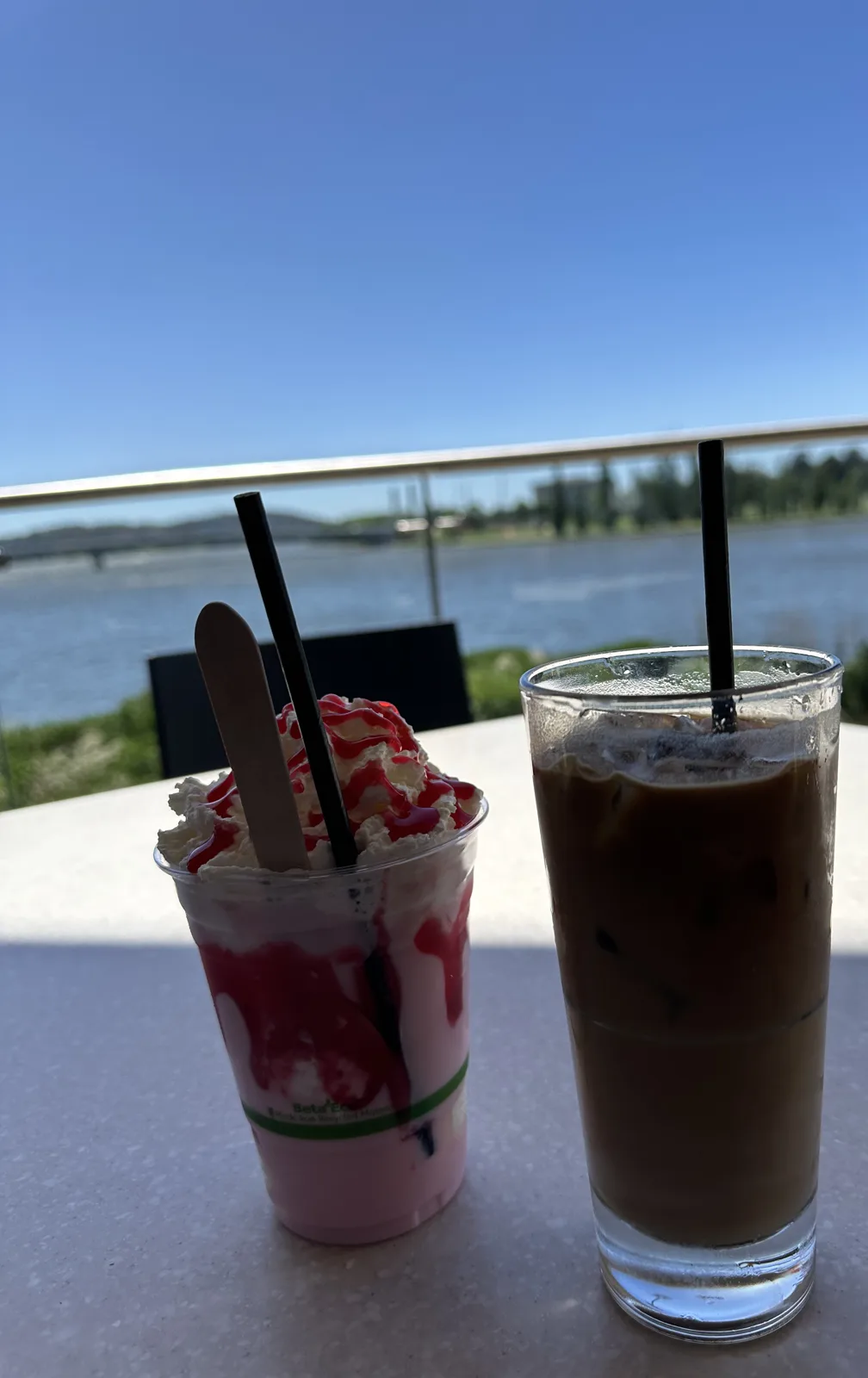
We finished the morning on the Acton Peninsula, next to the National Museum, at a café terrace right on the lake. The order was a strawberry milkshake under a mountain of whipped cream and red syrup, an iced coffee, and brunch for two, with the lake and the far shore glittering in the sun. Then we left Canberra.
Back to Sydney: a night at the Opera House
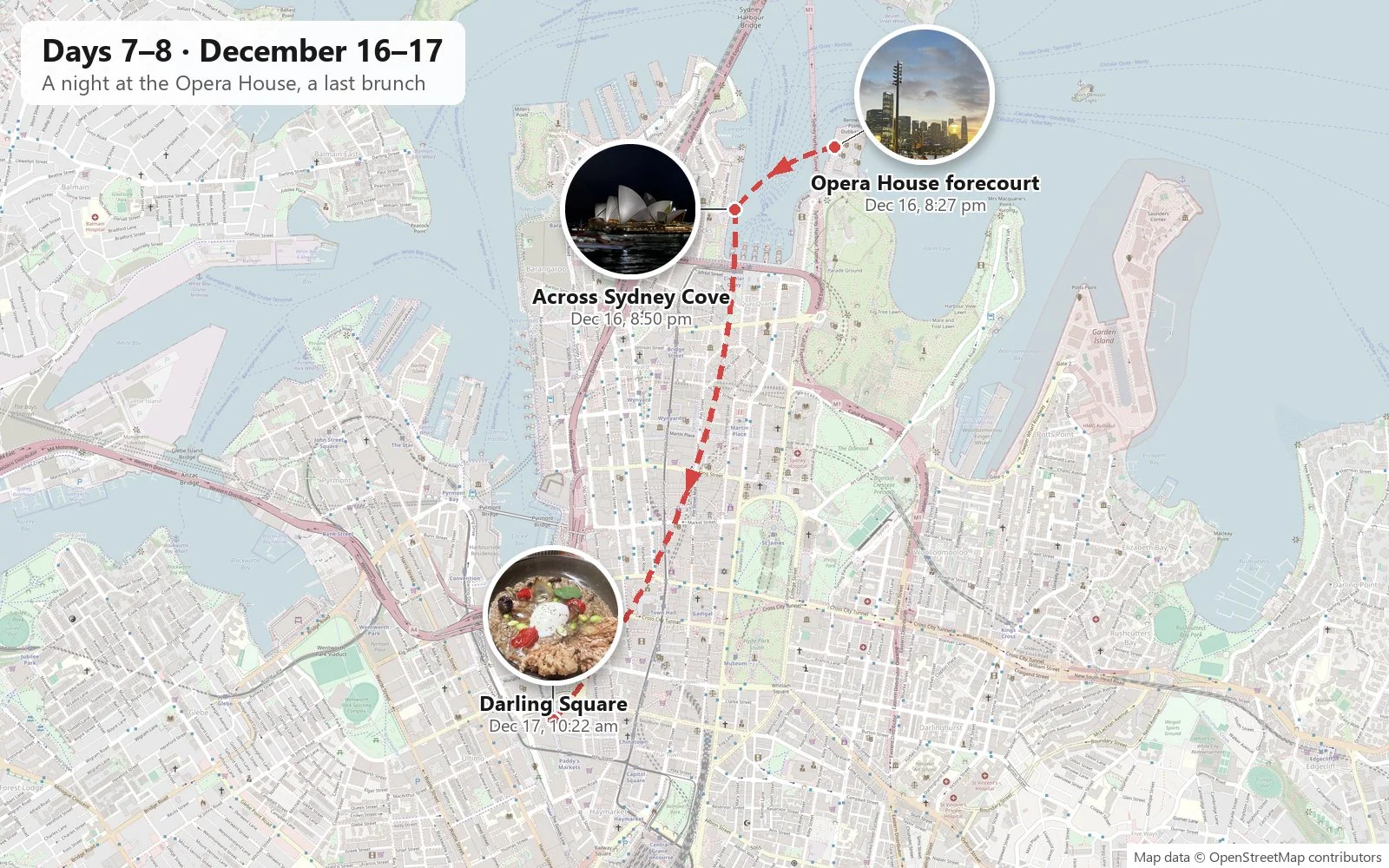
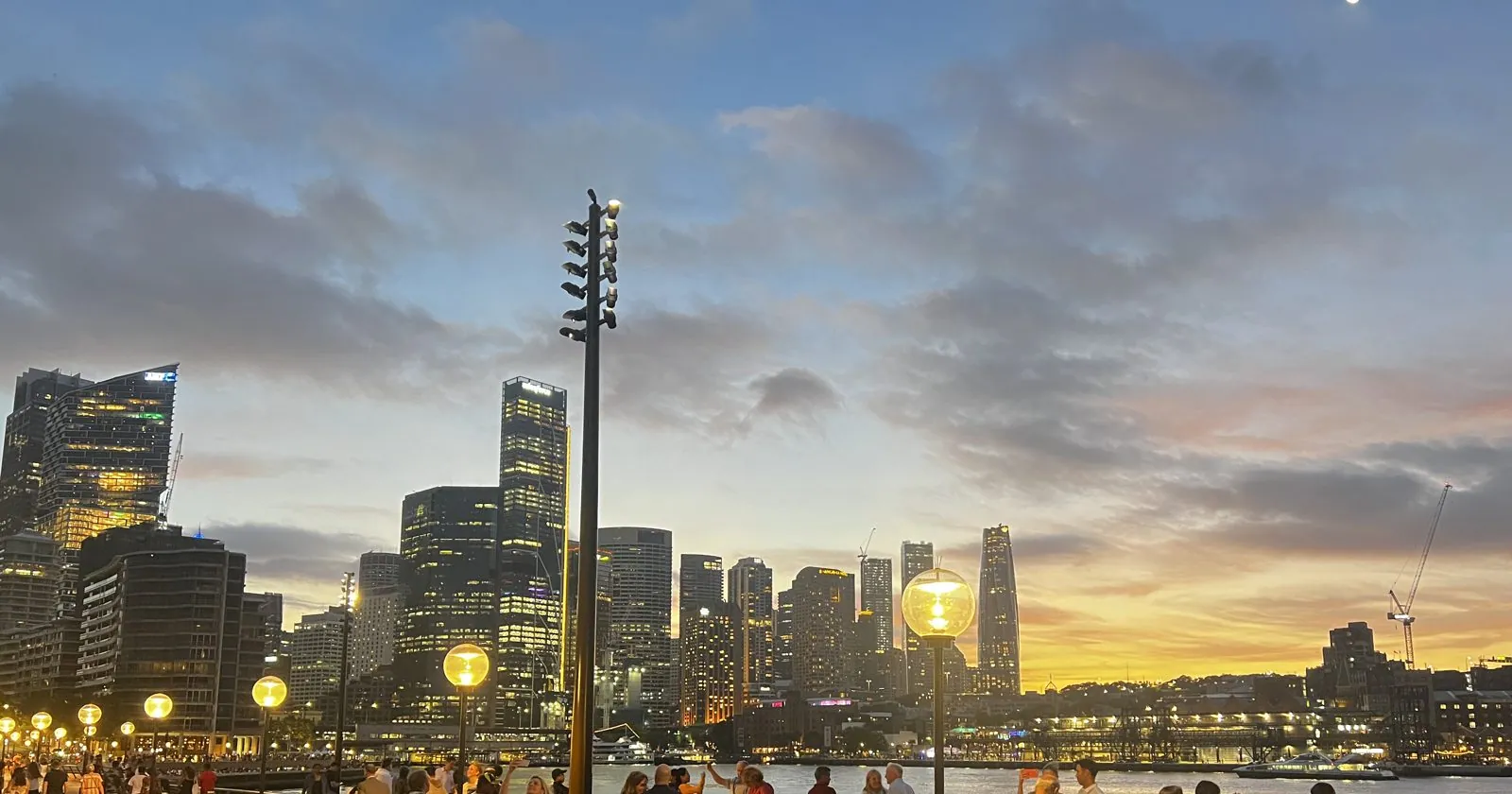
We came back by train, an earlier one than we had booked, and by evening we were in Sydney with one last plan for the trip: a show at the Opera House, Gatsby at the Green Light, at seven o'clock in the Studio. Having seen it from a giraffe's enclosure and from a ferry, it seemed only fair to go inside. Just before seven, the Harbour Bridge across the water was still in full daylight. When we came back out onto the forecourt at about half past eight, the sun had just gone down behind the city, and the whole of Circular Quay was out on the promenade.
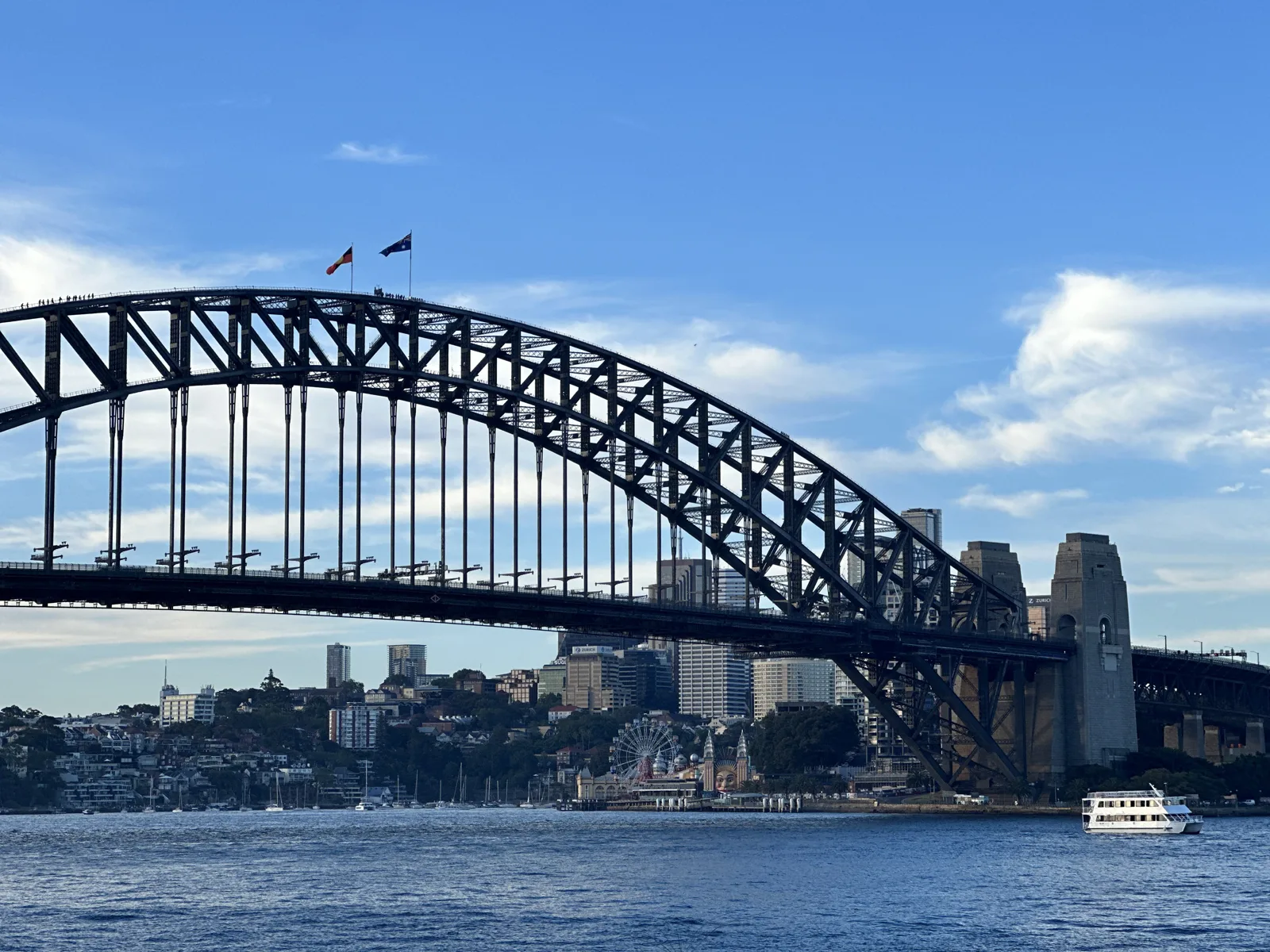
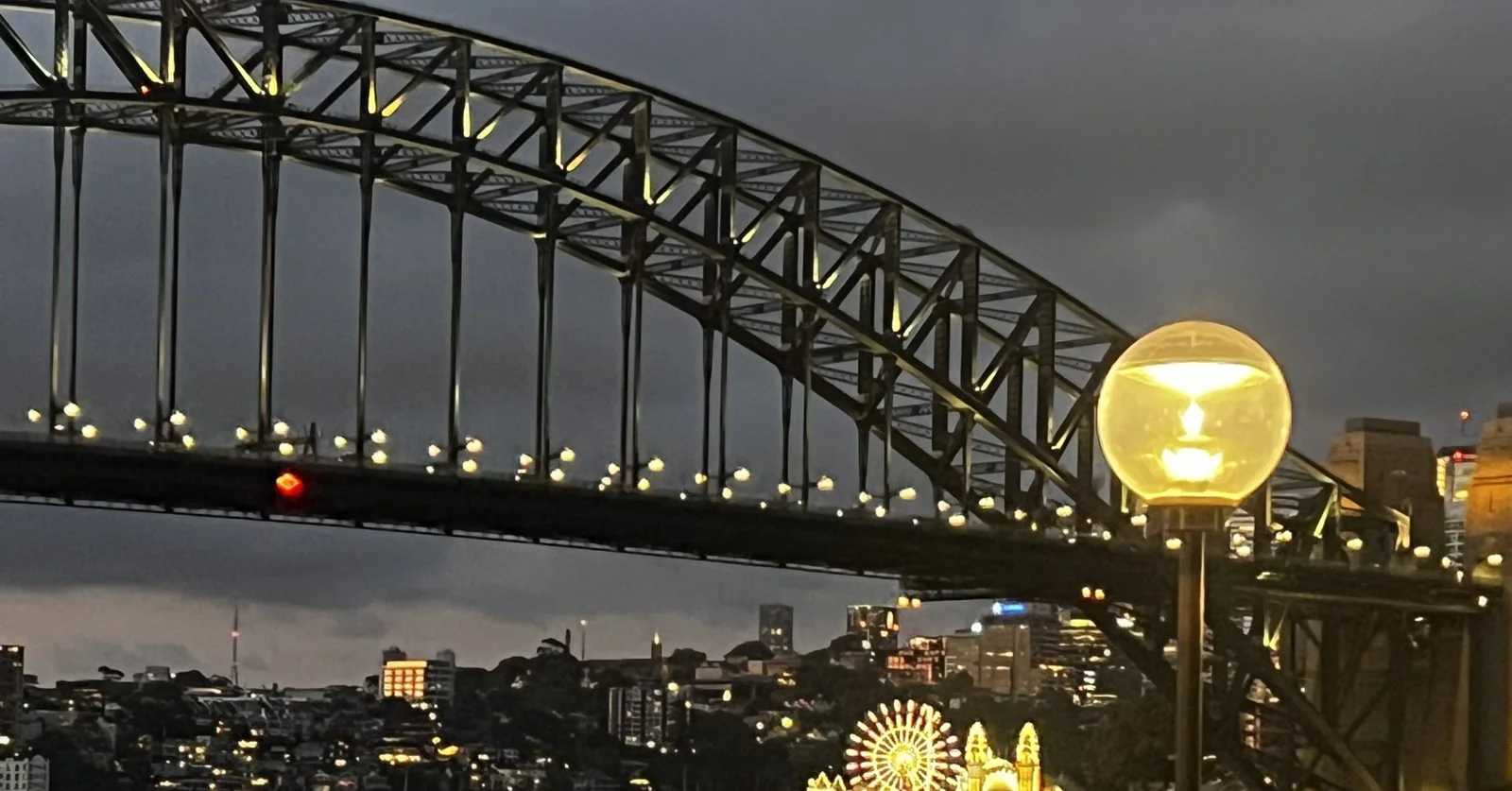
Looking west, the Harbour Bridge was lit up against a grey-violet sky, its arch strung with lights. At its far end, below the bridge, glowed the fairground lights of Luna Park, the 1935 amusement park whose giant grinning face has been greeting the harbour for nearly ninety years. The bridge itself opened in 1932, and Sydneysiders have called it "the Coathanger" for almost as long. Looking the other way, the sky over the city had gone gold and pink, the towers had started to light up, and the old globe lamps along the promenade had come on.
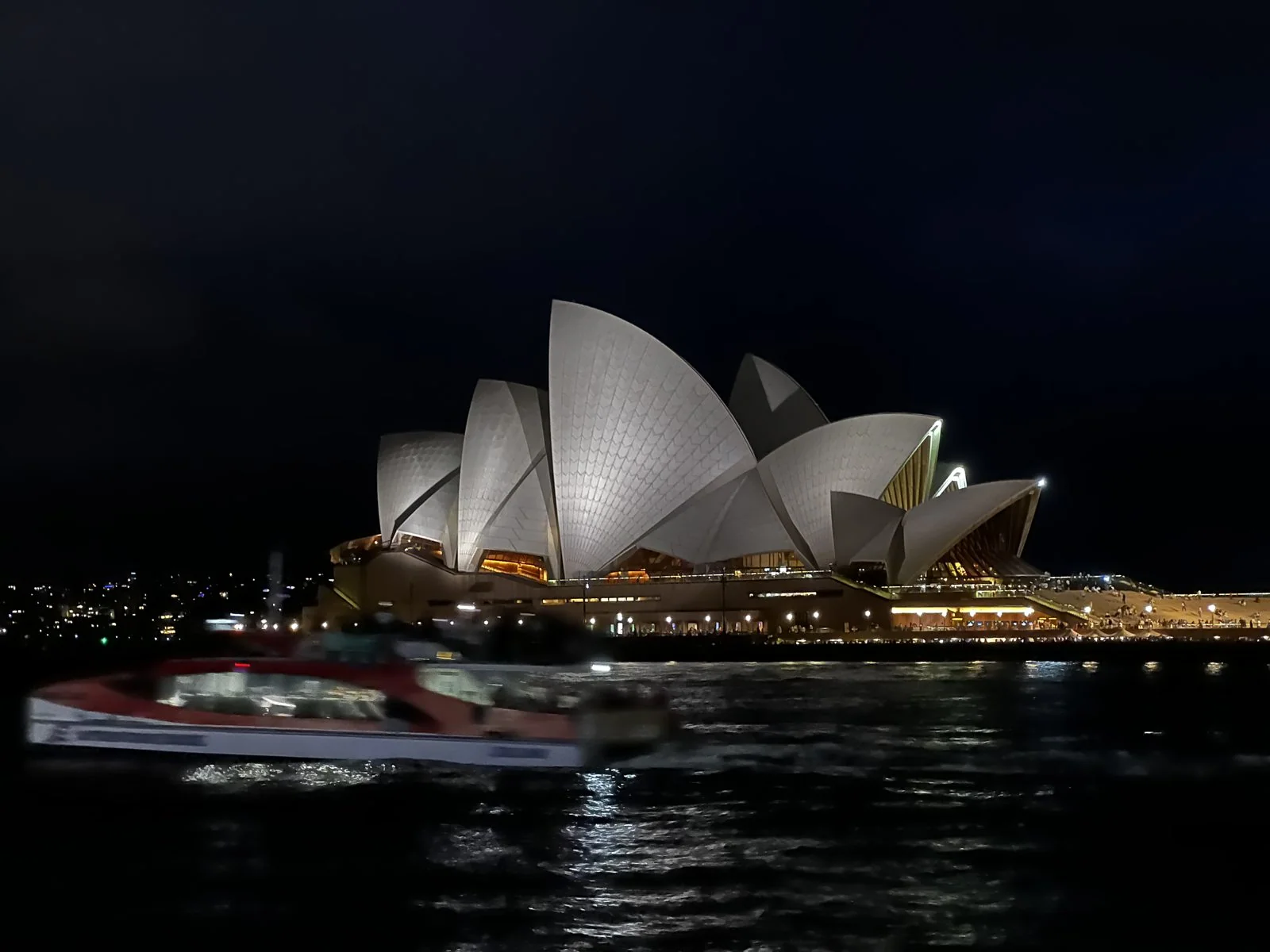
Later, from across Sydney Cove at The Rocks, we looked back at it fully lit. At night the Opera House stops being a building and becomes a lantern. The shells are floodlit from below, so they glow soft white against a black sky, while the glass walls under them show the warm light of the foyers, and the whole thing is doubled in the moving water. A boat went past just as the picture was taken and blurred into a red streak across the foreground.
A last brunch
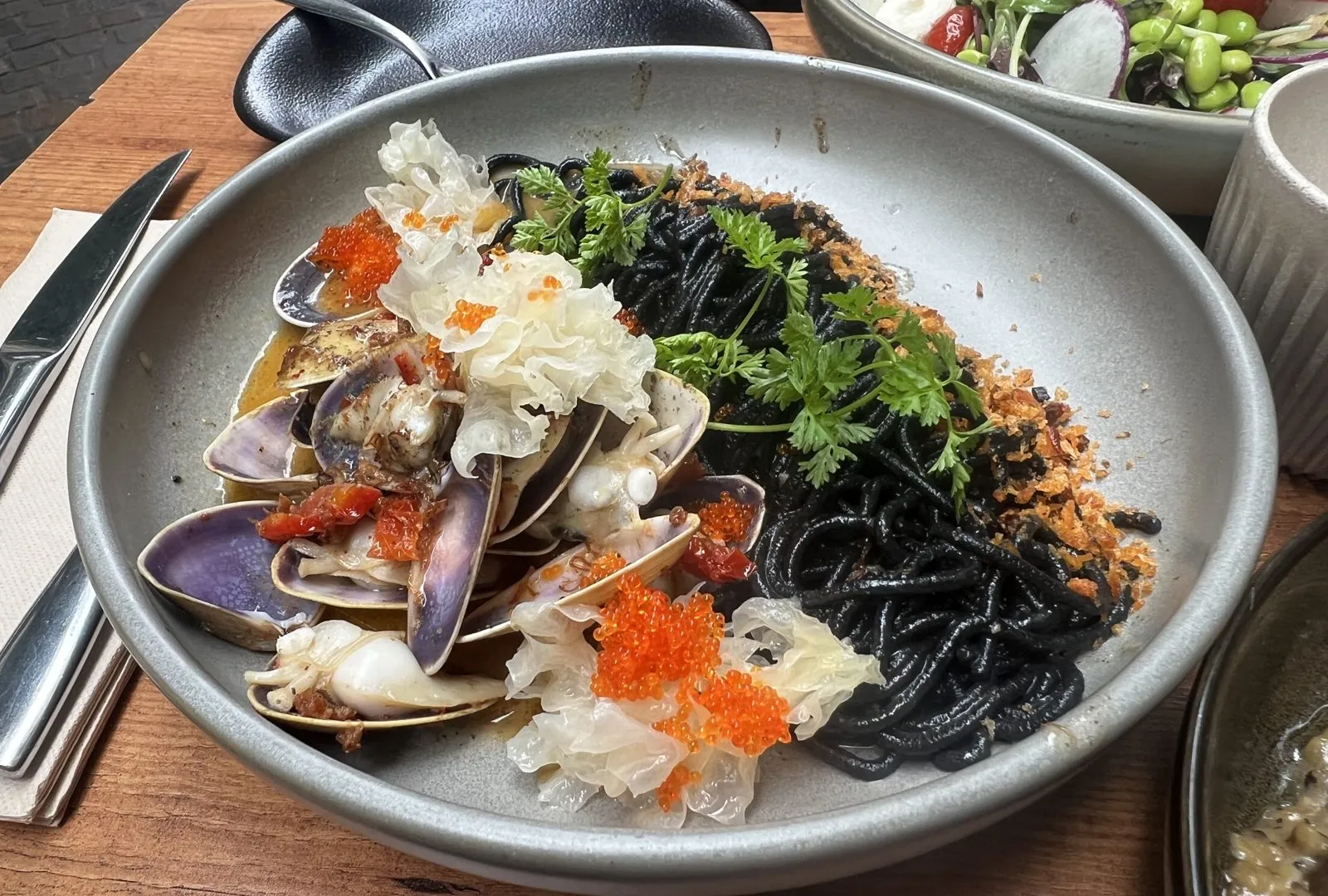
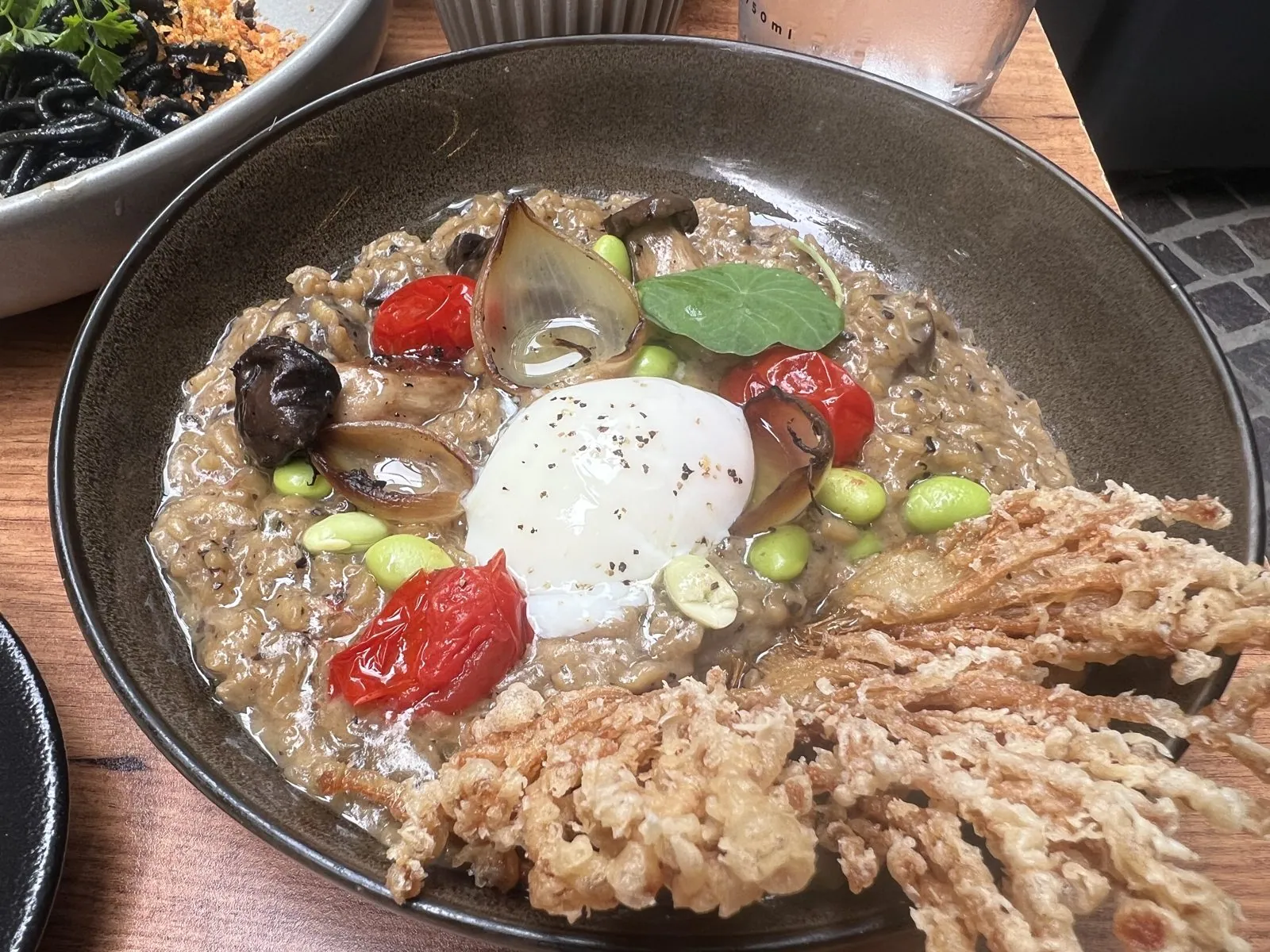
Sunday morning, the last of the trip, ended where the week had started, near Darling Harbour, with brunch in Darling Square. The square is a newly built neighborhood whose centerpiece is The Exchange, a round building by the Japanese architect Kengo Kuma, wrapped from top to bottom in a spiral of timber battens. Brunch was squid-ink spaghetti with clams, flying-fish roe and white wood-ear fungus, and a mushroom risotto with a soft burrata, roasted tomatoes and a crown of fried enoki. It was, by some distance, the most photogenic food of the week.
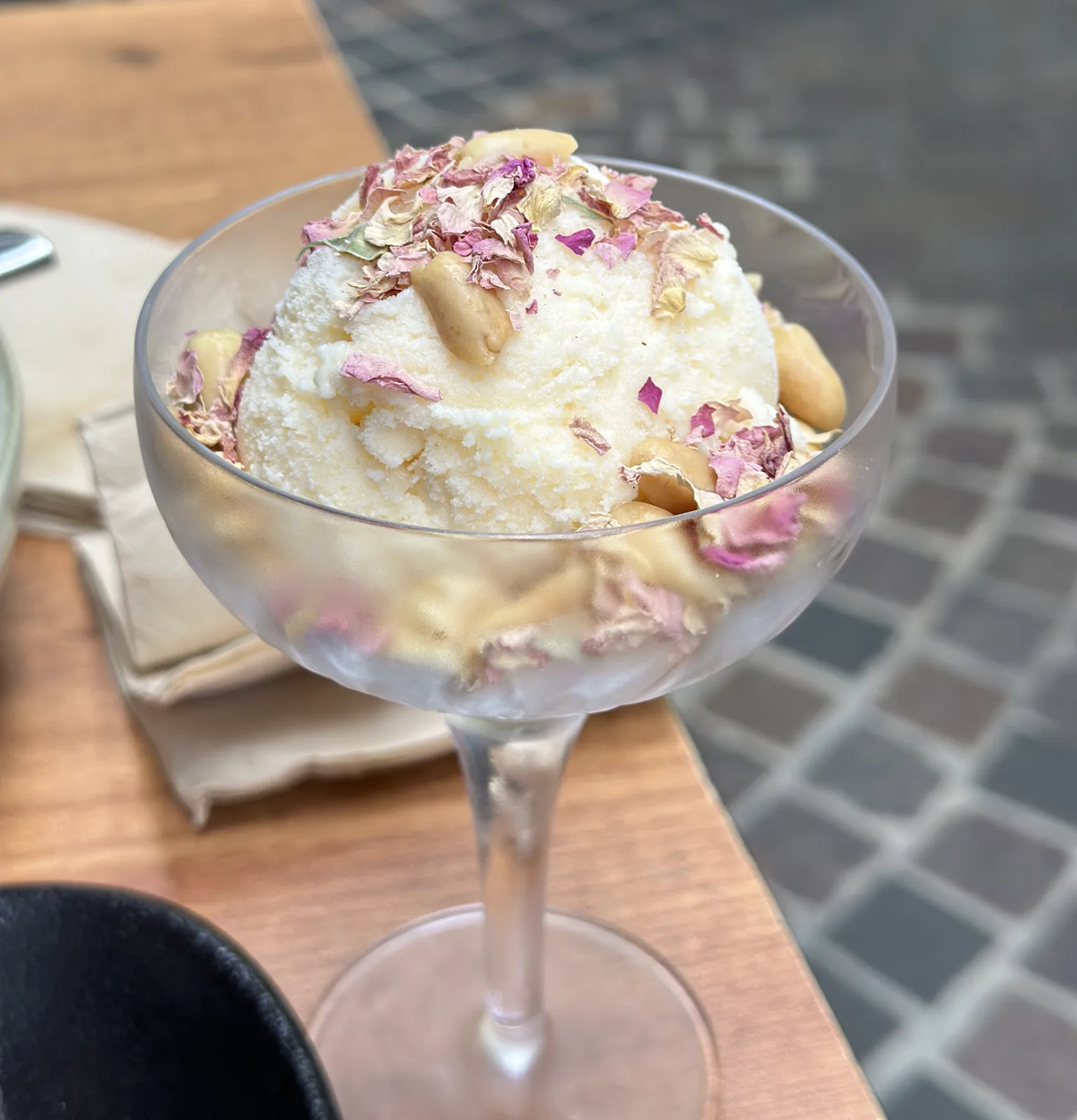
To finish, there was a scoop of ice cream in a coupe glass, scattered with rose petals and nuts.
The camera roll stops a little before noon. After that, all that remained was the long flight home, back across the Pacific into the northern winter.
Looking back
It was a short trip, and most of it was spent at a conference, including one nine o'clock talk that I will always remember more fondly than its audience will. But conferences are good at putting you in places you would never otherwise have gone, and this one did it twice. Sydney is the obvious half of the story: the harbour, the bridge, the shells. Even so, the camera roll is full of things I would not have predicted. There are giraffes posing in front of a skyline, a café with the sea outside the window, and a capybara that would not get up.
Canberra was the surprise. A city designed from scratch can easily feel like a diagram, and at times Canberra does. But it is a diagram made with real care. Hills sight onto hills, a lake was made to sit between them, and the parliament was buried in a hill so that people could walk over it. And at the bottom of it all, in a red room in a grassy mound, there is a pool of turquoise water under an open square of sky. For someone who spends his days thinking about how shapes and light are computed, a city built on lines of sight and a building cut from a single sphere made a fitting pair. The summer SIGGRAPH was next, in Denver, and that trip turned into something else entirely.
Maps built from the trip's photo timestamps and locations. Photo locations have been removed from the published images. Day maps: map data © OpenStreetMap contributors; each stop is placed where its photo was taken, hotels and home are never marked, and the dashed lines show the order of stops, not the exact roads.
Some photos in this post are my wife's.
Likes and comments
React with an emoji or leave a comment. Signing in with GitHub is required.