← Misc · October 2022
Where the Fence Meets the Sea
A weekend in Tijuana, a few days before the Day of the Dead.
Los Angeles → San Diego → across the border on Friday night → a night in Tijuana → Playas de Tijuana → Avenida Revolución → Mercado Hidalgo → a second night in Tijuana → the San Ysidro line → home
two nights in Tijuana · one border fence painted end to end · two giant Catrinas and a skeleton wedding · one zebra-striped donkey · one salad cart with a hundred years of history · hours in the line to go home
Tijuana is close. From most of Southern California it is a shorter drive than Las Vegas or San Francisco, and the border sits about twenty miles south of downtown San Diego. Plenty of people cross it every day without thinking much about it. For the two of us it had stayed a name on the freeway signs, the last exit before Mexico, until a weekend at the end of October 2022. Día de Muertos was a few days away, and the city was getting ready for it.
That was the whole reason for going. The Day of the Dead is one of the great festivals of the year, and the celebrations everyone pictures, the marigold-strewn cemeteries and the parades of painted skulls, belong to Mexico City and the south. Those are a long flight away. Tijuana is a morning's drive. If we wanted to see a Mexican city dressing up for its dead, this was the one within reach.
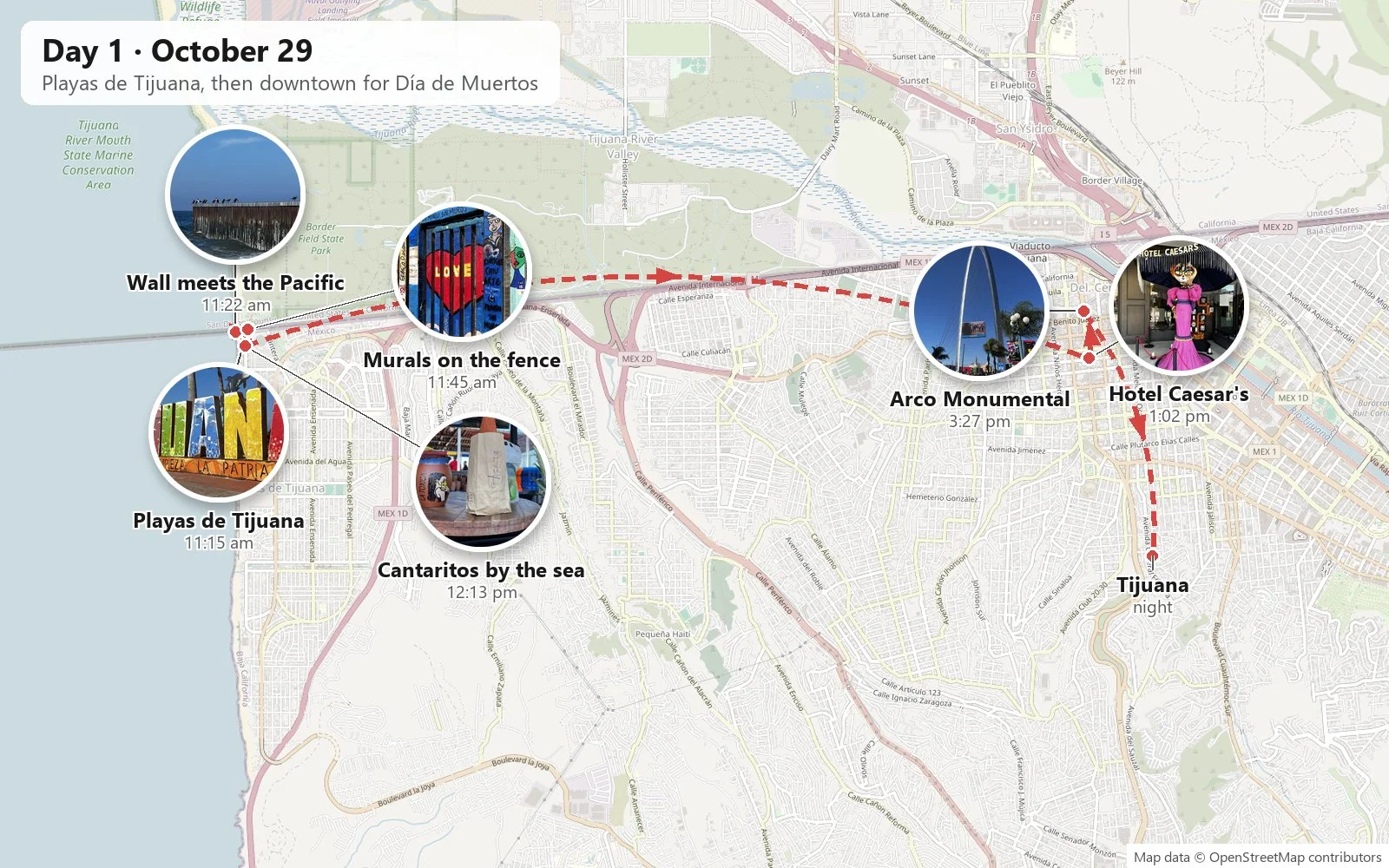
As with the other trips on this page, everything below is reconstructed from the camera roll: when each photo was taken, and where. The record is good for Saturday and patchy for Sunday, and where it is silent I've said so rather than guess. The weekend has a simple shape. Saturday morning was the ocean end of the border, where the fence runs down the beach and into the surf. Saturday afternoon was downtown, on Avenida Revolución, which was halfway through dressing up for the Day of the Dead. Sunday was brunch, a last look at downtown and the long, slow line north.
Day 1: The fence and the sea
Tijuana is a border city, so there was no flight and no plan beyond the car: we drove down from Los Angeles on Friday evening, past San Diego, and crossed the border after dark. The first thing we did in Mexico, at a quarter to ten, was eat tacos al pastor from a street stand. We spent the night in Tijuana, so Saturday began in the city. By eleven on Saturday morning we were in Playas de Tijuana, the beach neighborhood in the far northwest corner of the city, and of Mexico. The day was clear, with a cold, deep blue sky and the kind of hard, low October sun that makes every color look freshly painted. Playas sits on a bluff above a long sand beach. A wide malecón, the seafront promenade, runs along the top, lined with palms, seafood places and little plazas. At its north end the city stops, abruptly, at a wall of rusting steel posts.
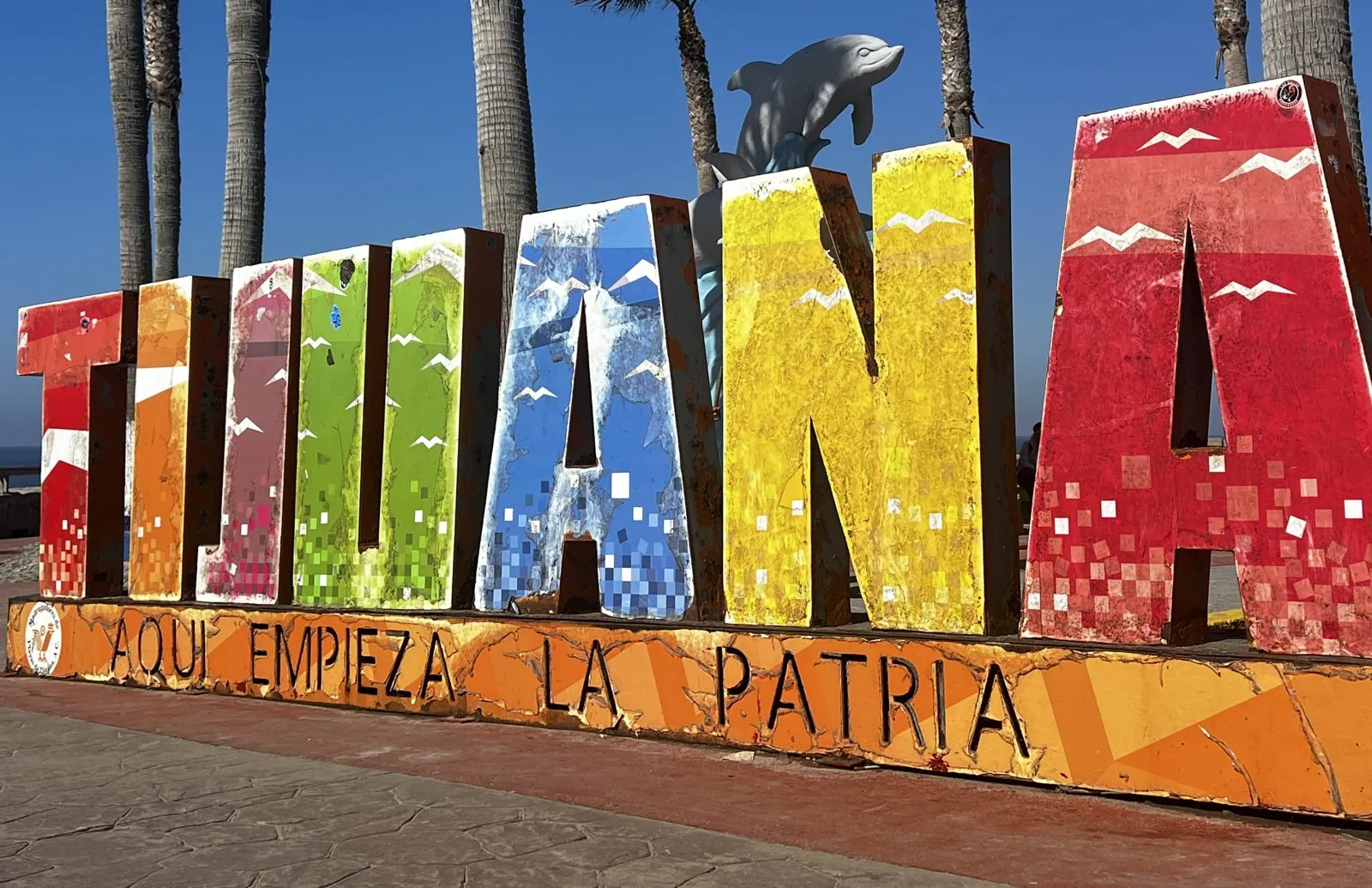
Here begins the homeland
The first thing you see on the promenade is the town's name, in letters taller than a person, each one a different color and covered in little painted tiles: red, orange, green, blue, yellow, and a big red A with white seagulls flying across it. A pair of leaping dolphins rides on top, and the palms lean overhead. Along the base runs Tijuana's motto, Aquí empieza la Patria, "Here begins the homeland". It is a play on geography: this is the northwestern tip of the country, so for Mexico, this is where the map starts. Signs like this have become a fixture in Mexican towns, and like all of them, this one is mostly a backdrop for photos. We spent a quarter of an hour there doing exactly that, and none of those photos are here.
Into the surf
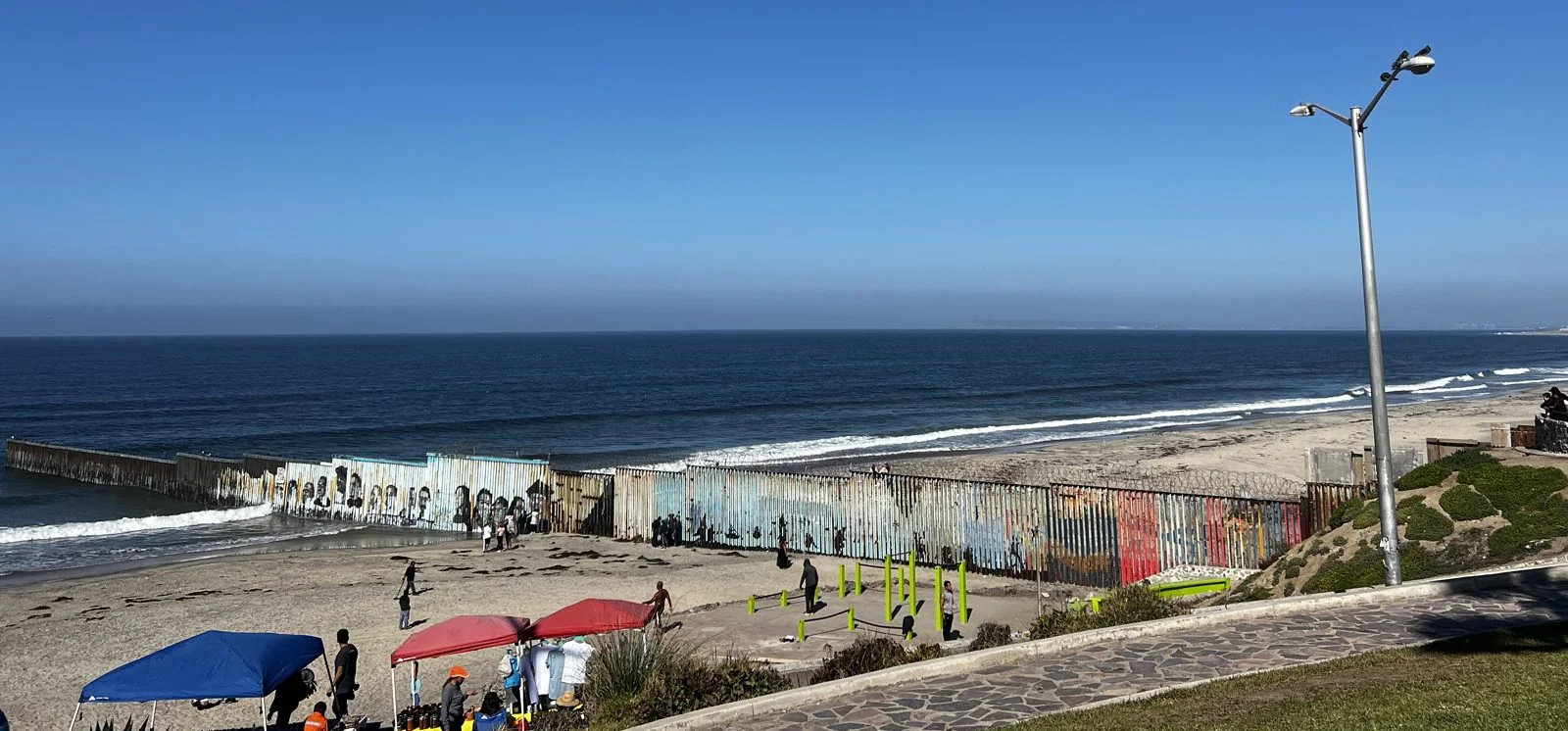
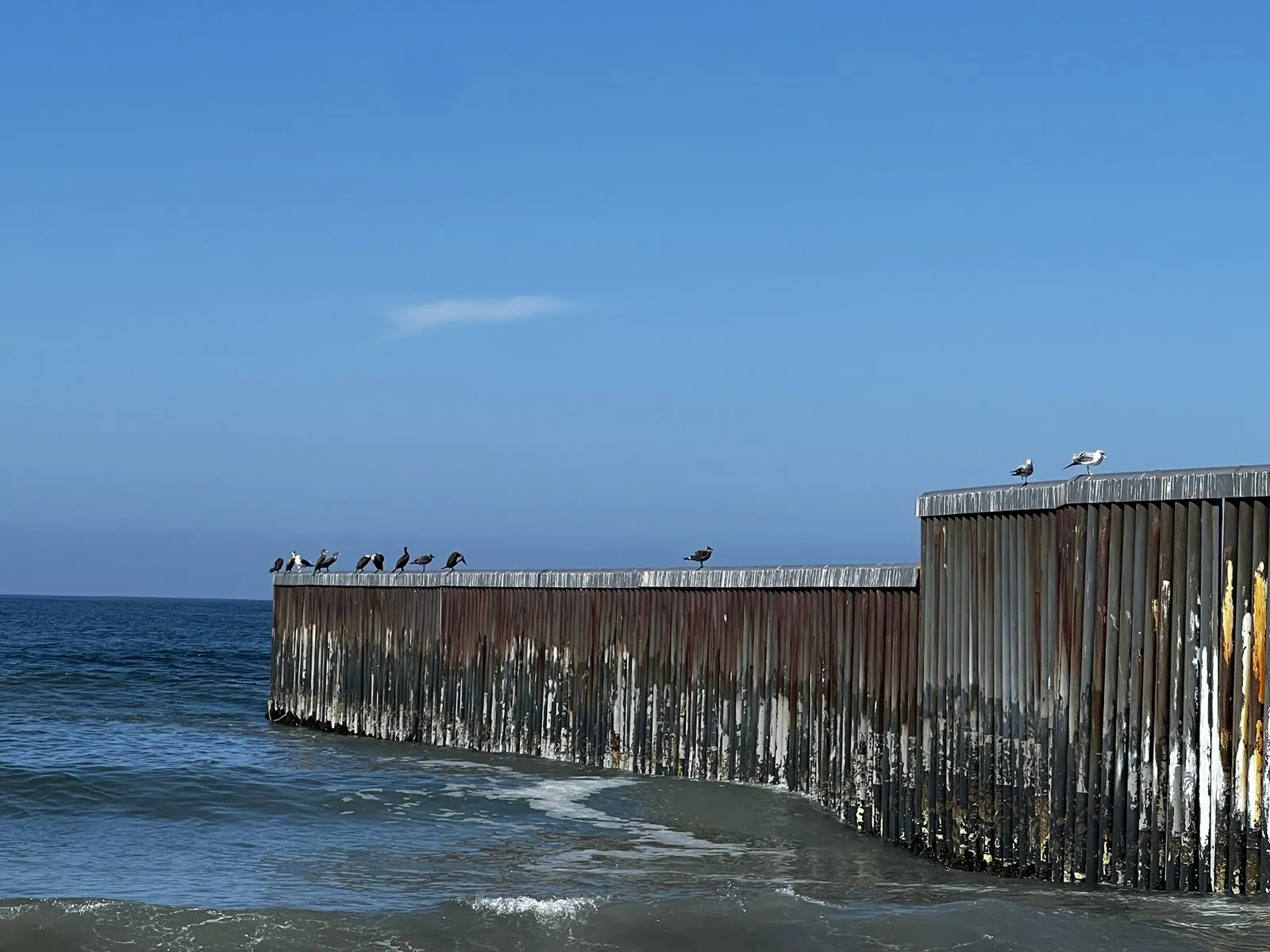
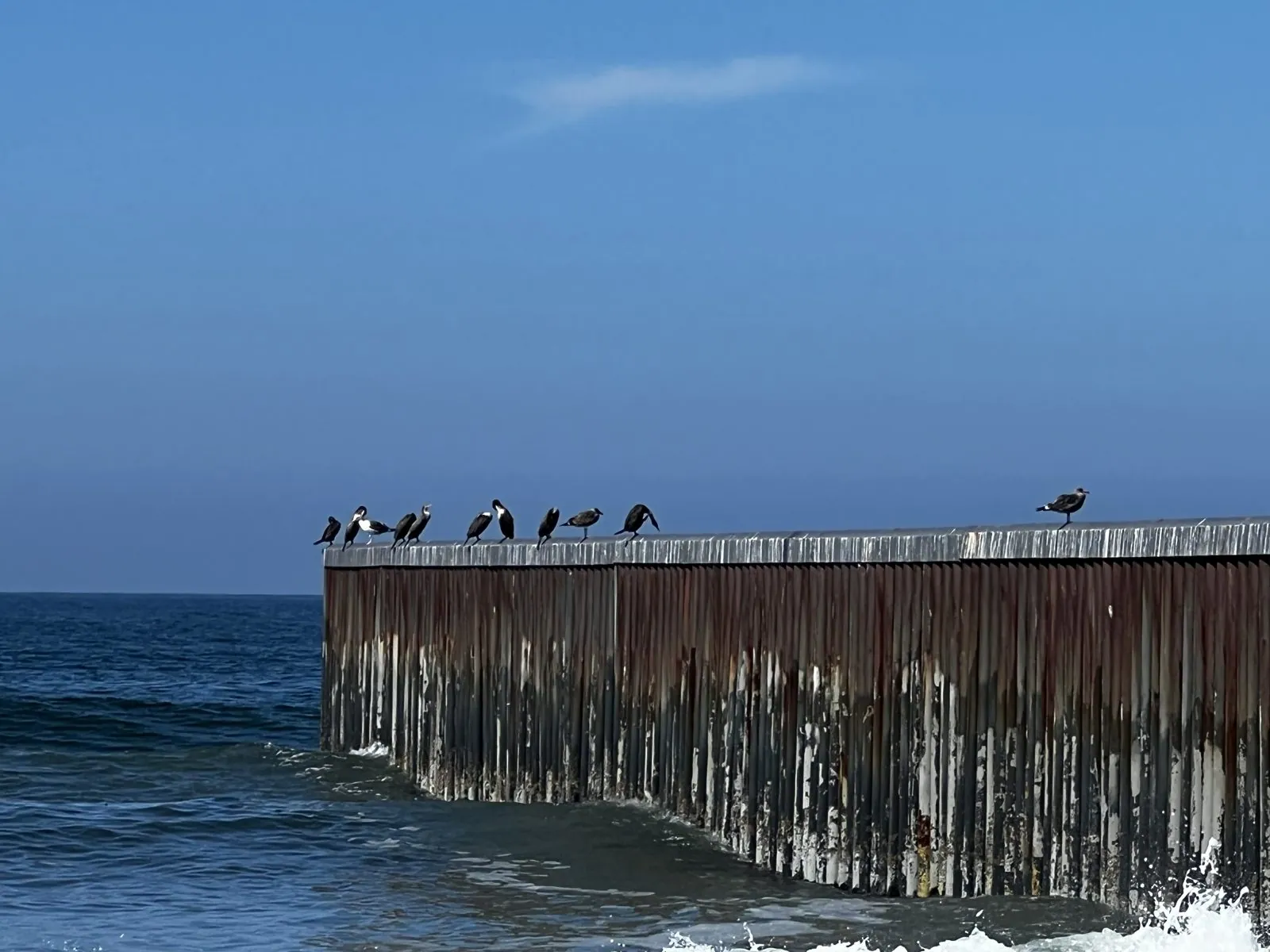
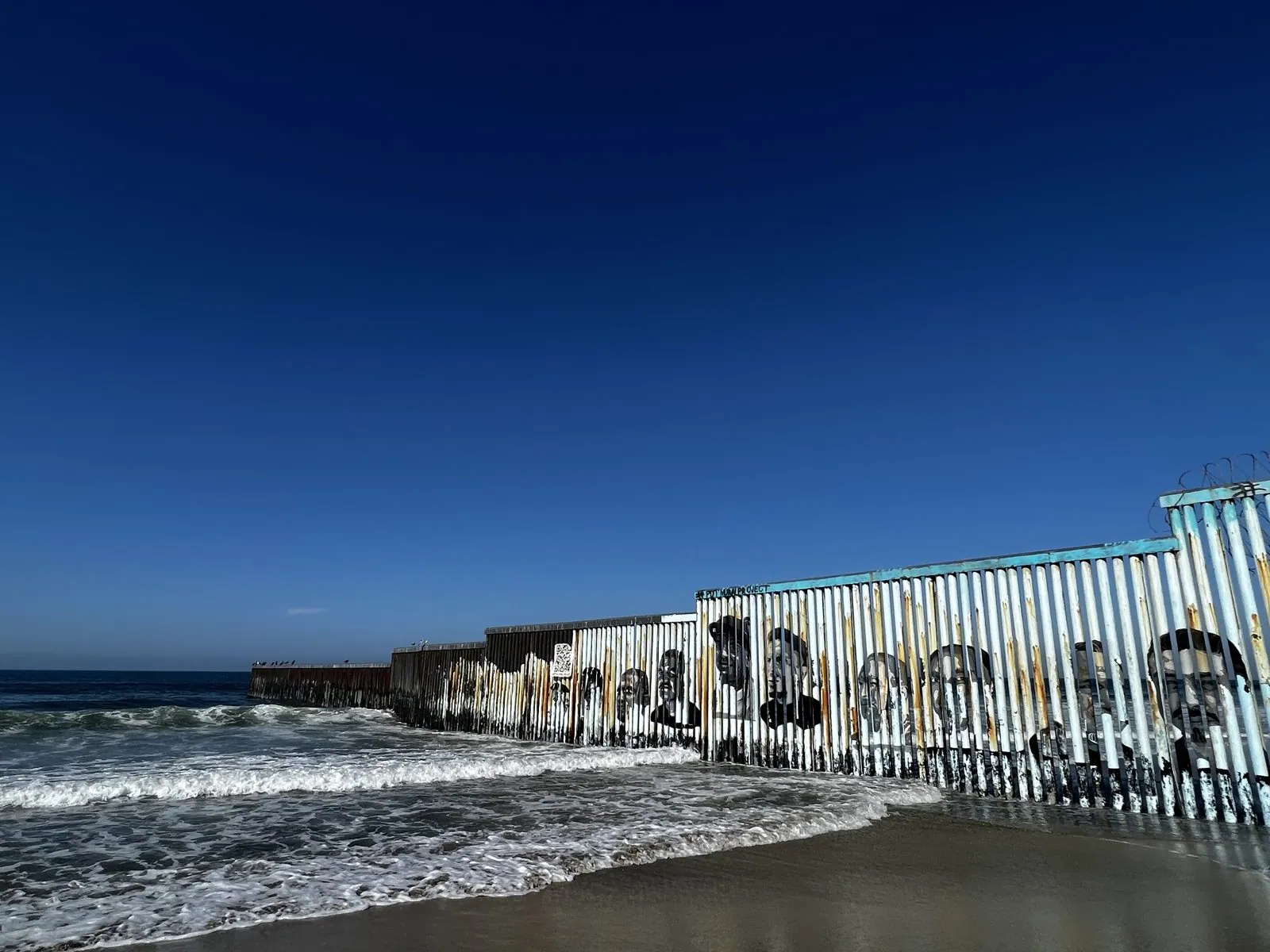
A few steps north, the promenade ends at the border, and the border keeps going. The fence here is a row of tall steel posts set a hand's width apart. It runs down the beach, across the sand and straight out into the Pacific, past the line where the waves break, before it finally stops in open water. The posts at the waterline are streaked with rust and salt, orange and black and white, and the surf piles up against them and pours through the gaps. It is a strange thing to look at. Fences are supposed to end somewhere, and this one simply walks into the sea. From the top of the bluff you can see all of it at once: the painted fence running down across the sand and straight into the surf.
The seabirds have their own opinion of it. That morning a row of cormorants stood along the top rail at the seaward end, with a couple of gulls keeping their distance a few posts along. To them it is just a convenient perch with an ocean view. Behind the fence, on the other side, the beach carries on exactly as before, the same sand, the same surf, for miles toward Imperial Beach. Every few seconds a wave came in, ran up between the posts and slid back out, the only thing in sight crossing freely in both directions.
This corner has a longer history than the steel suggests. In 1971 the area around the border monument here was dedicated as Friendship Park, a place where people from both countries could meet, and for decades families divided by the border came to see and talk to each other through the fence. The barrier has been rebuilt and made taller several times since, and the meeting area on the U.S. side has been closed for long stretches. On the Mexican side, though, the fence is right there at the end of the promenade, open to anyone who walks up to it, and over the years people have turned it into something else entirely.
A gallery on steel posts
Starting at the beach, the fence is painted almost all the way along. Near the water, the first stretch is a row of enormous faces, men and women in black and white and blue-gray, each several posts wide and as tall as the fence. Because the steel posts are set apart, every face is sliced into vertical strips with sky showing between them. Up close it falls apart into stripes; from twenty steps back, it snaps into a portrait. Stand further back still and the row of faces marches down the beach toward the waves, under a coil of razor wire along the top. A large QR code had been fixed to one post among them, linking the artwork to a mural project.
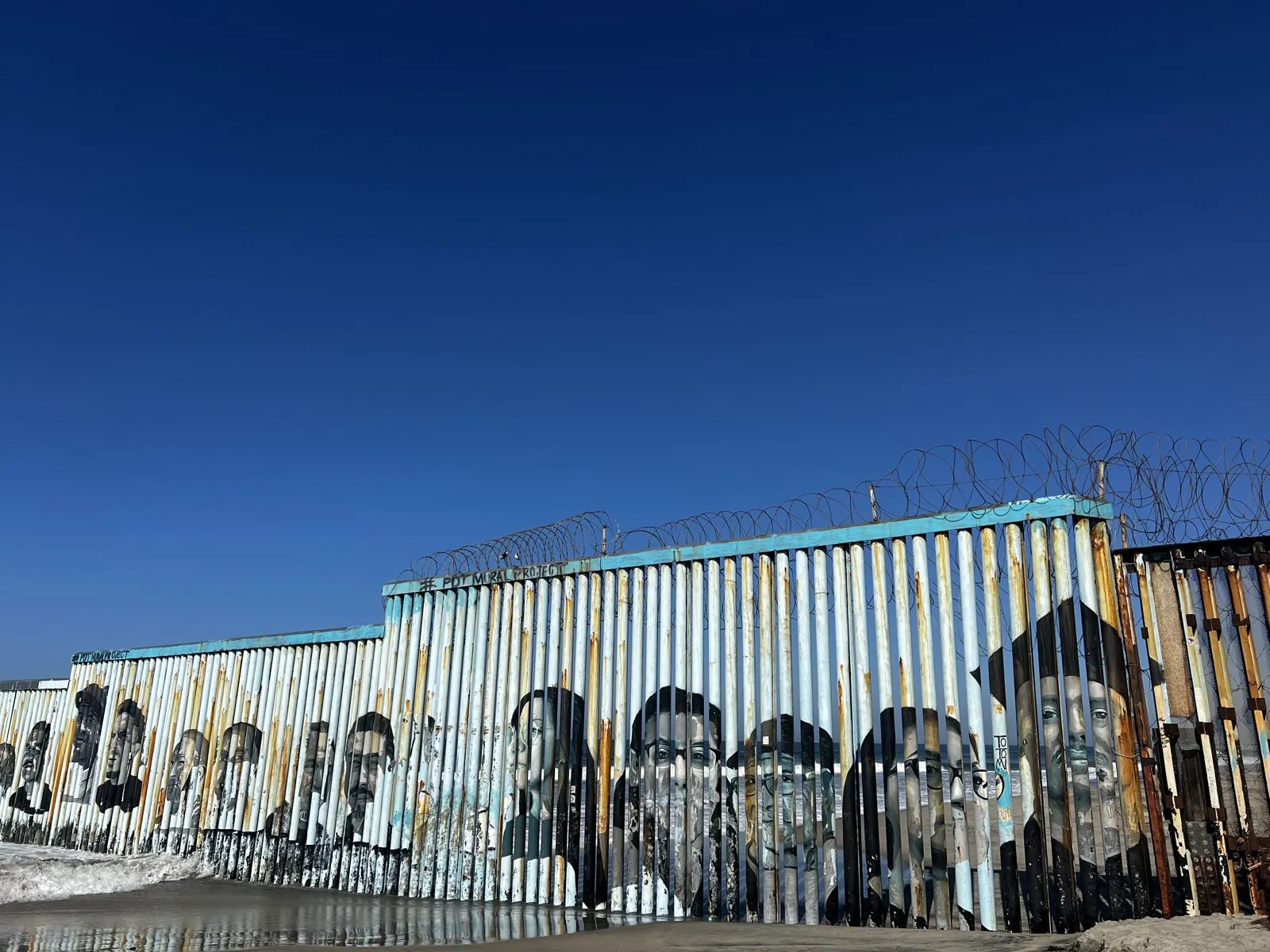
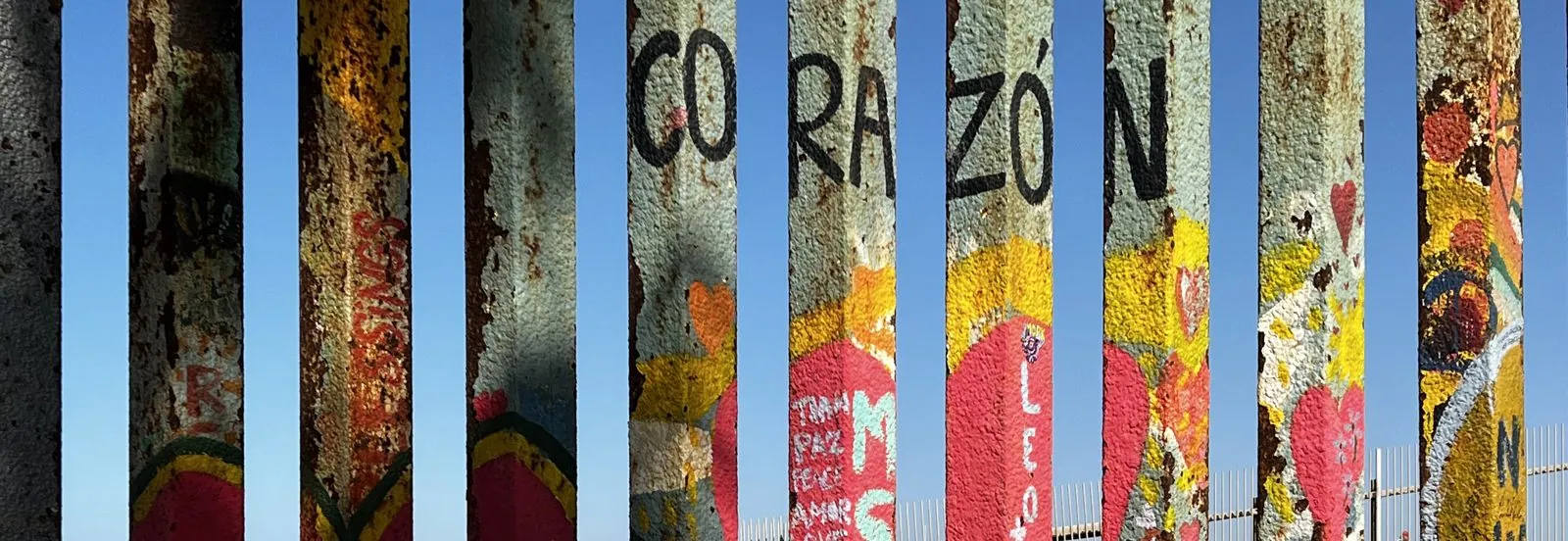
Walking inland along the fence, the style changes every few yards, as if a hundred different people had each been given one section, which is more or less what happened. Above the beach, a run of posts is painted in reds, pinks and yellows, covered in hearts and handwritten names, with one word stenciled across the tops in black capitals: CORAZÓN, "heart". Between the posts you can see straight through to the other side: a strip of sand, a second fence, the Tijuana River valley and the hills of San Diego beyond.
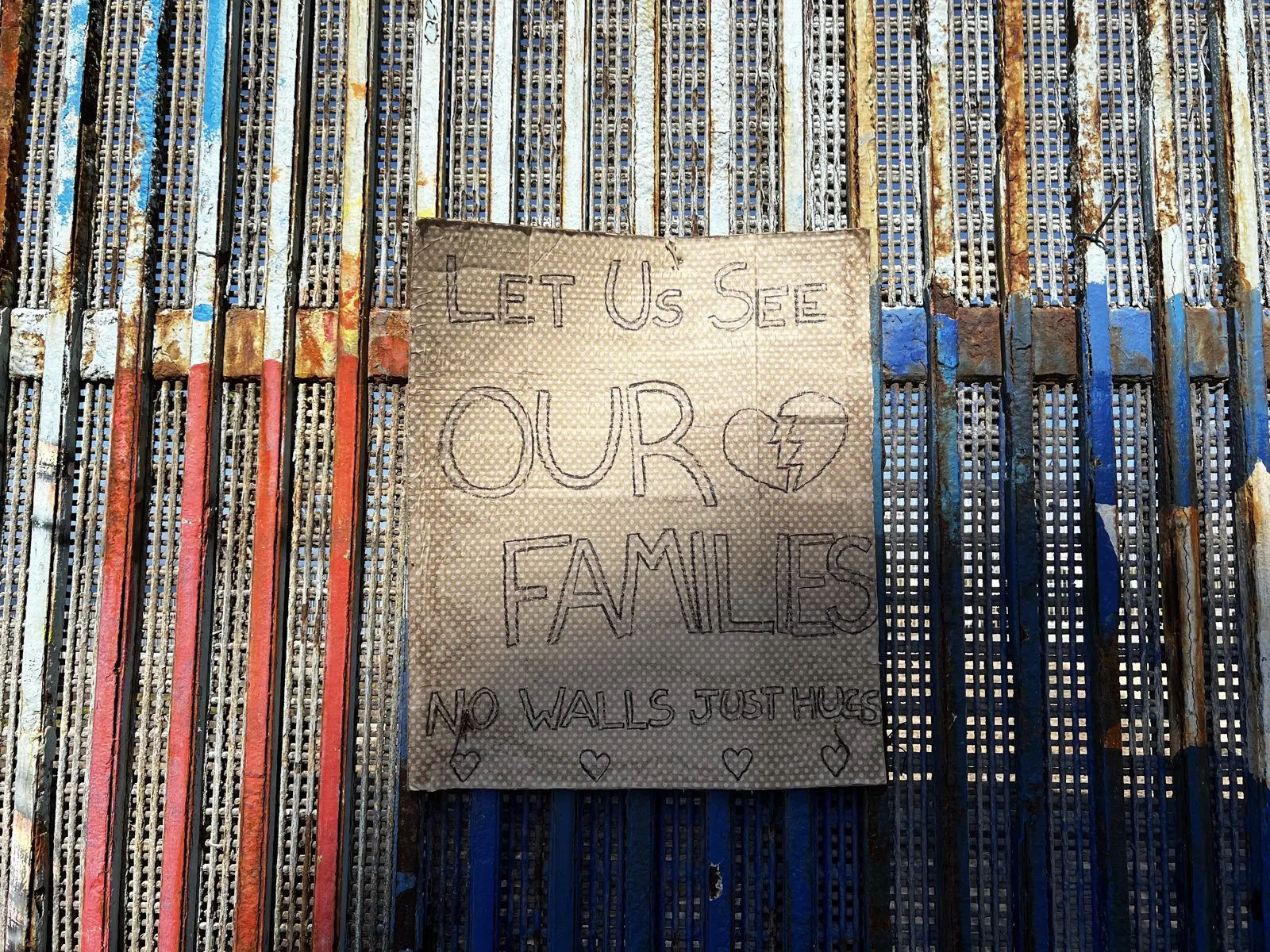
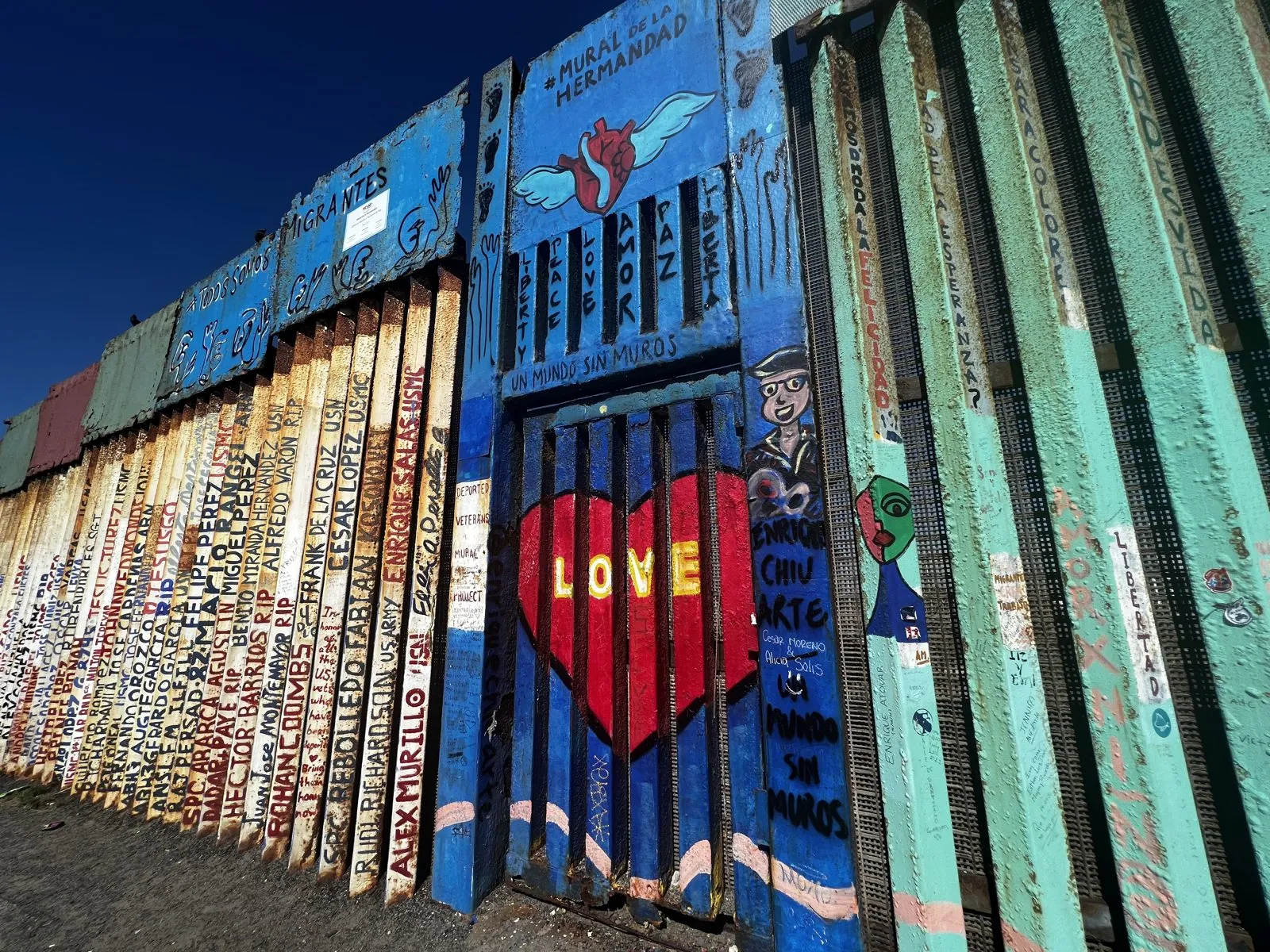
Some of the art is professional, and some is a piece of cardboard. Wired to the steel mesh at one point was a hand-lettered sign: Let us see our families, with a broken heart drawn in place of the O, and below it, No walls, just hugs, signed off with four little hearts. It was faded and a little warped by the weather. A few posts later came a large painted doorway, the Mural de la Hermandad ("mural of brotherhood"), signed by the Tijuana artist Enrique Chiu. A red heart with LOVE across it fills the bars, framed by the words Un mundo sin muros, "a world without walls", and flanked by narrow posts painted with names, many of them followed by a branch of the U.S. military.
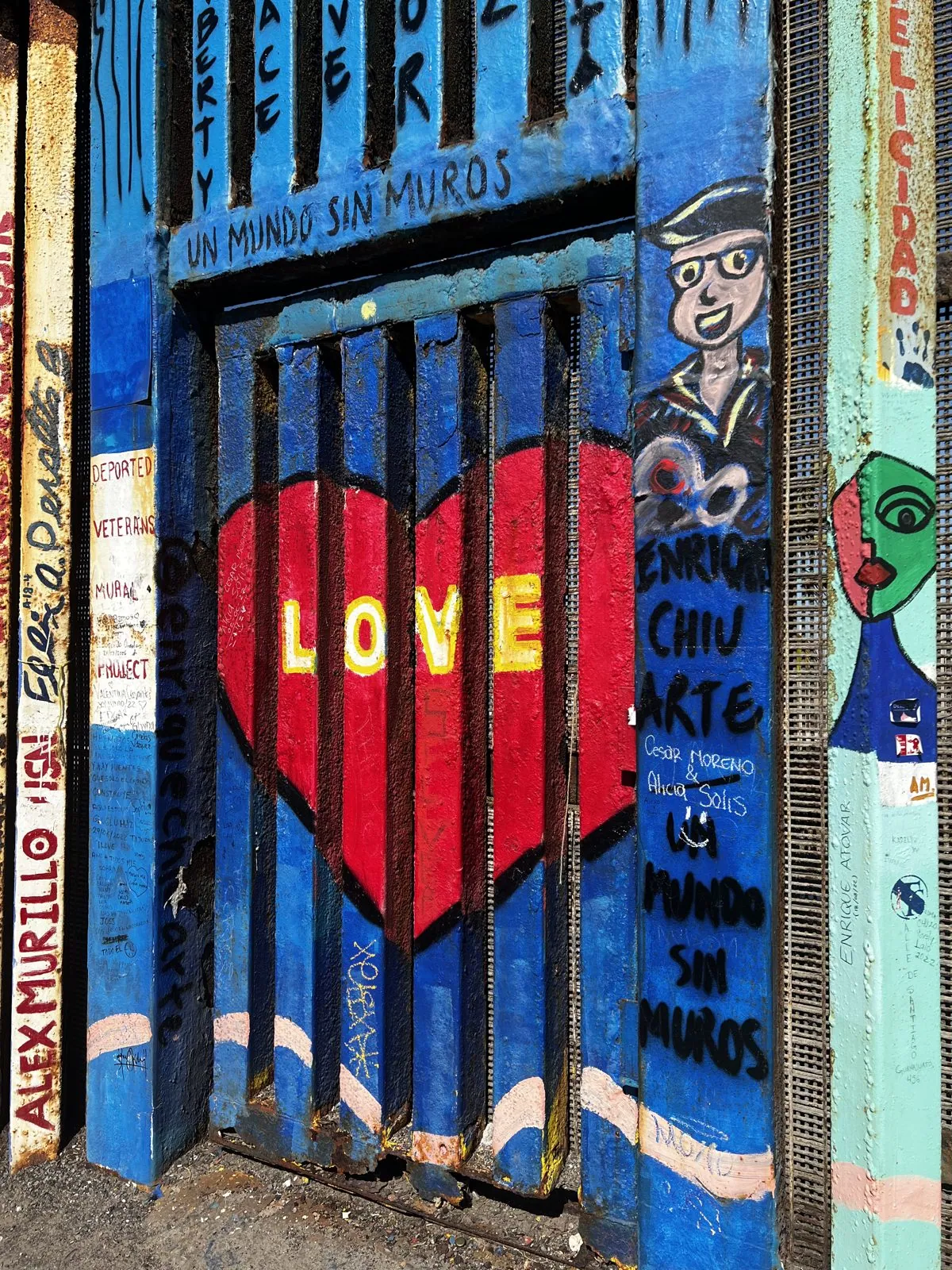
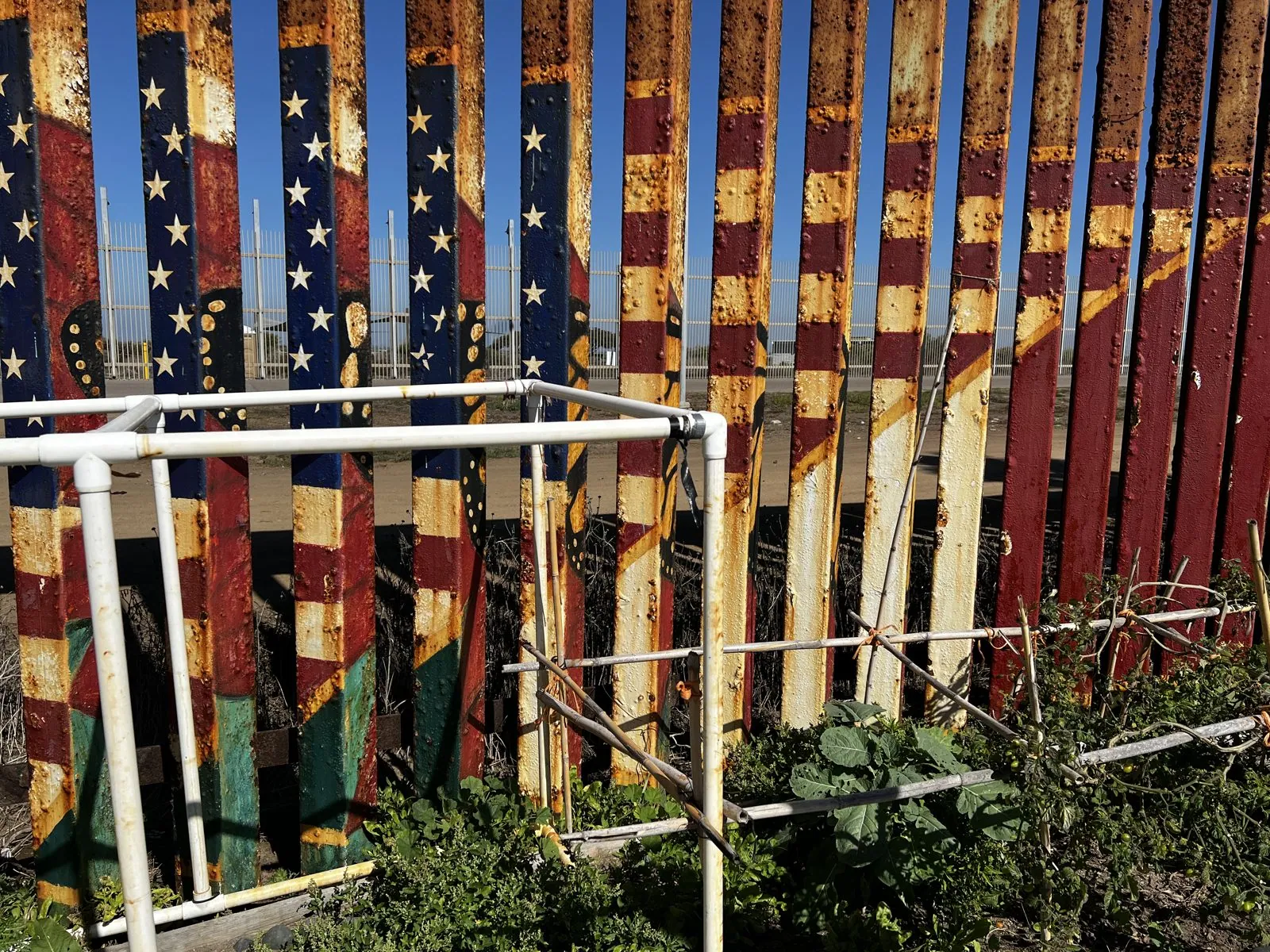
Pull back and the scale of it becomes clear. The LOVE doorway is one panel among dozens: to its left, a long run of pale posts each carries a name in a different hand; to its right come seafoam-green posts lettered with words like esperanza and felicidad, hope and happiness. A little further on, a stretch of fence is painted as an American flag, the stars and stripes running down the posts and fading where the paint has weathered, with a small vegetable garden growing in a frame of white pipe at its foot.
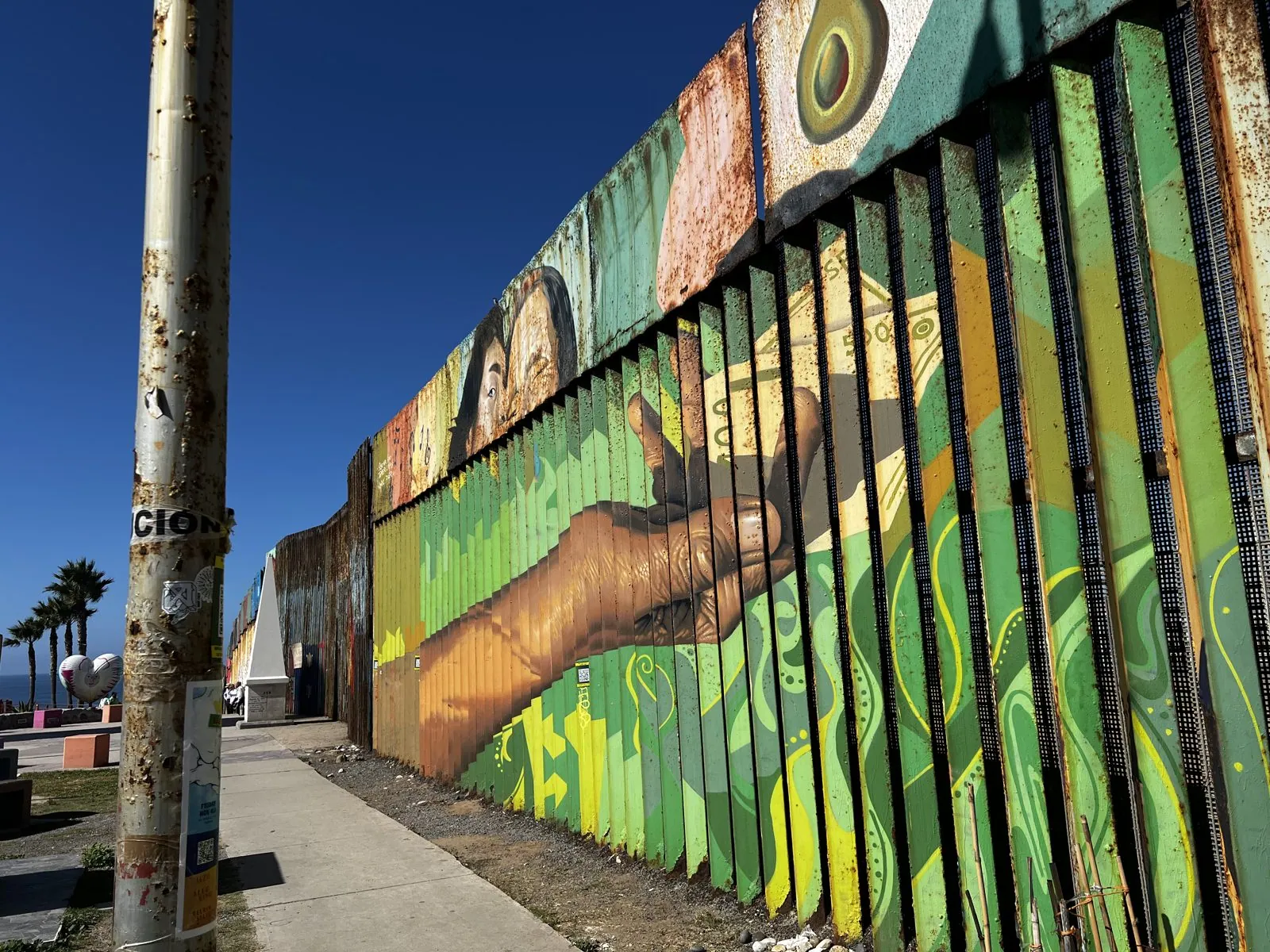
The biggest single mural was the last before the plaza. Along a long section of fence beside the sidewalk, a giant brown hand reaches out of a field of bright greens and yellows, palm open as if releasing something, with an avocado and two faces painted in the panels along the top. The green runs for a good fifty yards. From the end of the sidewalk, the fence and its mural recede in a long diagonal toward the palms and the ocean, and you can see a long way down the line of paint.
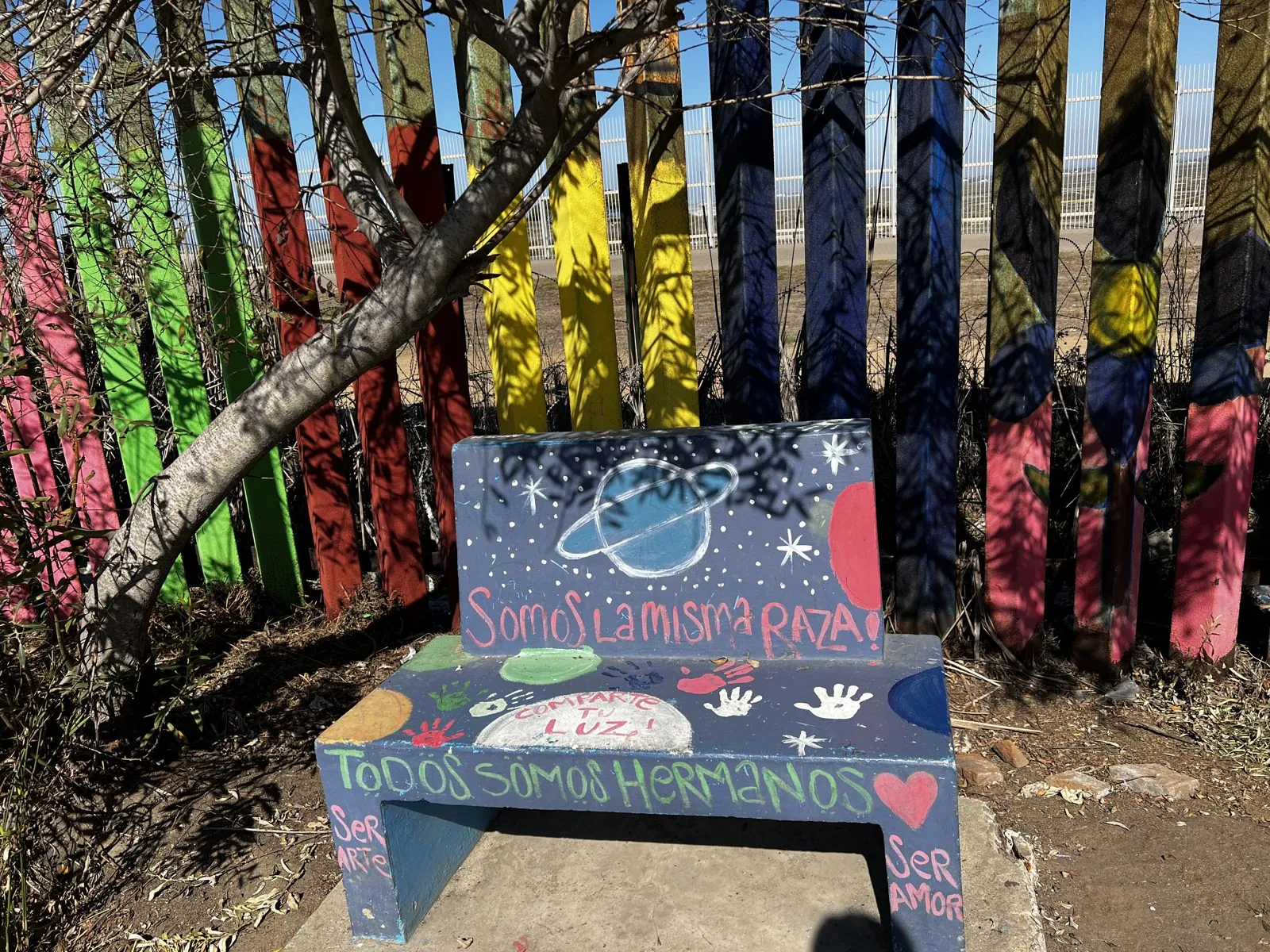
Todos somos hermanos
The fence along this stretch doubles as the back wall of a small park. Tucked under a leaning tree, in front of posts painted green, red, yellow and navy, is a concrete bench that someone painted dark blue and filled with stars, handprints and a ringed planet. Across its back it says Somos la misma raza, "we are the same people", and across the seat, in bubbly green letters with a heart, Todos somos hermanos, "we are all brothers and sisters". It is a good bench, in the sun, out of the wind, and it got sat on for a while, which is all a bench really asks.
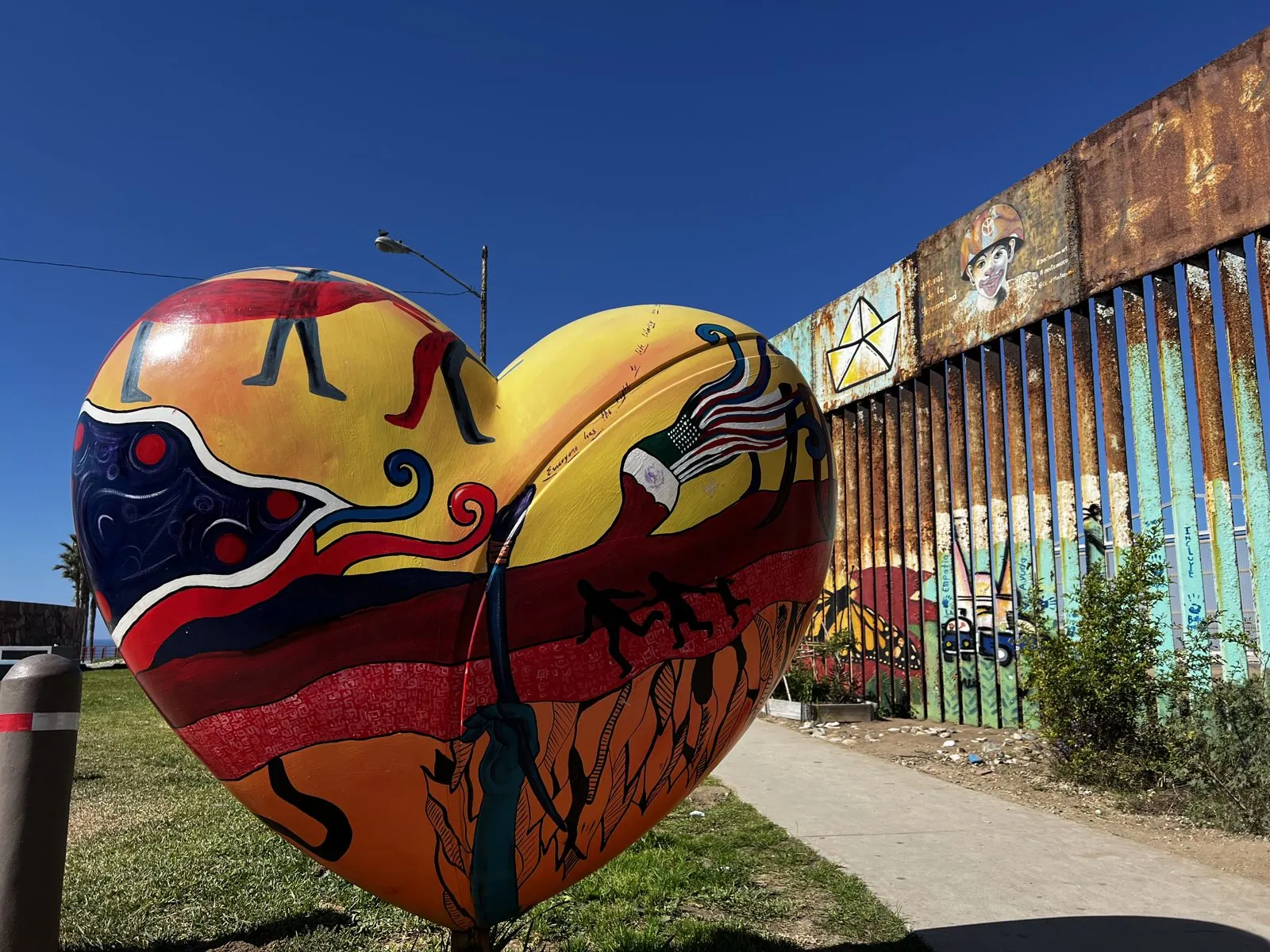
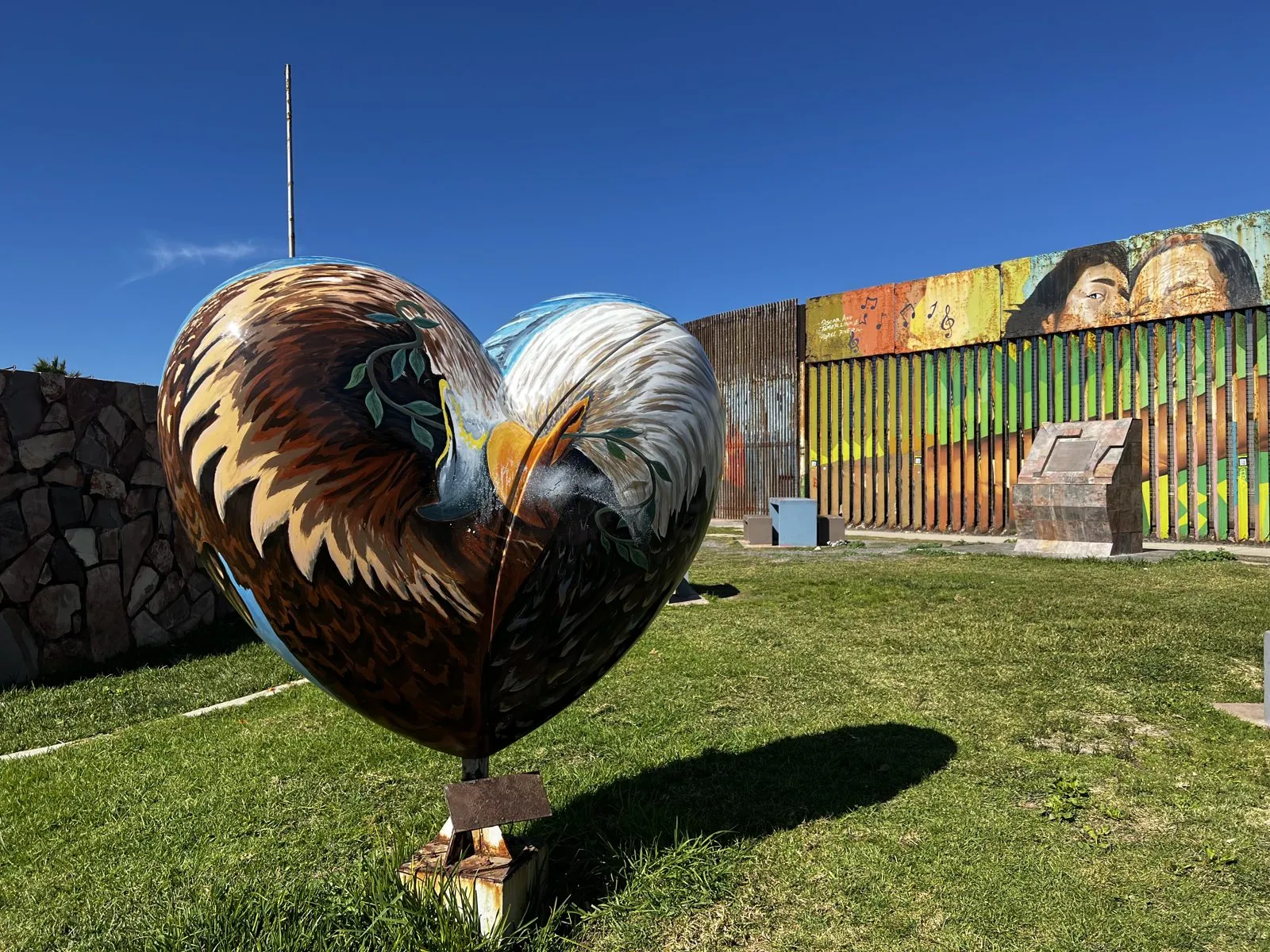
On the lawn by the plaza, a set of giant hearts stands on steel posts, each one painted by a different artist. One is a desert sunset in red, orange and yellow, with small figures walking across it. Another is an eagle, the two lobes of the heart turned into a pair of folded brown wings with a white head tucked between them, so from one side it is a heart and from the other it is a bird. Behind them, the fence carries on, painted with a portrait of two faces leaning together, and past that the low hills of the other side.
A cantarito by the sea
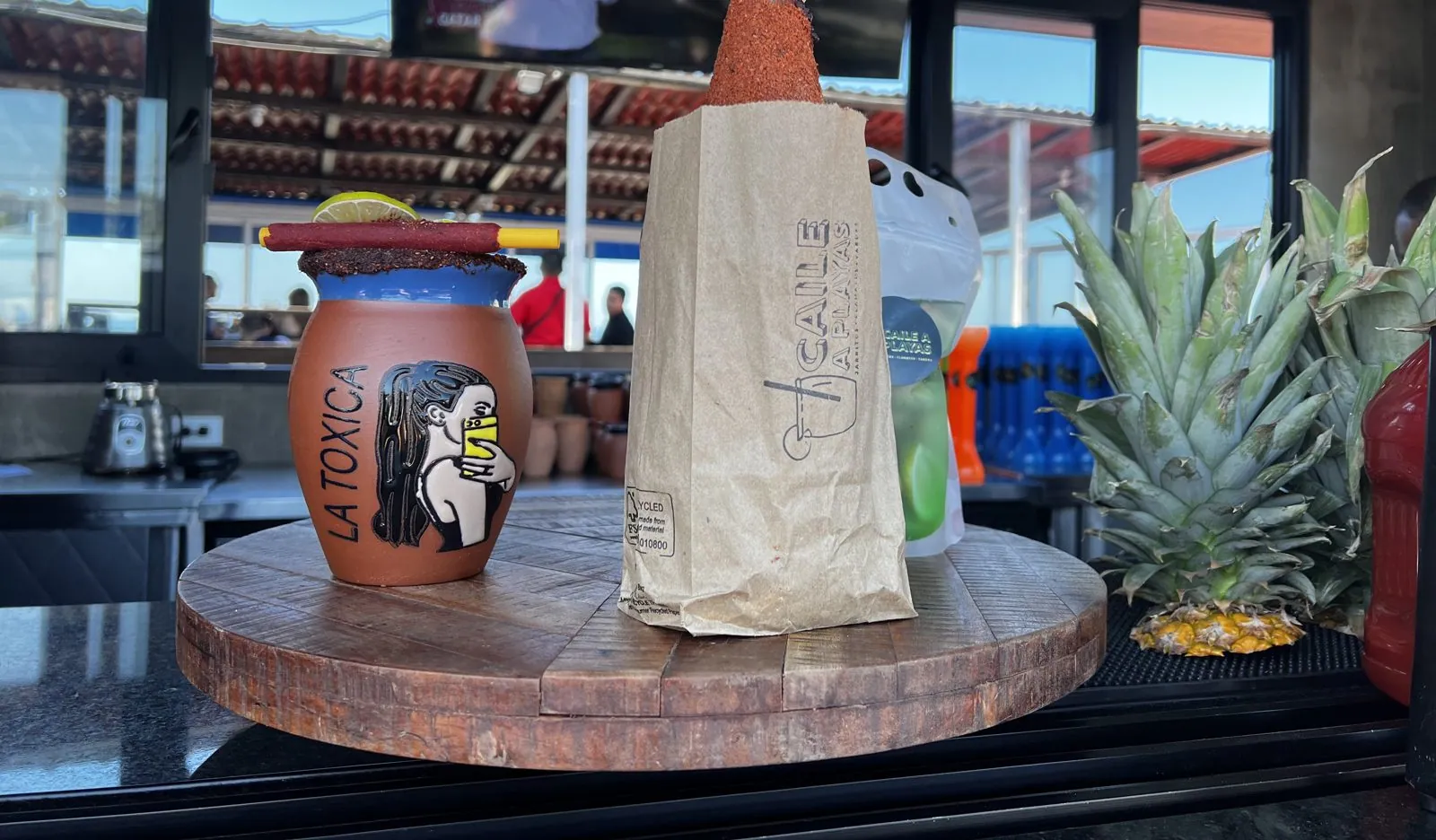
By a quarter past twelve we had walked back down the malecón to a bar overlooking the beach, with an open terrace, a red-tiled roof and a view straight out over the water. The drink of the house was the cantarito, which comes from Jalisco: citrus juice, soda and usually tequila, served in a small clay jug whose rim is crusted with chili salt. This one came with a little extra drama: a stick of chili-covered candy laid across the top, and a clay jug painted with a cartoon woman and the word La Tóxica. On the counter behind it sat a row of pineapples, waiting their turn.
Afternoon: Avenida Revolución
Then we went downtown. It is about six miles from Playas to the center of Tijuana, along the road that runs right beside the border. Downtown sits in the Zona Centro, a grid of streets just south of the busiest border crossing in the hemisphere, and its spine is Avenida Revolución, "La Revu". For a century this street has been where visitors from the north end up. In the 1920s, when Prohibition closed the bars of the United States, Hollywood drove down to Tijuana to drink, gamble and dine, and Revolución filled with bars, casinos and restaurants to serve them. Some of those buildings are still there.
Caesar's, and the salad
One of them is Hotel Caesar's, which has one of the better claims to fame of any building in Mexico. The Caesar salad is generally credited to Caesar Cardini, an Italian-born restaurateur who ran a restaurant in Tijuana during those Prohibition years. The story, as his family told it, is that on a busy holiday weekend in the 1920s the kitchen was running low, and he improvised a salad from what was left: romaine, olive oil, egg, parmesan, garlic, lemon and croutons, tossed at the table for show. It was a hit with the Hollywood crowd, and within a few decades it was on menus all over the world. Caesar's, on Revolución, carries his name and keeps the tradition alive.
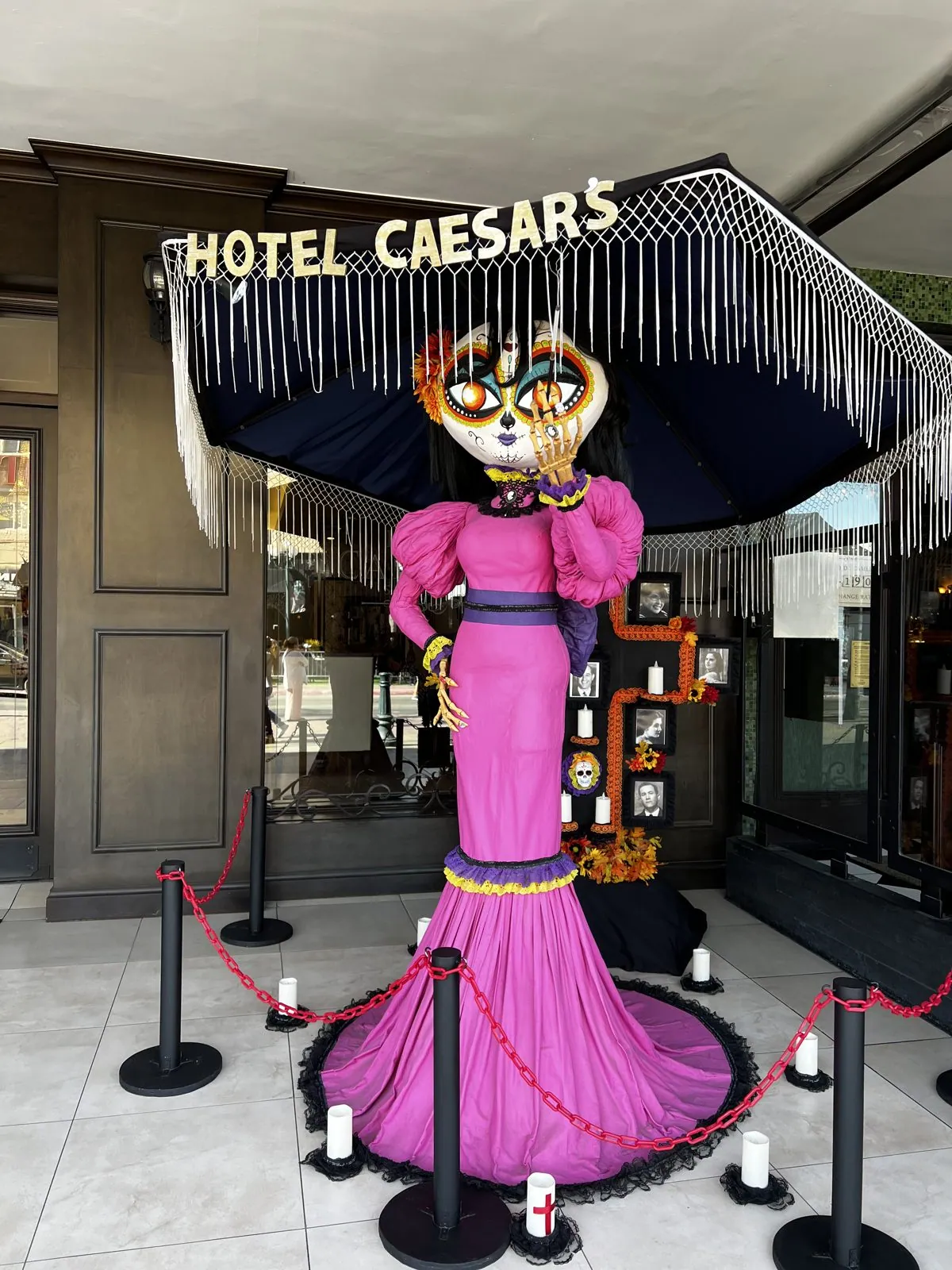
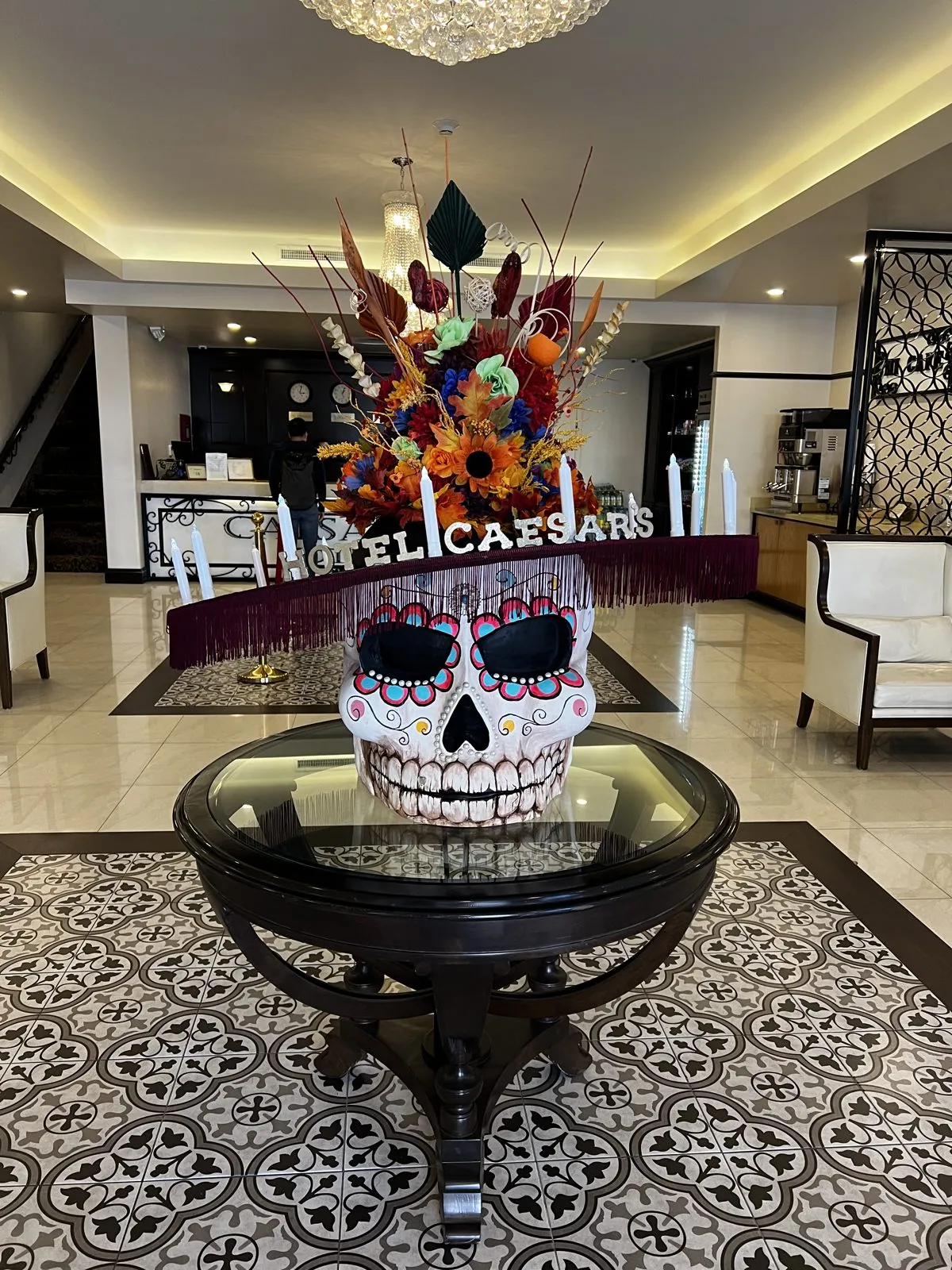
That week, the entrance had been handed over to the Day of the Dead. Under the hotel's sign, beneath a fringed black parasol, stood a Catrina twice the height of a person: a skeleton lady in a bright pink gown with puffed sleeves and a mermaid train pooled on the tiles, roped off like a museum piece, with an ofrenda of framed photos and candles behind her. In the lobby, a glass table held a sugar skull the size of a beach ball, painted white with red and black flourishes, crowned with a spray of dried flowers in orange, red and gold.
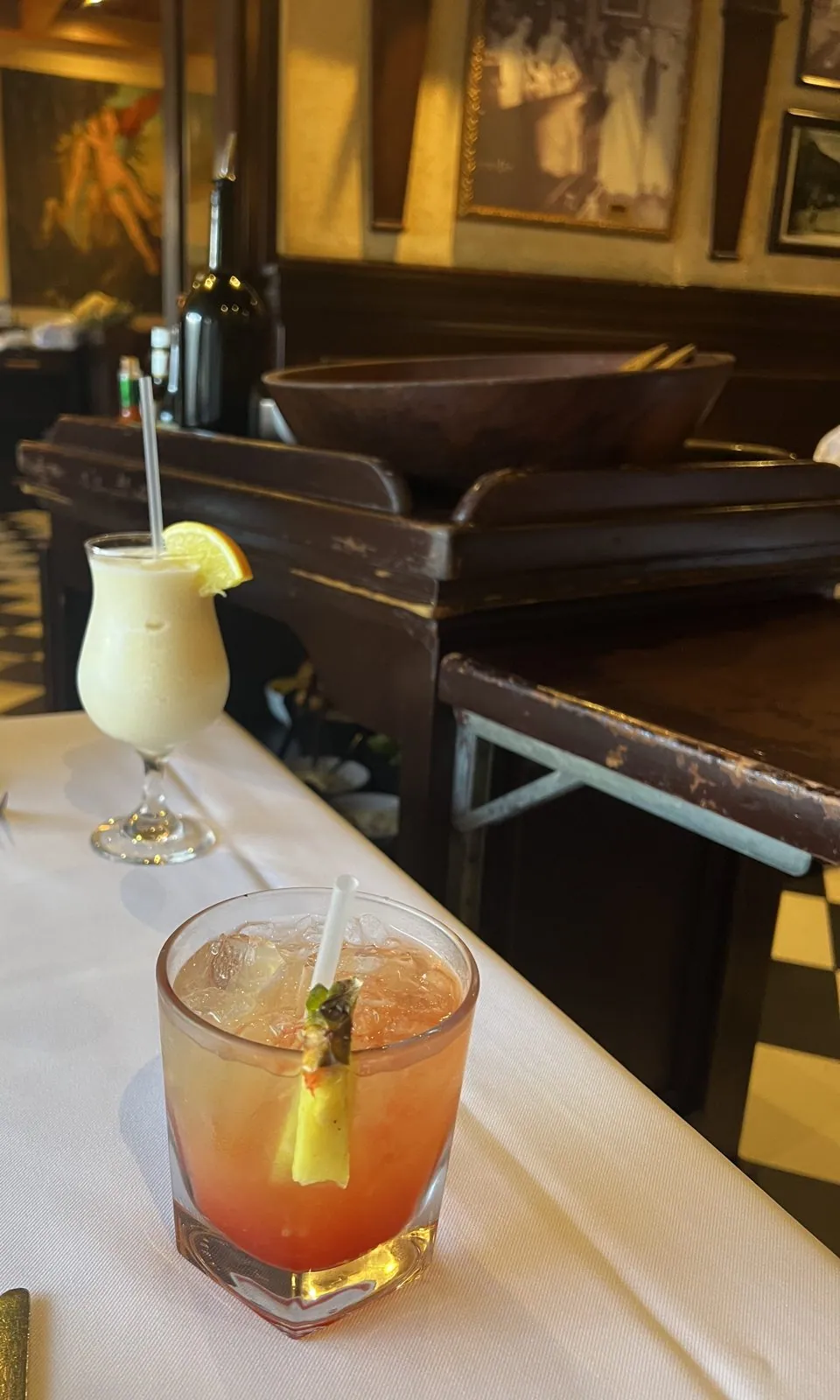
The dining room is dark wood, white tablecloths, low lamps and framed old photographs, the look of a place that has decided the 1920s were its best decade and sees no reason to change. Next to our table stood the thing that makes Caesar's Caesar's: a battered wooden cart with a big wooden salad bowl on top, the kind they wheel to the table to toss the salad in front of you. Of course we ordered the Caesar salad; you can't come to the place it was invented and not. We started with a piña colada and something red and orange with a pineapple spear in it.
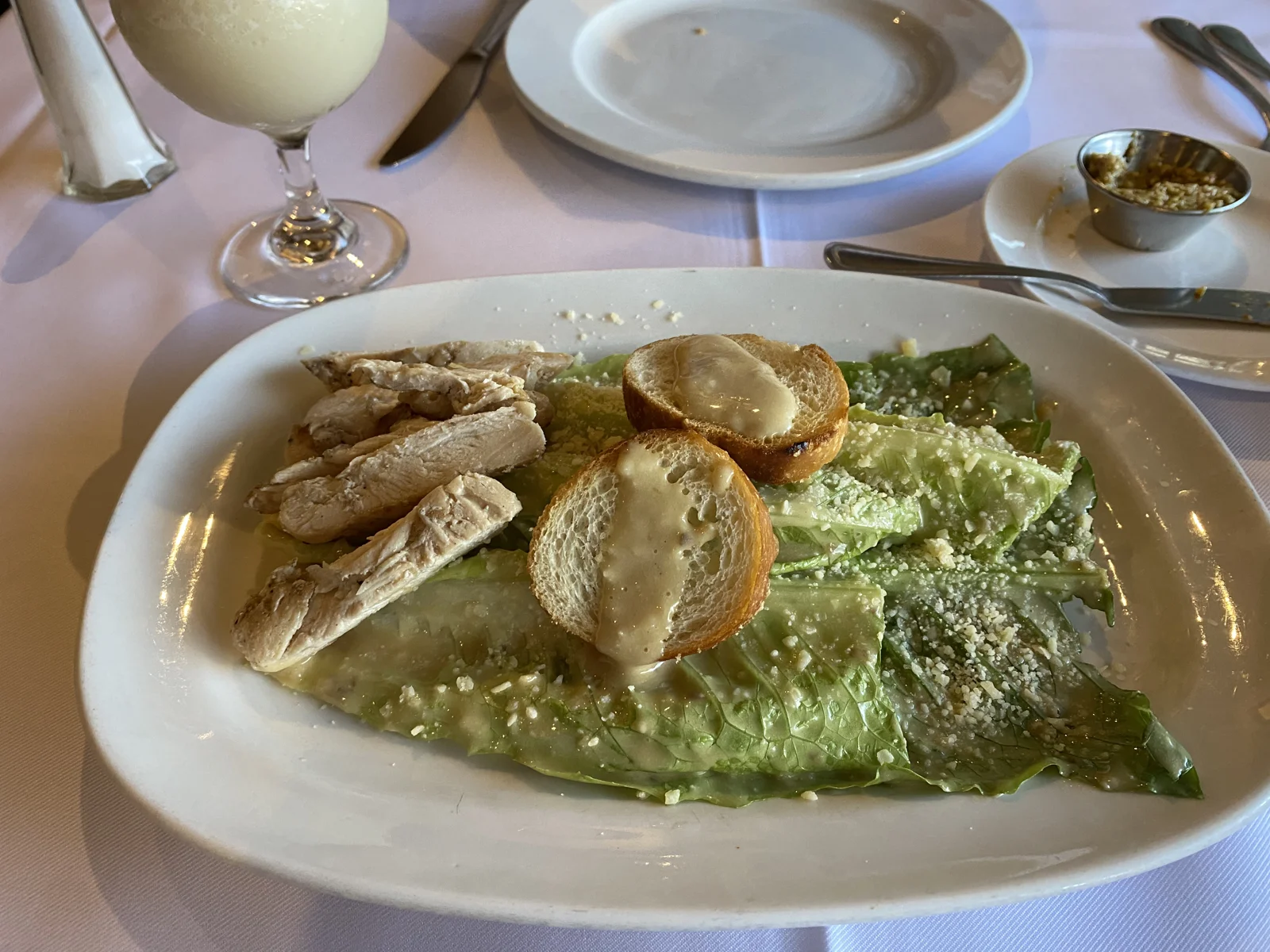
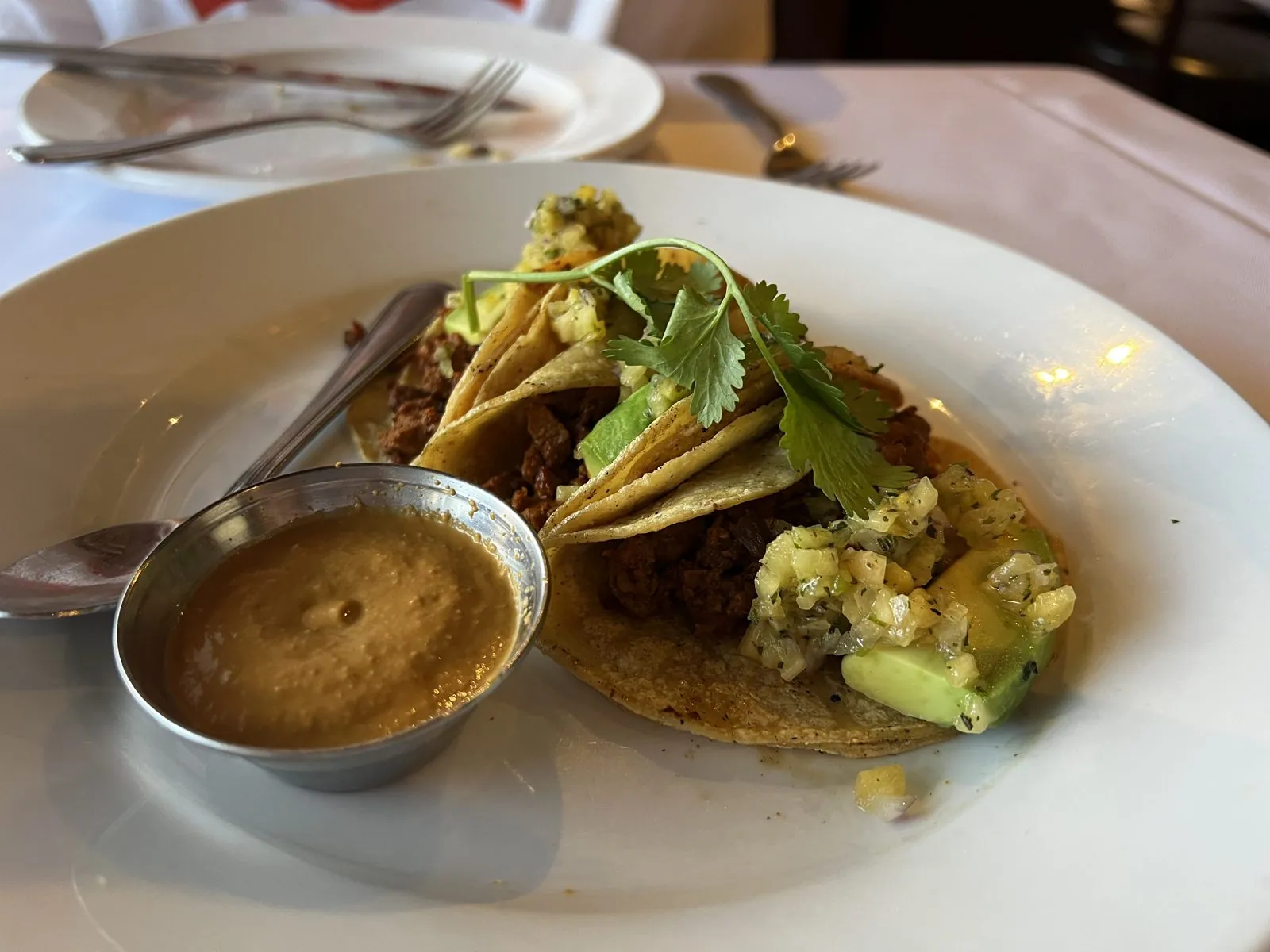
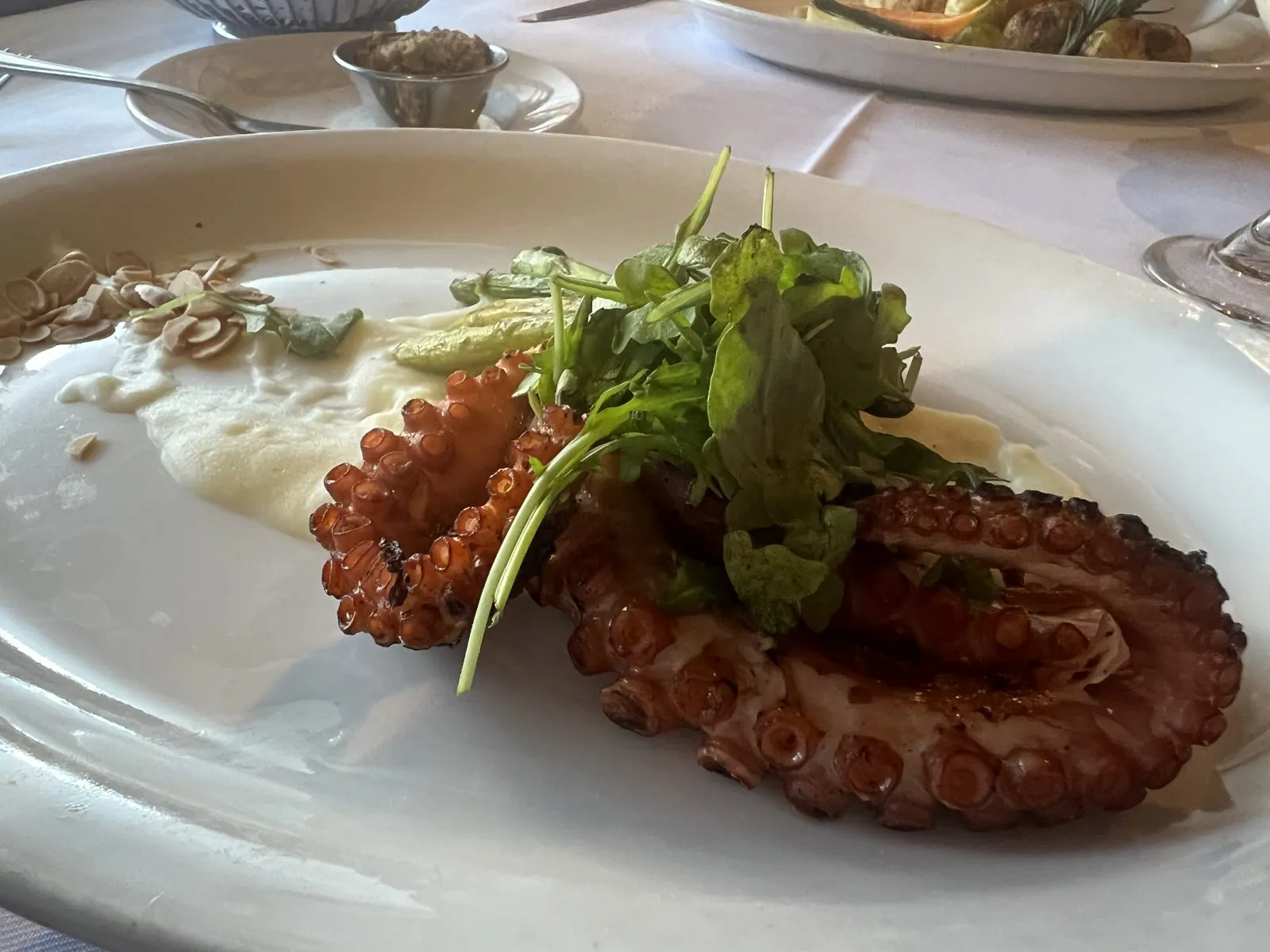
The rest of lunch was a tour of the menu. There were tacos topped with pineapple salsa, avocado and a sprig of cilantro, with a little steel cup of salsa on the side, and grilled octopus, its tentacles charred and curled, on a smear of something pale and creamy under a tangle of greens.
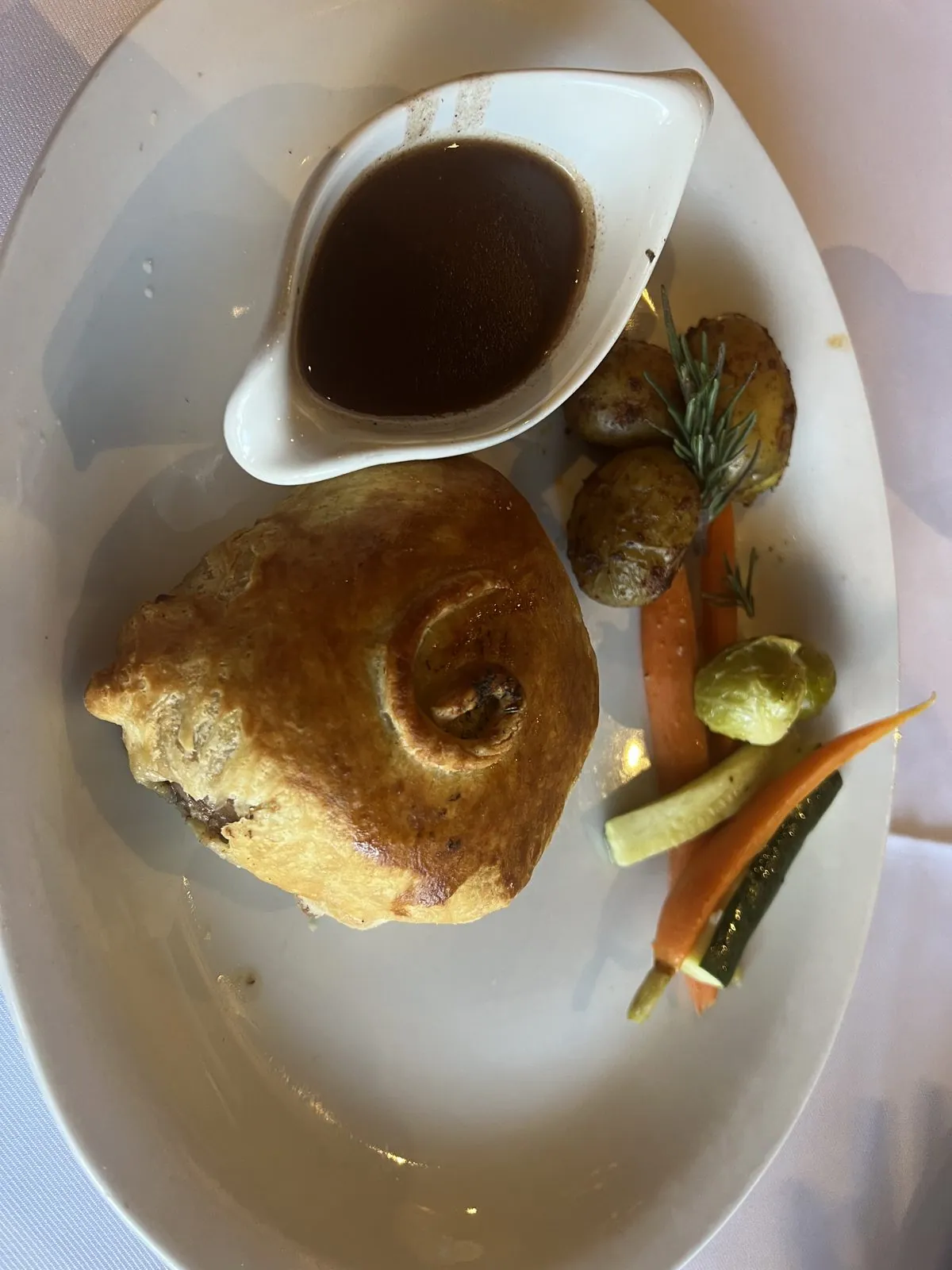
The main course was a round of puff pastry with a spiral pressed into the top and a sauceboat of dark gravy beside it, surrounded by roast potatoes, baby carrots and Brussels sprouts. We were at the table for a little under an hour, and walked out into the afternoon sun on Revolución.
The street dresses for the dead
Día de Muertos falls on November 1st and 2nd. It is a time when families welcome back the spirits of the dead with ofrendas, home altars laid with photographs, candles, marigolds, sugar skulls and the departed's favorite food and drink, and visit cemeteries to clean and decorate the graves. It is far less somber than it sounds: the skeletons are dressed up, smiling and dancing, and the mood is closer to a family reunion than a funeral. On the last weekend of October, Revolución was getting ready.
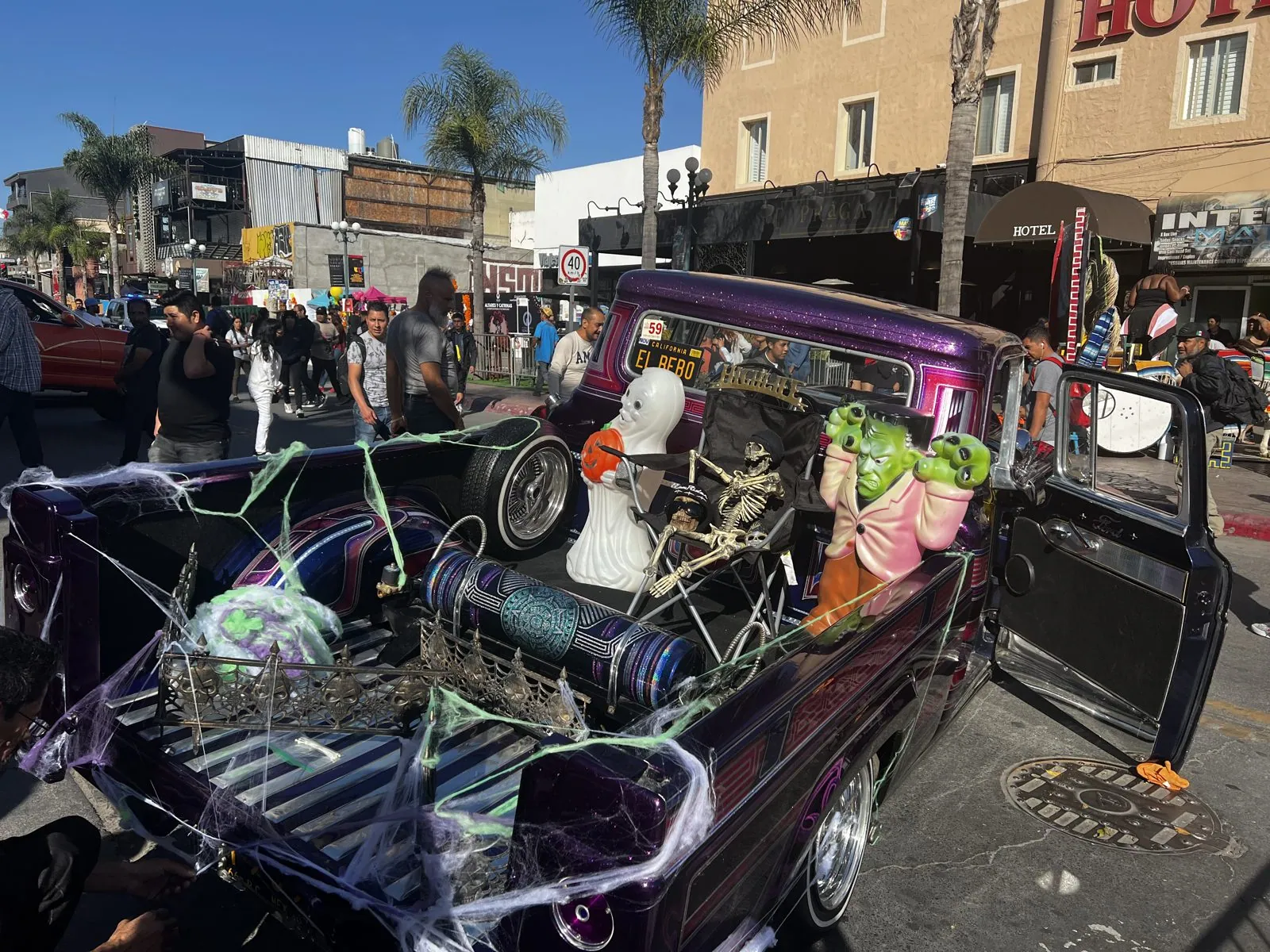
Out on the avenue at three o'clock, a lowrider had pulled up to the curb outside Caesar's, a purple pickup with flaming pinstripes and chrome wheels, its bed full of skeletons, a ghost, a cartoon zombie and a crown, all draped in fake cobwebs. The sidewalks were crowded with people out for the afternoon. A souvenir shop a block up had arranged its doorway like a stage set: a skeleton bride in a white veil holding purple flowers on one side, a skeleton groom in a top hat and tails on the other, and above them a row of painted portraits of Frida Kahlo, whose face, with flowers in her hair, is on souvenirs all over Mexico.
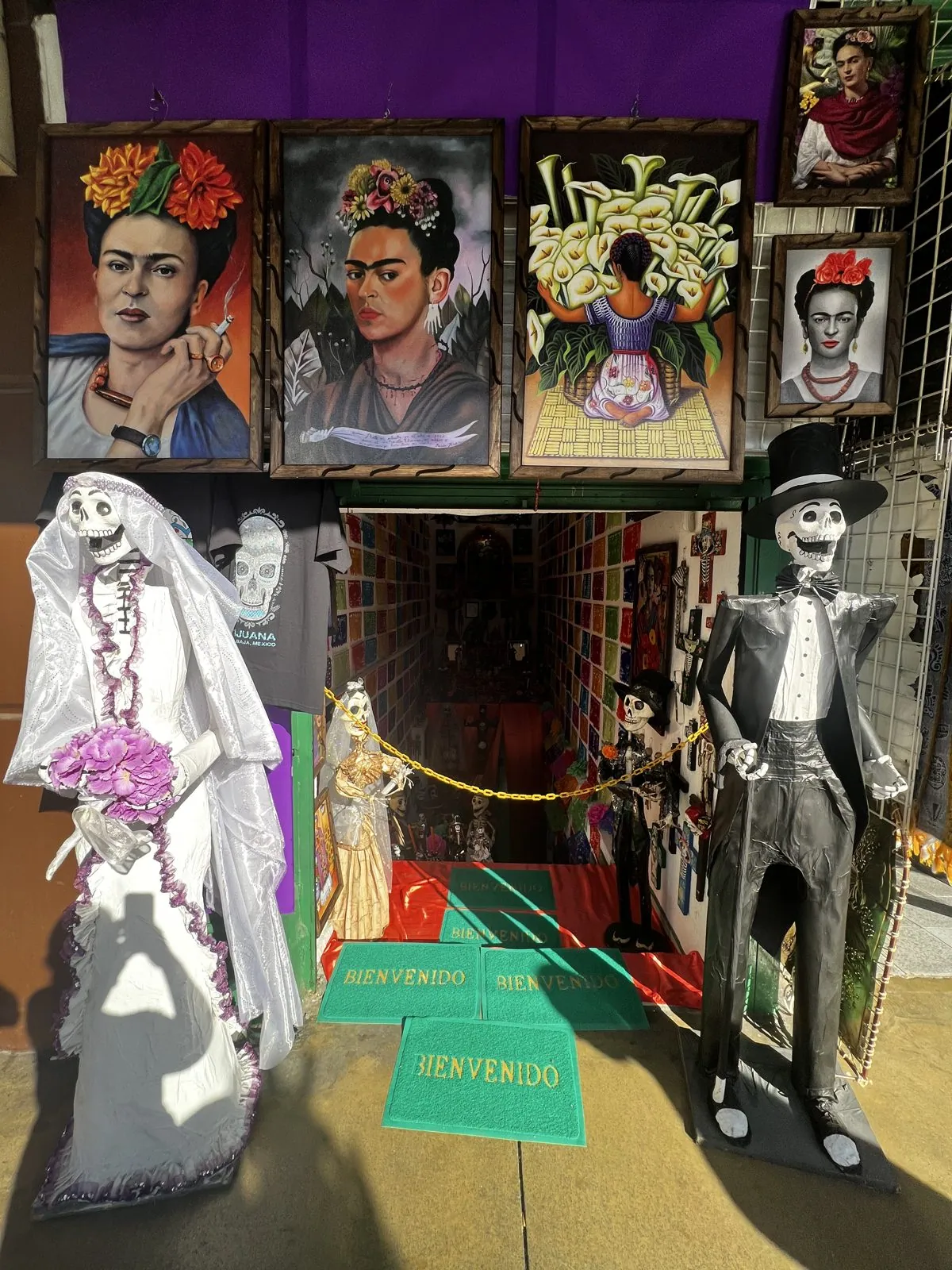
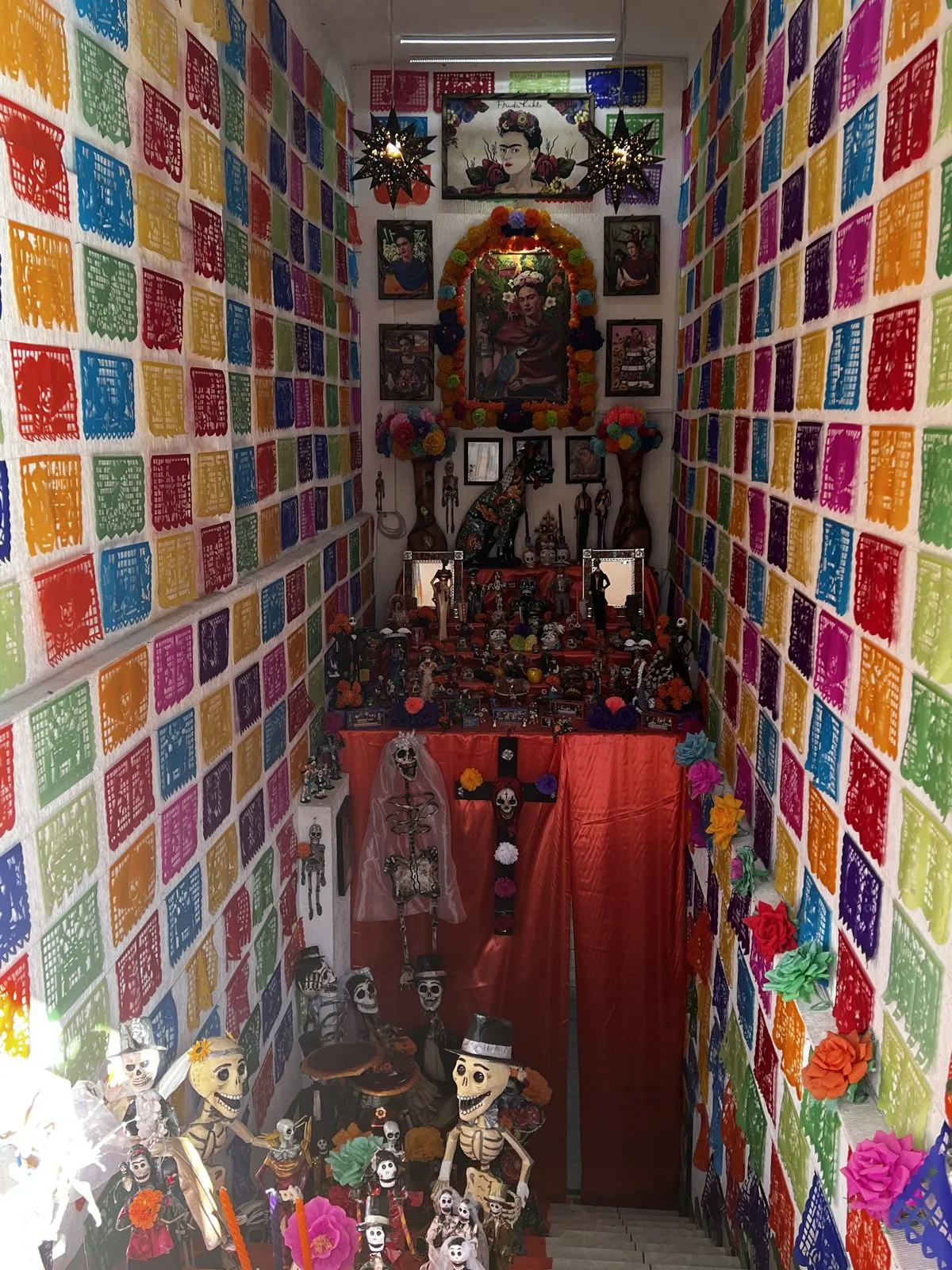
Right next to it was the best surprise of the afternoon: a passage no wider than a hallway, its walls tiled from floor to ceiling in squares of papel picado, the cut tissue-paper banners of every Mexican fiesta, in pink, yellow, green, blue, orange and red. At the far end stood an ofrenda: tiers of skeleton figurines, candles and paper flowers, a red cloth, and more Fridas, one framed in orange flowers. A few doors on, outside a café, stood the second Catrina of the day, this one in a magenta gown with a wide pink hat and a foaming skirt of turquoise ruffles.
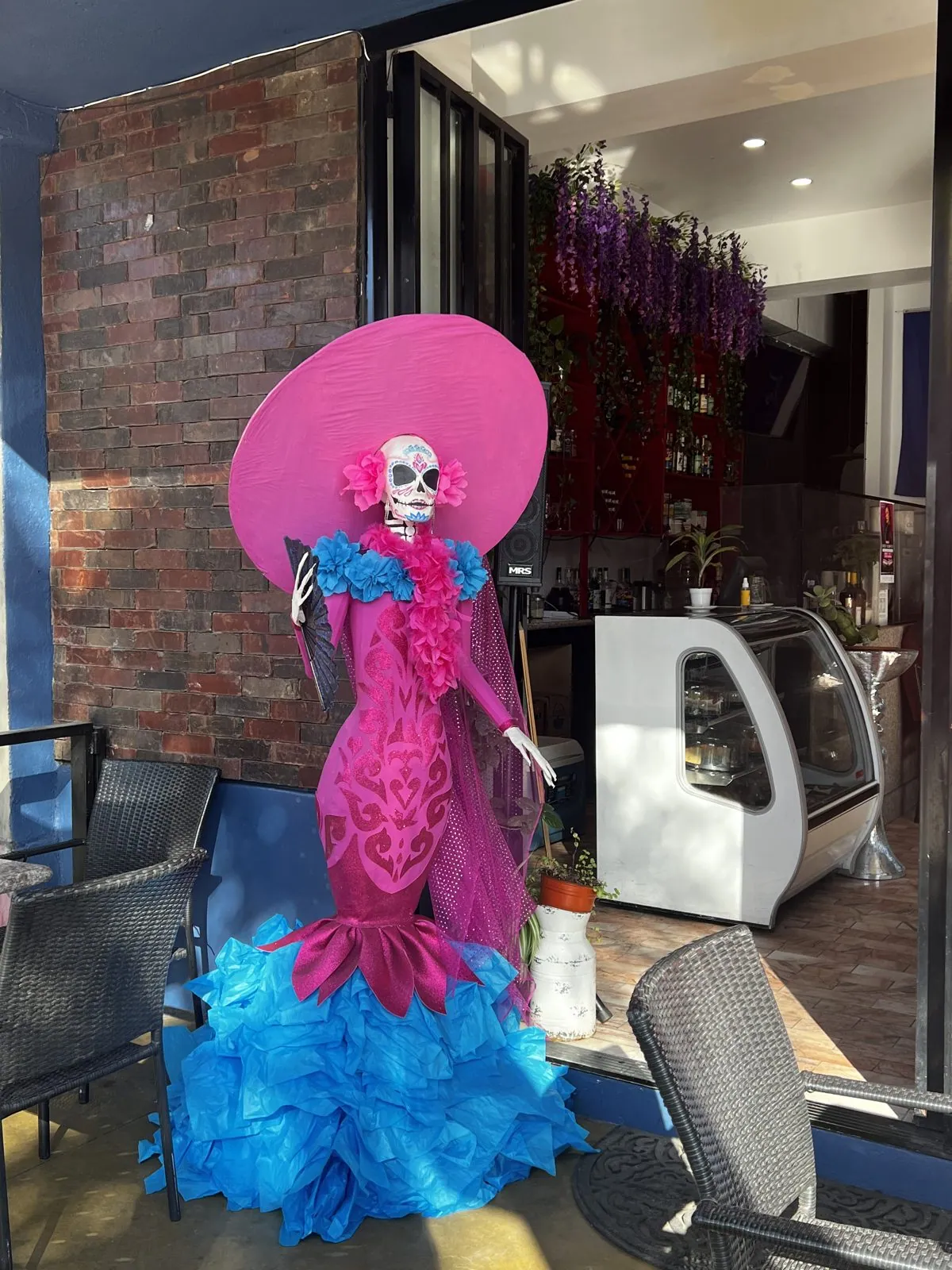
The Catrina herself has a surprisingly specific origin. She began around 1910 as a satirical etching by the printmaker José Guadalupe Posada: a skeleton in an elegant European hat, mocking Mexicans who aped French fashion and forgot that everyone ends up the same in the end. Decades later Diego Rivera painted her into a mural in a full gown, standing next to Posada and a young version of himself, and gave her the name Catrina, a word for a well-dressed lady. From there she became the face of the holiday, and in late October she seems to stand outside half the businesses in town.
The arch and the paper sky
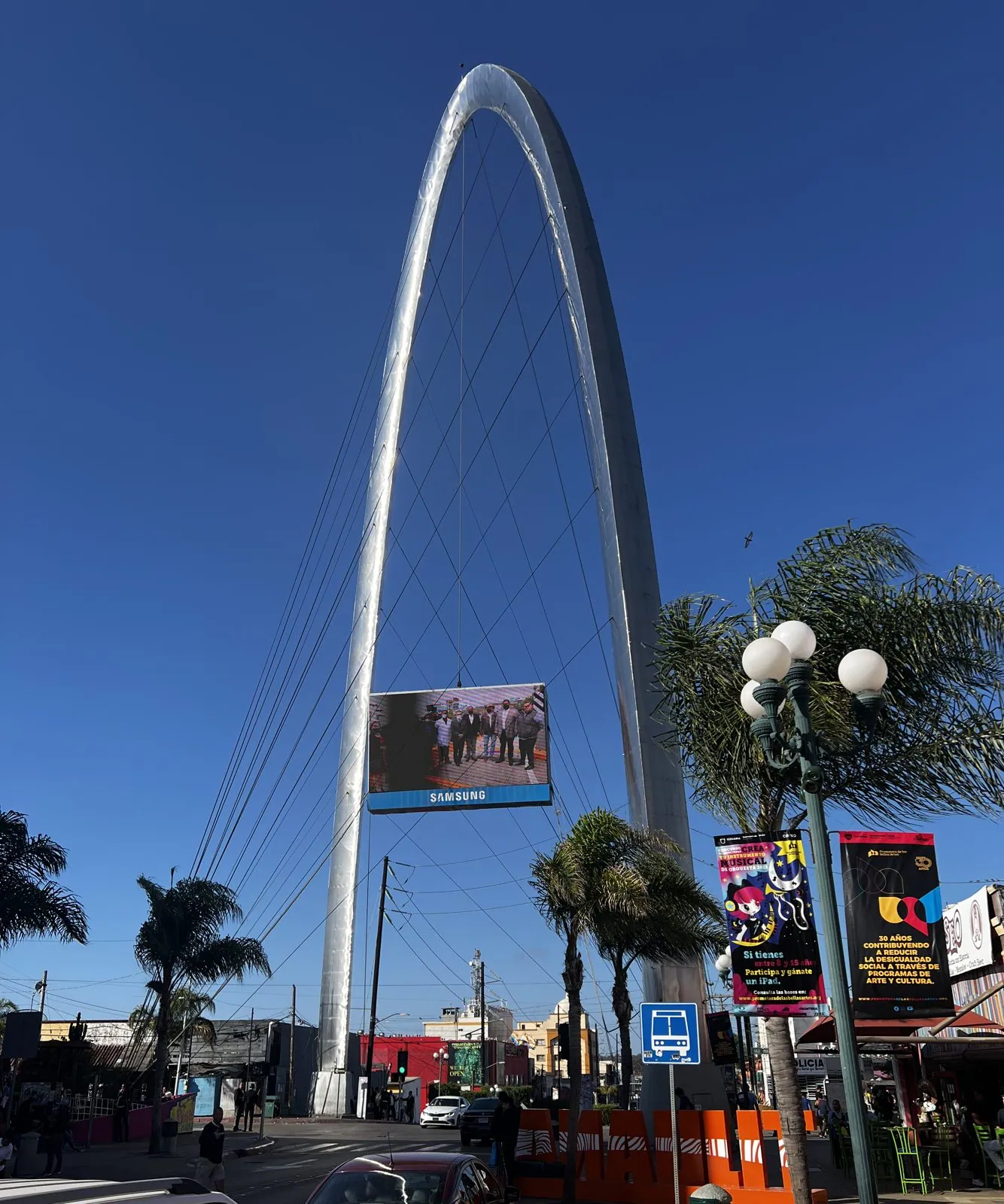
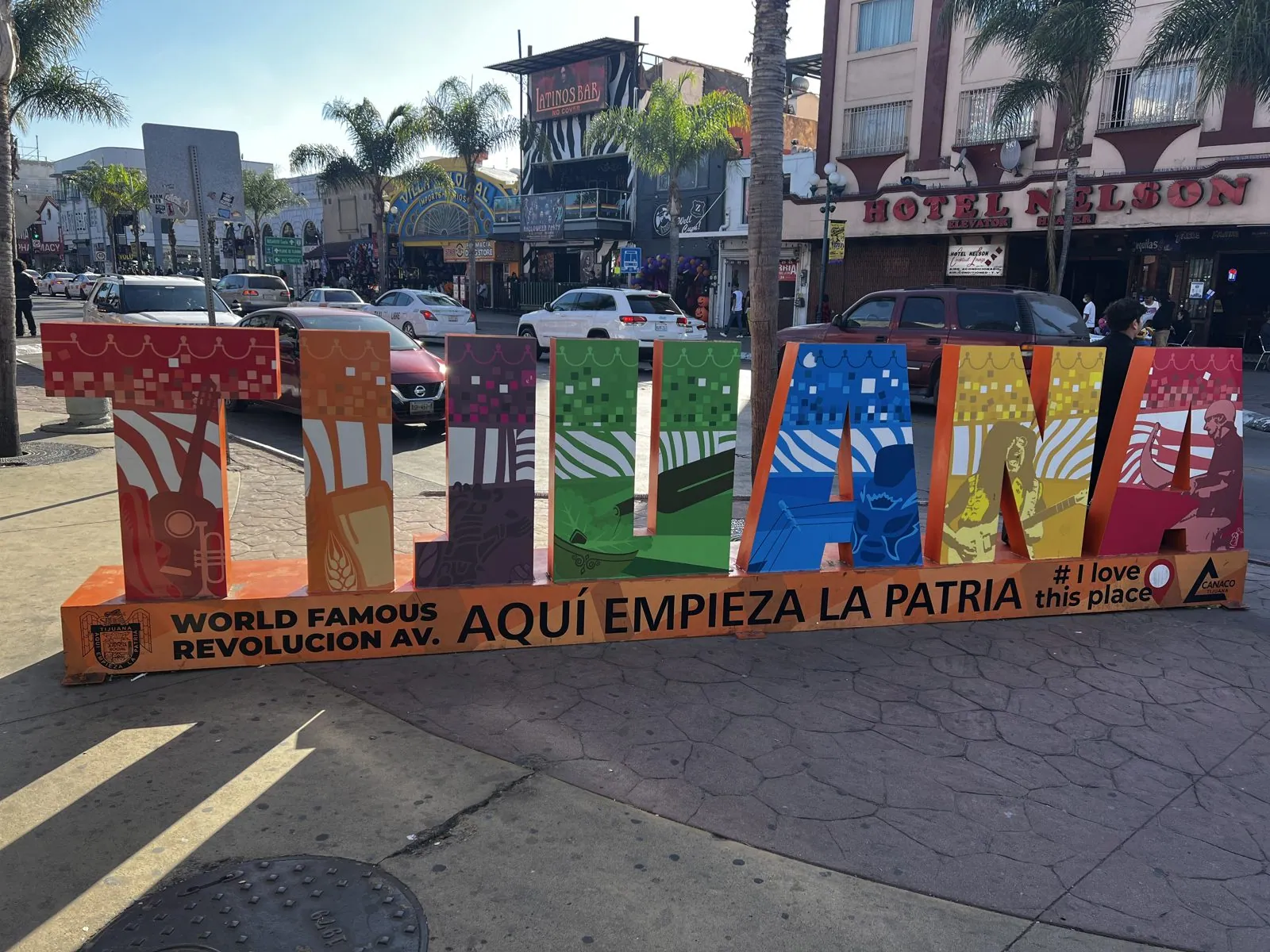
At the north end of Revolución, where the avenue meets Calle Primera, rises the Arco Monumental, a soaring steel arch that has marked the entrance to downtown since the turn of the millennium. From its foot it climbs straight out of the traffic, glinting against the blue, with a screen hung from cables beneath it. A second TIJUANA sign stands at the corner, this one labeled World Famous Revolución Av., the motto repeated along its base and a cheerful "#I love this place" tucked into the corner.
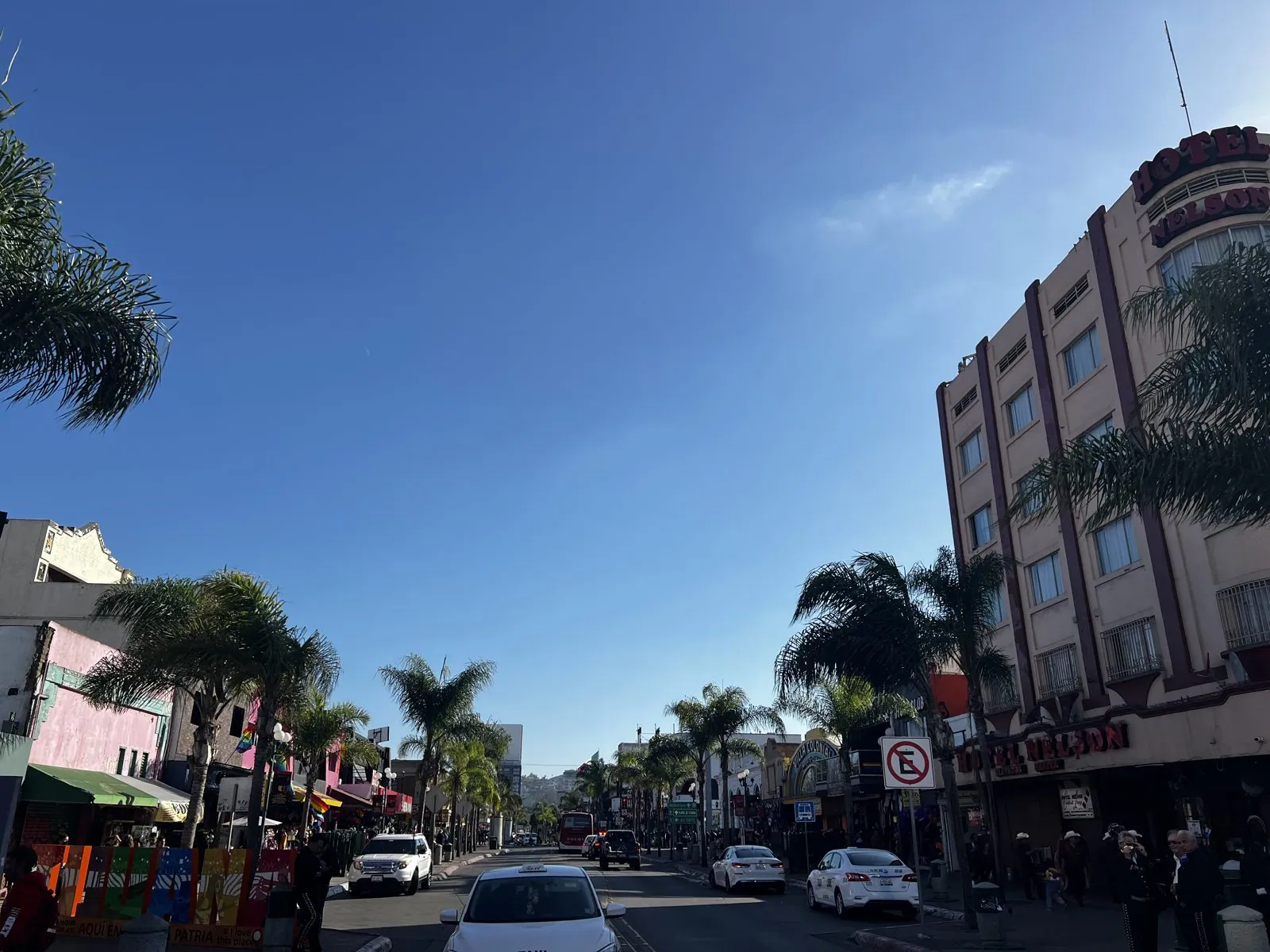
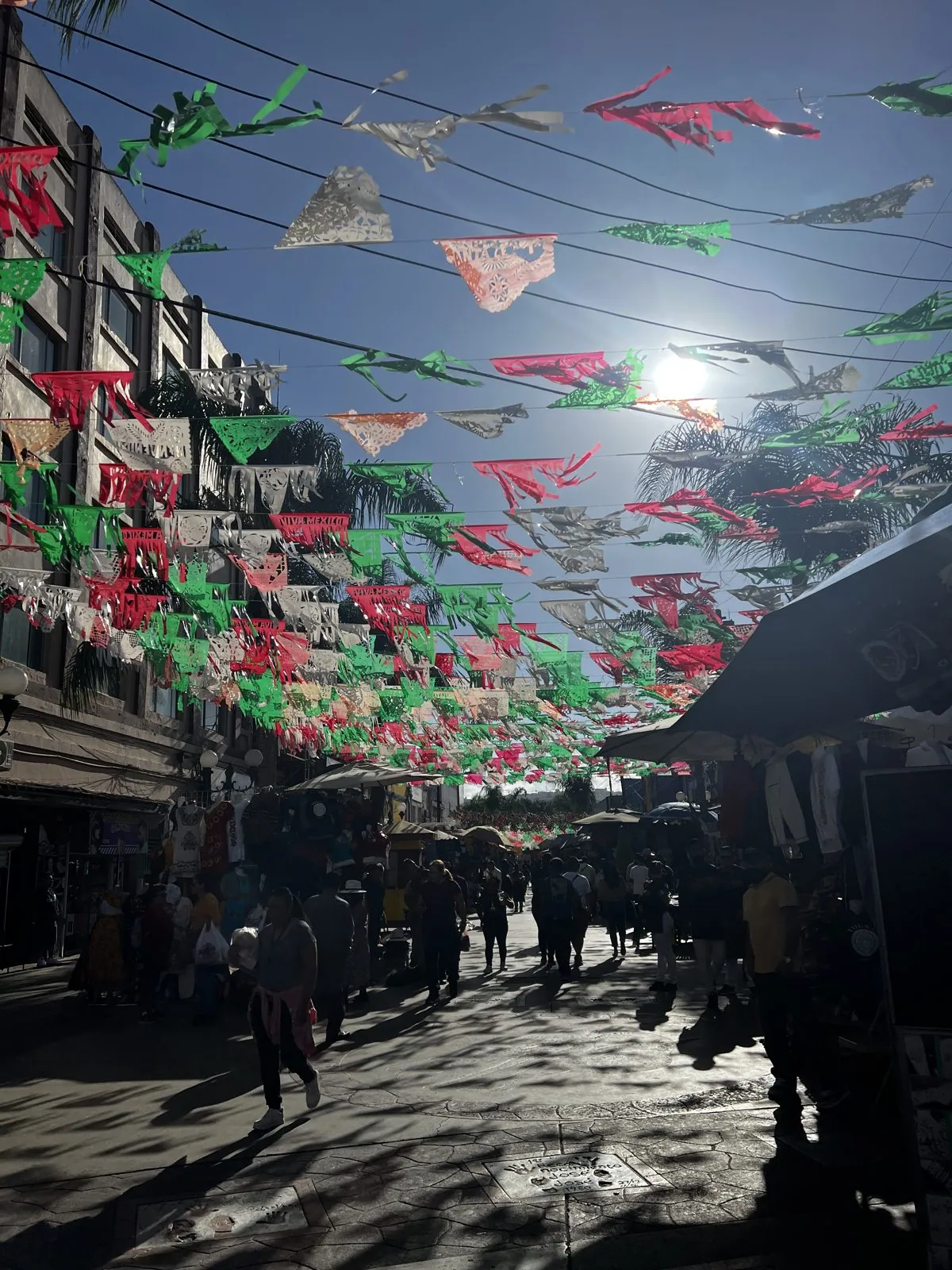
Looking back south, the avenue runs downhill in a straight line under palms, with the art deco curve of an old hotel on the corner and a row of shopfronts in pink, green and orange. Nearby, a pedestrian street had been roofed with papel picado: hundreds of banners strung on lines from one side to the other, in red, white and green, the colors of the flag, cut into lace patterns of skulls and flowers. With the sun behind them they glowed like stained glass, throwing a dappled shadow over the crowd below.
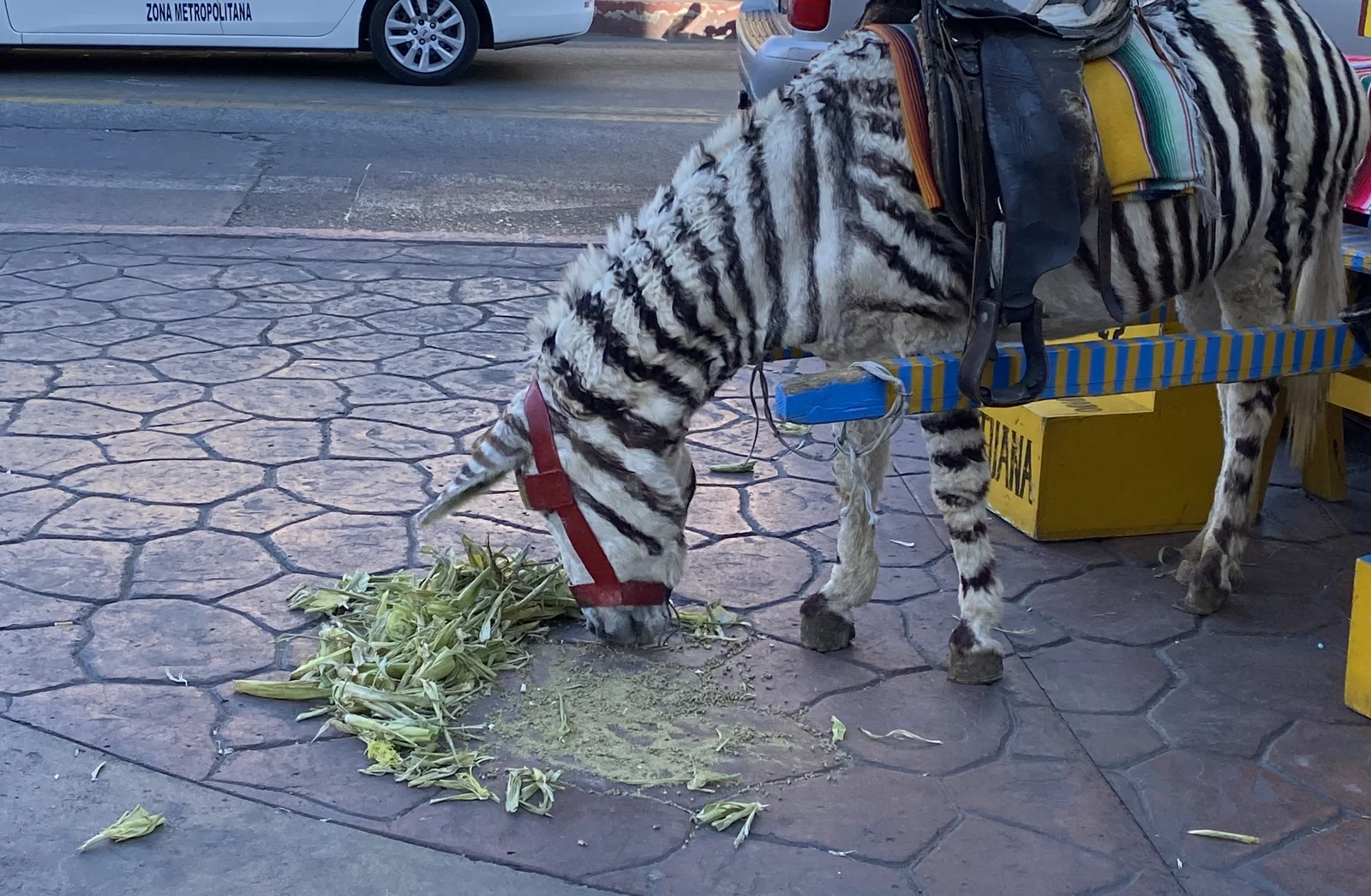
That was about half past three. A few minutes later, on the sidewalk of Revolución, a donkey painted with zebra stripes stood saddled for photos, eating a pile of corn husks. Tijuana calls them zonkeys.
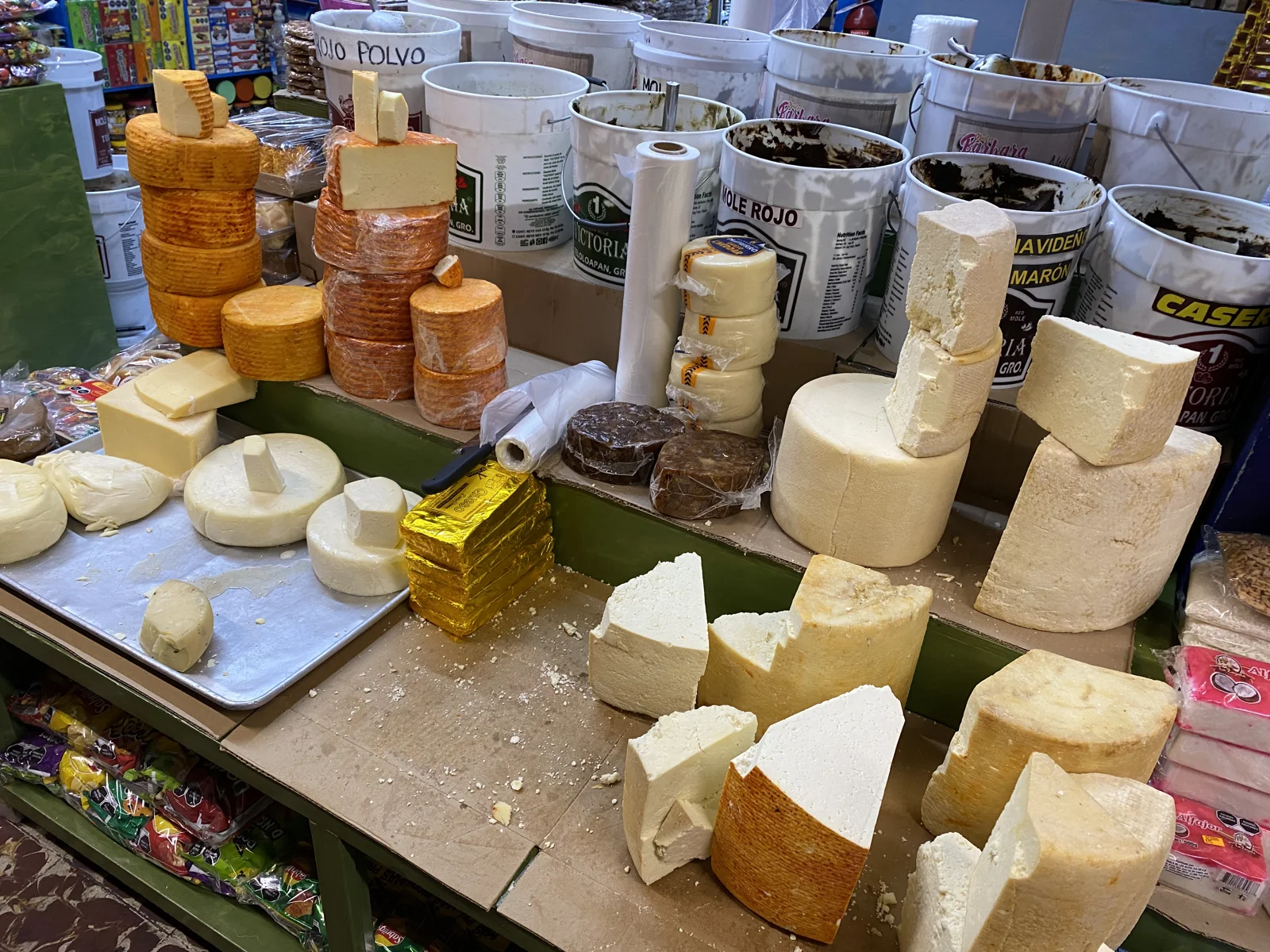
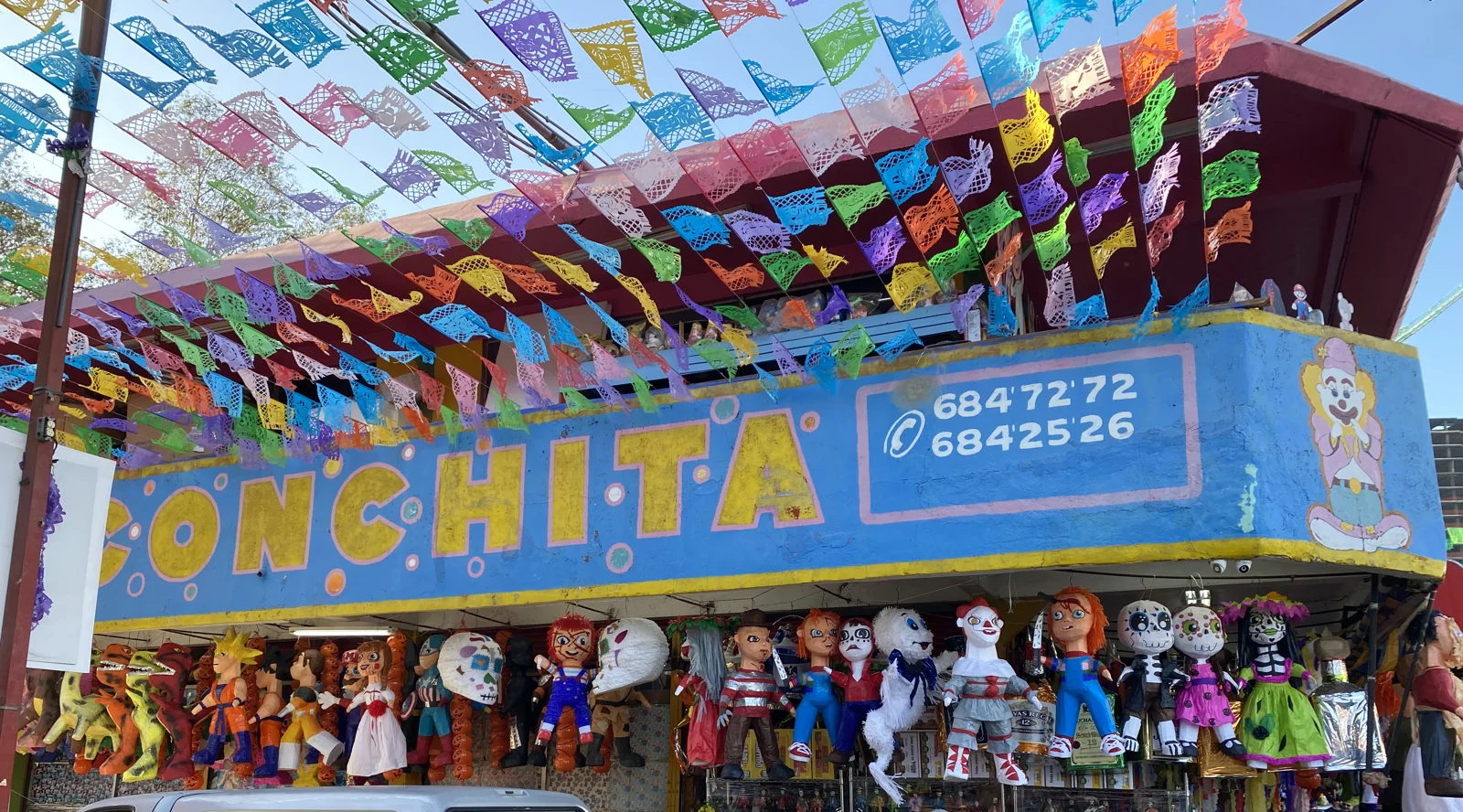
Around four we were at the Mercado Hidalgo, and we spent about forty minutes there. One stall was stacked with wheels and blocks of white and yellow cheese. A piñata shop called Conchita had a canopy of papel picado over its front and a row of piñatas hanging under its sign.
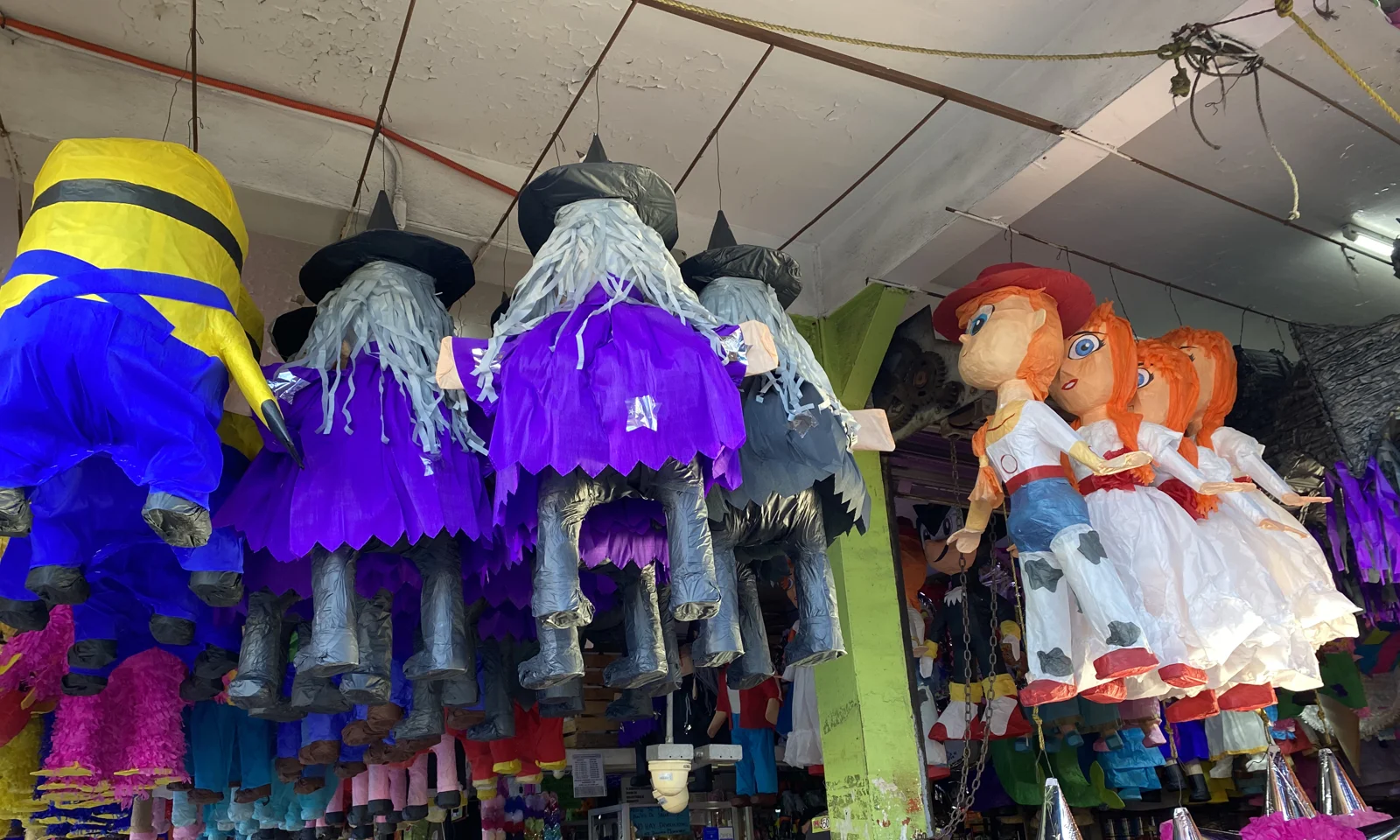
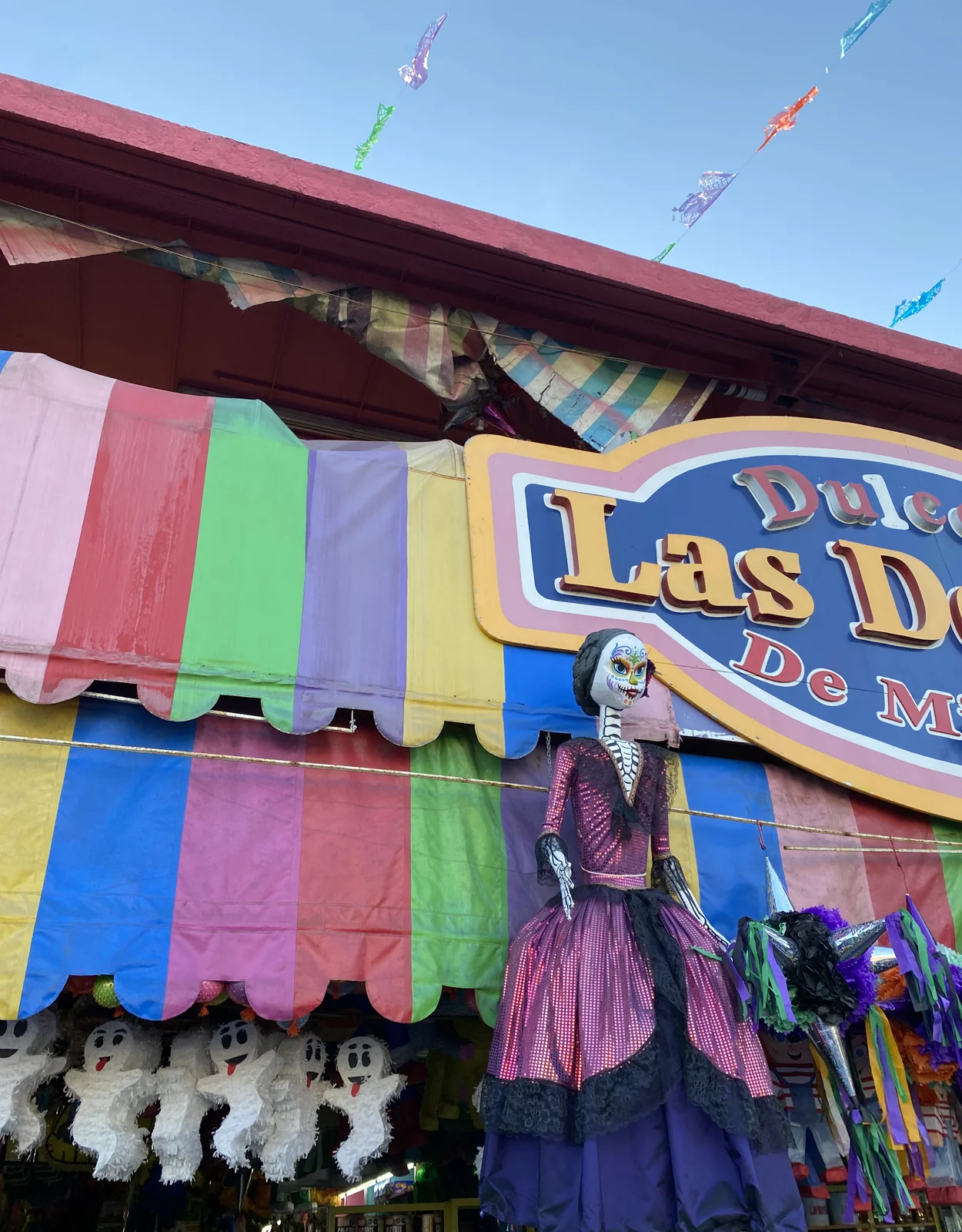
Under a roof nearby, piñatas hung from the ceiling in rows: Minions, purple witches and cartoon cowgirls. A little further on, in front of a candy stall with a striped awning, stood Catrina number three, life-size, in a purple gown.
Dinner, at about eight, was at Mr. Pampas, a Brazilian steakhouse across town. We spent a second night in Tijuana.
Day 2: Brunch and the line north
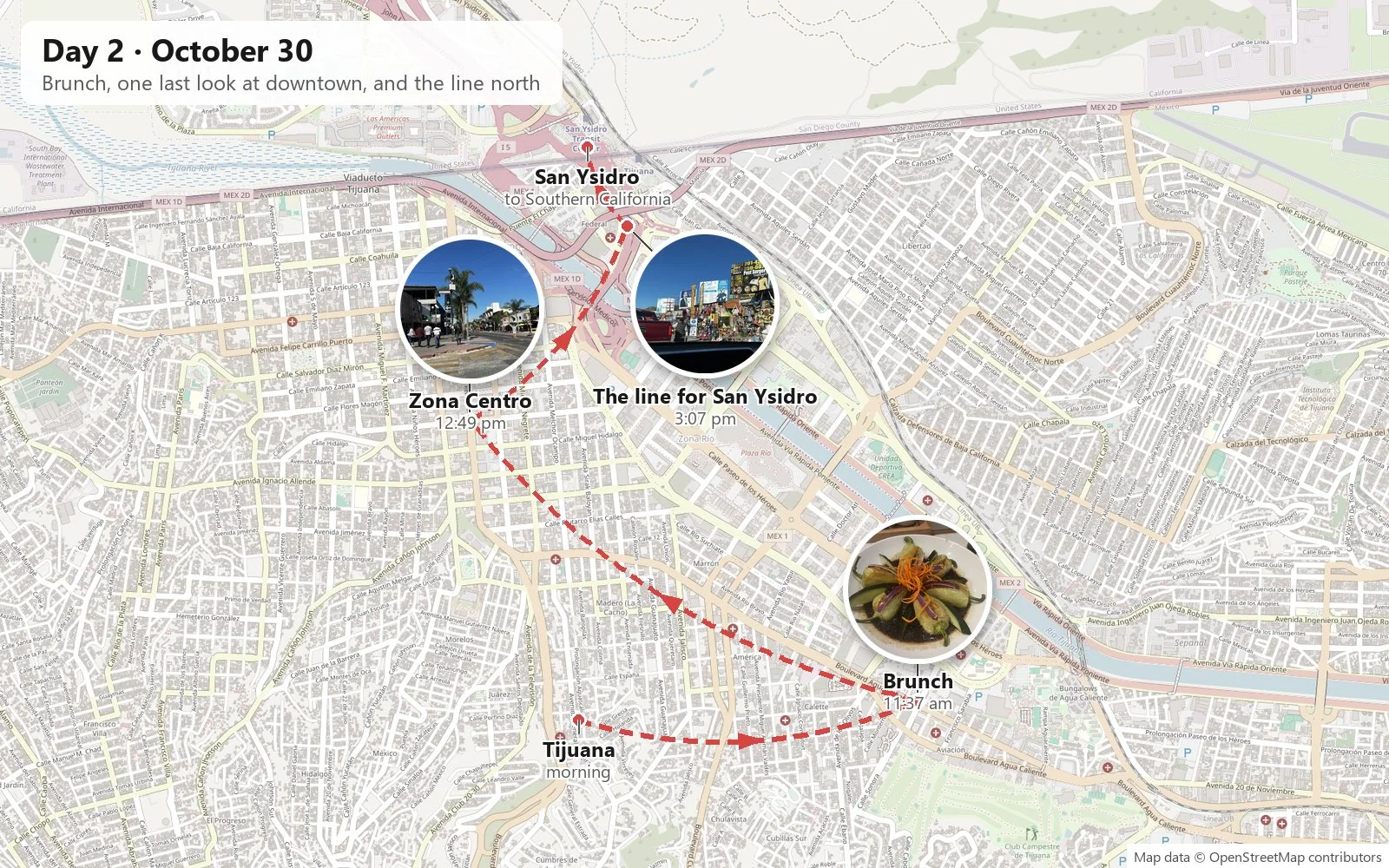
Sunday began late, with brunch at about eleven in the Aviación neighborhood, a quiet residential area south of downtown, near the Agua Caliente racetrack and the country club. The camera roll records the table in detail, which is a fair indication of how the morning went. From there we made one more pass through downtown before turning north for the border.
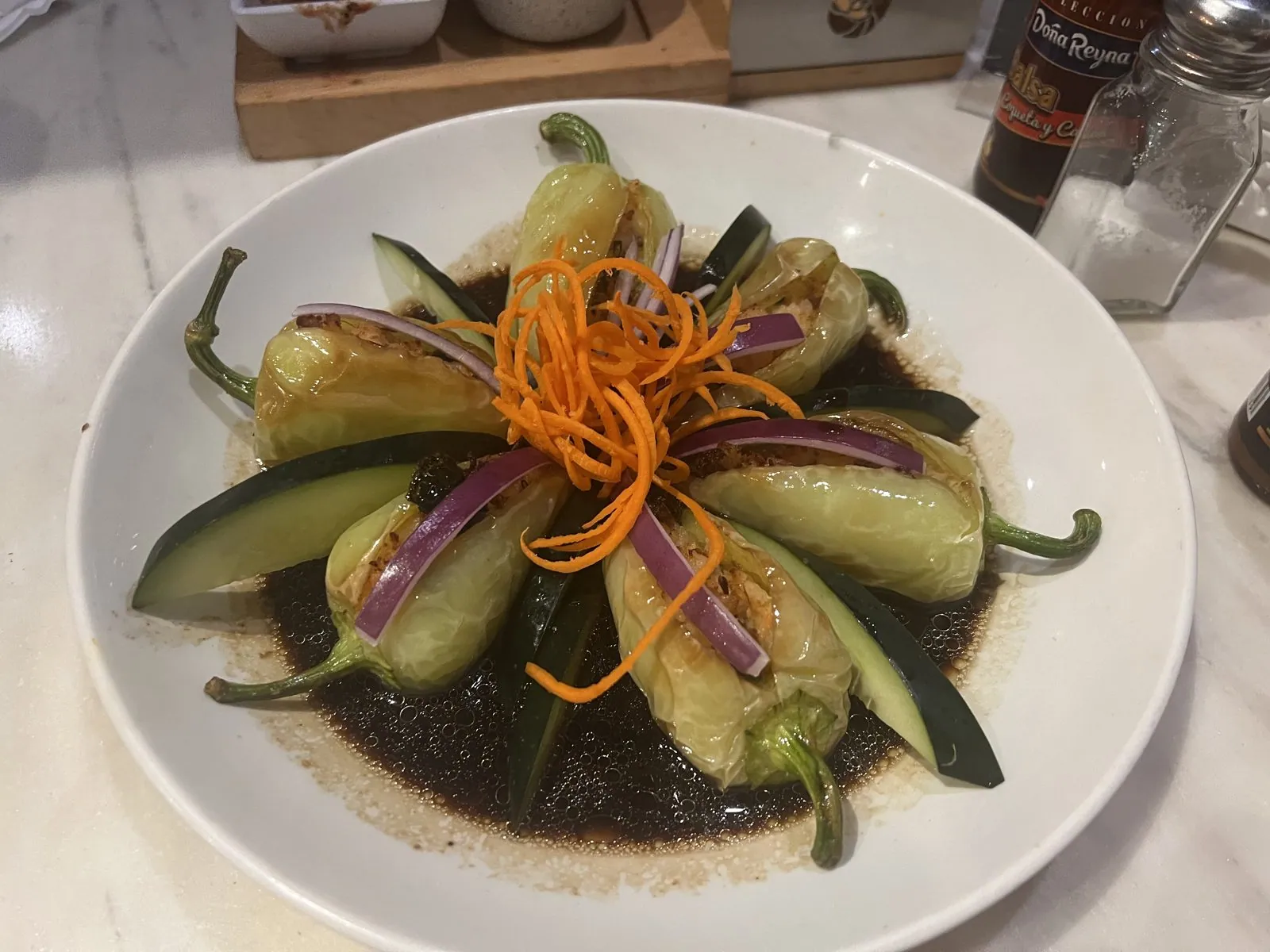
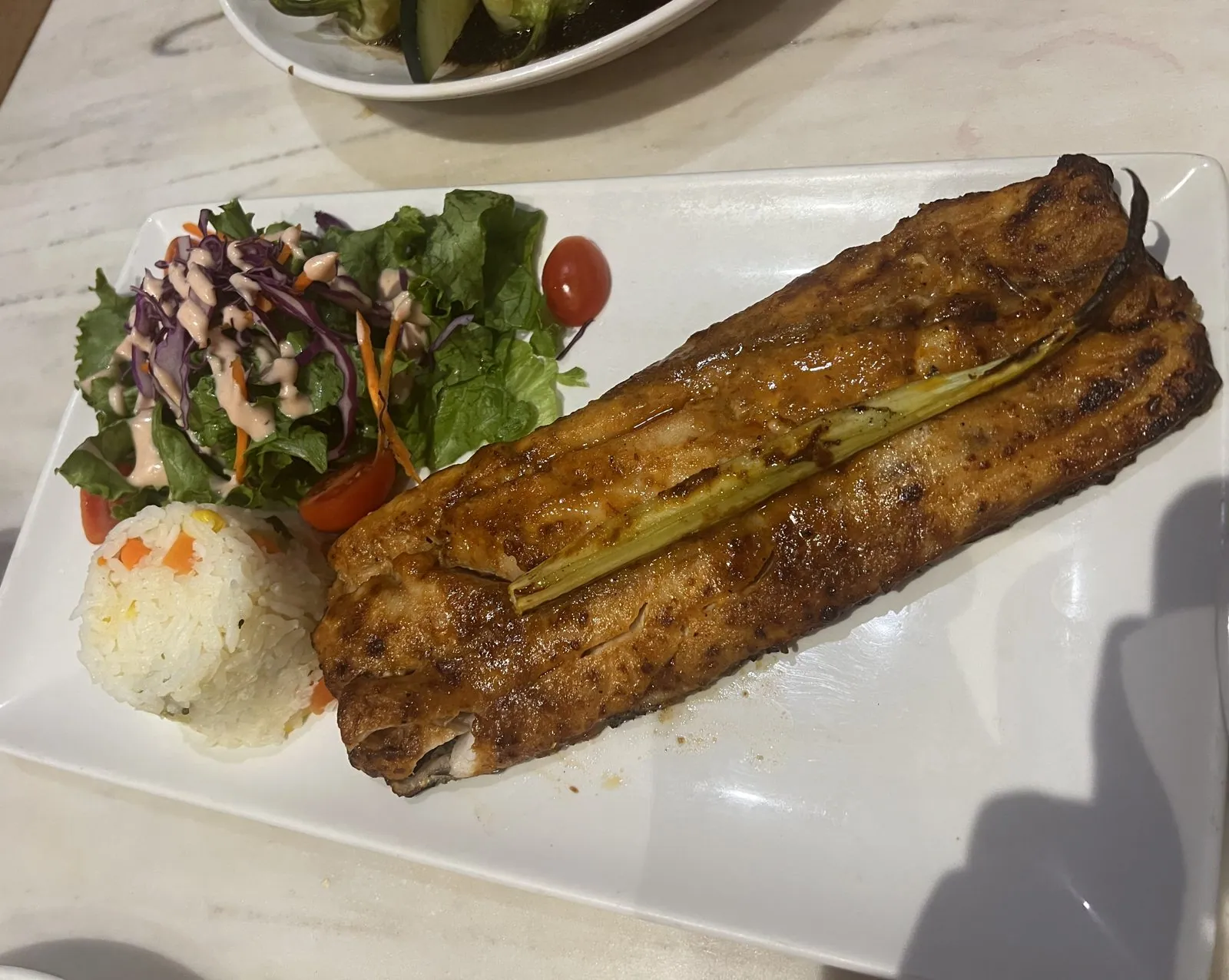
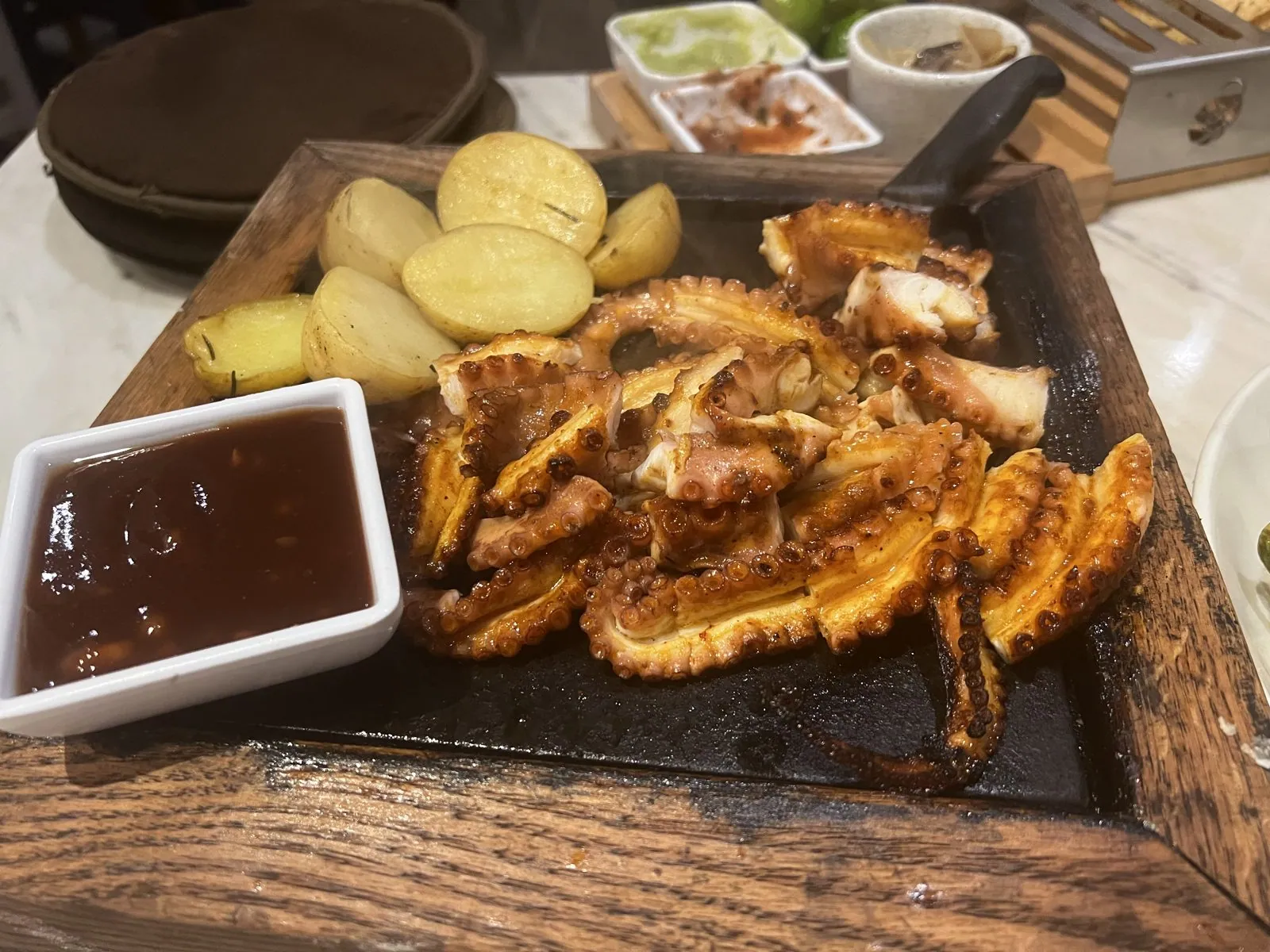
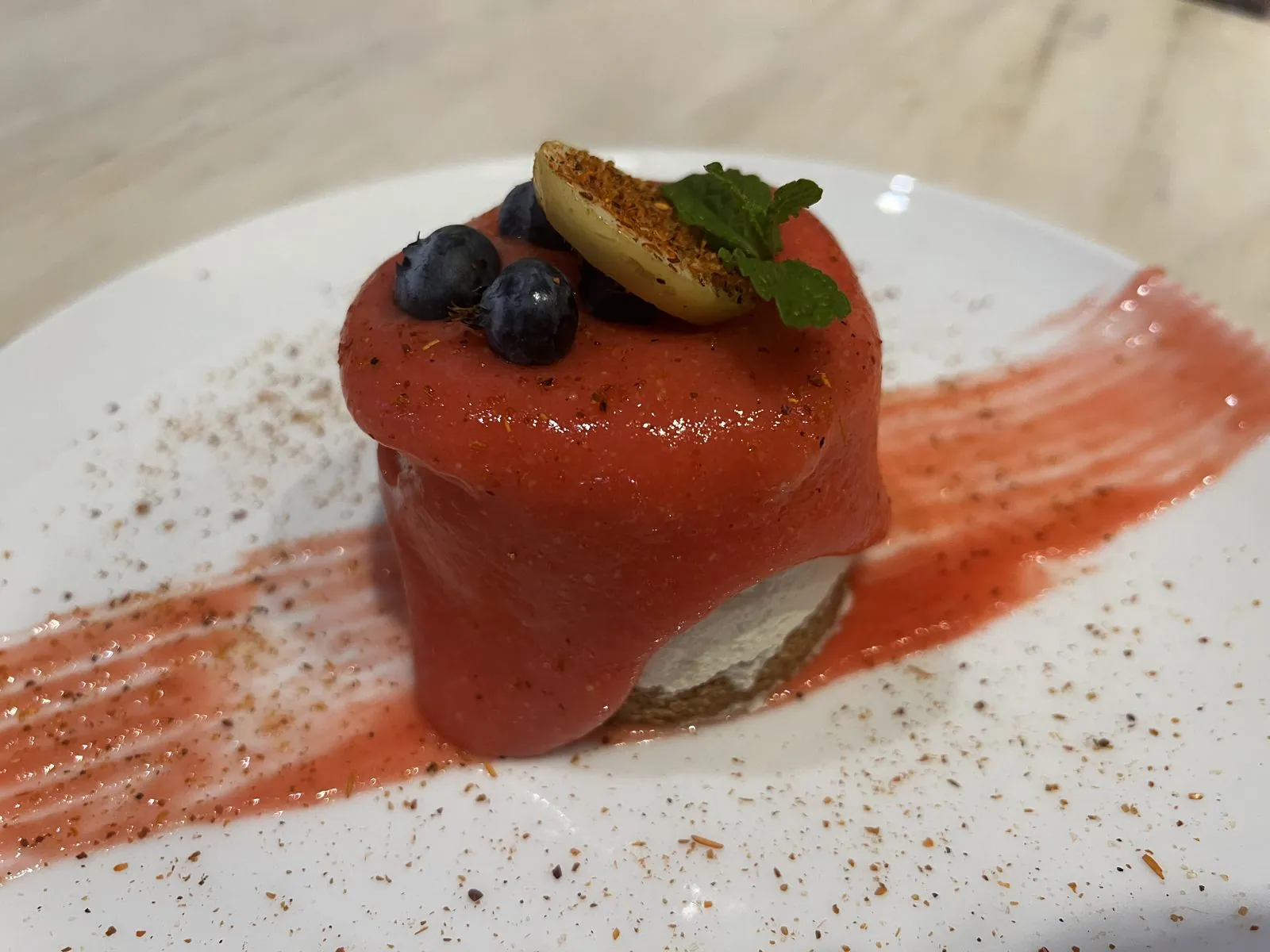
The food was a long way from Caesar's dining room, and better looking than most brunches have any right to be. Pale green chiles were arranged in a star on a pool of dark, glossy sauce, with cucumber, red onion and a nest of carrot ribbons in the middle. A long grilled fish fillet, glazed and blackened at the edges, came with rice and a salad. Then came a wooden board of grilled octopus, cut into curls and charred at the edges, with potatoes and a dish of dark sauce, and, for dessert, a small red mousse covered in berry sauce and topped with blueberries and mint.
Of everything we ate that weekend, the octopus came up twice, on both days, in two very different kitchens: one on fine china under a tangle of greens, one sizzling on a board. Baja California has the Pacific on one side and the Sea of Cortez on the other, and seafood is never far from any menu here. The dessert arrived a good forty minutes after everything else, which suggests nobody was in a hurry.
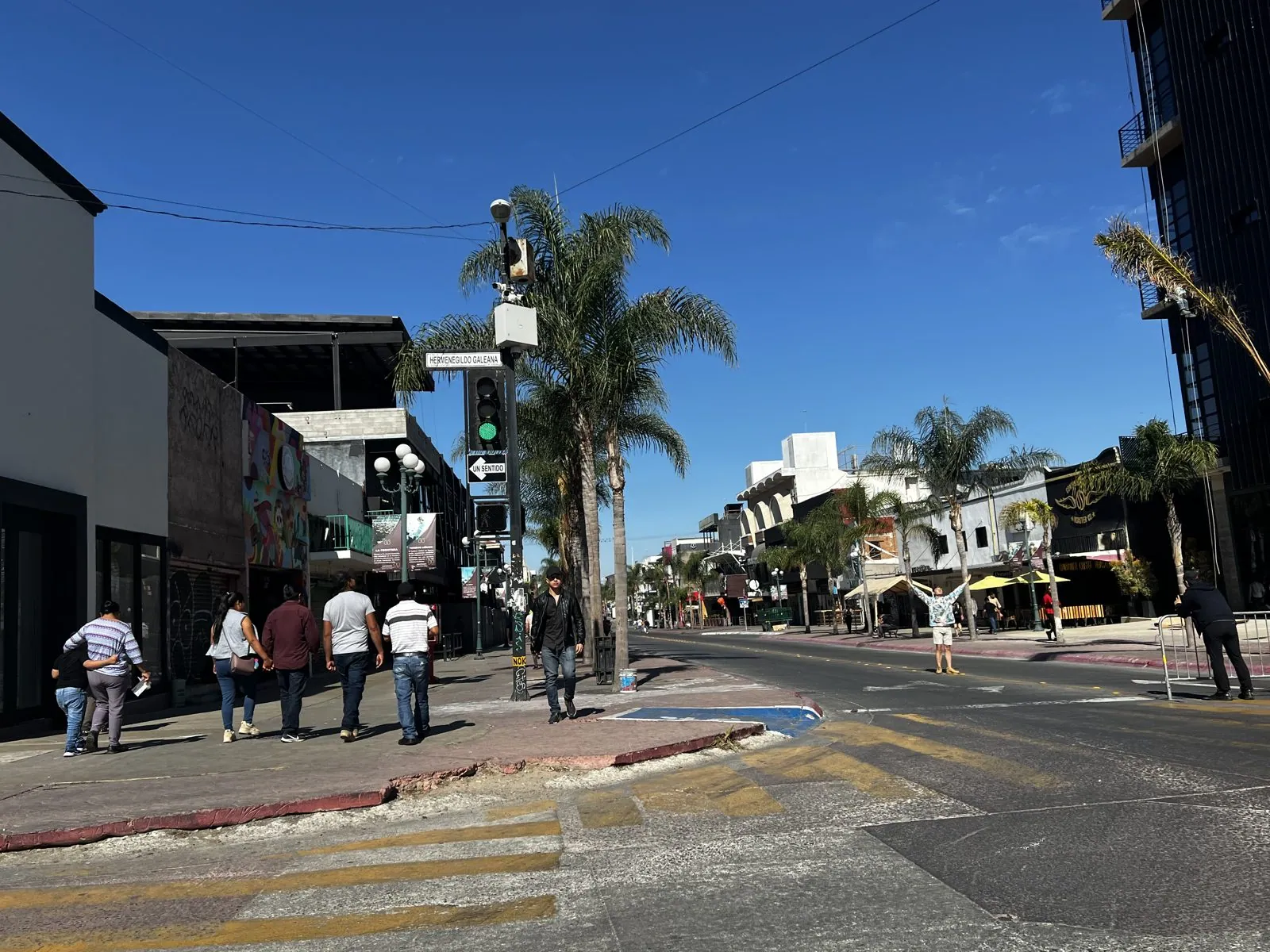
Just before one o'clock we were back in the Zona Centro. On a Sunday afternoon the streets were wide, sunny and quiet, the palms stock-still against the sky, a few people strolling along the sidewalk in the shade of the buildings. After the crowds under the papel picado the day before, it felt like a different city.
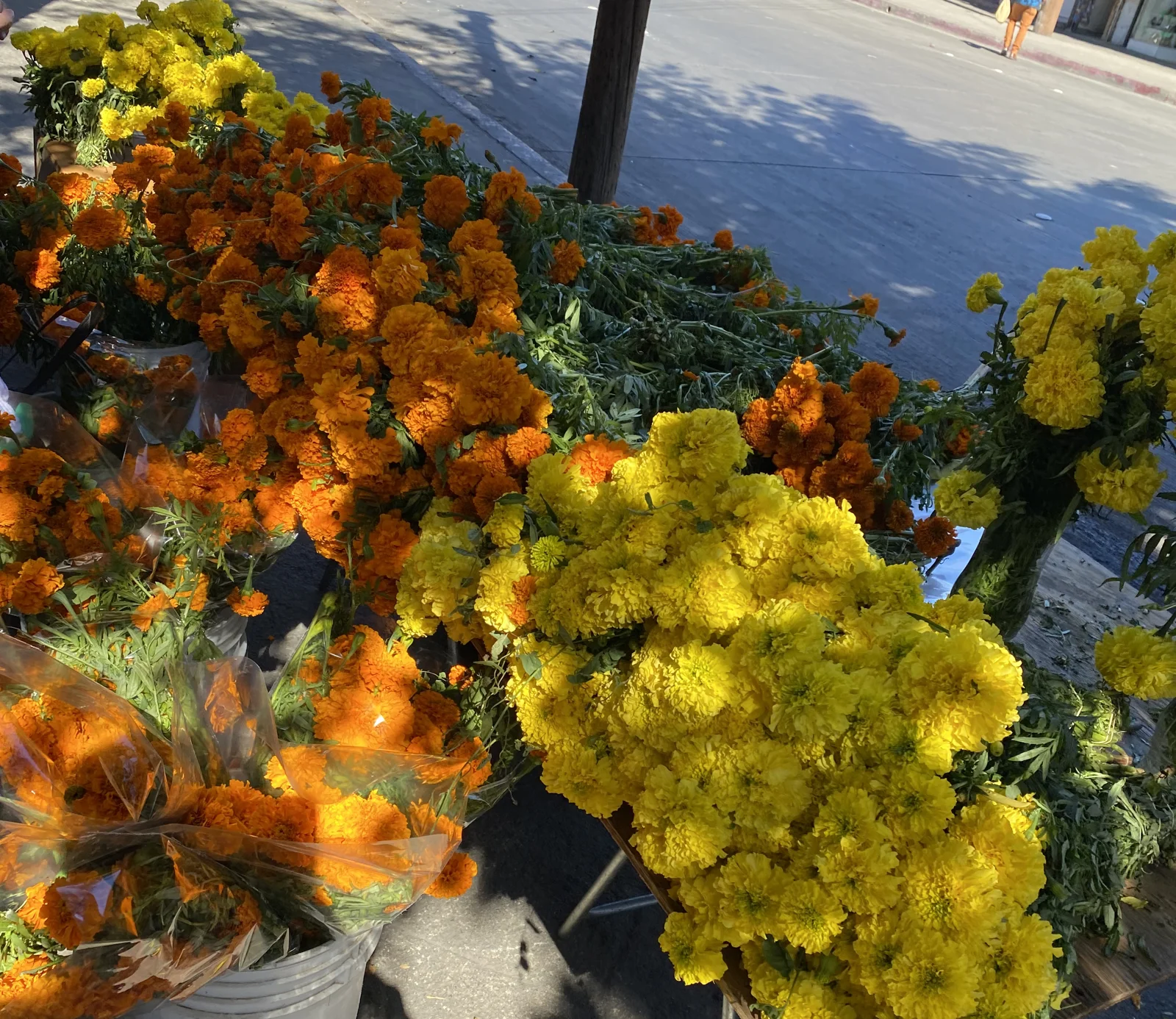
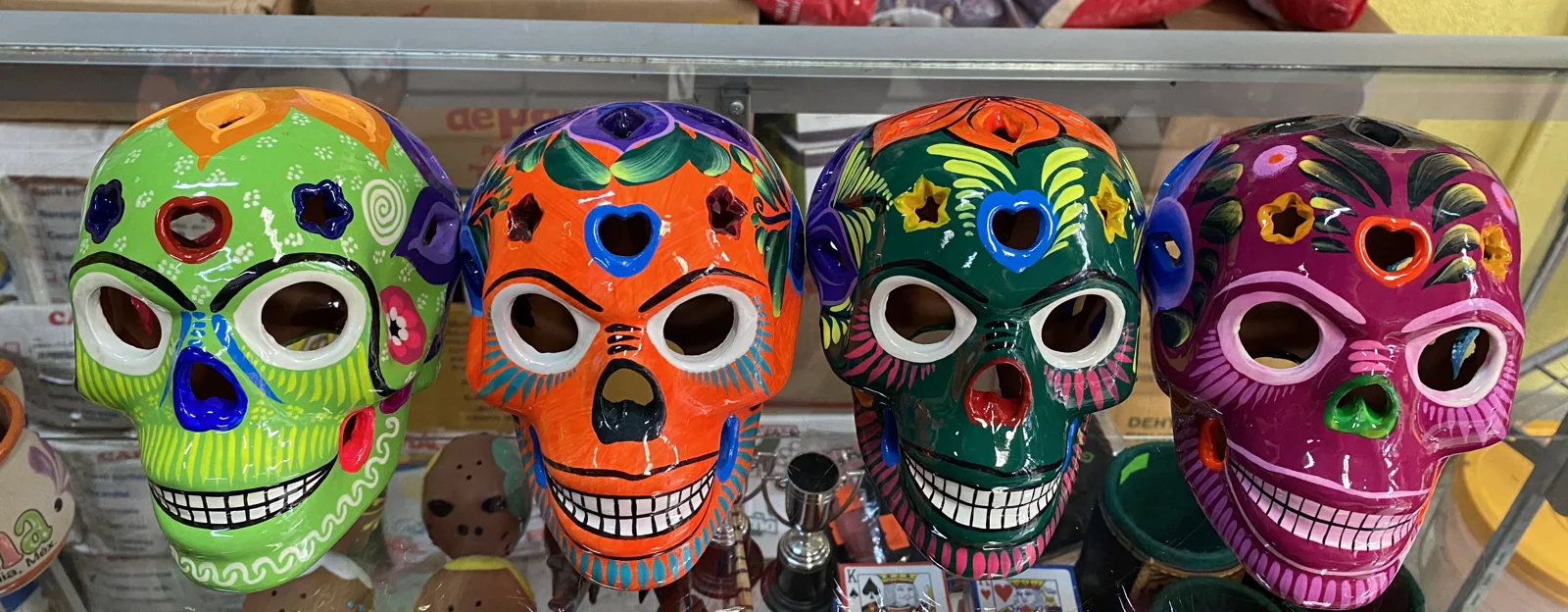
On the sidewalks, sellers had buckets of orange and yellow cempasúchil, the marigolds of the Day of the Dead, and the shops had painted skulls out on their shelves.
The line
Then came the part of any trip to Tijuana that everyone warns you about: going home. The San Ysidro Port of Entry is the busiest land border crossing in the Western Hemisphere. Tens of thousands of people cross north every day, and on a Sunday afternoon, when half of Southern California is coming back from the weekend, the line of cars backs up through the city for blocks, lane after lane of them inching forward toward the inspection booths. Ours took hours. It was a long time to look at the back of the same red pickup, but, as it turned out, not a boring one.
Fortunately, the line has its own scenery. Billboards stack up on both sides, in Spanish and English, aimed squarely at a captive audience: a barbecue festival thanking Tijuana for its success, lawyers, insurance for driving in the U.S., beauty clinics and, memorably, "post surgery therapy". And between the lanes, there is a market.
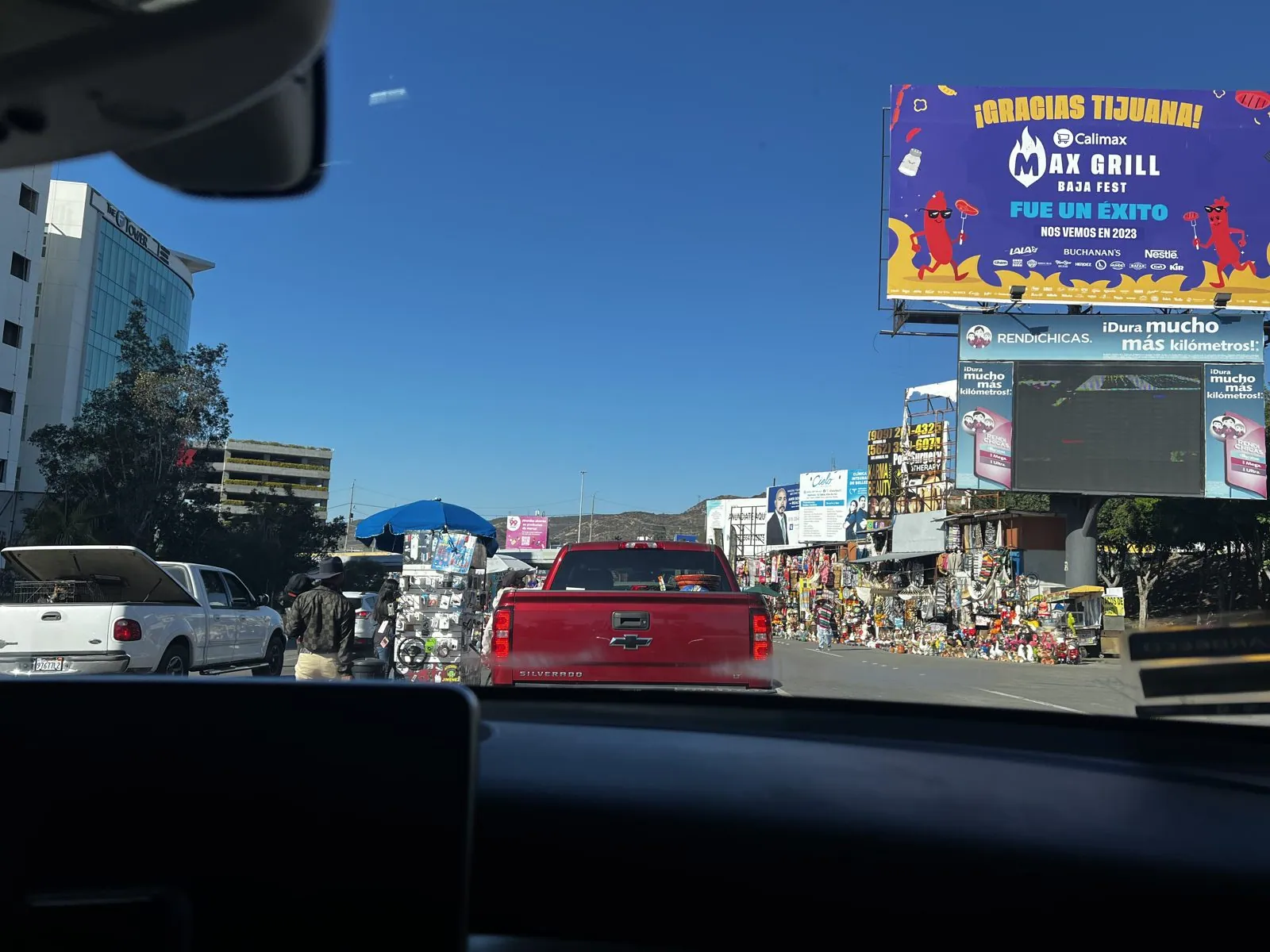
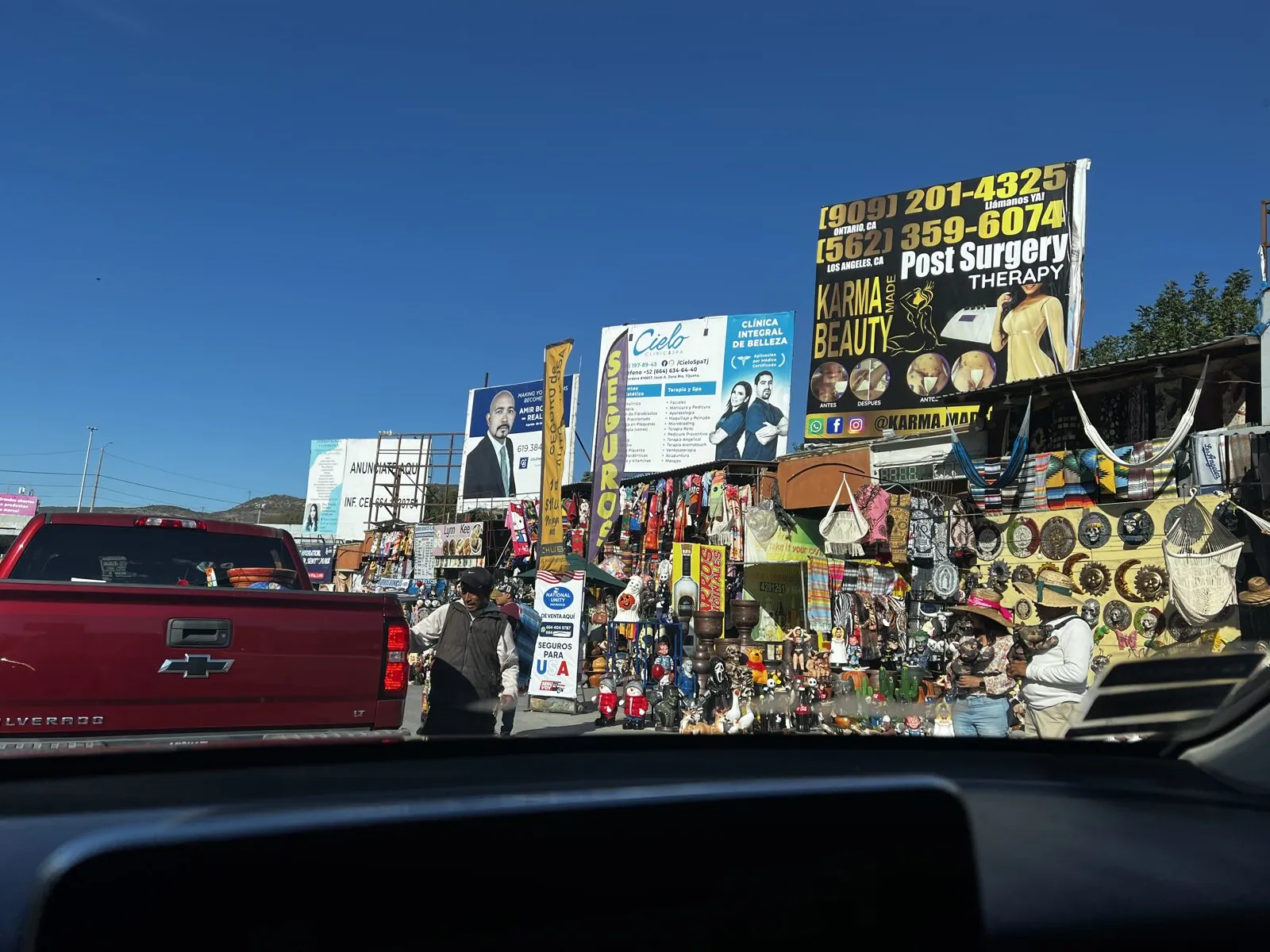
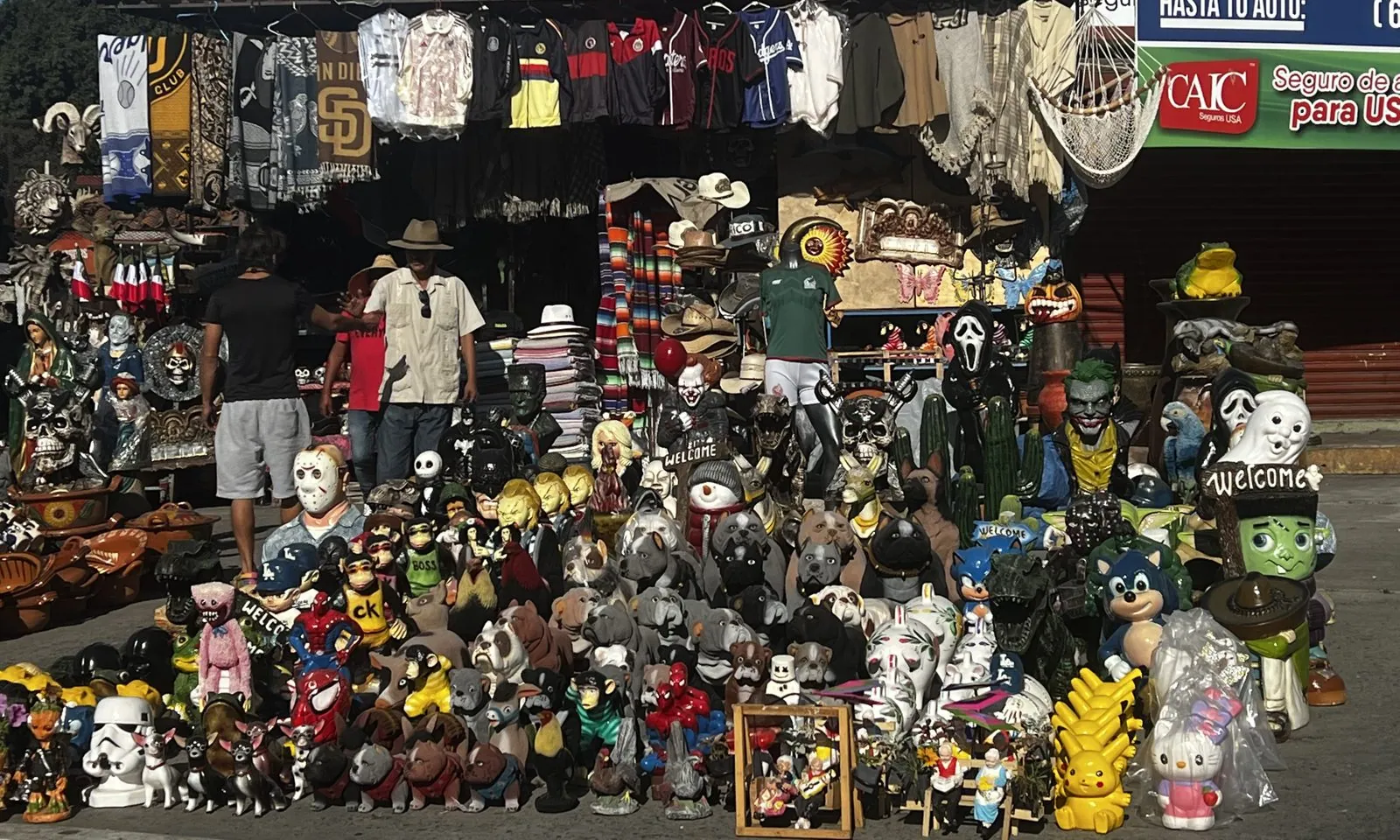
It is not a figure of speech. On the medians and shoulders along the last stretch before the border, vendors set up full shops: racks of soccer and baseball jerseys (the San Diego Padres well represented), striped serapes, hammocks, sombreros and leather goods. And in front of all of it stood an army of painted plaster figures. There were bulldogs and chihuahuas, Sonic the Hedgehog, Pikachu, Hello Kitty, stormtroopers, Spider-Man, the Joker, the Scream mask and Jack Skellington, all lined up in rows and facing the traffic. Other vendors walked between the cars with trays of snacks, drinks and piñatas. You could, in principle, buy a whole living room's worth of decor without leaving the driver's seat. The pace of the line makes it a surprisingly reasonable plan.
And then, eventually, the booths, a few questions, a glance at the passports, and the freeway north into Southern California. The whole trip covered barely a day and a half and a few dozen miles. But it held a fence that walks into the sea, a beach where the art is louder than the steel, a salad with a hundred-year-old story, a street dressing for its dead, and a traffic jam you could furnish a house from. That is a lot for one weekend, and it is twenty miles from San Diego.
Maps built from the trip's photo timestamps and locations. Photo locations have been removed from the published images. Day maps: map data © OpenStreetMap contributors; each stop is placed where its photo was taken, hotels and home are never marked, and the dashed lines show the order of stops, not the exact roads.
Some photos in this post are my wife's.
Likes and comments
React with an emoji or leave a comment. Signing in with GitHub is required.